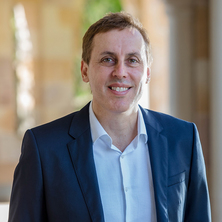
Karine Charry is a Professor at the Louvain School of Management (LSM) within the University of Louvain (UCLouvain), affiliated with the Louvain Research Institute in Management and Organizations (LouRIM) . Her work focuses on behavioral responses to marketing strategies in health and sustainability contexts. Email: karine.charry@uclouvain.be Office: Building B, Floor 02, Office B207, Chaussée de Binche 151, 7000 Mons Research Interests: Behavioral impact of sustainability labels and nudges Effectiveness of environmental NGO campaigns Role of social media influencers in dietary and ecological behaviors Prosocial communication via platforms like Twitter Co-branding and packaging strategies for child-targeted products Key Article Trends (2006-2025): Her publications span food marketing ethics, social media dynamics, threat appeals in youth campaigns, gamification for health apps, and sustainability labeling. Notably, she investigates how social norms and digital engagement shape pro-environmental and healthy eating behaviors in children and adolescents.
Dr. Seung-Hyun Lee is a Professor of Management at the Naveen Jindal School of Management, University of Texas at Dallas. He holds a Ph.D. in International Business and Strategic Management from Ohio State University (2002), an MBA in International Business (1998), and a B.A. in Political Science (1992) from Hankuk University of Foreign Studies. His research focuses on managing corruption in emerging markets, international entrepreneurship, and strategy in uncertain environments. He has published widely in journals like Strategic Management Journal and Journal of Business Venturing. Dr. Lee’s work explores how bribery impacts firm exports and profitability, the role of bankruptcy laws in entrepreneurship, and the strategic flexibility of multinational corporations during crises. He served as President of the Association of Korean Management Scholars (2008–2011) and currently serves as an Associate Editor of the Asia Pacific Journal of Management. His consulting experience includes work with Samsung Insurance and executive education programs in South Korea and the U.S. Key themes in his recent publications include corporate political strategies, environmental performance linked to executive gender, and the cost implications of wrongdoing in bystander firms. His research bridges international business theory with practical challenges faced by firms in transition economies and emerging markets.
Robert Emmet Jones is a Professor and Associate Head in the Department of Sociology at the University of Tennessee, Knoxville. He serves as a Senior Fellow with the Institute for a Secure and Sustainable Environment and the Center for the Study of Social Justice, and holds faculty associate appointments in the Environmental Studies Program and Watershed Program. Education: PhD, Washington State University, 1990 Dr. Jones specializes in environmental sociology with expertise in human dimensions of ecosystem management, public opinion and policy, and environmental justice. His interdisciplinary research bridges social and natural sciences, examining rural-urban dynamics, conservation behavior, and community responses to environmental hazards. Key methodological strengths include survey design and analysis of socio-ecological systems. His publication portfolio reveals consistent focus on urban forestry valuation, public support for environmental protection, and social justice dimensions of pollution. Recent works analyze biophysical indicators in forest conservation, homeowner attitudes toward urban trees, and racial disparities in environmental health outcomes, demonstrating applied research with policy relevance. Dr. Jones has mentored graduate students through funded projects on wolf reintroduction, salmon restoration, hazardous waste management, and GMO policy. His research portfolio includes collaborations with agencies managing the Columbia River Basin, Oak Ridge Nuclear Reservation, and Southern Appalachian water systems. He maintains active roles in the Institute for a Secure and Sustainable Environment, Center for the Study of Social Justice, and Watershed Program, directing interdisciplinary teams addressing regional environmental challenges through community-engaged scholarship.
Professor Xavier Font is a faculty member at the University of Surrey's School of Hospitality and Tourism Management, affiliated with the Centre for Sustainability and Wellbeing in the Visitor Economy. He holds an MSc and PhD in related fields. His research focuses on sustainable tourism production and consumption, including sustainability marketing, corporate social responsibility (CSR), and policy analysis. He leads a project with Therme Group to develop crypto-based systems for measuring and reducing tourism emissions, emphasizing digital platforms for carbon footprint management. Education: MSc, PhD (details unspecified) Research Interests: Sustainable tourism certification, policy frameworks, climate change mitigation, and pro-environmental behavior. Recent publications emphasize trends like sustainability communication challenges, blockchain applications in carbon reduction, and CSR in tourism enterprises. His work addresses policy complexity and the disconnect between sustainability evidence and actionable policies. Collaborations include the European Commission and industry partners like Travalyst coalition members (Amadeus, Booking.com, etc.). Current Projects: Crypto-based emissions systems, EU policy evaluations, and sustainable tourism indicator systems. Grants: Involvement in large-scale EU-funded initiatives and industry partnerships. Advising five PhD students on topics like sustainable hospitality, consumer behavior, and tourism policy. Active in teaching undergraduate and postgraduate courses, emphasizing culturally sensitive sustainability practices and international case studies. Labs/Teams: Centre for Sustainability and Wellbeing in the Visitor Economy (SWELL), leading interdisciplinary research on tourism sustainability challenges and innovations.
Dr Monica Chien is an Associate Professor at the School of Business, Faculty of Business, Economics and Law, The University of Queensland. With multidisciplinary expertise in marketing, psychology, and tourism, her research focuses on consumer behavior, tourist-host dynamics, and branding strategies. She has led international projects on sport scandals, tourism sustainability, and resident-tourist intergroup relations. Bachelor of Business (Administration), Queensland University of Technology Master of Business (Coursework), Queensland University of Technology Doctor of Philosophy, The University of Queensland Her research bridges experimental studies with practical applications in traveler behavior , social identity theory , and pro-environmental tourism practices . Recent projects explore sport scandals' impact on brands, international education-tourism nexus, and resident responses to tourism development. She supervises PhD candidates in topics like augmented reality marketing, cultural policy, and First Nations legacy planning. Key funding includes grants from the Japan Science and Technology Agency , ARC Linkage Projects , and The Academy of Korean Studies . Her work appears in top journals like Journal of Sustainable Tourism , Annals of Tourism Research , and European Sport Management Quarterly , with themes spanning social identity, sustainable practices, and behavioral interventions.
Aylin Cakanlar serves as Assistant Professor in the Department of Marketing and Strategy at the Stockholm School of Economics, focusing on the critical intersection of consumer behavior, sustainability, and political ideology with emphasis on recycling systems and climate communication. Her research program centers on six key domains: Sustainability Marketing : Historical evolution and future trajectories of green marketing frameworks Political Ideology and Consumption : Mechanisms through which conservative/liberal values shape environmental actions Recycling Behavior : Interventions to reduce contamination in waste streams Sharing Economy Dynamics : Trust mechanisms in peer-to-peer consumption models Identity-Driven Consumption : Self-expression through purchasing during societal uncertainty Climate Change Polarization : Strategies to overcome ideological barriers to environmental action Analysis of her 15 most recent publications reveals consistent methodological rigor in experimental design applied to urgent sustainability challenges, particularly examining how privacy concerns deter recycling, how parenting influences eco-behavior, and how political polarization fragments climate responses. Her work demonstrates increasing focus on actionable interventions since 2021. Scientific recognition: No awards or fellowships documented in source materials Academic mentorship and funding: Source documentation contains no references to graduate student supervision, research grants, or external funding mechanisms. Laboratory infrastructure and collaborative teams are not mentioned in available materials.
Dr. Rebecca K. Ivic is a Professor and Associate Dean of Research at the University of Alabama's College of Communication & Information Sciences. She holds a PhD and MA in Health Communication from Purdue University. Her research bridges health communication, public health, and computational social science to address global health challenges such as vaccine promotion and health equity. She currently serves as Senior Editor of the Journal of Health Communication and Co-Secretariat Lead for the Nature Medicine Commission's Quality Health Information for All initiative. Dr. Ivic has secured over $1.6M in research funding and contributed to 60+ peer-reviewed publications. She leads institutional research strategies, including a pilot funding program and strategic plans to enhance faculty and student research support. Her work emphasizes digital health directions, global partnerships, and evidence-based health information systems. She collaborates with multidisciplinary teams and international organizations to advance health equity through strategic communication frameworks. Key contributions include special journal collections, grant review roles for NIH and NSF, and partnerships with the CUNY School of Public Health. Dr. Ivic's research spans computational social science methodologies, social media discourse analysis, and health campaign effectiveness. Her recent work explores algorithmic impacts on misinformation, community support dynamics in online health spaces, and environmental health communication through social media networks.
Professor Dinos Arcoumanis FREng is a distinguished academic at City, University of London, where he has served as Professor since 2000. He previously held academic positions at Imperial College London from 1988-2000, progressing from Lecturer to Reader and ultimately to Professor of Internal Combustion Engines. At City University, he has held significant leadership roles including Head of the Aeronautical, Civil and Mechanical Engineering Department, Dean of the School of Engineering & Mathematical Sciences, Pro-Vice-Chancellor for Research and International Links, and Deputy Vice-Chancellor (Research & International) until August 2014. He remains actively involved in research and academic leadership, currently serving as Director of the International Institute of Cavitation Research and Coordinator of the World Cities World Class (WC2) University Network. Professor Arcoumanis holds undergraduate and graduate degrees in Physics, Engineering and Mechanical Engineering from the Aristotelian University of Thessaloniki, Greece (1973), the University of California at Irvine, USA (1980), and the Imperial College of Science, Technology and Medicine, London (1984), respectively. His primary research focuses on internal combustion engines, with specific expertise in combustion, exhaust emissions, and engine lubrication. Professor Arcoumanis has pioneered the application of laser diagnostics and computational fluid dynamics to study internal combustion engines, with particular interest in automotive fuels including renewable and alternative fuels. His work bridges fundamental fluid mechanics with practical engine applications, addressing critical environmental engineering challenges in the transportation sector. His recent research has expanded into cavitation phenomena, fuel cell technology, and the development of sustainable propulsion systems for future transportation needs. Professor Arcoumanis's extensive publication record demonstrates a clear evolution in research focus, beginning with fundamental studies of diesel engine combustion and progressing toward advanced fuel injection systems, alternative fuels, and environmental sustainability. His work consistently bridges theoretical fluid mechanics with practical engine applications, with recent emphasis on cavitation phenomena in fuel systems and the integration of renewable energy technologies with traditional combustion systems. The interdisciplinary nature of his research connects mechanical engineering principles with environmental science, materials science, and energy systems engineering. Professor Arcoumanis has received numerous prestigious awards and honors throughout his career: 1991 Dugald Clerk Prize of IMechE 1995 and 1998 Arch T. Colwell Merit Award of the Society of Automotive Engineers Elected Fellow of the Royal Academy of Engineering (FREng) in 2001 Honorary doctorate from St. Petersburg State Polytechnic University of Russia (2009) Professor Arcoumanis has made significant contributions to academic leadership and professional service. He founded the International Journal of Engine Research (JER) in 1999 and serves as its Editor for Europe. He has coordinated the World Cities World Class (WC2) University Network since 2010, which brings together international institutions in major cities to address research challenges in transport, global health, business, and cultural industries. He has also served as a consultant to Brussels (DG17) and Bechtel Ltd. on the Auto-oil II European Programme (1998-2000), and was appointed Ambassador-at-Large of the Hellenic Republic for Energy Policy and New Technologies in September 2012. His research has been supported by various funding bodies including the Lloyd's Register Educational Trust, which funds the International Institute of Cavitation Research that he directs. Professor Arcoumanis leads the International Institute of Cavitation Research, a partnership between City University London, Loughborough University, and Delft University of the Netherlands. He has established collaborative research teams focused on engine combustion, fuel injection systems, and alternative propulsion technologies. His research group has developed advanced experimental facilities for studying fuel spray dynamics, combustion processes, and cavitation phenomena in engine systems. These teams regularly collaborate with automotive industry partners and international research institutions to address cutting-edge challenges in engine technology and sustainable transportation.
Professor Merideth Gattis is a cognitive psychologist at Cardiff University's School of Psychology, specializing in how interactions between individuals and their environments influence cognition and communication. She leads research on parenting cognitions during pregnancy and infancy, developmental cascades, and the role of natural environments in social interaction. Her work bridges developmental psychology with environmental and cross-cultural studies. Education: B.A. (Psychology, Gordon College, 1985); Ph.D. (Cognitive Psychology, UCLA, 1995). Academic roles include Professor (2014–present), Reader (2011–2014), and Senior Lecturer (2007–2011) at Cardiff University. Honors include Fellow of the Learned Society of Wales (2016) and completion of the Professorial Leadership Programme (2022). Research focuses on developmental cognition, parent-infant interactions, and environmental influences. Key projects include the Baby Care Questionnaire (BCQ) to measure parenting beliefs, studies on preterm birth effects, and collaborations with organizations like the Wildfowl and Wetlands Trust (WWT) to evaluate nature-based interventions. Her work emphasizes innovative methods like remote research tools and longitudinal studies. Teaching includes research design and methods at undergraduate and postgraduate levels, with a focus on developmental psychology and mixed methodologies. Supervises PhD students on topics like parenting knowledge, pro-environmental behavior shifts, and sensorimotor patterns in parent-child interaction. Grants and collaborations involve European Research Council (ERC) funding and partnerships with institutions globally. Active in academic service as a reviewer for major journals and committees including the Economic and Social Research Council (ESRC) Peer Review College.
Tommaso Feraco is an Assistant Professor at the University of Padova , focusing on the intersection of education , psychology , and behavioral science . His work examines how social, emotional, and behavioral skills (SEBS) influence academic performance, well-being, and developmental outcomes across diverse populations, including adolescents, adults, and individuals with specific learning disabilities. Research trends highlight his contributions to character strengths , self-regulated learning , and adaptability in educational contexts. He has also developed methodological tools to address clustering analysis limitations in data science. His recent publications investigate SEBS applications in career readiness , pro-environmental behavior , and mental health resilience .
Matthew Hornsey is a Professor and ARC Laureate Fellow at the University of Queensland's School of Business. He leads the Net Zero Observatory, a multidisciplinary team advancing rapid decarbonization strategies. His research focuses on the rejection of scientific consensus (e.g., climate change skepticism), intergroup relations, and conspiracy theories. He has secured over 20 grants, including an ARC Laureate Fellowship, to explore these themes. Education : Bachelor (Honours) of Arts, University of Queensland Doctor of Philosophy, University of Queensland Research Interests : Psychology of science rejection (climate skepticism, vaccine hesitancy) Intergroup conflict and prejudice reduction Motivations behind belief in conspiracy theories Strategies for pro-environmental behavior change Grants & Awards : ARC Australian Laureate Fellowship (2024–2029) ARC Discovery Projects on conspiracy theories and accent-based discrimination UQ grants on trust breaches in nonprofits and climate communication Supervision : Available for PhD supervision in climate communication, science rejection, and intergroup relations. Current projects include public perceptions of climate protests and applying intelligence techniques to business problems. Labs & Teams : Leads the Net Zero Observatory and collaborates with the Centre for Research in Social Psychology (CRiSP).
Dr. Beo Thai is a researcher affiliated with the Sydney Southeast Asia Centre at the University of Sydney. His work spans consumer behavior, tourism marketing, and sustainable practices, with a focus on choice overload, environmental policies, and financial accessibility for SMEs. While his exact departmental affiliation remains unspecified, his research engages interdisciplinary themes through collaborations with scholars in marketing and economics. Key research areas: choice overload, sustainable tourism, SME financing, and consumer psychology Collaborations: U. Yuksel, J. Peck, S. Deo, H. Pham, F. Septianto, K. Bourne Institutional engagement: Sydney Southeast Asia Centre His publications (2013–2024) analyze decision-making in tourism, sustainable marketing pedagogy, and the impact of financial regulations. Despite a technical error in his profile URL, his academic contributions remain accessible through his publications.
Andrea W. Luangrath is an Associate Professor of Marketing and Henry B. Tippie Research Fellow in the Tippie College of Business at the University of Iowa. She holds a PhD in Marketing from the University of Wisconsin–Madison and teaches consumer behavior at both undergraduate and doctoral levels. Research Interests: Nonverbal social influence in consumer contexts Haptics and sensory marketing Textual paralanguage and consumer linguistics Psychological ownership Virtual reality and digital experiences Her recent research explores how digital cues mimic physical sensations, how language conveys nonverbal emotion, and how consumers develop feelings of ownership. Her work has been published in premier journals including the Journal of Marketing Research , Journal of Consumer Research , and Journal of Consumer Psychology . She has received numerous awards, including the C.W. Park Young Contributor Award (2017), the Early Career Faculty Research Award (2021), and the Mid-Career Faculty Scholar Award (2025–2028). She is also an MSI Young Scholar (2023). Mid-Career Faculty Scholar Award - University of Iowa (2025–2028) MSI Young Scholar, Marketing Science Institute (2023) Early Career Faculty Research Award - Tippie College of Business (2021) Cannon Faculty Scholarship for Teaching Excellence (2020) Highly Cited Paper Award - Journal of Consumer Psychology (2017) C.W. Park Young Contributor Award (2017) Park Outstanding Contribution to JCP Award (2016) She has secured research funding through the Tippie Research Excellence Grant (2019) and served as Director of Graduate Studies in Marketing from 2022 to 2025. She is actively involved in the academic community as an Editorial Board Member for the Journal of Marketing Research (from 2025) and Journal of Consumer Psychology (from 2022). Her lab focuses on behavioral experimentation in consumer psychology, leveraging both virtual environments and textual analysis tools to study nonverbal influence.
Laura Marie Edinger-Schons is a full Professor of Sustainable Business and Chief Sustainability Officer at the University of Hamburg , where she leads research at the intersection of Sustainable Management and Corporate Social Responsibility (CSR) . Her work explores organizational contributions to sustainable development through employee engagement, digital social innovation, and new work paradigms. Education : Master's Degree in Economics and Business Management (2001-2007) and Doctoral Degree (2007-2011) from Ruhr-University Bochum Academic Positions : Since 2022 at University of Hamburg; 2016-2022 Professor of Sustainable Business at University of Mannheim Her research focuses on employee sustainability behaviors , corporate digital responsibility , and social entrepreneurship , often contextualized within luxury sectors and digital economies. Recent publications analyze stakeholder democracy , sharing economy ethics , and CSR in urban sustainability projects . Key trends in her 2018-2022 publications include: Measuring social/environmental impacts CSR communication via social media Psychological ownership in urban data transparency Normative feedback for pro-environmental behavior Awards include: 2014 Overall Best Paper Award (AMA Winter Conference) 2016 German Science Prize for industry collaboration 2018 Roman Herzog Research Prize 2019 Capital Magazine's Top 40 under 40 As advisor to doctoral student Lisa Pfeiffer, she supervises projects like sMArt roots (Mannheim urban sustainability impact measurement). Her work spans grants for digital responsibility research and collaborations with marketing/sociology disciplines.
Maria José Chambel is a Full Professor and Pro-Rector at the University of Lisbon, promoting occupational health for students, faculty, and staff. She coordinates the Work and Organizational team at CICPSI (Center for Research in Psychological Science) and co-coordinates the Master in Psychology in Crisis and Emergency. As consultant to Portugal's General Direction of Health and national representative to the European Network of Organizational Psychologists (ENOP), she bridges academic research with public policy. Her research centers on occupational health in high-stress environments, examining work-family dynamics in non-standard jobs, psychosocial risks for contingent workers, and well-being of emergency personnel. She investigates how organizational policies impact stress in military, firefighting, and policing contexts, with recent focus on telework adaptations during the pandemic. Recent publications reveal three dominant trends: 1) Military personnel's work-family boundary management during humanitarian missions, 2) Telework's dual impact on work-family conflict and well-being during COVID-19, and 3) Longitudinal effects of temporary work arrangements on psychological health. Her methodology favors quasi-experimental field studies yielding actionable organizational interventions. Scientific recognition includes: Scientific Award in Psychology from the University of Lisbon (2017) As PhD Director and Principal Investigator, she leads major projects including the DGRDN military mental health study (2023-2026) and firefighters' occupational health interventions. Her research directly informs Portugal's national defense and public health policies through evidence-based organizational solutions. She founded the ULisboa Gender Equality, Inclusion and Non-Discrimination Network and directs CICPSI's crisis psychology research unit, implementing workplace health programs across academic and emergency service settings.