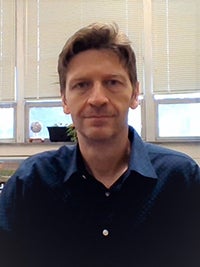
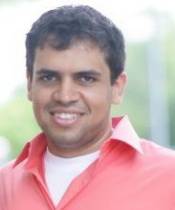
Kirsty Garbett is a Senior Research Fellow at the Centre for Appearance Research, University of the West of England (UWE Bristol). She specializes in applied body image research, focusing on developing and validating interventions to improve body confidence across diverse populations. Her work spans cross-cultural adaptations of body image programs in India, Indonesia, and Brazil, emphasizing scalability and digital delivery. Key areas: Body image interventions, social media impact, cosmetic procedures, psychosocial measurement tools Collaborations: Dove Self-Esteem Project, international academics, media experts Methods: RCTs, cross-cultural validation, systematic reviews Kirsty's recent research includes systematic reviews of cosmetic surgery outcomes, social media-based interventions for Indonesian women, and school programs for adolescents. She also investigates the validation of psychological tools like the Body Esteem Scale and ChEDE-Q across languages and cultures. Her publications highlight trends in digital interventions , cross-cultural adaptation , and psychosocial measurement , with a focus on low- and middle-income settings. While no scientific awards are listed, her work demonstrates rigorous methodological innovation in scaling evidence-based programs. Qualifications: DPhil in Health Psychology (UWE Bristol, 2022), MSc in Health Psychology (Nottingham, 2013), BSc in Psychology (Strathclyde, 2011).
Jan Bergström is Assistant Professor of Clinical Psychology at Stockholm University's Department of Psychology, where he serves as Director of Studies for the Postgraduate Psychotherapist Program and Head of the Stockholm University Psychology Clinic. His research focuses on self-help based CBT and digital psychological interventions, with particular emphasis on clinical behavior analysis, psychotherapy supervision, Behavioral Activation for depression, exposure-based interventions for anxiety/OCD, and Functional Analytic Psychotherapy (FAP). He also investigates metatheoretical aspects of psychotherapy and mental health treatment mechanisms. Research group: Clinical psychology, neuroscience and health Key clinical interests: Mental health problems in neurodiverse populations (autism, ADHD) His publications demonstrate extensive work on internet-delivered therapies for panic disorder, OCD, and depression, including comparisons of blended vs full treatment modalities. He has developed non-heteronormative psychometric instruments like the revised Social Interaction Anxiety Scale (SIAS). Current projects include ZeroOCD smartphone app development for OCD treatment and iMERAT emotion recognition training for adolescents. The academic literature shows his focus on treatment efficacy, therapist time optimization (47% reduction in blended models), and functional analytic approaches to mental health classification. His cross-disciplinary work combines psychological theory with technology-mediated solutions, bridging clinical practice, neuroscience, and digital health innovations.
Brandon K. Schultz, EdD, NCSP is an Associate Professor in the Department of Psychology at East Carolina University. His research focuses on adolescents with ADHD, developmental behavior disorders, and school-based interventions. He leads federally funded projects including a serious game for ADHD management (www.athemosthegame.org) and innovations to school mental health frameworks. Education: EdD in School Psychology from Indiana University of Pennsylvania; MEd in Educational Psychology and School Counseling from Indiana University of Pennsylvania and Frostburg State University; BA in Psychology from Salisbury State University. Research Interests: Schultz explores academic and social impairments in adolescents with ADHD, emphasizing school consultation and evidence-based interventions. His work integrates technology (e.g., serious games) and systemic frameworks to improve mental health service delivery in K-12 settings. Recent projects address teleconsultation acceptability among school psychologists and long-term treatment compliance outcomes. Grants: Projects funded by the US Department of Education include advancing school mental health systems and developing innovative ADHD interventions. No scientific awards explicitly listed, though his ongoing projects suggest strong recognition in developmental psychology and school-based care. Advising/Grants: Mentors graduate students in school psychology through funded research initiatives. Projects emphasize implementation science and translational research bridging academic theory with school practice. Labs/Teams: Leads interdisciplinary teams focused on school-based mental health innovations, including collaborations with the Interconnected Systems Framework initiative and serious game development for behavioral interventions.
Dr. Ludo Ausiello is a Senior Lecturer in Electronics at the University of Portsmouth, affiliated with the School of Electrical and Mechanical Engineering and the Faculty of Technology. His roles include membership in the Portsmouth AI and Data Science Centre and the Portsmouth Centre for Advanced Materials and Manufacturing. He holds a Fellowship of the Higher Education Academy and is a member of the Institute of Acoustics. Education: Integrated Master’s in Electronic Engineering (University of Bologna), European PhD in Audio Engineering, and PGCert in Higher Education (2019). Professional training includes Fonoprint Studios (Bologna) and industry experience at Maserati, Magneti Marelli, and Harman. Research interests focus on audio engineering, signal processing, electro-acoustics, and innovative manufacturing. Recent work includes developing affordable measurement ecosystems for musical acoustics, optimizing soundboard designs via least-squares analysis, and applying AI to room acoustics prediction. His studies span topics like wood elasticity, loudspeaker design, and vocal fatigue in educational spaces. Awards: Fellowship of the Higher Education Academy (2019). Teaching and advising: Taught analog and digital oscillator design at the University of Bologna and contributed to curriculum development at Solent University. Active in mentoring students through collaborative industry projects. Labs/Teams: Engaged with interdisciplinary teams at Portsmouth, focusing on advanced materials and AI-driven acoustic solutions.
Matthew Agarwala is an environmental economist specializing in water economics and natural capital accounting, currently affiliated with the Bennett Institute for Public Policy at the University of Cambridge. Previously, he served as a Senior Research Associate at the University of East Anglia's Centre for Social and Economic Research on the Global Environment (CSERGE) and completed his research studies at the London School of Economics' Grantham Research Institute. His educational background includes Summa Cum Laude honors in Economics and Political Science along with a Master's in Economic Policy from the University of Toronto, where he studied under Dr. Atif Kubursi. Agarwala's research focuses on the economic valuation of water resources, virtual water trade, gender-development-water nexus, green accounting frameworks, and transboundary water governance. He has pioneered methodological approaches for integrating ecosystem services into national accounting systems and policy decision-making processes. Analysis of his publication record reveals consistent emphasis on practical applications of environmental economics, particularly through UK National Ecosystem Assessment initiatives and innovative payment-for-ecosystem-services schemes. His work demonstrates evolving focus from theoretical valuation frameworks toward implementation challenges in policy contexts, with increasing attention to well-being metrics and climate-water interlinkages since 2015. Agarwala has secured research funding through collaborations with water utilities like South West Water, notably implementing the Cornwall Upstream Thinking Initiative - a groundbreaking auction-based payment scheme involving 150 farmers that reduced implementation timelines from years to months. His policy work directly informs UK government agencies including Defra and the Forestry Commission. He actively contributes to interdisciplinary research teams including the UK NEA Follow-On program (Work Package 3 on economic valuation) and the CSERGE consortium at UEA, frequently collaborating with leading scholars such as Giles Atkinson and Brett Day on natural capital accounting frameworks and ecosystem service valuation methodologies.
Sofia Santos is a Researcher at Iscte Business School , part of ISCTE - Lisbon University Institute. Her work focuses on urban mobility, sociospatial inequality, and cultural diversity. Research Interests: Urban mobility patterns and their sociodemographic determinants Transportation justice and equitable spatial planning Intersection of mobility, gender inequality, and environmental conditions Role of cultural diversity in metropolitan development Social capital dynamics in urbanizing regions Policy implementation challenges in fragmented governance systems Article Trends (2007–2020): Over 13 years, her research spans urban mobility (18/25 articles), sociospatial inequality (12/25), Lisbon metropolitan dynamics (10/25), and cultural diversity (6/25). Key methodologies include qualitative analysis, socioeconomic differentiation, and geospatial studies, with recent emphasis on policy consequences and transportation equity. Contact: Email execed@iscte-iul.pt for inquiries.
Dr. Erika Speelman is an Associate Professor at the Laboratory of Geo-information Science and Remote Sensing within Wageningen University. She holds MSc and PhD degrees from Wageningen University, specializing in tropical agronomy. Her research focuses on developing simulation and gaming tools to enhance stakeholder collaboration in addressing socio-ecological challenges, particularly in the Global South. She leads the INREF SESAM programme (2020-2025), supervising 15 PhD candidates and 2 PostDocs, and coordinates MSc courses in geo-information science and interdisciplinary research methods. Her work spans agroforestry, water governance, and participatory tools for sustainable landscape management. Dr. Speelman has extensive experience collaborating with NGOs, UN agencies, and academic institutions across Asia, Latin America, and Africa. Her research emphasizes boundary objects like serious games to bridge stakeholder perspectives in contested landscapes. Recent projects include exploring water management in Kenya’s Ewaso Ng’iro Basin and land use dynamics in Peru’s Amazon. She teaches courses on spatial modeling, remote sensing integration, and geo-information science in socio-ecological contexts. Her international collaborations reflect a commitment to global sustainability challenges, integrating technical tools with community-driven solutions. Dr. Speelman’s lab is part of the Environmental Sciences group at Wageningen, fostering interdisciplinary approaches to complex environmental problems. She advocates for inclusive landscape governance through participatory tools, aiming to enhance resilience among smallholder farmers and marginalized communities. Her work combines academic rigor with practical impact, addressing issues like climate change, biodiversity loss, and equitable resource distribution.
Marina Danckaerts is a Professor at the Faculty of Medicine at KU Leuven, affiliated with the Department of Neuroscience and active in the field of Developmental Psychiatry and ADHD research. Her research focuses on: Behavioral and emotional responses in ADHD Sleep disorders and interventions for adolescents with ADHD Attachment theory and instrumental learning in neurodevelopmental conditions Youth mental health service design Invisible disability representation in technology Post-trauma rehabilitation for refugee youth Recent publications highlight her work on: Sleep hygiene and cognitive-behavioral interventions for ADHD adolescents Behavioral persistence and reinforcement mechanisms in ADHD Comparative analysis of youth and professional perspectives on mental health services Game design applications for ADHD teenagers Impact of dopamine pathways on ADHD-attachment controversies She serves as: Co-promotor in 8 active research projects (2024-2030) Promotor for refugee family mental health research Member of KU Leuven Brain Institute (LBI) and Institute for Child and Youth (LC&Y) Participant in criminological sciences councils and psychology program committees Teaching contributions: Course coordinator for multiple child psychiatry modules (codes E0J45A, E0CR3A, etc.) Focus on evidence-based medicine, communication skills, and clinical practice in youth psychiatry
Cajsa Bartusch Kätting is a Senior Lecturer at Uppsala University's Department of Civil Engineering and Industrial Engineering within the Faculty of Science and Technology, and a Researcher at the Institute for Research on Conflicts of Goals in Sustainable Social Transition. As leader of the Uppsala Smart Energy Research Group (USER), she investigates electricity consumer and prosumer roles in smart grid development, focusing on demand response, decentralized generation, and sustainable energy transitions through industry-academic collaborations with partners including Ellevio and STUNS Energi. Her research centers on demand flexibility and consumer behavior in energy systems, examining how dynamic pricing, feedback mechanisms, and IT services influence residential and commercial electricity consumption. She integrates social psychology with engineering to design interventions for sustainable energy use, particularly studying gender differences in tariff understanding, prosumer integration challenges, and the impact of occupancy patterns on consumption. Analysis of her 15 most recent publications reveals increasing focus on behavioral aspects of smart grids, with empirical studies on dual-price signal confusion, microgrid optimization, and pandemic-driven consumption shifts. Her work consistently addresses the human dimension of energy transitions, moving beyond technical solutions to examine cognitive processes and social barriers in demand response adoption. Bartusch has secured significant funding from the Swedish Energy Agency and Familjen Kamprads stiftelse for projects like Användarnas roll i implementeringen av smarta elnät (2019-2024) and Holistiska affärsmodeller för prosumenter (2015-2018), often collaborating with municipalities and energy companies to translate research into practical solutions for grid congestion and renewable integration. She leads the USER research group which conducts applied interdisciplinary work combining engineering, psychology, and social sciences. The group's projects with partners like Uppsala Municipality and KTH focus on real-world implementation of demand response programs, prosumer business models, and microgrid optimization in multi-dwelling buildings, directly addressing Sweden's energy transition challenges.
Lawrence Jin is an Assistant Professor of Economics at the Lee Kuan Yew School of Public Policy, National University of Singapore (NUS). He holds a PhD in Economics and a BA in Mathematics & Economics from Cornell University. His research focuses on behavioral economics, health economics, environmental economics, and cost-benefit analysis, with an emphasis on applying econometric and experimental methods to inform public policy. His academic work spans topics such as physician decision-making, consumer behavior under misinformation, and the economic impacts of health policies. He has published in leading journals like Nature Human Behaviour , Review of Economic Studies , and American Economic Review . Courses taught include PP5203 - Behavioral Economics and Public Policy . Lawrence’s research explores how behavioral insights can address societal challenges, such as vaccine hesitancy, smoking cessation, and infrastructure resilience. His recent studies investigate replicability in social science experiments and the role of decision markets in selecting research priorities. He maintains an active research profile with collaborations in interdisciplinary fields, including health economics and environmental policy. His work bridges theoretical frameworks with real-world policy applications, aiming to enhance decision-making in public health and economic development.
Petros Rakitzis is a Professor in the Department of Physics at the University of Crete and affiliated with the Foundation for Research and Technology - Hellas (FORTH) at the Institute of Electronic Structure and Laser (IESL). He received his B.A. in Physics and Chemistry from Cornell University (1992) and his Ph.D. in Physics from Stanford University (1997), focusing on atomic and molecular angular momentum in chemical reactions. Since 2001, he has progressed from Lecturer to Professor, securing the prestigious ERC Starting Grant in 2008. His research spans quantum angular momentum, spin polarization, photodissociation dynamics, and cavity-enhanced spectroscopy. Education: B.A. in Physics and Chemistry, Cornell University (1992); Ph.D. in Physics, Stanford University (1997) Rakitzis's work explores spin manipulation in particle beams, polarization phenomena in spectroscopy, and chirality sensing using parity-time-symmetric systems. His research has applications in nuclear fusion, laser-plasma acceleration, and quantum metrology. He leads the PREFER collaboration, focusing on polarization research for fusion experiments and reactors, and has developed techniques like signal-reversing cavity ring-down polarimetry for precision measurements. His recent publications highlight trends in spin-polarized hydrogen production, cavity-based chiral sensing, and parity nonconservation studies. These works intersect atomic physics, quantum optics, and nuclear fusion, with methodologies involving laser excitation, relativistic plasmas, and advanced spectroscopic techniques. Scientific Awards: ERC Starting Grant (2008) Rakitzis has contributed to experimental techniques and theoretical frameworks in spin polarization and photodissociation, securing grants and advancing polarized beam applications. His research impacts fusion energy, quantum sensing, and fundamental symmetry studies.
Gideon Nave is the Carlos and Rosa de la Cruz Associate Professor of Marketing at The Wharton School, University of Pennsylvania. He holds a prominent position within the Department of Marketing and contributes significantly to the school's research and teaching missions in consumer behavior, marketing analytics, and decision sciences. His academic journey began with B.Sc and M.Sc degrees in Electrical Engineering from the Technion – Israel Institute of Technology, specializing in Signal Processing. He then pursued and earned his PhD in Computation & Neural Systems from the California Institute of Technology (Caltech), establishing the interdisciplinary foundation for his current research program. Nave's research focuses on how technological developments in measurement instruments have granted unprecedented access to individual-level data. His work spans several interconnected domains: Consumer neuroscience and neuroeconomics Applications of genetic data in marketing AI's impact on creativity and consumer research Ethical implications of new data collection technologies Decision-making processes across various contexts He investigates how digital footprints of online behavior, MRI, genotyping, and hormonal assays can help understand consumer preferences and behavior, while critically evaluating the ethical challenges these technologies present. His publication record demonstrates a clear trajectory toward understanding the intersection of emerging technologies and consumer behavior. Recent work particularly emphasizes AI applications in marketing research, genetic data utilization for personalization, and neuroscientific approaches to understanding decision-making processes. His methodological approach often combines large-scale datasets with rigorous experimental designs, contributing significantly to both theoretical advancement and practical applications in marketing. Nave's contributions to the field have been recognized with several prestigious awards: National Science Foundation Faculty Early Career Development (CAREER) Award (2020-2025) Association For Consumer Research (ACR) Early Career Award (2024-2025) APS Rising Star Award (2020) Poets & Quants Selection as one of the "World's Best 40 B-School Professors under the Age of 40" (2021) As a recipient of the NSF CAREER Award, Nave leads significant research initiatives examining the applications and ethical implications of new measurement technologies in marketing and consumer behavior. His work has attracted considerable media attention, with features in major outlets including The New York Times, The Guardian, CNN, and The Economist, reflecting the broad relevance and impact of his research. While specific lab names aren't prominently featured in his public profile, Nave's research appears to involve extensive interdisciplinary collaborations spanning neuroscience, genetics, computer science, and marketing. His publications frequently include co-authors from diverse disciplinary backgrounds, suggesting a team-based research approach that bridges traditional academic boundaries.
Ajitha Rajan is a Professor (Personal Chair of Software Testing and Verification) at the School of Informatics, University of Edinburgh. Previously, she was a post-doctoral researcher at Oxford University's Computer Science Department and Laboratoire d'Informatique de Grenoble (LIG) in France. She earned her PhD in Computer Science from the University of Minnesota in August 2009 under the supervision of Prof. Mats Heimdahl. Her research spans two main directions: Automated Software Testing Techniques covering test input generation, test oracles, and coverage metrics; and Biomedical Artificial Intelligence focusing on cancer survival models, interpretability for biological sequences, and medical images. Her work bridges software engineering and biomedical applications, particularly in the development of trustworthy AI systems for healthcare. Professor Rajan leads several significant research projects including a Royal Society Industry Fellowship (2022-2025) on AutoTest for autonomous vehicle perception safety, the H2020 European Project KATY (2021-2025) on AI for genomics and personalized medicine where she serves as Edinburgh Lead PI, and an EPSRC Trustworthy Autonomous Systems Node project (2020-2024). Her recent publications demonstrate strong activity across software testing, explainable AI, and biomedical applications, with numerous papers accepted to top conferences in 2025 including ML for Healthcare, IJCAI, and ESEM. Among her scientific recognitions, she received the Best Reviewer Award at ISSTA'25. Her work has been consistently published in leading venues including ICSE, ICASSP, and Communications Biology. Professor Rajan actively mentors PhD students working on diverse topics from automated testing of speech recognition systems to explainable AI for medical image analysis and cancer immunotherapy. She teaches undergraduate courses in Software Testing, Computer Programming, and Embedded Systems, and has been instrumental in establishing several fully funded PhD positions through Centres for Doctoral Training at the University of Edinburgh.
Debabrota Basu is a tenured faculty member (Inria Starting Faculty Position - ISFP) at the Scool team (previously called SequeL) of Inria Centre at University of Lille in France. He teaches postgraduate-level courses on privacy, responsible machine learning, and research methods in AI at École normale supérieure-PSL University, Université de Lille, and Centrale Lille. He is also a member of the ELLIS Society (European Laboratory for Learning and Intelligent Systems) and the Paris unit of ELLIS. Dr. Basu earned his PhD in Computer Science from the Department of Computer Science, School of Computing, National University of Singapore, advised by Stéphane Bressan and Pierre Senellart. Prior to that, he obtained a B.E. degree with Honours in Electronics and Telecommunication Engineering from Jadavpur University. Before joining Inria, he was a postdoctoral researcher at Chalmers University of Technology's Data Science and AI Division. Dr. Basu's research focuses on constructing algorithms for developing efficient, robust, private, and ethical learning machines that solve real-world problems. His methodological approach blends statistics, machine learning, and optimization. His application interests span sustainable agro-ecology, medical and pharmaceutical applications, energy-efficient autonomous systems, and algorithmic audits. Recent collaborations include the Inria-Indian Statistical Institute associate team SeRAI for developing Sequential Testing and Learning Algorithms for Verifiably Robust and Responsible AI, and the Inria-INRAE collaboration on Resilient Agricultural Decision Making under Environmental Risks. His publication record demonstrates expertise in bandit algorithms, reinforcement learning, and privacy-preserving machine learning. Recent work shows a strong theoretical foundation with practical applications, particularly in pure exploration bandits, differential privacy mechanisms, constrained optimization, and fairness verification. His research bridges the gap between theoretical guarantees and real-world deployment challenges across multiple domains. Dr. Basu has received notable recognition for his contributions: Best Student Paper Award at ACM EAAMO 2022 for 'On Meritocracy in Optimal Set Selection' Young researcher (JCJC) grant from the French National Research Agency (ANR) in 2022 in 'Artificial Intelligence and Data Science' He leads the project 'RL under Real-life Constraints: Regrets and Algorithms' and supervises PhD students and postdoctoral researchers. His research is supported by multiple projects including REPUBLIC ('Vers l'IA responsable avec l'apprentissage par renforcement sous contraintes') and 'Foundations of robustness and reliability in artificial intelligence.' Dr. Basu actively collaborates with institutions worldwide, including establishing the RELIANT associate team with Kyoto University for investigating structured multi-armed bandit problems.
Jane Hall is a Distinguished Professor of Health Economics at the Centre for Health Economics Research and Evaluation (CHERE) within the Faculty of Health at the University of Technology Sydney (UTS). She is a Fellow of the Academy of Social Sciences in Australia and a Fellow of the Australian Academy of Health and Medical Sciences. Professor Hall serves on the Independent Health and Aged Care Pricing Authority and has been instrumental in shaping health economics research and policy in Australia through her extensive national and international committee work. Professor Hall earned her PhD from the University of Sydney in 1994. She was the founding Director of CHERE, established in 1990, and led the center until 2012. Her leadership has significantly contributed to the development of health economics as a discipline in Australia, building institutional capacity and professional networks that continue to influence health policy development. Professor Hall's research program spans multiple dimensions of health economics, with a current focus on healthcare financing and funding mechanisms to improve system performance. Her work examines health technology assessment, measurement of quality of life, end-of-life care economics, health workforce issues, and primary care economics. Recent publications reveal a strong emphasis on out-of-pocket costs, Medicare sustainability, geographic disparities in healthcare access, and value-based payment reform. Her methodological approaches include sophisticated econometric analyses, discrete choice experiments, and health services research designs that bridge theoretical economics with practical policy applications. Her scholarly contributions demonstrate consistent thematic development across healthcare financing models, with particular attention to equity implications and system performance metrics. The articles show progression from foundational work on health technology assessment to current research addressing complex challenges in healthcare financing amid rising costs and demographic pressures. Officer in the Order of Australia (AO) 2023 Fellow of the Academy of Social Sciences in Australia Fellow of the Australian Academy of Health and Medical Sciences UTS Distinguished Service Award 2019 National Health and Medical Research Council Outstanding Contribution Award 2017 Australian Financial Review/Westpac 100 Women of Influence 2016 Inaugural Professional Award of the Health Services Research Association of Australia and New Zealand 2011 Professor Hall has been actively engaged in professional leadership throughout her career, serving as Past President of the Academy of Social Sciences in Australia, the Health Services Research Association of Australia and New Zealand, and the International Health Economics Association. Her work has attracted significant research funding through collaborations with government bodies seeking evidence to inform health policy decisions. She maintains an extensive international network through her long-term involvement with the Commonwealth Fund International Program in Health Policy and Practice. As founder and former Director of CHERE, Professor Hall established a vibrant research center that brings together interdisciplinary teams working collaboratively with policymakers, healthcare providers, and other stakeholders. The center continues to conduct high-impact research addressing complex challenges in healthcare financing and delivery, building on the foundation she established over three decades ago.