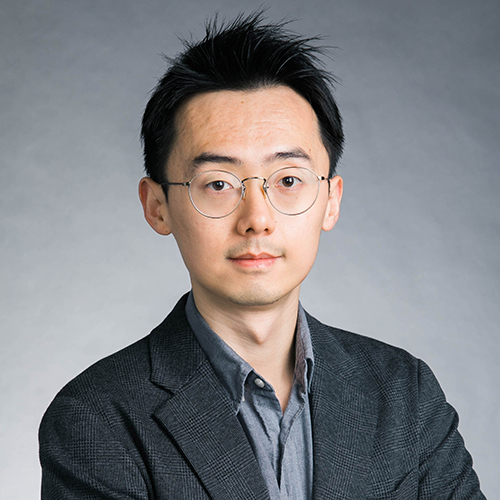
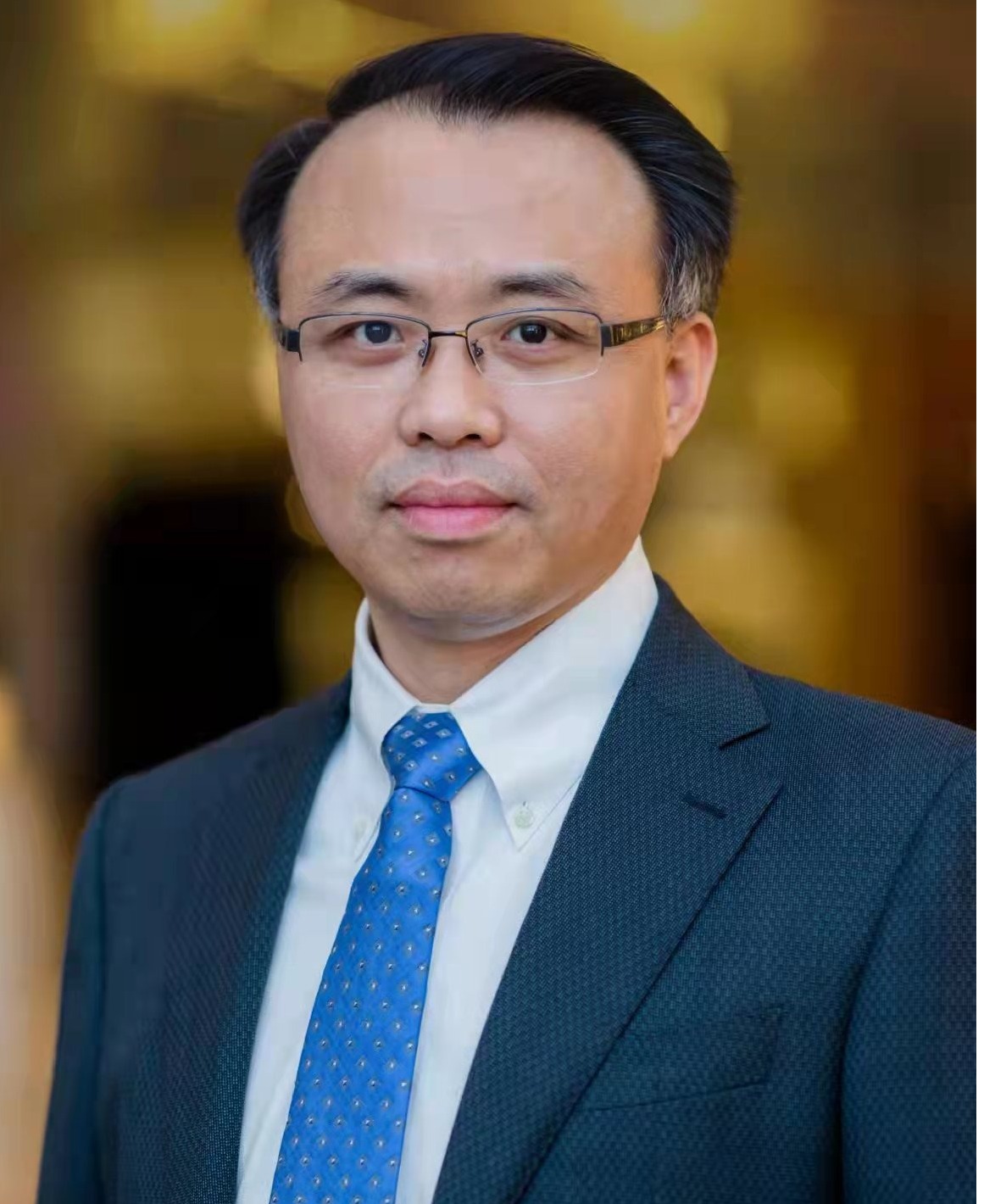
Gökhan Alcan is an Assistant Professor in Robotics and Machine Learning at the Automation Technology and Mechanical Engineering Unit of Tampere University, Finland. He leads the Advanced Learning, Control and AutomatioN (ALCAN) Research Group, focusing on safe model predictive control, constrained optimal control theory, reinforcement learning, and their applications to dynamical systems. His research addresses challenges in robotic manipulation, safe navigation, and human-robot collaboration through projects like the Aurora initiative on automated and connected machines. Education: B.Sc., M.Sc., and Ph.D. in Mechatronics Engineering from Sabanci University (2008–2019). Postdoctoral research at Sabanci University (2019) and Aalto University (2020–2024). Research Interests: Robotics, control theory, system identification, autonomous systems, and machine learning applied to robotic manipulation, autonomous vehicles, and safety-critical systems. Notable work includes trajectory optimization for hybrid systems, magnetic manipulation for medical applications, and sim-to-real gap analysis in cloth manipulation. Awards: Third Place in Aalto Open Science Award 2023, Elginkan Foundation Technology Award (2016), and multiple scholarships. Advised Ph.D. student David Blanco Mulero, who defended his thesis on robotic manipulation of deformable objects. Labs/Teams: ALCAN Research Group, former roles in Aalto University's Intelligent Robotics Group and Sabanci University's Control, Vision, and Robotics (CVR) Group.
Antonio Pierro is a Full Professor of Social Psychology at the Department of Psychology of Developmental and Socialization Processes, Sapienza University of Rome. He holds a Ph.D. in Psychology from Sapienza and has held post-doctoral positions there, including a grant from the Istituto Superiore di Sanità. His academic roles include coordinating the Social Psychology Ph.D. Programme and serving as a reviewer for top journals like Psychological Science and Journal of Personality and Social Psychology . Education: Bachelor's Degree in Psychology, Sapienza University of Rome Ph.D. in Social and Developmental Psychology, Sapienza University of Rome Postdoctoral Researcher at Sapienza Research Interests: Pierro’s work focuses on the interface between motivation and cognition, including: Power dynamics and leadership styles Persuasion and communication strategies Group processes and self-regulation Epistemic motivations (e.g., need for cognitive closure) Political psychology and extremism Cultural tightness-looseness and its societal implications Recent Projects: Ecological threats and their impact on cultural attitudes Role of cognitive closure in prejudice and leadership preferences Psychology of extremism and motivational imbalance Teaching: Currently teaches courses on Extremism Psychology and Persuasion & Interpersonal Influence at Sapienza. Courses are offered in Italian and English, with materials available via Google Classroom. Awards & Grants: Over 300 publications in international journals, though no specific awards are listed. Active in securing grants and maintaining collaborative research networks. Labs/Teams: Leads research projects on cultural tightness, pandemic psychology, and motivational dynamics within the Department of Psychology at Sapienza.
Jeffrey A. Lee is a Professor in the Department of Geosciences at Texas Tech University, specializing in aeolian geomorphology and environmental processes. With academic appointments since 1988, his work focuses on wind-driven sediment transport and dune dynamics across multiple continents. Education: B.A. in Geography (1979), University of California, Los Angeles M.A. in Geography (1984), University of California, Los Angeles Ph.D. in Geography (1990), Arizona State University Research interests center on aeolian processes, particularly dust emission dynamics and wind erosion patterns. His work examines temporal trends in blowing dust across Texas and the American Southwest, while also investigating long-term shifts in wind climate patterns. Professor Lee teaches foundational physical geography courses including Global Environmental Science and advanced topics in arid land geomorphology. Recent publications demonstrate interdisciplinary focus across aeolian geomorphology, environmental monitoring, and climate science. Key themes include dust source characterization using satellite data, drought legacy effects on erosion, and historical analysis of environmental disasters like the Dust Bowl. Contact: jeff.lee@ttu.edu | 213 Holden Hall, Texas Tech University | (806) 834-8228
Professor Xiaodong Liu is a faculty member at Edinburgh Napier University, affiliated with the School of Computing, Engineering and the Built Environment . His research spans Internet of Things , Edge Computing , Artificial Intelligence , and Cybersecurity , with a focus on decentralized systems and data-driven decision-making. Research Themes : IoT orchestration, federated learning, smart city infrastructure, building maintenance optimization, and automotive cybersecurity. Current Projects : Leading Swarmchestrate (EU-funded), Long-range Perceptive Autonomous Vehicles (Royal Society), and Met-Bot for Disaster Surveillance (Royal Society). His recent publications emphasize privacy-preserving edge learning , semantic IoT data validation , and deep learning for weather prediction . As a supervisor, he has guided PhD students in areas like federated learning, smart building systems, and IoT security. Collaborations include partnerships with institutions in Scotland, China, and Italy, alongside funding from European Commission , Royal Society , and Scottish Funding Council . He contributes to international conferences and journals, with notable work in IEEE Transactions , ACM TAAS , and MDPI publications.
John O'Doherty is the Fletcher Jones Professor of Decision Neuroscience at the California Institute of Technology (Caltech). He holds a B.A. from Trinity College Dublin (1996) and a D.Phil. from the University of Oxford (2000). His academic trajectory includes roles as Assistant Professor (2004–2007), Associate Professor (2007–2009), and Professor (2009–present), culminating in his current endowed chair since 2021. From 2013–2017, he served as Director of the Caltech Brain Imaging Center. Research Focus: O'Doherty’s work investigates how the brain processes decisions under uncertainty, encodes reward values, and learns from experience. His group studies neural systems involved in decision-making, including arbitration between model-based and model-free learning strategies, the role of prefrontal and striatal circuits in value representation, and social learning mechanisms. They utilize computational modeling combined with neuroimaging (fMRI) and electrophysiological techniques. Key Contributions: His research bridges cognitive neuroscience and psychiatry, addressing topics like gambling disorder, autism spectrum traits, anorexia nervosa, and obsessive-compulsive behaviors. He has pioneered studies on the neural substrates of reward prediction errors, hierarchical decision-making, and the interplay between habitual and goal-directed actions. Affiliations: Caltech Brain Imaging Center (Former Director) Leading international collaborations in neuroeconomics and computational psychiatry Grants & Funding: Extensive support from NIH, NSF, and private foundations for projects on decision neuroscience and translational mental health research.
Jyoti Sinha is a Professor of Condition Monitoring and Plant Maintenance in the Mechanical and Aerospace Engineering department. He has extensive experience in vibration analysis, structural dynamics, and plant reliability. His research focuses on experimental and analytical techniques for fault diagnosis, rotating machinery health monitoring, and maintenance optimization. He has authored over 300 technical papers and serves as Editor-in-Chief of Maintenance, Reliability and Condition Monitoring (MARC) . Education: Ph.D. (Rotor Dynamics), University of Wales Swansea (2002) M.Tech. (Aerospace Engineering), IIT Bombay (1998) B.Sc. (Mechanical Engineering), Ranchi University (1988) Research Interests: Vibration-based condition monitoring Rotors and bearings fault detection Finite element modeling and model updating Asset management and Industry 4.0 integration Structural health monitoring Awards: Boyscast Fellowship (1999) Excellence awards for supervision (2012, 2014) 3rd Best Paper Award (2024) Advising & Grants: Supervising 10 PhD and 2 DProf students Completed 17 PhD and 325+ PG projects Secured £3M+ in research grants Labs & Teams: Head of Dynamics Laboratory Chair of International Conference on Maintenance Engineering (IncoME)
Avi Goldfarb is Professor of Marketing at the Joseph L. Rotman School of Management, University of Toronto, where he holds the Rotman Chair in Artificial Intelligence and Healthcare. He serves as Chief Data Scientist at the Creative Destruction Lab and Research Associate at the National Bureau of Economic Research (NBER). His academic career spans 2002-2012 as Assistant and Associate Professor, becoming Professor of Marketing in 2012. Rotman Chair in Artificial Intelligence and Healthcare (2018-present) Professor of Marketing (2012-present) Research Associate, NBER (2014-present) Chief Data Scientist, Creative Destruction Lab (2015-present) Research Interests : Specializing in digital economics and the economics of artificial intelligence, his work bridges technology, marketing, and public policy. Key focus areas include: Digital economics and platform behavior AI adoption in healthcare systems Quantum computing economic implications Privacy regulation and data markets AI's impact on labor and inequality General purpose technology frameworks Publication Trends : His recent work spans AI implementation strategies across industries, digital behavior economics, and emerging technology commercialization. Key subfields include AI adoption patterns, digital privacy frameworks, quantum computing applications, and workplace health safety analytics. Scientific Recognition : INFORMS Society of Marketing Science Long Term Impact Award (2018) Roger Martin Award for Excellence in Teaching (2017) Leadership Roles : Former Senior Editor at Marketing Science (2016-2021), with editorial board memberships at Management Science, Journal of Marketing Research, and Journal of Economics and Management Strategy. He contributes to the Acceleration Consortium and Schwartz Reisman Institute for Technology and Society.
Shixiang (Woody) Zhu is an Assistant Professor in Data Analytics at the Heinz College of Information Systems and Public Policy, Carnegie Mellon University. He holds a PhD in Machine Learning from Georgia Institute of Technology (2022) and B.S./M.S. in Computer Science from Beijing University of Posts and Telecommunications (2017). His research bridges machine learning, operations research, and statistics, focusing on sequential modeling, human-AI collaboration, and energy systems operations. He has received awards including the IEEE Power & Energy Society Best Paper Award (2025) and was a finalist for the INFORMS Wagner Prize (2021). Education : PhD in Machine Learning, Georgia Tech (2017–2022) B.S./M.S. in Computer Science, BUPT (2010–2017) His research emphasizes spatio-temporal data analysis , decision making under uncertainty , and applications to energy systems, healthcare, and public policy. Notable projects include optimizing police zone design (Wagner Prize finalist) and enhancing grid resilience through robust optimization. He actively collaborates with institutions like Argonne National Laboratory and NSF-funded projects. Awards : Best Paper Award, IEEE Power & Energy Society (2025) Gen-AI Fellows (2024) Finalist, INFORMS Wagner Prize (2021) Advising & Grants : Advises PhD students Zekai Fan, Wenbin Zhou, and others Recipient of Block Center Seed Grant (2024), NSF funding (2024) His work spans energy resilience, public policy optimization, and causal inference in social systems. He co-leads the INFORMS Data Mining Society and reviews for top journals like Operations Research and Management Science.
Rocio Lilen Segura is an Assistant Professor in the Department of Civil, Environmental and Sustainable Engineering at Santa Clara University's School of Engineering. She holds a Ph.D. in Civil Engineering from Sherbrooke University (2019) and a B.Sc. in Civil Engineering from Del Comahue National University (2013). Dr. Segura specializes in infrastructure resilience against extreme events and climate change, focusing on probabilistic risk assessment of critical infrastructure systems like dams and levees. Her work bridges civil engineering with machine learning and climate justice, integrating built, natural, and social systems to address environmental challenges. 2023 Severo Ochoa Mobility Programme grant 2019-2022 MITACS Accelerate industrial postdoc scholarship 2019 Léonard de Vinci medal and Scholarship Her research spans seismic risk reduction, surrogate modeling, and uncertainty quantification in dam engineering, with over 10 publications in journals like Advances in Civil Engineering and Water Journal. She previously collaborated with Hydro-Quebec during her postdoctoral research.
Rianne Conijn is an assistant professor in the Human-Technology Interaction group at Eindhoven University of Technology (TU/e), Netherlands. Her research bridges data-driven methodologies (machine learning, statistical modeling) with human-centered design to enhance learning analytics, explainable AI, and writing process analysis. She holds a joint PhD (cum laude) from Antwerp University and Tilburg University, and an MSc (cum laude) in Human-Technology Interaction from TU/e. Academic Background: MSc (2015, TU/e, cum laude), PhD (2020, Antwerp University & Tilburg University, cum laude). Research Focus: Learning analytics, keystroke logging, explainable AI for education, data dashboards, and self-regulated learning dynamics. Teaching: Courses in Advanced Research Methods, Human-AI Interaction, Behavioral Research Methods, and AI ethics in education. Her recent publications explore parallel language planning in writing, longitudinal self-regulated learning strategies, and generalizability of academic performance prediction models. She leads an NWO Veni project on Human-Centered AI in education, emphasizing tailored explanations for student-AI collaboration. Scientific awards include cum laude distinctions for her MSc and PhD, and the NWO Veni grant. Collaborative work spans institutions in the Netherlands, Norway, and the U.S., with applications in intelligent tutoring systems and ethical AI deployment in exams. Key trends across her work: integration of machine learning with educational theory, leveraging keystroke data for cognitive process insights, and prioritizing actionable, explainable AI systems for student support. Publications span journals like the Journal of Experimental Psychology: General , Computers and Education , and IEEE Transactions on Learning Technologies . Scientific Awards: NWO Veni grant for Human-Centered AI in education Cum laude for MSc and PhD Grants & Collaborations: National Science Foundation grants (2016868, 2302644) for biometric feedback in writing UK Research and Innovation grant (ES/W011832/1) for real-time AI scaffolding TU/e Boost! Program grant for self-regulated learning analysis Labs & Teams: EAISI Foundational (Eindhoven AI Systems Institute) Human Technology Interaction group at TU/e Collaboration with Norwegian Reading National Center (University of Stavanger) Project teams for Waterproof ITS and ProWrite grants
Professor Tomasz Kapitaniak is a distinguished academic in the field of nonlinear dynamics and theoretical mechanics. He serves as a Professor of Theoretical and Applied Mechanics and Head of the Division of Dynamics at the Faculty of Mechanical Engineering, Technical University of Lodz, Poland. His career spans over three decades at the university, where he has made significant contributions to the understanding of nonlinear systems, chaos theory, and mechanical oscillations. Professor Kapitaniak holds advanced degrees in both mechanics and applied mathematics from the Technical University of Lodz and the University of Lodz. His educational background includes: M.Sc. in mechanics, Faculty of Mechanical Engineering, Technical University of Lodz (1982) M.Sc. in applied mathematics, Faculty of Mathematics, Physics and Chemistry, University of Lodz (1985) Ph.D. in mechanics, Faculty of Mechanical Engineering, Technical University of Lodz (1985) D.Sc. in mechanics, Faculty of Mechanical Engineering, Technical University of Lodz (1988) Professor of technical science, title given by the President of Poland (1995) His research focuses on nonlinear dynamics, with particular emphasis on mechanical oscillations, stability, bifurcations and chaos, stochastic dynamics, and applications of nonlinear dynamics in mechanical engineering. Professor Kapitaniak is renowned for his work on the development of methods for controlling chaos without feedback, identification of new types of bifurcations, synchronization mechanisms in coupled mechanical oscillators, and explaining the origin of randomness in mechanical systems. His research has evolved from fundamental theoretical work to increasingly applied studies involving complex networks, biological systems, and engineering applications. Professor Kapitaniak has published over 300 scientific papers in renowned journals, cited over 8,000 times. His work exhibits a consistent focus on understanding complex nonlinear phenomena across various physical systems. The trend in his recent publications shows continued exploration of synchronization phenomena, extreme events in dynamical systems, and applications of nonlinear dynamics to biological, mechanical, and physical systems. His most recent work demonstrates a growing interest in multistability, chimera states, and the prediction of tipping phenomena in complex systems. Among his notable scientific achievements and distinctions are: Election as a member of the Polish Academy of Sciences (corresponding member in 2013, ordinary member in 2019) Election to Academia Europaea in 2021 Honorary doctorates from Saratov State University (Russia, 2001) and Lublin University of Technology (Poland, 2014) Multiple prestigious fellowships including the British Council Fellowship (1989), King Abdul Aziz Award Fellowship (1990), and Fulbright Fellowship (1997) Editorial roles including Associate editor of Chaos, Solitons and Fractals since 1990 and member of editorial boards of several other prestigious journals Throughout his career, Professor Kapitaniak has been actively involved in mentoring the next generation of researchers, having supervised numerous PhD students including Jerzy Wojewoda, Anton van Wyk, Barbara Błażejczyk-Okolewska, Andrzej Stefański, Andrzej Kozłowski, and Przemysław Szumiński. He has secured significant research funding from various national and international sources including the Ministry of Science and Higher Education (Poland), Deutscher Akademischer Austauschdienst, The Royal Society of London, and others. His research team has maintained strong international collaborations with institutions worldwide, including universities in the United States, United Kingdom, Germany, Brazil, Russia, and Ukraine. He leads the Division of Dynamics at the Technical University of Lodz, which serves as a hub for research in nonlinear dynamics, mechanical oscillations, and related fields. The division maintains strong international collaborations with institutions worldwide and continues to produce cutting-edge research in the field of nonlinear dynamics and its applications.
Zhu Yan serves as Professor at Tsinghua University's School of Economics and Management, Department of Management Science and Engineering. He concurrently holds leadership positions as Dean of Tsinghua's Internet Industry Research Institute, Director of the Advanced Information Technology Business Application Laboratory, and Executive Deputy Director of the Medical Management Research Center. Education: Postdoctoral Fellow (1998-2000) and Ph.D. in Nuclear Energy Technology (1994-1998) at Tsinghua University, Bachelor's in Engineering Physics (1989-1994) Professional Experience: Professor (2010-present), Associate Professor (2002-2010), Lecturer (2000-2002); Visiting Scholar at MIT Sloan, CUHK, and Lancelot Institute Professor Zhu's research spans digital transformation , industrial blockchain , and digital production relations , with emphasis on practical applications in healthcare, construction, and finance. His work bridges theoretical frameworks with industry implementation, particularly in China's digital economy evolution. Current projects focus on industrial internet integration and digital finance systems. His 15 most recent publications demonstrate strong interdisciplinary focus, connecting information systems with healthcare analytics (40%), industrial digitalization (35%), and economic policy (25%). The research shows increasing emphasis on AI-driven diagnostic systems and pandemic-responsive economic strategies since 2020. Beijing Philosophy and Social Sciences Excellent Achievement Award (2020) China Petroleum and Chemical Automation Association Science and Technology Progress Award (2010) Multiple Beijing Science and Technology Progress Awards (2001, 2005) Tsinghua University Outstanding Teaching Award (1999) As academic advisor to national initiatives, Professor Zhu leads the China Technology Economics Society's Blockchain Division and serves as Chief Academic Officer for Chengdu University of Information Technology's Blockchain Industry College. His industry partnerships include SAP Global HR Advisory role since 2000 and CCTV Financial Commentary position since 2015. Current research funding focuses on digital infrastructure development through the Industrial Digital Finance Technology Application Laboratory. He directs the Advanced Information Technology Business Application Laboratory, which develops enterprise digital transformation frameworks, and co-leads the Medical Management Research Center's AI diagnostic initiatives. Current projects include national blockchain infrastructure development and pandemic-resilient supply chain systems.
Associate Professor Murali Agastya is a faculty member in the School of Economics , Faculty of Arts and Social Sciences , University of Sydney . His research and teaching focus on game theory, auction theory, mechanism design, and microeconomic theory, with a special emphasis on learning in games and market microstructure. He obtained his PhD in Economics from the University of Chicago in 1993. Before joining the University of Sydney, he served as a lecturer at University College London and as a Research Fellow at the Center for Economic Learning and Social Evolution . He has also held postdoctoral and visiting appointments at the Hebrew University of Jerusalem , University of Tokyo , University of Western Ontario , and Ben Gurion University . Research Interests Game Theory and Bargaining Theory Auction and Mechanism Design Learning in Games Market Microstructure Information Economics Decision Theory under Uncertainty Grants & Funding 2007 : "Choice and Classification in either complex or adversarial environments" – Australian Research Council Discovery Project 2006 : "A game theoretic approach to classification in adversarial environments" – University of Sydney Bridging Support 2005 : University of Sydney Near Miss Scheme – CHASS Bridging Support 2001 : "Strategic Thought and Prediction in Strategic Environments" – Australian Research Council Discovery Project Teaching & Supervision He offers PhD and master's project supervision in finance and microeconomic theory, with particular strengths in game theory and mechanism design. He teaches courses in game theory, finance, and microeconomics at both undergraduate and postgraduate levels.
Prof. Dr. Julia Rieck is a Full Professor of Business Administration at the University of Hildesheim , leading the Department of Business Administration and Operations Research within the Faculty of Mathematics, Natural Sciences, Economics and Computer Science. As Dean of the Faculty , she oversees academic programs, quality management, and research initiatives. Her roles include academic advising for the Business Information Systems (B.Sc./M.Sc.) programs and active participation in examination boards and quality committees. Education: PhD in Political Science (Dr. rer. pol.) with summa cum laude (2008), Habilitation at Clausthal University of Technology (2014), and studies in Business Mathematics (Diploma, University of Hamburg, 2003) and Mathematics (Georg-August-University Göttingen, 2000). Research: Focuses on Operations Research , Supply Chain Management , Project Planning , and Logistics . Her work integrates mathematical modeling , machine learning , and real-world applications , particularly in disaster response , dynamic transportation , and sustainable e-commerce . Projects: Leads third-party funded initiatives like "IT für die sorgende Gesellschaft" (AI in healthcare/social sectors) and contributes to the HULLS real-lab (AI in aging societies). Collaborates with regional companies (e.g., Youco, ADITUS) and institutions (HAWK, University of Hannover). Teaching: Emphasizes practical application through case studies, industry partnerships, and the IT-Speed Dating event for student-company connections. Her courses cover project resource planning , logistics , and digital transformation . Labs & Teams: Active in the Institute of Business Administration & Business Information Systems , contributing to the KET Kompetenzwerkstatt (entrepreneurship support) and interdisciplinary teams in AI and sustainability research.
Leif Sörensen is a researcher at the University of Hildesheim , affiliated with the Institute of Business Administration and Business Informatics within the Faculty of Mathematics, Natural Sciences, Economics and Computer Science . His work focuses on operations research and digital transformation in public transport systems, particularly examining flexible transport models, agent-based simulations, and geoinformation system integration. Core Affiliations Researcher (since 2023) - HAWK Hochschule für Angewandte Wissenschaft und Kunst, Holzminden Doctoral Researcher - Institute of Business Administration and Business Informatics, University of Hildesheim Former Student Assistant - TU Dresden and Max Planck Institute for Self-Organization Research Focus: Sörensen's research bridges transport policy , agent-based modeling , and data analytics . He investigates how digital transformation can enhance rural mobility through flexible public transport systems , with emphasis on contractual incentives for drivers and stochastic behavior prediction . His work spans both developed and developing economies , particularly analyzing informal transit systems in South Africa. Publication Trends: Recent articles demonstrate a strong focus on operations research in transport contexts, with 7/9 publications involving agent-based simulations and DRT (Demand-Responsive Transport) . Keywords cluster around urban mobility , digital transformation , and transport resilience , while sub-fields reveal expertise in dynamic routing algorithms , passenger acceptance metrics , and GIS-integrated transport planning . Key Projects Co-author on European Commission-funded transport safety modeling Participant in Smart Hybrid research initiative (44 co-publications) Contributor to International Transportation Economics Association conferences Academic Background: Holds degrees in International Economics (University of Göttingen) and International Business and Development (University of Bayreuth). Completed internships at UNECE Geneva and KfW Entwicklungsbank Pretoria , with fieldwork in South Africa and Japan .