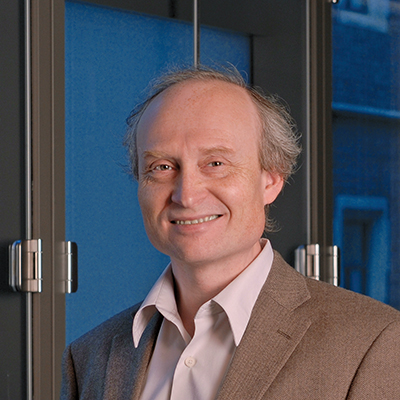
Dr. Michael Oram is a Lecturer at the University of St Andrews, School of Psychology and Neuroscience. He holds a Ph.D. in Psychology/Neurophysiology from the University of St Andrews, a B.Sc. in Zoology from the University of Bristol, and an M.Sc. in Biological Computation from the University of York. His research focuses on neurophysiological mechanisms underlying behavior, particularly primate visual information processing and temporal aspects of neural data. He integrates neurophysiological findings with computational modeling to advance understanding of sensory mechanisms. Education: Ph.D., Psychology/Neurophysiology, University of St Andrews B.Sc., Zoology, University of Bristol M.Sc., Biological Computation, University of York Research Interests: Neurophysiology of visual processing Temporal dynamics of neuronal activity Neural networks and computational modeling Primate behavior and social cognition Neuronal response latency and adaptation Scientific Awards: Honorary Research Fellow, Institute of Adaptive & Neural Computation, University of Edinburgh (2007) Advising/Grants: No formal advisee list provided; contributions include interdisciplinary collaborations. Labs/Teams: Institute of Behavioural and Neural Sciences (IBANS) Centre for Higher Education Research
Ioannis Georgilas is a Senior Lecturer in the Department of Mechanical Engineering at the University of Bath. He is affiliated with the Centre for Bioengineering & Biomedical Technologies (CBio), The Foundry: Centre for Digital, Manufacturing & Design Innovation, and the Bath Institute for the Augmented Human. His research focuses on the design and development of robotic systems for healthcare and agricultural applications. Key areas include safety certification of medical robots, control strategies for complex systems, and precision agriculture robotics. He actively supervises doctoral students and has secured funding from organizations such as the Engineering and Physical Sciences Research Council (EPSRC), Cancer Research UK, and the National Institute for Health Research (NIHR). Georgilas' work intersects with UN Sustainable Development Goals, particularly in advancing healthcare technologies and sustainable agriculture. His projects include developing image-guided surgical robotics, adaptive control for compliant continuum robots, and robotic solutions for composite material manufacturing. He collaborates internationally, contributing to advancements in robotic safety, human-robot interaction, and precision agriculture. His research outputs span robotics control, medical device validation, and material characterization. Notable projects include a robotic test rig for prosthetic joints, closed-loop testing frameworks for composite materials, and a drill guidance system for orthopaedic surgery. Georgilas emphasizes interdisciplinary approaches, integrating mechanical engineering, AI, and biomedical sciences to address real-world challenges. His lab and team focus on translating innovative robotic concepts into practical applications, ensuring rapid clinical or industrial adoption. Collaborations with industry and medical institutions underpin his commitment to bridging research and real-world impact.
Edgar Lobaton is a Professor in the Department of Electrical and Computer Engineering at North Carolina State University (NC State). He holds a B.S. in Mathematics and Electrical Engineering from Seattle University (2004) and a Ph.D. in Electrical Engineering and Computer Sciences from UC Berkeley (2009). His research integrates AI, probabilistic modeling, and cyber-physical systems for applications in wearable health monitoring, rehabilitation robotics, agriculture, and biological imaging. He has led projects at Alcatel-Lucent Bell Labs and the University of North Carolina at Chapel Hill. Lobaton is an IEEE Senior Member and advisor to the Embedded Machine Learning Club. Key awards include the NSF CAREER Award (2016), William F. Lane Outstanding Teaching Award (2023), and University Faculty Scholars Award (2024). His work spans grants focused on wearable sensors for asthma monitoring, plant health diagnostics, and automated microscopy systems. He emphasizes interdisciplinary collaboration, with projects involving robotics, environmental sensing, and medical devices. Professional involvement includes leadership roles in IEEE and SACNAS, reflecting his commitment to diversity in STEM. His lab develops innovative solutions for precision agriculture, wearable health systems, and bio-inspired robotics, with a focus on translating research into practical applications for healthcare and environmental sustainability.
Tan Ahn is an Associate Professor in the Department of Physics & Astronomy at the University of Notre Dame. His research focuses on experimental nuclear physics, particularly cluster structure in nuclei, testing ab-initio theories, and developing active-target techniques using radioactive ion beams. He leads experiments at facilities like the Institute for Structure and Nuclear Astrophysics (ISNA) at Notre Dame, ATLAS at Argonne, and NSCL at Michigan State University. His work addresses astrophysical phenomena such as X-ray bursts and nucleosynthesis processes. Education: B.S., M.S., and Ph.D. in Physics from Stony Brook University (2002–2008). Postdoctoral and research roles included Yale University (2008–2011), Michigan State University (2011–2014), and institutions in Germany (2006–2008). Teaching includes adjunct roles at the University of New Haven and teaching assistantships at Stony Brook. Research interests include fusion reactions with halo nuclei, gamma-ray spectroscopy, and detector development. His lab develops active-target time-projection chambers (AT-TPC) to study unstable nuclei. Collaborations involve international teams and cutting-edge facilities. Current projects explore cluster structures in light nuclei, alpha-induced reactions for astrophysics, and fusion studies with radioactive beams. Students and postdocs in his group work on detector design, data analysis, and experimental techniques.
Martin Føre is an Associate Professor at the Department of Engineering Cybernetics, NTNU. His work focuses on aquaculture robotics, sensor technologies for underwater applications, and mathematical modeling for fisheries and aquaculture industries. He holds a Master's (2006) and PhD (2011) from NTNU's Department of Engineering Cybernetics. His research emphasizes autonomous systems, precision farming, and digital twin technologies in marine environments. Education: M.Sc. & PhD in Engineering Cybernetics from NTNU (2006, 2011) His research interests include underwater robotics, bio-inspired motion planning, and real-time monitoring systems for fish farms. Key contributions include adaptive path planning algorithms for UUVs, sensor networks for fish welfare assessment, and digital twin integration in aquaculture. He has published extensively on topics like net pen dynamics, obstacle avoidance, and autonomous farm management. Publications highlight advancements in robotics for aquaculture, such as 3D motion planning for autonomous vehicles and real-time structural monitoring of net cages. His work bridges engineering, biology, and data science to enhance sustainable aquaculture practices. Major contributions include the development of acoustic telemetry systems for fish behavior analysis and IoT-based solutions for farm optimization. Collaborative projects with industry and academia focus on improving fish welfare, operational efficiency, and environmental sustainability in marine farming.
Robert Landers is the Associate Faculty Director of iNDustry Labs and a Collegiate Professor in the Department of Mechanical Engineering at the University of Notre Dame's College of Engineering. His research focuses on advanced manufacturing processes, including laser powder bed fusion, digital glass forming, and control systems for alternative energy systems. He holds a Ph.D. from the University of Michigan, an M.S. from Carnegie Mellon University, and a B.S. from the University of Oklahoma. Landers' research interests include thermal modeling of additive manufacturing processes, in-situ monitoring techniques for quality control, and energy systems optimization for hydrogen fuel cells and lithium-ion batteries. His work bridges mechanical engineering with mechatronics, emphasizing precision control in industrial robotics and machine tools. His recent publications emphasize defect prediction in additive manufacturing, kinematic error compensation in robotics, and novel methods for glass-metal integration. Landers collaborates on interdisciplinary projects such as digital twin systems for manufacturing and sensor-driven process optimization. Key areas of contribution include: Development of layer-to-layer control strategies for additive manufacturing Integration of LIBS and thermal imaging for real-time material analysis Advances in wire saw machining for semiconductor fabrication Optimization of lithium-ion battery degradation models for microgrid applications His research has been applied in aerospace, energy storage, and medical device manufacturing sectors.
Dr. Sara Sharifzadeh is a Senior Lecturer in Computer Science at Swansea University. Her research applies machine learning to spectral/satellite data analysis, human activity recognition, and robotic sensor systems. Education PhD in Computer Science (Technical University of Denmark, 2015). Research Focus She develops AI models for healthcare (e.g., rehabilitation assessment), agriculture (crop mapping), and industrial diagnostics (bearing fault detection), leveraging radar, infrared, and satellite data. Publication Trends Her 15 most recent articles (2021–2025) emphasize deep learning for sensor-based applications: radar activity monitoring, satellite crop classification, and healthcare robotics. Methodologies include transformers, GANs, and reinforcement learning. Collaborations She has led EPSRC/Danish Council-funded projects with industry partners and reviews for high-impact AI journals.
Hasnain Zohaib is an Assistant Professor in the Department of Mechanical Engineering at Texas A&M University. His research develops computational and experimental frameworks for autonomous systems, aerospace applications, and robotic perception. Education: Ph.D. Aerospace Engineering, University of Maryland (2014) M.S. Aerospace Engineering, University of Maryland (2012) B.S. Aerospace Engineering, University of Maryland (2008) Research integrates machine learning with fluid dynamics for aerospace challenges, including lunar landing systems and high-speed autonomy. Robotic perception work advances damage assessment algorithms using 3D point clouds. Recent projects focus on sim-to-real transferability and extraterrestrial infrastructure development. Publications demonstrate expertise in computational modeling of particulate flows, robotic localization in low-feature environments, and adaptive aerospace structures. Applied research supports NASA lunar missions through erosion mitigation and landing technologies. Leads projects funded by aerospace and robotics consortia, collaborating with industry partners on space exploration and terrestrial automation.
ChaBum Lee is an Associate Professor and Morris E. Foster Faculty Fellow in Mechanical Engineering at Texas A&M University. His research advances metrology and inspection for semiconductor manufacturing and precision systems. Research focuses on interferometry, 3D imaging, machine tool metrology, robotic machining, and optical spectroscopy. Key innovations include diffraction-based via inspection, autonomous wafer defect detection, and non-contact surface profiling. Recent publications emphasize semiconductor metrology advancements, including through-silicon via characterization, wafer edge inspection, and machine learning-driven quality control. Articles demonstrate integration of optics, sensors, and AI for manufacturing applications. Awards include: ASME Blackall Machine Tool Award (2020) Institute of Physics Emerging Leader (2021) ASPE Best Researcher (2017) Leads the Precision Metrology and Instrumentation Group (PMIG), collaborating with semiconductor industry partners including Samsung and Honeywell. Teaches courses in precision engineering and instrumentation.
Srikanth Saripalli is Professor and Director of the Center for Autonomous Vehicles and Sensor Systems at Texas A&M. His research develops autonomous navigation systems for UAVs and ground vehicles, specializing in vision-based control, sensor calibration, and path planning algorithms for GPS-denied environments.
Stavros Kalafatis is an Associate Department Head and Professor of Practice in the Department of Electrical and Computer Engineering at Texas A&M University, part of the College of Engineering. He holds an M.S.E.E. from the University of Arizona (1991) and a B.S.E.E. from the University of Surrey (1989). His research focuses on datacenter system optimization, SDI/SDN/SDS improvements for server efficiency, robotics in manufacturing, and sensor systems for agricultural applications. He has received multiple awards, including the Intel Achievement Award (2005) and repeated Intel Divisional Recognition Awards (1993, 2000–2010). His work spans cutting-edge technologies like precision agriculture robotics, network performance optimization, and machine learning-driven systems for hydroponics and wildfire prediction. Recent publications emphasize interdisciplinary solutions in agriculture, networking, and environmental modeling. Kalafatis is affiliated with the Computer Engineering and Systems Group at Texas A&M and contributes to advancing practical applications of engineering and computing. Education: M.S.E.E., University of Arizona, 1991 B.S.E.E., University of Surrey, 1989 Awards: Intel Achievement Award (Lynnfield Team), 2005 Intel Divisional Recognition Award (multiple years) His research trends highlight innovations in smart systems, including digital twins for manufacturing, AI-driven crop monitoring, and network optimization for data centers. While no grants or advising records are explicitly listed, his publications reflect active collaboration with industry and academic partners.
Research Professor at University of Pennsylvania leading projects on cyber-physical systems safety. Directs DARPA-funded research in assured autonomy and attack-resilient control systems. Education: PhD in Computer Science from SUNY Stony Brook (1996). Research: Develops formal methods for runtime monitoring and verification of embedded systems. Current projects include medical device interoperability and physiological closed-loop control. Created MaC runtime verification framework and contributed to AADL standardization. Teaching: Advises PhD students in real-time systems and formal verification. Teaches courses on mathematical foundations of computer security. Awards: Best Paper, IEEE/ACM CPS Week (2014) Best Student Paper, RTAS (2012) Labs & Projects: Member of PRECISE Center. Leads DARPA projects on assured autonomy and SPARCS. Collaborates with FDA on medical device safety frameworks.
Jian Liu is an Associate Professor in the Department of Systems and Industrial Engineering at the University of Arizona, College of Engineering, and an affiliated faculty member in the Statistics Graduate Interdisciplinary Program. He has been with the university since 2008, first as a faculty member from 2008–2014 and continuing in his current role since 2014. PhD in Industrial and Operations Engineering and Mechanical Engineering, University of Michigan, Ann Arbor (2008) MS in Statistics, University of Michigan, Ann Arbor (2006) MS in Industrial and Operations Engineering, University of Michigan, Ann Arbor (2005) MS in Mechanical Engineering, Tsinghua University, Beijing (2002) BS in Precision Instruments & Mechanology, Tsinghua University, Beijing (1999) Dr. Liu’s research centers on data analytics and system informatics, with a focus on integrating engineering knowledge, optimization, and statistical learning to model system performance, prognostics, diagnostics, and risk management. His work applies to manufacturing, civil, chemical, and software systems, emphasizing multi-source, multi-scale data fusion in hierarchical and distributed environments. Key research areas include reliability modeling, quality engineering, machine learning, and decision-making under uncertainty. His recent publications demonstrate a strong trend in applying advanced statistical and machine learning methods to real-world systems such as autonomous vehicles, water distribution networks, UAV/UGV surveillance, and healthcare monitoring. The integration of DDDAS (Dynamic Data-Driven Application Systems) frameworks, tensor decomposition, Bayesian modeling, and digital twins reflects a multidisciplinary approach spanning engineering, computer science, and data science. Honorable Mention for the Best Paper in the 2020 IISE Transactions Focus Issue on Quality and Reliability Engineering Honorable Mention for the Best Paper Award, International Conference on Industrial Engineering and Engineering Management, 2020 Outstanding Associate Editor Award, Journal of Manufacturing Systems, Spring 2019 Dr. Liu has secured research funding from the US National Science Foundation, US Department of Homeland Security, and US Air Force Office of Scientific Research. He has collaborated with domain experts on projects related to machining/assembly process improvement, water system service enhancement, and software reliability. He has advised students and contributed to professional leadership as a council member, board director, and currently as president of the Quality Control and Reliability Engineering (QCRE) Division of IISE. He is actively involved in research teams and labs focused on system informatics, data fusion, and reliability engineering, often employing simulation, sensor networks, and real-time data analysis in applications ranging from manufacturing to public health.
Rolf Johansson is a Professor of Control Science at the Department of Automatic Control, Faculty of Engineering, Lund University, Sweden. He also serves as Director of the Robotics Laboratory and has held a dual affiliation with the Faculty of Medicine, Lund University Hospital, since 1987. He has held numerous visiting appointments at institutions including UC Berkeley, Caltech, Tsinghua University, and NTNU, reflecting his international stature in control systems and robotics. Research Interests: His research spans system and control theory , robotics , adaptive control , system identification , biomathematics , and automotive systems . He has made significant contributions to human balance and postural control , diabetes modeling , and industrial robotics . His work bridges engineering and medicine, particularly in applying control theory to physiological systems. Publication Trends: His recent publications focus on physical human-robot collaboration, learning-based control for engines and fuel cells, real-time trajectory generation using MPC, and sensorless force control in robotic assembly. These reflect a strong integration of machine learning, optimization, and robust control in both industrial and biomedical applications. Scientific Awards: IEEE Fellow (2012) Ebeling Prize (1995) ICRA2012 Best Automation Paper Award EURON Technology Transfer Awards (2004, 2007) Russell S. Springer Visiting Professor at UC Berkeley (2004) Fellow of the Royal Physiographic Society (2007) Advising and Grants: He has supervised over 25 PhD students across engineering and medicine. His research has been funded by major agencies including the Swedish Research Council (VR), EU Framework Programs (FP5–H2020), SSF, VINNOVA, and industry partners like ABB and Volvo. Key projects include SMErobotics, LCCC, DIAdvisor, and KCFP. Labs and Teams: He leads the Robotics Laboratory at Lund and has co-led the Balance Laboratory at Lund University Hospital. He is central to the LCCC (Linnaeus Center for Control of Complex Engineering Systems) and has coordinated multiple EU projects in robotics and control.
Björn Olofsson is an Associate Professor and Senior Lecturer in the Department of Automatic Control at Lund University's Faculty of Engineering. He also serves as the Director of First and Second Cycle Studies and is a Project Manager. He is affiliated with major research initiatives including ELLIIT (the Linköping-Lund initiative on IT and mobile communication) and WASP (Wallenberg AI, Autonomous Systems and Software Program). His academic affiliations span Lund University and Linköping University, where he was appointed Docent in 2020. He holds an M.Sc. in Engineering Physics and a Ph.D. in Automatic Control, both from Lund University. His academic journey reflects a strong foundation in engineering and control systems. His research focuses on the autonomy of robots and vehicles, with emphasis on motion planning and optimal motion control. He explores applications in ground vehicles, unmanned aerial and surface vehicles, and industrial robotics. His work intersects with key global challenges, including sustainable transport and digitalization, aligning with UN Sustainable Development Goals related to technology and health. The 15 most recent publications analyzed show a consistent trend in autonomous systems, predictive control, and robotics. Topics include uncertainty-aware motion planning, human-robot collaboration, maritime autonomy, and learning-based control. The research integrates AI, machine learning, and advanced control theory, applied across aerial, marine, and terrestrial domains. Björn actively supervises multiple PhD students and has led numerous research projects, such as ELLIIT B14 and the Center for Construction Robotics. He is involved in organizing academic events like Robotics Week for Schools and manages the RobotLab LTH infrastructure. He has taught a range of courses including Applied Robotics, Autonomous Vehicles, and graduate-level courses on motion planning and optimal control. He also supervises Master’s theses in Automatic Control and Vehicular Systems.