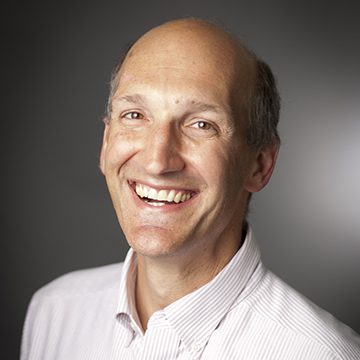
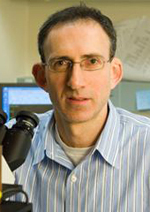
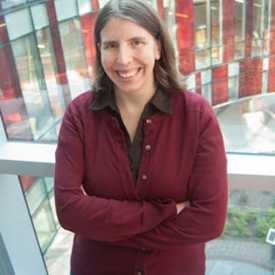
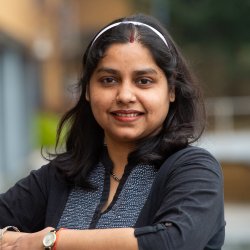
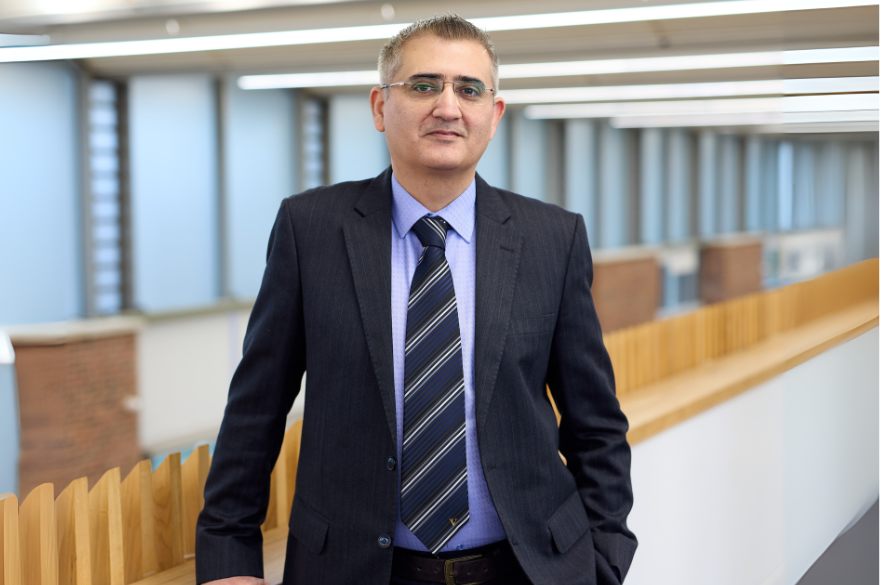
Prof. Anastasia Borschevsky is a Professor at the Van Swinderen Institute for Particle Physics and Gravity, University of Groningen. She holds a PhD in Quantum Chemistry from Tel Aviv University (2009) and has held postdoctoral positions at institutions including Massey University and GSI Helmholtzzentrum. Her research focuses on relativistic quantum chemistry methods applied to heavy atoms and molecules, supporting precision experiments in physics beyond the Standard Model. She leads the NL-eEDM collaboration to measure electron’s electric dipole moment using BaF molecules. Her expertise includes relativistic coupled cluster calculations, properties of superheavy elements, and symmetry violations. Awards include the Rosalind Franklin Fellowship (2015) and NWO VIDI Grant (2019). She is actively involved in academic administration, serving on the Van Swinderen Institute board and Physics Program committee.
Professor Jim Monaghan is a Professor of Crop Science and Director of the Centre for Crop and Environmental Science at Harper Adams University. He leads research in crop phenotyping, abiotic stress resilience, and sustainable agricultural practices. His roles include coordinating academic-commercial collaborations in fresh produce and potato crops. Key affiliations include the School of Sustainable Food and Farming and the Crop Science Group. Education: BSc and PhD in relevant fields (explicit degrees not detailed in text). Research focuses on enhancing crop resilience through genetic and environmental interventions, with projects funded by Defra, BBSRC, and Innovate. He supervises numerous PhD students exploring topics like post-harvest quality, nitrogen fixation, and precision agriculture. Notable projects include the Vegetable Genetic Improvement Network (VEGIN) and LED4FaB Roots, aiming to improve vegetable stress tolerance and lighting efficiency. His work bridges lab-to-field applications, addressing challenges in food safety, vertical farming, and paludiculture. Awards: None explicitly listed in provided texts. Advising/Grants: Supervises 10+ PhD students; leads £-funded projects on crop systems and environmental sustainability. Labs/Teams: Directs the Centre for Crop and Environmental Science and collaborates with groups like the Crop Science Group.
Prof. Morgan Mitchell is a distinguished ICREA Professor and Group Leader at the Institute of Photonic Sciences (ICFO) in Barcelona, Spain. He leads the Atomic Quantum Optics Group and holds ERC Starting and Advanced Grants for his groundbreaking research. His work focuses on quantum information processing, quantum sensing with cold atoms, and ultra-low-field magnetic resonance imaging technologies. He earned a PhD in Physics from the University of California (USA). Mitchell’s research explores cutting-edge applications of quantum systems, including squeezed-light-enhanced sensors, optically pumped magnetometers, and device-independent quantum randomness generation. Key innovations include miniaturized atomic vapor cells and cavity-enhanced detection techniques. His scientific contributions span quantum limits in magnetic measurement, spin dynamics in alkali-metal vapors, and quantum protocols for secure random number generation. Mitchell’s work bridges theoretical quantum mechanics and practical sensor development, with applications in medical imaging, fundamental physics, and cybersecurity. Awards: ERC Starting Grant (201x), ERC Advanced Grant (202x) Key Projects: Quantum sensors for ultra-low magnetic fields, integrated atomic-photonic devices Lab Focus: Atomic Quantum Optics Group at ICFO His research portfolio includes over 100 peer-reviewed articles, emphasizing quantum metrology, spin coherence manipulation, and quantum technologies for societal applications.
Monroe Kennedy is an Assistant Professor in the Department of Mechanical Engineering, leading the Assistive Robotics and Manipulation Lab (ARMLab). His research focuses on developing robots that collaborate effectively with humans, emphasizing tactile sensing, prosthetic interfaces, and human-robot safety. Key areas include assistive technologies, sensor design, and control systems for dexterous manipulation. Research Interests: Kennedy’s work spans robotics, human-robot interaction, and assistive technologies. His lab explores tactile sensors for precise manipulation, safety frameworks for caregiving robots, and prosthetic systems with haptic feedback. He also advocates for equity in robotics through initiatives like Black in Robotics . Key Trends in Publications: Recent work emphasizes optical tactile sensing (e.g., TensorTouch ), shared autonomy in human-robot tasks ( Diffusion-SAFE ), and safety protocols for caregiving robotics. His 2024 papers also highlight augmented reality interfaces ( ProACT ) and Gaussian splatting for 3D reconstruction. Labs/Teams: Directly affiliated with the ARMLab, which integrates mechanical engineering, AI, and human-centered design to advance assistive robotics solutions.
Stuart Szigeti is a theoretical quantum physicist affiliated with The Australian National University (ANU) and Q-CTRL. He holds a PhD from ANU (2013) and a Bachelor of Philosophy (Science) with First Class Honours (2008), for which he received the University Medal in Theoretical Physics. His research focuses on quantum optics, cold-atom systems, and quantum sensing, with applications in navigation, space science, and hydrology. He leads the Quantum Sensing Capability at Q-CTRL and has received an Australian Research Council DECRA Fellowship (2020). Education: PhD in Theoretical Physics, ANU (2013) Bachelor of Philosophy (Science), ANU (2008) Graduate Certificate in Higher Education (2011) ANU Award for Excellence in Tutoring (2010) His research interests span Bose-Einstein condensation, quantum measurement, and cold-atom sensing. He has pioneered work on feedback cooling of ultracold gases, atom interferometry design, and software-ruggedized quantum sensors. Stuart has contributed to projects such as the 'Quantum Matterwave Vortex Gyroscope' and 'Optimising Space-Based Atom Interferometer Design.' Notable achievements include developing dual open atom interferometry for compact sensors and quantifying fundamental limits of feedback cooling. His work bridges fundamental physics with applied technologies, emphasizing translational impact in fields like space-based navigation and environmental sensing. Awards: ARC DECRA Fellowship (2020) ANU University Medal (2008) ANU Tutoring Excellence Award (2010) Stuart collaborates extensively with experimental groups, including the ANU Quantum Sensors and Atom Laser Group, and leads interdisciplinary teams at Q-CTRL. His current projects aim to advance quantum sensing technologies for real-world applications.
Darrell Schlom is the Tisch University Professor in the Department of Materials Science and Engineering at Cornell University's College of Engineering. He holds one of the most prestigious faculty appointments at Cornell, recognizing his exceptional contributions to materials science and engineering. His research focuses on the atomic-scale synthesis and characterization of complex oxide thin films using reactive molecular-beam epitaxy (MBE), with an emphasis on discovering novel materials through a 'materials-by-design' approach. His educational background includes: B.S. in Engineering and Applied Science from California Institute of Technology (1984) M.S. in Electrical Engineering from Stanford University (1989) Ph.D. in Materials Science and Engineering from Stanford University (1990) Prof. Schlom's research interests center on oxide materials for electronic applications, particularly perovskite oxides that exhibit a rich variety of electronic properties including ferroelectricity, magnetism, superconductivity, and multiferroic behavior. His group specializes in heteroepitaxial growth techniques to create high-quality oxide heterostructures with precise control over composition and structure at the atomic level. This enables the exploration of emergent phenomena at interfaces and the development of next-generation electronic and energy-efficient devices. The recent publications highlight a strong trend in advanced oxide materials, with a focus on quantum phenomena in nickelates, strain engineering of ferroelectrics, high-mobility oxide semiconductors, and novel growth techniques for β-Ga₂O₃ and other wide-bandgap semiconductors. There is a clear emphasis on interface engineering, spin-orbit coupling, and the manipulation of electronic and magnetic states through external stimuli such as strain, electric fields, and doping. His scientific achievements have been recognized with numerous prestigious awards: John Bardeen Award, The Minerals, Metals & Materials Society (TMS) 2024 John A. Thornton Memorial Award, American Vacuum Society 2021 James C. McGroddy Prize for New Materials, American Physical Society 2021 Frank Prize, International Organization for Crystal Growth (IOCG) 2019 Humboldt Research Award 2018 Inducted into National Academy of Engineering 2017 MRS Medal, Materials Research Society 2008 Fellow of the American Physical Society, Materials Research Society, and American Vacuum Society Prof. Schlom has led major research initiatives, including a DOE-funded project (DE-SC0002334) on using interfaces to create strongly coupled magnetic-ferroelectrics. He advises numerous graduate students and postdoctoral researchers, and his group collaborates widely across disciplines. He teaches core courses in electronic materials and thin-film science at both undergraduate and graduate levels. His leadership extends to directing research centers, including a $34 million semiconductor research center at Cornell focused on energy-efficient microelectronics. His lab is equipped with state-of-the-art MBE systems for oxide synthesis and collaborates closely with facilities for advanced characterization such as electron microscopy and synchrotron-based techniques. He leads a vibrant research team that includes graduate students, postdocs, and collaborators, working at the forefront of quantum materials and oxide electronics. The group maintains strong ties with national laboratories and industry partners, particularly in the semiconductor sector. Future work is expected to continue exploring novel quantum phases in oxide heterostructures, integrating these materials into functional devices, and expanding into new material systems such as topological oxides and low-dimensional quantum materials.
Dr. Jack Devlin is a Royal Society University Research Fellow and Lecturer at the Department of Physics, Imperial College London. He is affiliated with the Quantum Engineering, Science and Technology group, Quantum Technology for Fundamental Physics, and the Ion Trapping group. His research focuses on precision measurements of fundamental quantities, new physics searches using table-top experiments, and dark matter detection with quantum sensors. Key research interests include measuring the electron's electric dipole moment using ytterbium fluoride molecules, simulating multi-level molecular systems for laser cooling applications, testing CPT symmetry via proton-antiproton comparisons, and dark matter detection using superconducting LC circuits and Penning traps. He leads the Ion Trapping group and collaborates with CERN's Antiproton Decelerator facility. Developed novel sympathetic laser cooling techniques for trapped protons/antiprotons Pioneered cryogenic Penning trap systems for antiproton storage Contributed to the BASE experiment achieving 16 parts-per-trillion precision in antiproton-proton comparisons His work has produced over 30 peer-reviewed articles since 2013, with recent focus on axion dark matter detection (2023-2025) and antiproton magnetic moment measurements (2022-2024). He holds a Royal Society University Research Fellowship supporting his experimental program. Current projects include developing the BASE-STEP transportable antiproton reservoir and advancing laser cooling techniques for molecular systems.
Professor Richard Thompson is a Professor of Experimental Physics in the Quantum Optics and Laser Science (QOLS) group at Imperial College London's Department of Physics, Faculty of Natural Sciences. He previously served as Vice-Dean (Education) for the Faculty and held roles such as Chair of the Science Studies Committee and Director of Undergraduate Studies. His research focuses on trapped ions, laser cooling, and quantum optics, particularly using Penning traps to achieve ultra-low temperature ion states for quantum information processing. Key achievements include demonstrating ground-state cooling of ions and achieving record-low motional heating rates. Education: PhD in Atomic Spectroscopy from the University of Oxford (1976–1979) and BA in Physics from the University of Oxford (1973–1976). Research Interests: Thompson specializes in laser-cooling techniques for trapped ions, ion Coulomb crystals, and applications in quantum computing and spectroscopy. His work bridges fundamental physics with practical advancements in quantum technology, including optimal control methods and microwave quantum gates. Publications: His research spans ion trapping mechanics, coherence properties, and applications in quantum systems. Notable contributions include studies on Penning trap dynamics and textbook publications on trapped charged particles. Awards: Recipient of the Imperial Medal (2023) for contributions to physics and education. Active in professional organizations like the Institute of Physics and CERN's SPS/PS Experiments Committee. Teaching and Leadership: Coordinates undergraduate Atomic Physics courses and contributed to quantum technology education through Imperial's Centre for Doctoral Training. His administrative roles have shaped educational policies in natural sciences. Labs/Teams: Leads the Ion Trap Group at Imperial, pioneering UK research in Penning trap-based ion cooling and quantum state manipulation.
Bastien LANGE is a Teacher-Researcher in Plant Ecology and Quantitative Genetics at UniLaSalle, France, affiliated with the Department of Agricultural and Animal Sciences within the Agrosciences College. His research focuses on plant-environment interactions, metal tolerance in plants, and agroecosystem adaptation. He holds a PhD from Université Libre de Bruxelles (2016), co-directed with UniLaSalle, and an Agricultural Engineering degree from UniLaSalle (2012). His expertise includes ecological engineering of degraded metal-rich habitats, plant-soil relationships in extreme edaphic conditions (e.g., Copperbelt regions of DR Congo), and crop adaptation to climate change. Key areas of investigation involve functional traits of metallophytes, genotype-environment interactions in soybean and barley, and environmental impacts of mining activities. He contributes to courses on Genetics and Agroecosystem Ecology at UniLaSalle and collaborates with the AGHYLE research unit. His work bridges fundamental ecology and applied agronomy, addressing challenges in sustainable agriculture and biodiversity conservation in metalliferous ecosystems.
Prof. Amit Meller is a Full Professor of Biomedical Engineering at Technion-Israel Institute of Technology and holds adjunct roles at Boston University (Adjunct Associate Professor in Biomedical Engineering and Materials Science & Engineering). He earned his Ph.D. in Physics and Biophysics from the Weizmann Institute of Science, followed by M.Sc. and B.Sc. degrees in Physics from Weizmann and Tel Aviv University, respectively. Research Interests: Dr. Meller’s work focuses on developing novel experimental techniques for studying biomolecular interactions at the single-molecule level. Key areas include nanopore force spectroscopy for RNA/DNA analysis, ultra-fast DNA sequencing, and single-molecule optical methods. His lab pioneered silicon-based nanofluidic devices for high-resolution protein separation and developed nanoscale biosensors for precision medicine applications. Recent advancements include amplification-free mitochondrial DNA quantification and sub-micrometer channel-based SDS-PAGE for clinical diagnostics. Lab & Collaborations: The Meller Lab at Technion employs interdisciplinary approaches, combining nanotechnology, optics, and machine learning. Collaborations include work with Prof. Oded Lewinson on bacterial transporter dynamics and the development of parallel STED microscopy for live-cell imaging. Recent projects involve optoelectronic nanopore control and machine learning-based protein identification. News Highlights: 2025: Presented research at the CECAM workshop in Italy and published a review on nanofluidics in Analytical Chemistry . 2025: Published in ACS Nano on ultra-long genomic DNA manipulation and developed machine learning tools for cfDNA analysis. 2022-2024: Advanced nanopore-based protein sensing, surfactant-enhanced DNA translocation, and light-enhanced biosensors. Advising & Training: Mentored students like Noam (PhD graduate), Malak Hijazi (studying cfDNA fragmentation), and Jiban Mondal (recent lab joiner). Focus on training in nanopore technology, single-molecule imaging, and bio-nano device fabrication.
Gretchen Campbell is an Adjunct Professor at the University of Maryland and Co-Director of the Joint Quantum Institute (JQI). Her research focuses on ultracold atomic gases, particularly Bose-Einstein condensates (BECs) and their applications in studying quantum fluids and superfluidity. She leads experiments on atom circuits and ultracold strontium systems, exploring analogs of superconducting electronics and cosmological phenomena. Key projects include persistent currents in superfluid rings, Rayleigh-Taylor instabilities in quantum fluids, and grating magneto-optical trapping techniques. Her work bridges quantum simulation, condensed matter physics, and precision measurement. Recent advancements include the creation of sodium BECs in hybrid traps and strontium BECs for quantum simulation. She has pioneered atomtronic devices, such as superfluid SQUID analogs, and used expanding BECs to model cosmic phenomena like Hubble friction. Campbell also holds an appointment as Associate Vice President overseeing UMD’s quantum initiatives, reflecting her leadership in quantum science education and research. Research Groups: JQI, RQS (Quantum Simulation Group) Labs: Sodium Atom Circuits Lab, Ultracold Strontium Experiment Her team includes graduate students and postdocs working on topics like quantum control systems, narrow-line spectroscopy, and experimental instrumentation. Notable contributions include the development of programmable systems for atomic physics and ultra-low noise drivers for precision experiments.
Devin Balkcom is a Professor of Computer Science at Dartmouth College, currently serving as Department Chair. He co-directs the Reality and Robotics Lab, focusing on efficient robot design and motion, including knot-tying, autonomous construction, and human motion training. His research spans robotics, motion planning, and human-robot interaction. Affiliations: Dartmouth College, Thayer School of Engineering, Department of Computer Science Labs: Reality and Robotics Lab Research Interests: Efficient robot motion, autonomous underwater construction, modular robotics, robot manipulation, and systems for teaching human movement (e.g., dance, sign language). Recent articles highlight advancements in energy-optimal trajectories for skid-steer rovers, autonomous underwater cement block assembly, and interactive dance lesson systems derived from TikTok videos. His work bridges robotics with applications in education and marine engineering. Grants & Students: Advised numerous PhD/Master’s students (e.g., Yinan Zhang, Weifu Wang) and collaborates on projects involving grants for robotics innovation. Notable student contributions include work on interlocking structures, soft robotics, and human motion analysis.
Ruchi Saxena is a Research Fellow at the University of Surrey, affiliated with the School of Mathematics and Physics and the Advanced Technology Institute. Her work focuses on quantum phenomena in topological materials for next-generation electronic applications. Education: PhD from Harish-Chandra Research Institute, India Research Interests: Dr. Saxena specializes in topological insulator nanowires, investigating quantum confinement effects and spin-momentum locking. Her research explores tunable quantum dot formation through magnetic flux and electrostatic gating, with direct implications for quantum computing hardware and fault-tolerant qubit design. This work bridges theoretical condensed matter physics with practical nanoelectronic device engineering. Publications: Her 2022 Physical Review B publication demonstrates controlled electron transport in topological nanowires using constrictions to create quantum dots. This research establishes foundational principles for manipulating surface states in topological materials, advancing the field toward practical quantum information processing devices through precise external parameter control. Research Environment: Based at the Advanced Technology Institute, she operates within Surrey's multidisciplinary hub for nanotechnology research, leveraging cross-departmental expertise in materials science and quantum device fabrication to explore topological quantum phenomena.
Azfar Khalid is a Senior Lecturer of Mechanical Engineering in the Department of Engineering at the School of Science & Technology, Nottingham Trent University (NTU). He holds a BS in Mechanical Engineering from GIK Institute of Engineering, Pakistan and a PhD in Precision Engineering from University of Manchester (2009). Dr. Khalid teaches across Mechanical and Electronics Engineering disciplines, including Control Systems, Robotics, Cybernetics & Biomechatronics. His research focuses on smart factory systems, human robot collaboration, cyber physical production systems, digital twins, and Industry 4.0. He serves as the research coordinator of the Department of Engineering and leads the Digital Innovation Research Group within the Imaging, Materials & Engineering Centre. Dr. Khalid's publications demonstrate a strong trend toward human-centric digital twin technology, with emphasis on occupational safety, mental stress factors in human-robot collaboration, and cognitive workload assessment in smart manufacturing environments. His work bridges engineering, human factors, and neuroscience to create safer, more efficient industrial systems. Fellow of The Higher Education Academy (FHEA) Member of Institute of Mechanical Engineers (MIMechE) Chartered Engineer (CEng) Lead Guest Editor for special issues on Cyber Physical Systems Associate Editor for Industrial Robotics and Automation As a research leader, Dr. Khalid has secured significant funding including EPSRC grants totaling over £120K from Connected Everything initiatives, with PepsiCo as an industrial partner. He supervises multiple PhD students working on digital twins for workplace safety, mental stress management, and modular robotic systems. His lab collaborates with industrial partners including Olympus Technologies, Raruk Automation, WMH Robotics, and The Care Machine, as well as international academic institutions across Germany, Spain, and Pakistan.
Pascal Hersen serves as a CNRS Research Director at the Institut Curie in Paris, holding three key leadership roles: Director of the Cell Physics and Cancer research unit (UMR168), Team Leader of the Dynamic Control of Gene Signaling and Expression group, and Site Coordinator for the institute's Research Center. This joint CNRS/Sorbonne University unit represents his primary institutional affiliation since at least 2016. His research pioneers the interdisciplinary field of Cybergenetics—developing real-time computer interfaces to manipulate gene expression—and Synthetic Embryology, investigating tissue self-organization through embryonic stem cell models. The team integrates microfluidics, microfabrication, fluorescence microscopy, and synthetic biology to dynamically control cellular processes, emphasizing quantitative analysis of regulatory networks beyond traditional static methods like gene knockouts. 2023-2024 publications reveal a concentrated focus on optogenetic manipulation in yeast systems, exploring stress adaptation, population cooperation, and metabolic bioproduction. These studies demonstrate how computational control of microfluidic environments enables unprecedented spatiotemporal precision in cellular experiments. Dr. Hersen's major scientific recognitions include: ERC Consolidator Grant (2016) for the SmartCells project, which created an intelligent microscopy system for live-cell control ERC Proof of Concept Grant (2023; 150,000 euros, 18 months) for CyberSco.Py, aiming to commercialize open-source software for automated microscopy parameter adjustment and adaptive cell culture As a team leader, he actively recruits researchers skilled in instrumentation, coding, and synthetic biology to advance cybergenetics applications. His ERC-funded work targets simplifying complex experimental design for cell biologists through autonomous imaging systems that dynamically respond to cellular behavior without manual intervention. The Dynamic Control of Gene Signaling and Expression team operates within the Cell Physics and Cancer unit at the Curie Institute, leveraging microfluidic platforms, computational modeling, and advanced microscopy to probe cellular dynamics. Their infrastructure supports real-time manipulation of temperature, optogenetics, and microfluidics for high-resolution spatial-temporal studies.