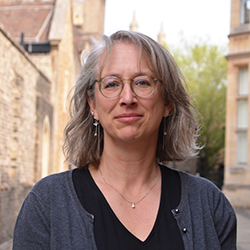
Ching Kwan Lee is a Professor of Sociology at the University of California, Los Angeles (UCLA). Her work focuses on global and comparative issues, including labor politics, political sociology, decolonization, and the dynamics of Chinese capitalism. She is renowned for her trilogy on Chinese labor and global expansion, including Gender and the South China Miracle , Against the Law , and The Specter of Global China . Lee has also authored groundbreaking studies on Hong Kong’s decolonization struggles and African-China relations. Education: PhD in Sociology from the University of California, Berkeley. Research Interests : Globalization and its social impacts Comparative labor movements and protest dynamics Decolonization and postcolonial state formations Sino-African economic and labor relations Hong Kong’s political trajectory and transnational activism Her recent work explores resistance to 'global China,' including mass mobilizations in Hong Kong documented in Forever Hong Kong: A Global City’s Decolonization Struggle (2025). She co-edits the Cambridge Elements in Global China and leads the Global Hong Kong Studies @UC initiative. Awards & Recognition : 2024 Distinguished Career in Political Sociology Award Multiple book prizes for The Specter of Global China Fellowships at Stanford’s Center for Advanced Study and Princeton’s Institute for Advanced Study Grants & Initiatives : Lead researcher on NSF grants studying platform capitalism and labor in China Initiated comparative projects on Brazil, India, China, and South Africa ( Southern Interregnum ) Co-editor of volumes on Hong Kong’s Umbrella Movement and global labor studies
Silvia Lindtner is an Associate Professor at the University of Michigan's School of Information and Director of the Center for Ethics, Society, and Computing (ESC). She holds courtesy appointments in the Penny W. Stamps School of Art and Design and the Digital Studies Institute. Her work focuses on the social and cultural study of technology in China and globally, with a focus on data-driven governance, AI ethics, and the intersection of technology and labor. Lindtner has conducted nearly two decades of fieldwork in China, examining innovation ecosystems, digital economies, and the affective dimensions of state control. She is the author of the award-winning *Prototype Nation: China and the Contested Promise of Innovation* (2020) and co-author of *Technoprecarious* (2020). Education: PhD in Information and Computer Sciences from University of California, Irvine; BS/MS in Media Technology and Design from University of Hagenberg, Austria. Research Interests: Science and Technology Studies (STS), China Studies, HCI, Critical Computing, AI Ethics, Data Governance, Labor Studies, and Transnational Digital Economies. She explores how technological systems shape governance, labor practices, and everyday life, particularly in contexts of global inequality and state surveillance. Awards: Joseph Levenson Prize (2021), Francis L.K. Hsu Book Prize (2021), ACM Distinguished Member (2022), and fellowships from the National Committee on US-China Relations (2021-2023) and China-US Scholars Program (2021-2022). Grants: Supported by NSF, IMLS, Intel Labs, Google Anita Borg, and Chinese National Natural Science Foundation. Leads interdisciplinary initiatives including Tech.Culture.Matters research group and Michigan Interactive and Social Computing (MISC) research group. Labs/Teams: Directs the Center for Ethics, Society, and Computing (ESC) and collaborates with the Lieberthal-Rogel Center for Chinese Studies. Current projects include studies on affective control in AI governance and transnational data practices in healthcare and labor.
Ian Greer is a Research Fellow at Cornell University's School of Industrial and Labour Relations , with a career focused on marketisation , industrial relations , and transnational solidarity . He holds a PhD from Cornell University and has previously studied at Bard College. His work examines labor dynamics in globalised industries , welfare states , and multinational corporations , often through qualitative comparative methods . Education : BSc (Bard College), MSc/PhD (Cornell University) Greer's research spans marketisation of employment services , social movement unionism , and labour policy in crisis situations . His publications include studies on European welfare-to-work schemes , healthcare privatisation , and labour migration . He is associated with the Centre for Employment Relations, Innovation and Change (CERIC) at the University of Leeds. Greer's recent work analyses precarious labor and project-based employment in social services across Slovenia and France. He also contributes to debates on social dumping , work-first welfare states , and activist labor strategies in sectors like healthcare and automotive manufacturing. He has no listed scientific awards. His work often involves collaboration with scholars like Marco Hauptmeier , Charles Umney , and Nathan Lillie , though no formal advisees are named in the provided text. His email is icg2@cornell.edu .
Adam King is an Assistant Professor in the Labour Studies Program at the Faculty of Arts, University of Manitoba. His research focuses on labor regulation, employment standards enforcement, Indigenous labor dynamics, deindustrialization impacts, and labor market policy. He co-investigates a SSHRC Partnership Grant project on migrant labor in settler-colonial contexts. Education: PhD in Sociology (York University, 2019) MA in History (University of Toronto, 2011) BA in Sociology/History (Trent University, 2010) His research examines the political economy of labor regulation, including enforcement mechanisms in federally regulated sectors and contested Indigenous labor relations. He analyzes deindustrialization's social consequences and contributes to debates on job guarantee proposals and right-wing populism's influence on labor movements. Recent publications explore topics like Indigenous labor law frameworks, precarious creative workers' unionization, and gendered identities in deindustrializing communities. He actively engages with media outlets such as CBC, The Globe and Mail, and The Maple's 'Class Struggle' newsletter.
Elizabeth Bernstein is a Professor of Women's, Gender & Sexuality Studies and Professor of Sociology at Barnard College, Columbia University, where she has been a faculty member since September 2002. Her work bridges sociological theory with feminist analysis, focusing on the intersections of gender, sexuality, and political economy. Bernstein directs significant research initiatives including the Gender Justice and Neoliberal Transformations Working Group, a transnational collaboration among thirteen scholars examining gender justice in contemporary global contexts. She is currently developing a new book project titled "Imagining Immunity: Precarious Bodies and the Governance of Gendered Dis-ease," which explores immunological metaphors in understanding bodily risk and suffering. B.A., University of California, Berkeley M.A., University of California, Berkeley Ph.D., University of California, Berkeley Professor Bernstein's research focuses on the political economy of the body, gender, and sexuality, with particular attention to sexual commerce, sex trafficking, and neoliberal governance. Her work employs ethnographic methods to examine how intimate relations become sites of economic exchange and political regulation. She investigates how concepts of authenticity, freedom, and rights are mobilized in debates about sexual commerce and trafficking. Bernstein's scholarship critically engages with feminist theory, carceral politics, and transnational governance frameworks, challenging conventional approaches to sex work and trafficking that often reinforce punitive systems rather than advancing gender justice. Analysis of Bernstein's scholarly output reveals a consistent trajectory examining the intersections of gender, sexuality, and political economy within neoliberal frameworks. Her work demonstrates increasing attention to transnational governance mechanisms and their impact on intimate relations and bodily autonomy. A notable trend is her critical examination of how anti-trafficking campaigns often employ carceral logic that undermines feminist goals of gender justice. Her scholarship consistently challenges binary frameworks that position sex work solely as exploitation or liberation, instead analyzing the complex economic, political, and social dynamics that shape sexual commerce globally. Bernstein's research has received significant recognition through prestigious awards including: Distinguished Book Award, American Sociological Association, Sociology of Sexualities Section (2020) for "Brokered Subjects" Honorable Mention, Society for the Study of Social Problems Global Division Book Award (2019) Norbert Elias Prize, Norbert Elias Foundation (2009) Distinguished Book Award, American Sociological Association, Sex and Gender Section (2009) Her work has also been supported by major funding organizations including the Institute for Advanced Study, National Science Foundation, Social Science Research Council, AAUW, and Mellon Foundation. As a principal investigator along with Janet Jakobsen for the Gender Justice and Neoliberal Transformations Working Group, Bernstein leads a significant collaborative research initiative sponsored by the Barnard Center for Research on Women. Her grant portfolio demonstrates sustained support from major research institutions, reflecting the significance of her work in gender studies and sociology. While specific student advisees aren't listed in the available materials, her role as a full professor at Barnard College indicates extensive mentorship of undergraduate and likely graduate students in Women's, Gender & Sexuality Studies and Sociology. Bernstein co-leads the Gender Justice and Neoliberal Transformations Working Group, a collaboration among thirteen scholars working transnationally on questions of gender justice. This initiative represents a significant research collective examining how neoliberal policies reshape gender relations globally. Her work with the Barnard Center for Research on Women provides institutional support for this transnational feminist research network, facilitating scholarly exchange and collaborative publication projects that advance critical perspectives on gender, sexuality, and political economy.
Roxana Willis is an Assistant Professor of Law at the LSE Law School, London School of Economics and Political Science. Her research focuses on structural inequality through a legal lens, emphasizing class and race dynamics in Britain and Cameroon. She holds an LLB from the University of Kent and Charles University, an LLM from SOAS, London, and a DPhil from the University of Oxford. Education: LLB in Law with European Legal Studies (University of Kent & Charles University, Prague) LLM in International Economic Law (SOAS, London) DPhil in Law (University of Oxford) Her research includes ethnographic studies of disadvantaged communities and legal philosophy. Notable works include her monograph A Precarious Life , examining criminal law through the lens of marginalized groups. She has held fellowships at the Freiburg Institute for Advanced Studies and the University of Oxford. Roxana teaches Criminal Law and Family Law at LSE, with prior experience at the University of Oxford and Universitat Pompeu Fabra. Her expertise spans legal anthropology, criminology, and research methods.
Antonio A. Casilli is a Professor of Sociology at Télécom Paris (Institut Polytechnique de Paris) and a researcher at the Interdisciplinary Institute of Innovation (i3) . He is an associate member of LACI-IIAC (formerly the Edgar Morin Center) at EHESS and serves as a Faculty Fellow at the Nexa Center for Internet and Society (Polytechnic University of Turin) since 2018. Research Focus: Digital labor, platform economy, AI ethics, and the social implications of technology Awards: Prix Étoiles de la SCAM, Prix Meilleur Documentaire de l'Année (Bangkok), selected as Nature Journal Top Science Pick His work analyzes how digital platforms reshape labor dynamics, privacy norms, and social inequalities. Recent studies explore global AI data work, including fieldwork in Latin America, Africa, and Europe. He advocates for ethical frameworks recognizing human labor behind automation. Media Engagement: Regular contributor to France Culture , Le Monde , Wired , and Rue89 . Authored En attendant les robots (2019) and Schiavi del clic (2020), investigating hidden digital labor structures.
Julia Ticona is an Assistant Professor at the Annenberg School for Communication and holds a secondary appointment in Sociology at the University of Pennsylvania. Her research examines how digital communication technologies shape precarious work, focusing on mobile phones, algorithmic platforms, and data-driven management systems affecting low-wage workers. She explores identity construction, inequality, and labor dynamics in the gig economy, including a book under contract with Oxford University Press titled *The Digital Hustle: Precarity Beyond Platforms*. Dr. Ticona earned her Ph.D. in Sociology from the University of Virginia (2016), an M.A. from the same institution (2011), and a B.A. from Wellesley College (2009). She has held postdoctoral roles at Data & Society Research Institute and is currently a Faculty Affiliate there and an Associate Fellow at the Institute for Advanced Studies in Culture. Her work appears in journals like *New Media & Society* and outlets such as *Wired* and *Slate*. Her research interests include digital labor platforms, algorithmic management, carework regulation, and the intersection of technology with inequality. She has contributed to legal advocacy, including an amicus brief for the U.S. Supreme Court case *Carpenter v. U.S.*. Her courses address digital inequalities, labor in the digital economy, and qualitative research methods. Her publications analyze topics like visibility regimes in domestic work platforms, contested governance on carework platforms, and strategies for coping with insecure digital labor. Her recent work critiques data colonialism and explores how technological systems exacerbate socioeconomic divides. Leveraging qualitative methods, Ticona’s scholarship bridges sociological theory with empirical studies of digital labor. She collaborates across disciplines to address systemic inequities perpetuated by technology, emphasizing worker agency and institutional accountability in platform economies.
Max Koch is a Professor at Lund University's School of Social Work, specializing in the intersection of social policy, ecological sustainability, and postgrowth theories. His research explores how capitalist restructuring impacts welfare, inequality, and climate action, with a focus on sustainable welfare systems and degrowth. Current projects: 'Economic Elites in the Climate Change Transformation' (PI, 2023-2028), 'Regulating the Polluter Elite' (2024-2027), 'FLYWELL' (2023-2026). Former projects: 'Postgrowth Welfare Systems' (2021-2025), 'Sustainable Welfare for a New Generation' (2020-2023). He teaches political economy, social inequality, and ecological sustainability at Lund University, directing the 'Social Policy in Europe' course. As a Visiting Scholar, he has collaborated with institutions in Spain, the Netherlands, Scotland, and Chile. His work contributes to UN Sustainable Development Goals (SDGs) related to climate action and reduced inequalities. Scientific award: Atlas Prize (2019) for degrowth research. Editorial roles: Environmental Values, advisory boards for ORSI and Collorative Future Making. Recent publications analyze planetary boundaries, postgrowth welfare models, and climate policy synergies. His research emphasizes interdisciplinary approaches combining social practices with policy innovation.
Julia Ticona is an Assistant Professor at the University of Pennsylvania's Annenberg School for Communication and affiliated with the Sociology department. Her work focuses on digital inequalities, labor dynamics, and cultural impacts of technology. She holds a PhD in Sociology from the University of Virginia and has been a post-doctoral researcher at the Data & Society Research Institute. She is a core faculty member at the Center on Digital Culture and Society and an Associate Fellow at the Institute for Advanced Studies in Culture. Her research examines how digital technologies influence precarious work beyond traditional gig platforms, explored in her book Left to Our Own Devices (Oxford, 2022). Key themes include platform capitalism, labor precarity, and digital governance. Her articles analyze topics like the digital divide, algorithmic bias, and the intersection of technology with marginalized communities. Her work appears in journals such as Journal of Communication , New Media & Society , and Information, Communication, and Society , alongside media outlets like Wired and FastCompany . She actively engages with public discourse on technology's societal implications through media commentary and policy advocacy.
Mohammad Amir Anwar is a Senior Lecturer in African Studies and International Development at the University of Edinburgh's School of Social and Political Science. He leads the UKRI-funded Planetary AI project and has held senior research roles at the British Institute for Eastern Africa and the University of Johannesburg. His work bridges digital economies, labor studies, and African political economy. Research Interests: His scholarship focuses on globalization, digital economies, platform labor, and the political economy of AI, with specific attention to inequality, social movements, and the future of work in African contexts. He employs digital ethnography and interdisciplinary frameworks to analyze technology's impact on marginalized communities. Publications & Projects: He is author of The Digital Continent (Oxford University Press, 2022) and has over 20 peer-reviewed publications. Current projects include studies on AI labor chains, platform economies in African cities, and pandemic impacts on informal workers, funded by UKRI, Royal Society of Edinburgh, and British Academy. Public Engagement: Anwar regularly contributes to media outlets like The Conversation and African Arguments, translating academic insights into public debates around digital labor, gig economy dynamics, and South-South cooperation.
Sian Lazar is a Professor of Social Anthropology at the University of Cambridge, serving as Head of the Department of Social Anthropology and a Fellow at Clare College. Her research focuses on labor politics and social movements across Latin America, particularly within trade unions in Buenos Aires, Argentina, and collective mobilizations in El Alto, Bolivia. Research Interests include political anthropology, ethics and kinship in collective action, citizenship studies, and the anthropology of Latin America. She explores themes of labor agency, urban rebellion, and the interplay between state and non-state forms of political engagement. Recent Publications demonstrate a strong focus on labor organization in precarious economies, moral dimensions of political outrage, and comparative analyses of citizenship practices. Her work spans ethnographic studies of trade unions, indigenous movements, and the evolving role of infrastructure in political subjectivities. Teaching & Supervision at Cambridge includes courses on Social Anthropology, with a particular emphasis on labor, citizenship, and political movements. She supervises postgraduate students and contributes to the academic community through editorial and research leadership roles.
Meg Rithmire serves as the James E. Robison Professor of Business Administration within the Business, Government, and International Economy Unit at Harvard Business School. She holds concurrent faculty affiliations at Harvard's Weatherhead Center for International Affairs, Fairbank Center for East Asian Studies, and Harvard Faculty Committee on Southeast Asia, where she convenes the Chinese Economy Seminar. Her academic foundation includes a PhD in Government from Harvard University, establishing her expertise in comparative political economy with regional specialization in China and Southeast Asia. Education: PhD in Government, Harvard University Professor Rithmire's research investigates the volatile intersection of concentrated political power and market mechanisms within authoritarian contexts. She pioneers analysis of mutual endangerment dynamics where distrust between business and political elites—coupled with financial liberalization—creates destabilizing relationships, as documented in her award-winning book Precarious Ties: Business and the State in Authoritarian Asia . Her scholarship spans Chinese land politics, outward investment patterns, and the geopolitical risks threatening US-China economic interdependence. Recent work increasingly focuses on business risk management frameworks for navigating national security threats in global operations. Analysis of her 15 most recent publications reveals a sharp pivot toward geopolitical risk governance, with 60% of her 2022-2025 output addressing business resilience in deteriorating US-China relations. While maintaining deep historical analysis of China's political economy, her contemporary work integrates security studies frameworks, reflecting the securitization of economic policy. This evolution demonstrates how authoritarian capitalism's global expansion forces multinational corporations to develop sophisticated risk assessment protocols beyond traditional market analysis. Awards & Honors: 2023 HBS Student Association Faculty Teaching Award for Outstanding Teaching in the Elective Curriculum 2020 Greenhill Award for Outstanding Service to the HBS Community 2015 Charles M. Williams Award for Teaching Excellence 2015 HBS Student Association Faculty Award for Outstanding Teaching in the Required Curriculum Professor Rithmire advises executive education programs on geopolitical risk management while co-chairing the U.S. Chamber of Commerce Foundation's Business Geopolitical Risk and Resilience initiative. Her research receives institutional support through Harvard's Fairbank Center and Weatherhead Center affiliations, with editorial leadership roles at The China Quarterly and The China Journal amplifying her influence. Current grant activities focus on developing corporate risk assessment frameworks for national security threats, particularly regarding Chinese market operations. She leads the Business Geopolitical Risk and Resilience initiative with the U.S. Chamber of Commerce Foundation, convening multinational executives and policymakers to develop practical risk management protocols. Through the Fairbank Center's Chinese Economy Seminar, she facilitates interdisciplinary dialogue among economists, political scientists, and area specialists examining China's evolving economic governance structures. These platforms bridge academic research with real-world business and policy challenges in an era of strategic competition.
Dr. Shanshan Lan is a researcher affiliated with the University of Amsterdam’s Faculty of Social and Behavioural Sciences, where she contributes to the Moving Matters programme group. Her work focuses on urban anthropology, migration patterns, and racial formations across Asia and Euro-America. She examines transnational student mobility, global cities, African diasporas in China, and Chinese diasporas in the U.S., with a particular emphasis on class dynamics and social change. Her research employs ethnographic methods, including walking ethnography in urban environments, to explore how race and migration intersect with globalization. Notable projects include studies on African communities in Guangzhou, the role of the Catholic Church in African diasporas, and the experiences of Western entrepreneurs during the pandemic. Key Interests: Transnational migration, racial knowledge circulation, pandemic sociology, and global urban studies. Recent Focus: Whiteness studies in China, precarious migrant identities, and the impact of globalization on education and labor markets. Lan has received recognition for her work, including the Honorary Mention of the 2006 SUNTA Graduate Student Prize. Her publications span academic journals and edited volumes, addressing topics from racial inclusion policies to transnational business networks.
Rosalind Gill is a prominent Professor at Goldsmiths, University of London, with a distinguished career spanning gender studies, media studies, and cultural studies. Her extensive publication record demonstrates leadership in critical analyses of postfeminism, neoliberalism, and digital culture. Gill's research interests focus on the intersections of gender, media, and neoliberal subjectivity, with particular attention to postfeminist discourse, digital culture, embodiment, and creative labor. Her work critically examines how contemporary media cultures shape gendered subjectivities, with significant contributions to understanding the 'postfeminist sensibility' as a dominant cultural framework. She has pioneered research on the affective dimensions of neoliberalism, particularly how it shapes women's experiences of confidence, self-care, and embodiment in digital environments. Analysis of Gill's recent publications reveals a consistent scholarly trajectory examining the psychological and affective dimensions of contemporary culture. Her work increasingly focuses on digital embodiment, social media practices, and the 'editable self,' exploring how visual culture and digital technologies reshape bodily experiences and self-perception. Gill's research demonstrates a sophisticated understanding of how neoliberal imperatives intertwine with postfeminist discourse to create new forms of gendered subjectivity. Gill has produced significant scholarly collaborations, particularly with researchers like Shani Orgad, Julia Coffey, and Akane Kanai. Her influential book 'Confidence Culture' (2022, co-authored with Orgad) offers a critical analysis of how confidence has become a moral imperative within contemporary neoliberal feminism. Her academic contributions extend to professional activities, including submissions of evidence to UK Parliamentary committees on employment rights, demonstrating her engagement with policy-relevant research. Gill's work consistently bridges theoretical sophistication with attention to contemporary social issues, making significant contributions to feminist scholarship and cultural studies.