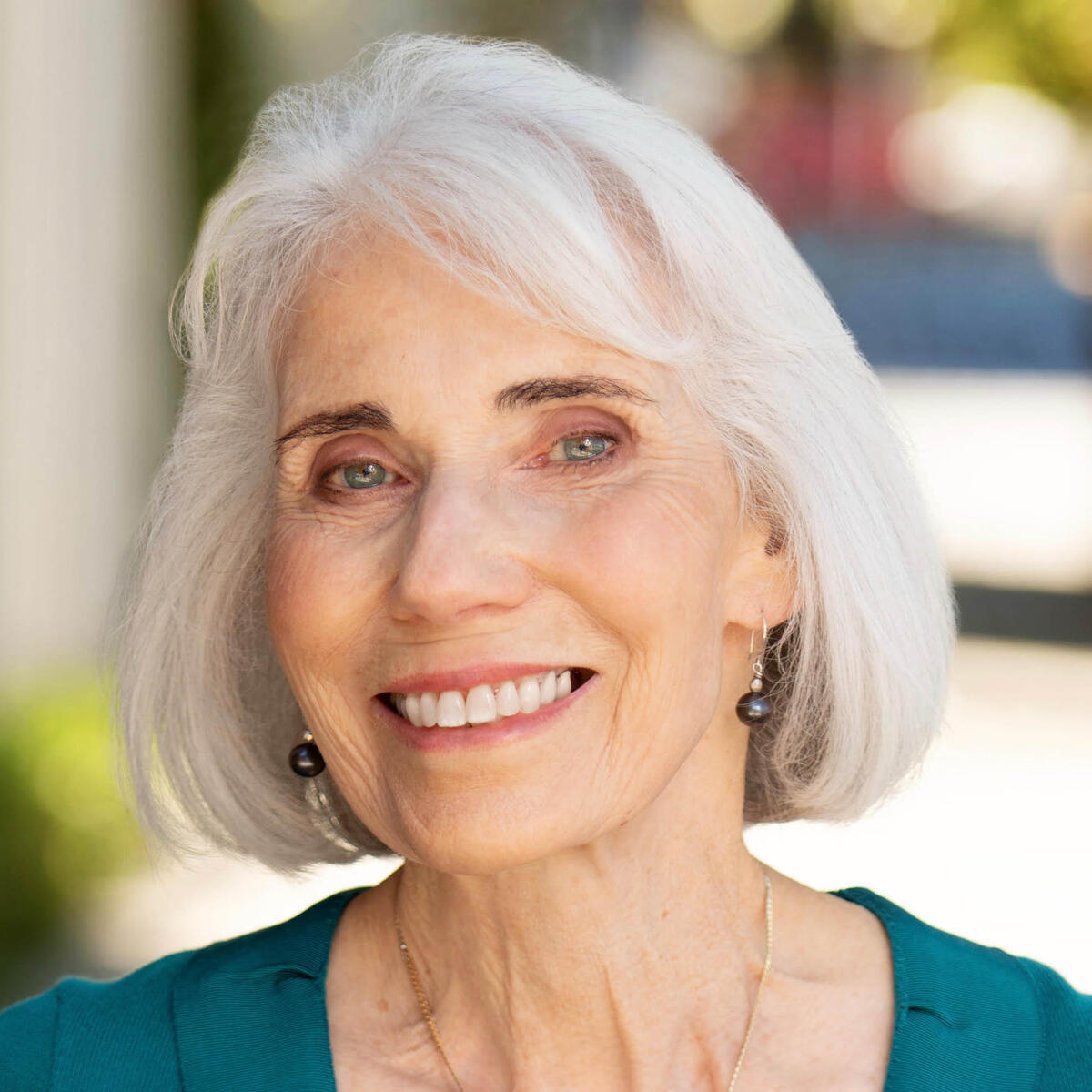
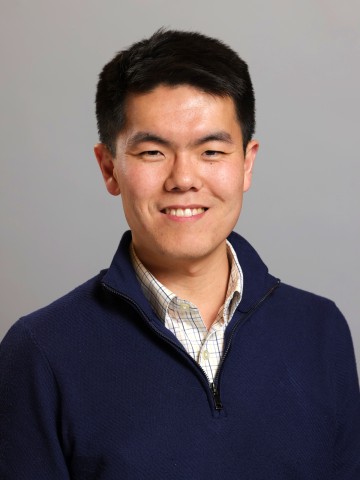
Marco Giacalone is a Research Professor at the Private and Economic Law Department (PREC) of the Vrije Universiteit Brussel (VUB), where he also serves as Co-Director of the Research Group on Digitalisation and Access to Justice (DIKE). He holds adjunct professorships at VUB (2018-2019) and has been a postdoctoral researcher at the Brussels Research Institute on Development, Governance, and Empowerment. His work focuses on the intersection of digital technologies and legal processes, particularly in Private International Law, ODR, and ADR. **Education**: PhD in Law (Doctor Europaeus, 2016) from VUB and University of Naples Federico II, specializing in Dispute Resolution and emerging IT realities. **Research Interests**: Digital transformation of legal systems, blockchain applications in justice, AI-driven conflict resolution, cross-border dispute mechanisms, and equitable algorithmic systems. His projects include EU-funded initiatives like CREA3 (Equitative Algorithms) and IDEA (Access to Justice tools). **Grants & Projects**: Over 10 projects funded by the EU, including EU683 (Equitative Algorithms), EU681 (IDEA), and EU676 (Digitalising Small Claims). Active in consortiums like IPSU 2022 (Digital Ius Knowledge Empowerment) and OZR4193 (VUB-UNIPARTHENOPE PhD collaboration). **Awards**: 2019 Best Paper Award and Marie Skłodowska-Curie Fellowship (2020). Extensive speaking engagements on topics like AI in judiciary, blockchain legal frameworks, and digital justice. **Labs/Teams**: Leads the DIKE Research Group and collaborates with the Brussels Research Institute. Involved in developing tools like Prodigit (digital tax justice) and CREA’s cloud-based decision support systems.
Konstantinos Alexakos is a Professor and Program Coordinator for General Science (GSCI) and Science Education (covering biology, chemistry, physics and earth science for grades K-12) at the School of Education, Brooklyn College, City University of New York (CUNY). He also holds a professorship in The Ph.D. Program in Urban Education at the Graduate Center, CUNY. His academic work focuses on science education, teacher development, and the integration of mindfulness practices in educational settings. His educational background includes: B.S. in Physics from The City College of New York - CUNY (1989) M.A. in Education in Physics and General Science from New York University (2000) M.Phil. in Science Education from Columbia University (2004) Ph.D. in Science Education from Teachers College, Columbia University (2005) Alexakos's research interests span multiple interconnected domains within science education. He has made significant contributions to understanding mindfulness and wellness in educational contexts , particularly how contemplative practices can enhance teaching and learning environments. His work explores emotional dimensions of science education , examining how teachers and students navigate emotional landscapes in classrooms. He has pioneered research on cogenerative dialogue and coteaching as mechanisms for improving educational practice. His scholarship also addresses diversity, equity, and inclusion in science education, with particular attention to race, gender, and cultural considerations. Alexakos investigates teacher identity formation and the challenges science educators face in urban settings, while also developing frameworks for authentic inquiry that empower teachers as researchers. His recent work increasingly focuses on holistic approaches to education that integrate physical, emotional, and intellectual dimensions of learning. Analysis of his recent publications (2017-2022) reveals a clear trajectory toward integrating contemplative practices with science education. His scholarship demonstrates a consistent focus on teacher development through authentic inquiry, with increasing emphasis on wellness, mindfulness, and emotional dimensions of teaching and learning. The publications show a progression from theoretical frameworks to practical applications of heuristics and contemplative practices in educational settings. His collaborative work with Kenneth Tobin forms a substantial portion of his output, indicating a productive research partnership focused on transforming educational practices. The publications span multiple formats including books, book chapters, and journal articles, demonstrating versatility in scholarly communication. His scientific awards and recognitions include: Brooklyn College Student Technology Fee Award for "Science Lab Probes" ($12,000) PSC-CUNY Research Award (PSCREG-38-335) for "Self and Science Teacher Attrition" ($6,000; 2007-08) PSC-CUNY Research Award (PSCOOC-37-30) for "The Science Teacher, Subjective Constructs of Science Teaching, and the 'Organic Link'" ($5,990; 2006-07) Alexakos has been actively involved in mentoring students through various teaching practicums and research activities. His courses include Natural Science for Early Childhood & Childhood Education, General Science for Child & Elementary School, Physical Science for Childhood Teachers, and multiple student teaching practicum courses. He has developed the master of arts in teaching (MAT) in science education program at Brooklyn College that infuses research and practice in science teaching in urban settings. His grant activities include research projects on teacher attrition, the science teacher as the organic link, and wellness practices in educational contexts. He has also secured funding for technology implementation in science education through the Student Technology Fee Award. While not explicitly mentioned as leading a specific laboratory, Alexakos is deeply involved with the Urban Science Education Research Seminar at the CUNY Graduate Center, where he has presented and organized numerous sessions. He has collaborated extensively with colleagues including Kenneth Tobin, Maria Powietrzynska, and Leah Pride on research related to emotions, mindfulness, and wellness in educational settings. His work with the Association of Greek American Professional Women (AGAPW) on "Inspiring Women in Science, Technology, Engineering, and Mathematics (STEM)" demonstrates his commitment to supporting underrepresented groups in STEM fields.
Dr. Paulina Yurman is a Wellcome Research Fellow and Lecturer in Industrial Design at Central Saint Martins, University of the Arts London. She is currently leading the Wellcome-funded research project Maternal Machines: Design Speculations about Fantasies of Care (2024–2028), which explores AI and technology in maternal and infant care through speculative design and participatory workshops with diverse stakeholders. PhD, Goldsmiths, University of London (2019) MA, Royal College of Art (1996) DIC, Imperial College London (1996) Her research centers on ambivalence in human-technology relationships, particularly in family and caregiving contexts. Using speculative design, drawing, and material prototyping, she investigates how technologies shape rituals, emotions, and identities in everyday life. Her work critically engages with feminist design, material culture, and psychoanalytic perspectives. The recent publications and projects reflect a strong trajectory in speculative and critical design, especially in maternal health, bodily fluids, and AI. Themes include the defamiliarization of care technologies, entanglements between humans and machines, and non-numerical forms of bodily knowledge. Her visual and workshop-based methods emphasize collaboration and imagination in envisioning alternative technological futures. Scientific awards include: Honorable Mention Award, ACM Creativity & Cognition Conference (2021) She has advised and collaborated with researchers and practitioners across design, HCI, AI ethics, medical humanities, and maternal health. Her work has been supported by major grants, including the Wellcome Trust and EPSRC. She has led workshops and presented at institutions such as KTH, Imperial College, and the Leverhulme Centre for the Future of Intelligence. Dr. Yurman leads the Drawing Conversations initiative, a collaborative drawing practice that bridges disciplines through visual dialogue with scholars in mathematics, physics, and HCI. She also developed the Fluid Speculations method, using watercolour to explore the materiality and ambiguity of care technologies.
Marcia C. Linn is the Evelyn Lois Corey Professor of Instructional Science at the University of California, Berkeley, School of Education. She is a member of the National Academy of Education and a Fellow of the American Association for the Advancement of Science (AAAS), the American Psychological Association, the Association for Psychological Science, and the International Society of the Learning Sciences (ISLS). She has held leadership roles, including President of the ISLS, Chair of the AAAS Education Section, and board memberships at the Educational Testing Service, the McDonnell Foundation, and the National Science Foundation Education and Human Resources Directorate. Ph.D., Stanford University, Educational Psychology Postdoctoral experiences: Geneva (Jean Piaget), Israel (Fulbright Professor), London (University College) Fellow, Center for Advanced Study in Behavioral Sciences (three terms) Marcia C. Linn’s research focuses on science education, technology integration, and learning environments. She explores how technology can enhance knowledge integration, curriculum design, and equity in education, with an emphasis on urban schooling, gender equity, and policy analysis. Her work bridges school and non-school learning contexts, prioritizing participatory research and practitioner knowledge to inform educational practices. National Association for Research in Science Teaching Award for Lifelong Distinguished Contributions to Science Education American Educational Research Association Willystine Goodsell Award Council of Scientific Society Presidents first award for Excellence in Educational Research She has authored influential books, including Computers, Teachers, Peers (2000) and Science Education and Technology (2011), and chairs the Technology, Education—Connections (TEC) series for Teachers College Press. Her professional affiliations span the Learning Sciences and Human Development Cluster and Social Research Methodologies at UC Berkeley.
Lars B. Sonderegger serves as a Lecturer at the Lucerne University of Applied Sciences and Arts (HSLU), School of Business, within the Institute for Business and Regional Economics. He teaches management and leadership modules while simultaneously leading his research and consulting firm Quantonomics LLC. His work bridges academic theory with practical business applications, focusing on translating behavioral neuroscience into organizational solutions. His educational background includes neuroscience and behavioral sciences studies at the University of Zurich, culminating in a magna cum laude doctorate in stress management under Prof. Dr. Ulrike Ehlert. This foundation combines with his Swiss Federal Diploma in Business Administration and family background in SME entrepreneurship to create his unique practitioner-scholar approach. Sonderegger's research centers on behavioral economics and neuroscience applications in management, with particular emphasis on leadership development, organizational transformation, and human capital optimization. His work explores how neurobiological principles can reshape traditional management practices, especially in hybrid work environments, decision-making processes, and talent retention strategies. Current projects include the VR Board Assessment Tool, Transformation Tracking, and Agile Collaborative People Management. His publication portfolio demonstrates consistent focus on practical neuroscience applications, with recent work examining leadership in VUCA environments, employee well-being frameworks, and cognitive bias mitigation in governance. The trajectory shows increasing integration of neuroscientific evidence into management literature, moving from foundational stress research toward actionable leadership tools. Schulze Award for Outstanding Applied and Practice Publication (2023) Fellow of the Royal Society for the Encouragement of Arts, Manufactures & Commerce (2017) Sonderegger actively advises Master's students at HSLU on topics ranging from performance management to organizational transformation, while securing consulting engagements that translate academic insights into business value. His Quantonomics firm implements behavioral strategies for clients, supported by research projects tracking transformation effectiveness and developing neuroscience-based leadership tools. He serves on multiple boards including SHL Schweizerische Hotelfachschule Luzern and Eigthwell, applying his expertise to real-world organizational challenges. Through Quantonomics and his university role, Sonderegger maintains a dynamic research-practice ecosystem where academic inquiry directly informs consulting solutions. His teams develop tools like the VR Board Assessment platform while conducting field research on agile people management and SME internationalization, ensuring continuous feedback between theory and practice.
Nicole Mills serves as Joint Director of Language Programs (interim), Coordinator of the French language program, and Language Advisor for the Office of International Education at Harvard University, while holding an adjunct lecturer appointment in Education at the Harvard Graduate School of Education. She co-founded the Certificate in Teaching Language & Culture and actively shapes language pedagogy through administrative leadership and innovative curriculum design across multiple Harvard departments. Her educational background includes a Ph.D. in French and Educational Studies and an M.A. in French literature , both from Emory University. These qualifications underpin her interdisciplinary approach to language education, bridging theoretical linguistics with practical pedagogy. Mills’ research pioneers the integration of virtual reality and artificial intelligence in language learning, focusing on psychological aspects of language acquisition, immersive cultural experiences, and curriculum development. Her work demonstrates how experiential learning contexts can transform traditional language instruction, particularly through projects like the La République VR environment that immerses students in Parisian life through diverse perspectives. This research intersects digital humanities, critical theory, and French literary studies to create transformative educational experiences. Her publication trajectory reveals a clear evolution from foundational self-efficacy studies toward cutting-edge explorations of AI and immersive technologies in language education. Recent work emphasizes pedagogical innovation during crises (like pandemic teaching transitions) and the systematic integration of emerging technologies into language program infrastructure, reflecting both theoretical depth and practical applicability. Innovation in Language Program Direction Award (2020) from the American Association of University Supervisors and Coordinators ABL Connect award for Teaching Innovation (2018) from Harvard's Center for Teaching and Learning Mills has secured significant grant funding including Harvard's HILT grants (2017-2020) for VR initiatives and Provost Fund support for AI pedagogy projects. Her collaborative approach is evident in partnerships with Wonda VR, Harvard's Center for Technology in Government, and international institutions for VR/AI development, while her co-founding of the Charlie Archive demonstrates commitment to digital humanities infrastructure for preserving cultural responses to global events. She leads the La République VR project team and the Charlie Archive curation group, fostering interdisciplinary collaboration between technologists, language educators, and digital archivists to create resources that bridge academic research with real-world cultural contexts.
Dr. Máire Ní Ríordáin is a Senior Lecturer in the School of Education at University College Cork. She currently serves as M.Ed. Modular Programme Director, School of Education Examinations Officer, and Chair of the School of Education Research Ethics Committee. She is also Treasurer of the Educational Studies Association of Ireland (ESAI) and a serving member of their Executive Committee. Her educational background includes a BSc.(Hons.) in Physical Education and Mathematics from the University of Limerick (2005) and a PhD in Mathematics Education from the same institution (2009). Dr. Ní Ríordáin's research focuses on the intersection of language and mathematics education. Her primary interests include bilingualism (Irish and English) in mathematics education, mathematics teacher professional development, practitioner research in teacher education, and STEM education. She has developed frameworks like LCM2 to analyze bilingual mathematics learning and has contributed significantly to understanding how language influences mathematical cognition. Her work addresses critical issues in Irish education, particularly regarding the teaching of mathematics through Irish and supporting out-of-field mathematics teachers. Her extensive publication record demonstrates a consistent focus on language-responsive mathematics teaching, bilingual education, and teacher development. Recent work explores CLIL (Content and Language Integrated Learning) approaches, STEM education, and gender issues in mathematics learning. She has led major international conferences, including serving as Co-Leader of the 14th Congress of the European Society for Research in Mathematics Education. Teaching Council Research Bursary (2009) Advanced Scholar Award (2005) MACSI Postgraduate Scholarship (2006) Dr. Ní Ríordáin has supervised multiple doctoral students including Aoife O'Brien, Fergal Harrington, Laura Tagnin, and Bernie Ní Dhonnchú. She has secured significant research funding, including projects like M²EID (€95,500 from Irish Research Council), CaLSAM (€68,840 from ERASMUS), and several grants from University College Cork and the National Forum for the Enhancement of Teaching and Learning. She has been actively involved in national teacher development programs, particularly for out-of-field mathematics teachers.
TL Hill serves as Teaching Professor in the Management Department at Temple University's Fox School of Business and Management, concurrently directing the Translational Research Center and Fox Management Consulting. His experiential teaching approach features live client projects (exceeding 500 engagements), nonprofit governance courses, and executive workshops that bridge academic theory with real-world business challenges across undergraduate and graduate programs. Hill's research integrates theoretical frameworks with practical applications in organization design, governance, social legitimacy, and political risk resilience. His dual focus spans innovation through social networks and action-oriented studies of experiential education, social impact, and social venture management. This work manifests in over 35 peer-reviewed publications and editorial board service for the Academy of Management Review, emphasizing translational impact where academic insights directly inform business practice. Analysis of Hill's 2021-2025 publications reveals three dominant thematic clusters: competency development in MBA capstone courses (examining skill transfer and career impact), political risk navigation for multinational enterprises (particularly during events like the Arab Spring), and emerging technology applications in international business (including blockchain solutions for trade governance). His collaborative research consistently addresses practitioner-relevant problems while advancing theoretical understanding in strategic management. Hill has not been listed with any scientific awards in the provided information. Through experiential courses like the MBA capstone and nonprofit governance class, Hill mentors students via live client engagements rather than traditional doctoral advising. His leadership in the Translational Research Center facilitates community partnerships where students develop business competencies through real-world problem-solving, though specific research grants aren't documented in the source materials. The centers under his direction function as innovation incubators connecting academic resources with industry and nonprofit challenges. Hill's operational leadership of the Translational Research Center and Fox Management Consulting creates structured pathways for knowledge transfer between academia and practice. These units coordinate over 500 client projects annually, enabling students to apply strategic management concepts while generating actionable insights for community partners across sectors including arts organizations, social ventures, and multinational corporations.
Professor Evonne Miller is a leading academic at Queensland University of Technology (QUT), where she holds the title of Professor of Design Psychology and serves as Director of the QUT Design Lab . Her work bridges healthcare design , participatory co-design , and planetary health , focusing on creating inclusive environments for vulnerable populations. As a Fellow of the Australian Association of Gerontology , she chaired the 56th AAG National Conference in 2023 and has pioneered innovative approaches to aged care , prison healthcare , and climate change engagement . PhD (University of Otago) Bachelor of Arts (Psychology) Bachelor of Commerce (Marketing) Her research expertise spans design thinking , arts-based knowledge translation , and health systems transformation , with over $16M AUD in competitive grants from ARC, NHMRC, and Queensland Health. Notable projects include Grief Guide AI , HEAL (Healthcare Excellence AcceLerator) , and intergenerational living campuses . She has published 140+ academic works , including books on healthcare design and creative research methods. Recent publications demonstrate her focus on AI in mental health , VR training , social prescribing , and arts-based interventions across diverse contexts like prison healthcare and voluntary assisted dying . Awards include Good Design Australia and National Communication Association recognitions, with her work influencing policy changes such as direct access to pain relievers in prisons. As a Senior Fellow of the Higher Education Academy , she teaches research methods and design thinking while leading co-design workshops globally. Her advocacy for human-centered design extends to climate anxiety , disaster resilience , and everyday activism , supported by a free co-design resource repository for global practitioners.
Lyne Martel is an Adjunct Professor in the Department of Educational Administration and Foundations at the Faculty of Education, Université de Montréal. She holds a PhD in Education (2020) and a Master’s in Educational Administration (2011), both from the Université de Sherbrooke. Her academic profile includes membership in the CRIFPE research center and leadership roles in graduate programs like the DESS in Educational Leadership and Management. Adjunct Professor, Université de Montréal PhD in Education (2020), Université de Sherbrooke Master’s in Educational Administration (2011), Université de Sherbrooke Member, CRIFPE research center Her research focuses on school leadership practices, particularly how administrators can enhance student success through collaborative governance and pedagogical leadership. She has explored the integration of experiential knowledge with scientific insights, emphasizing qualitative approaches to understanding school management realities. Recent publications highlight her work on data-driven decision-making in schools, concordance-based training for novice administrators, and collaborative practices between school leaders and teachers. Funded by SSHRC and FRQSC, her projects include provincial professional learning networks and initiatives supporting unqualified teachers. Scientific contributions include book chapters on school leadership training, peer-reviewed articles in journals like Revue Hybride de l'Éducation , and presentations at international conferences. She has supervised several graduate students, including ongoing theses on school leadership transitions and educational equity in Senegal. Desjardins Foundation Scholarship for academic excellence Second Prize in Scientific Poster Contest (2014) University of Sherbrooke Institutional Scholarships (2013, 2012) Martel’s career bridges practical experience as a school principal with academic research, focusing on sustainable educational leadership and institutional knowledge transfer.
Steven Zhou is an Assistant Professor of Psychological Science at Claremont McKenna College, where he leads the STATS Lab (www.statslabatcmc.com). His academic work bridges quantitative methods with psychological research, focusing on leadership, personality, and vocational psychology. With methodological expertise in psychometrics, machine learning, and data visualization, he actively contributes to both academic and practitioner communities through research, teaching, and consulting. Dr. Zhou's educational background includes: PhD in Organizational Psychology + Certificate in Computational Social Sciences from George Mason University BA in Organizational Psychology + Certificate in Conflict Resolution from Pepperdine University His research program centers on developing and refining psychological assessments while investigating bias in measurement systems. Dr. Zhou specializes in forced-choice personality assessments, leadership evaluation methodologies, and career calling research. His work consistently addresses the gap between academic research and practical application in organizational settings, with recent projects incorporating large language models and agent-based simulations to study complex behavioral phenomena. Dr. Zhou's publication record shows a clear trajectory toward increasingly sophisticated methodological approaches to organizational psychology questions. His recent work demonstrates growing integration of computational techniques (machine learning, NLP) with traditional psychological research, while maintaining strong connections to practical organizational applications. The research consistently addresses measurement challenges in leadership assessment and career development. His notable scientific achievements include: 2025 Jablin Dissertation Award from the International Leadership Association and Jepson School of Leadership Studies 2025 Chapman Dissertation Award from the Network of Leadership Scholars and Academy of Management 2023 Dissertation Research Award from the American Psychological Association 2022 Free Inquiry Grant from the Foundation for Individual Rights and Expression 2022 Graen Grant for Student Research on Leaders and Teams from SIOP 2021 Kenneth E. Clark Student Research Award from ILA and Center for Creative Leadership 2021 Outstanding Graduate Student Instructor from GMU Department of Psychology Dr. Zhou actively mentors both graduate and undergraduate students, with numerous student co-authors across his publication record. He has secured nearly $40,000 in external research funding to support his work on leadership assessment and psychometric methodology. His professional service includes editorial roles for multiple journals and leadership positions within the Society for Industrial and Organizational Psychology. As director of the STATS Lab, Dr. Zhou leads a research team focused on applying quantitative methods to understand leadership, career development, and personality. The lab's five research pillars include Psychometrics & Measurement Science, Bias in Measurement & Analytics, Leadership Assessment & Team Dynamics, Integrating Novel Methods into Research, and Career Development & Vocational Psychology, all emphasizing both methodological rigor and practical application.
Colleen Horn is a Lecturer in Education and Coordinator of Education Studies Work Placement at Trinity College Dublin. She holds a Doctorate in Education (D.Ed.) from Trinity College, alongside advanced degrees in Inclusive Education, Literacy, and Finance. Her work focuses on teacher education emphasizing place-based pedagogies, clinical practices, and heritage language preservation. She leads modules on professional studies and work placements for B.Ed., PME, and BScES programs. Doctorate in Education, Trinity College Dublin Masters in Inclusive Education, Roehampton University Diploma in Education Studies (Literacy), UCD Bachelor’s in Elementary Education & Humanities, Lesley University Her research explores professional identity formation in urban teaching, pandemic impacts on educational placements, and multilingualism in Ireland. She has presented at AERA, ECER, and WERA conferences worldwide, co-authoring chapters on teacher residencies and heritage language schools. Professional roles include ELSTA’s National Executive and peer reviewing for leading journals. Grant history includes a Teaching Council of Ireland research grant (2008-2014). She actively contributes to academic communities through AERA, NYSOBE, and the Irish Teaching Council.
Laura Gonzalez is a Professor of Research and Interdisciplinary Work at the Royal Conservatoire of Scotland and an Athenaeum Research Fellow. She serves as a summer faculty member, advisor, and supervisor for the MFA and PhD residency program at Transart Institute. Her work spans performance art, medical humanities, psychoanalysis, and embodied practices, with a particular focus on hysteria studies and breathwork. Her educational background includes: PhD in Cultural Communication and Computing Research Institute (C3RI), Art and Design Research Centre, Sheffield Hallam University (2005-2010) Postgraduate Certificate in Learning and Teaching in Art, Design and Communication (2004-2005) Master of Fine Art: Drawing, Wimbledon School of Art (2000-2001) Licenciada en Bellas Artes (BA equivalent), Universidad del Pais Vasco, Spain (1995-2000) Gonzalez's research explores the intersections of performance, psychoanalysis, and medical humanities, with particular emphasis on hysteria as a cultural and embodied phenomenon. Her work investigates how knowledge is produced through the body, especially through 'illegitimate forms of knowledge' such as intuition, magic, and oracles. She examines the relationship between breath, performance, and consciousness, developing practices that connect somatic awareness with artistic expression. Her research also engages with feminist theory, exploring how women's bodies have been historically pathologized while simultaneously serving as sites of resistance and creative transformation. Her recent publications reveal a consistent trajectory exploring embodiment, hysteria, and breath as artistic and scholarly concerns. She has increasingly focused on the medical humanities, examining historical medical texts and case histories through performance. Her work demonstrates a movement from theoretical analysis of seduction in art toward practical applications of breathwork and embodied knowledge in performance contexts. The interdisciplinary nature of her scholarship bridges art practice, psychoanalytic theory, and medical history. Her notable awards and recognitions include: Shortlisted for the Adrian Howells Award For Intimate Performance (2019) Athenaeum Award – Knowledge Exchange Route (2023) Glasgow Medical Humanities Network Foundation Award (2023) Athenaeum Award for research (2021) Multiple Research Development Funds from The Glasgow School of Art (2012-2016) AHRC Collaborative Doctoral Awards (2005, 2006, 2013) Gonzalez has supervised numerous doctoral students across institutions including the Royal Conservatoire of Scotland, Glasgow School of Art, and Transart Institute. Her supervision focuses on interdisciplinary projects at the intersection of performance, visual arts, and embodied research. She has secured significant grant funding for projects exploring the relationship between imitation and dance, breath practices, and hysteria studies. Her collaborative projects often involve partnerships with medical humanities scholars, performance practitioners, and community organizations. She is actively involved in several research collectives including The Workroom (since 2017), where she develops collaborative performance projects. She co-founded @TheGlasgowJam (2015-2018), creating space for multidisciplinary arts exploration. In 2021, she created the Scottish Breath Network, fostering interdisciplinary research on breathing practices. She also co-founded the Dialectical Materialist Book Group with Ian Macbeth, exploring Marxist theory through collective reading.
Nanda Surendra is an Associate Professor in the Department of Management Information Systems and Supply Chain at West Virginia University. He specializes in agile systems development, information systems design, and qualitative research methodologies. Ph.D., University of Cincinnati (1998) MBA, Madras University (1989) BEngg, Annamalai University (1987) His research explores the intersection of agile methodologies, privacy frameworks, and ethnographic approaches to systems development. He has pioneered techniques for integrating reflective practice into information systems and applying sports analytics concepts to educational reform. The 15 most recent publications span agile development in hyper-agile environments, privacy paradigms in IT, ethnographic requirements analysis, and curriculum design innovations. Key trends include crisis adaptation, collaborative software development, and ethical considerations in disaster recovery planning. Dr. Surendra's work bridges theoretical rigor with practical implementation, focusing on systems that balance automation with human intuition while maintaining technical relevance through case study validation.
Prof Joy Higgs is a Professor at Charles Sturt University actively engaged in research with 275 publications and an h-index of 18. As a registered supervisor, she contributes significantly to health professions scholarship through editorial roles including Sense Publishers (2016) and media appearances on allied health education. Her research centers on Clinical Reasoning (85% fingerprint match), Professional Practice (100%), and Clinical Decision Making (49%), emphasizing practice wisdom development, social justice integration, and client empowerment in healthcare. She investigates how contextual factors shape professional judgment across physiotherapy, medicine, and interdisciplinary teams. Analysis of her 2019-2025 publications reveals consistent exploration of wisdom cultivation through experiential learning, ethical decision frameworks amid technological disruption, and strategies for equitable care delivery. Her work addresses 21st-century challenges including AI integration, changing workforce dynamics, and power structures in client-practitioner relationships. Prof Higgs has supervised 9 academic works while advancing discourse through edited volumes like Practice Wisdom: Values and Interpretations (2019) and the 5th edition of Clinical Reasoning in the Health Professions . Her fingerprint confirms deep expertise in physiotherapy (37%) and health care personnel dynamics (52%).