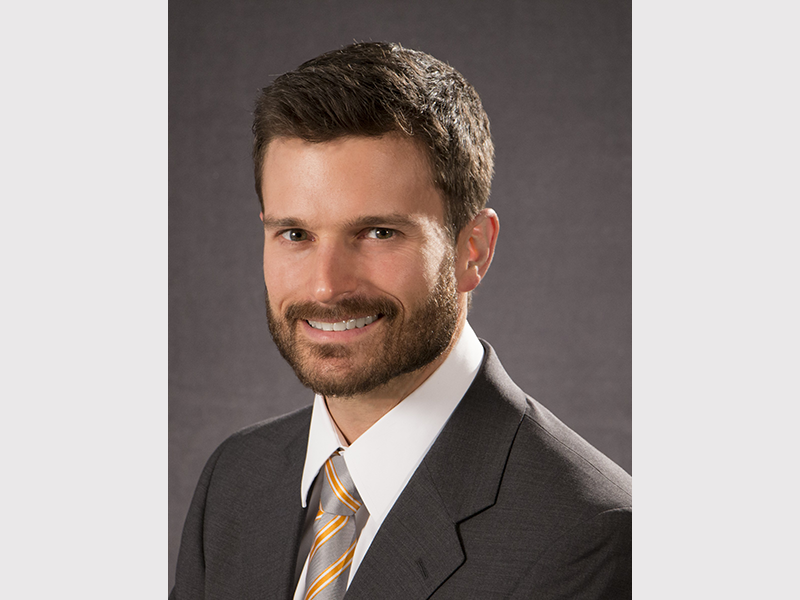
Sverker Molander is a Full Professor at the Environmental Systems Analysis group at Chalmers University. His research integrates systems approaches to analyze human-induced environmental change and its mitigation, with a focus on chemical risk assessment, material flows, and renewable energy systems. He actively collaborates with social scientists to examine technology-society-ecosystem interfaces and participates in international programs like Sida's collaboration with Universidade Eduardo Mondlane in Mozambique. SETAC Global Science Committee member Baltic Sea Foundation research delegation Kamprad Family Foundation scientific reviewer His work employs environmental risk assessments, life cycle analyses, and substance flow modeling, particularly examining: Toxicological impacts of nanomaterials Renewable energy environmental interactions Chemical exposure limit inconsistencies Multidisciplinary approaches to sustainability Risk communication in chemical supply chains Climate-chemical pollution intersections Recent publications demonstrate expertise in: Ecotoxicity extrapolation methods Machine learning for toxicity prediction Circular tungsten flows Marine energy collision risks Climate-adapted chemical management His research connects technical systems with societal and ecological considerations, emphasizing indicator development and interdisciplinary collaboration.
Dr Xiandong Ma is a Reader in Power and Energy Systems at Lancaster University's School of Engineering, where he has been a faculty member since December 2008. His research focuses on intelligent condition monitoring and fault diagnosis of power systems, with particular expertise in wind energy systems and smart grid technologies. His educational background includes: BEng in Electrical Engineering from Jiangsu University (1986) MSc in Power Systems and Automation from Nanjing Automation Research Institute (1989) PhD in Partial Discharge based High-voltage Plant Condition Monitoring from Glasgow Caledonian University (2002) Dr Ma's research spans intelligent condition monitoring and fault diagnosis/prognosis of wind power systems and electrical assets, condition-based operations and maintenance of power and energy systems, modeling, optimization, and control of smart/micro grids with renewable energy resources, power conversion and renewable energy integration, and associated machine learning and AI technologies and digital twin solutions. His work bridges theoretical advances with practical engineering applications in the renewable energy sector. His recent publications demonstrate a strong focus on quantum machine learning applications for wind turbine monitoring, electric vehicle-grid integration challenges, wave energy conversion systems, and nuclear fuel inspection technologies. The research shows a clear trajectory toward more sophisticated AI-driven solutions for energy systems, with increasing emphasis on multi-physics modeling and cross-domain applications. Dr Ma has received several prestigious recognitions: Chartered Engineer Fellow of the Institution of Engineering and Technology (FIET) Fellow of the Higher Education Academy (FHEA) Member of EPSRC Peer Review College KTP Fellowship awarded by University of Technology Sydney (2018) Ranked in the world's top 2% scientists by Stanford University He actively supervises numerous PhD students and postdoctoral researchers, with current projects including the Leverhulme Trust-funded "Self-Aware Power Networks: Autonomous Operation at Scale" and several EPSRC-funded initiatives. Dr Ma has secured significant research funding and collaborates extensively with industry partners to translate research into practical applications. Dr Ma leads research within Lancaster's Energy research group, focusing on the integration of advanced sensing, AI, and control techniques for next-generation power and energy systems. His team works closely with industrial partners including ALSTOM Power and various renewable energy companies to develop innovative solutions for real-world energy challenges.
Professor Nebojsa Mitrović is a distinguished faculty member at the Electronic Faculty of the University of Niš, Serbia, where he serves as a Professor in the Department of Power Engineering. With decades of academic and research experience, he has established himself as a leading expert in electric motor drives and power electronics. His work bridges theoretical research with practical industrial applications, particularly in crane systems and power quality issues. Professor Mitrović's research interests span electric motor drives, power electronics, control systems for electrical machines, induction motors, voltage sag effects on electrical drives, crane applications, renewable energy systems, and electromechanical energy conversion. His work demonstrates a consistent focus on improving the performance and reliability of electrical drive systems, particularly in industrial settings where power quality issues can significantly impact operations. He has made substantial contributions to understanding how voltage sags affect various types of motor drives and has developed innovative control strategies to mitigate these effects. His extensive publication record shows a clear research trajectory focusing on electric motor drives and power electronics. The most recent publications (2020-2023) demonstrate continued innovation in grid-connected converters, microgrid stability, and modern testing methodologies for electric drives. Earlier works (2006-2017) established foundational knowledge in direct torque control, multi-motor drive systems for cranes, and voltage sag effects on industrial drives. His research consistently addresses practical engineering challenges while advancing theoretical understanding in the field. Professor Mitrović has contributed significantly to academic literature through numerous journal articles, conference papers, and book chapters. His 2009 monograph "Implementacija algoritama za upravljanje momentom i fluksom asinhronih motora" (Implementation of Algorithms for Torque and Flux Control of Induction Motors) and the 2012 book chapter "Electrical Drives for Crane Application" in Mechanical Engineering published by InTech represent substantial contributions to the field. He has also co-authored educational materials including solved problem collections and laboratory exercises for electric motor drives courses. Professor Mitrović actively supervises student research and has been involved in numerous technical projects, including the development of laboratory setups for testing vector controlled induction motor drives. His work has practical applications in various industries, particularly in crane systems and industrial drive applications. He has collaborated extensively with colleagues including Vojkan Kostić, Milutin Petronijević, and Bojan Banković on research projects funded by various Serbian research initiatives. His laboratory work includes the development of testing systems for electric drives and the implementation of advanced control algorithms for industrial applications. Professor Mitrović is associated with the Power Engineering Department at the University of Niš, where he teaches courses including Electric Motor Drives, Selected Topics in Electric Motor Drives, Electrical Machines, Electromechanical Energy Conversion, and Modeling of Electrical Machines and Drives. His teaching reflects his research expertise and provides students with both theoretical knowledge and practical skills in electric drive systems.
Bülent Haznedar is an Associate Professor in the Department of Computer Engineering at Gaziantep University's Faculty of Engineering, a position he has held since 2024. Previously, he served as Doctor Lecturer at Gaziantep University (2021-2024) and held academic positions at Hasan Kalyoncu University (2013-2021) and Erciyes University (2011-2013), where he progressed from Lecturer to Department Head. His educational qualifications include: Doctorate in Computer Engineering from Erciyes University (2011-2017) Master's degree in Computer Engineering from Erciyes University (2007-2010, with thesis) Licence degree in Computer Engineering from Erciyes University (2003-2007) Dr. Haznedar's research centers on Artificial Intelligence and Machine Learning applications, with significant contributions in hydrological modeling (streamflow forecasting using hybrid ANFIS algorithms), renewable energy (solar radiation optimization), medical diagnostics (thyroid nodule classification and cancer detection), and cultural heritage informatics (3D point cloud segmentation for historical buildings). His work consistently integrates fuzzy logic systems with metaheuristic optimization techniques to solve complex prediction problems. Analysis of his 29 journal articles (2016-2024) reveals a dominant focus on Adaptive Neuro-Fuzzy Inference Systems enhanced by evolutionary algorithms (PSO, GA, ABC) across hydrology and medical domains, with recent expansion into sustainable energy and heritage preservation. His publications show increasing interdisciplinary collaboration, particularly in TUBITAK-funded projects. His scientific recognition includes: TUBITAK Publication Encouragement Awards (2018, 2023) TUBITAK PhD Scholarship (2011) TUBITAK Master's Scholarship (2008) Dr. Haznedar has supervised eight master's theses on AI applications in streamflow forecasting, energy prediction, cancer classification, and heritage modeling. His research is supported by seven projects, most notably the TUBITAK 1001 project (2019-2023) developing Heritage Building Information Modeling for Turkey's cultural heritage restoration. He also contributed to TUBITAK's Digital Prosthesis Workshop initiative. While specific laboratory affiliations aren't detailed, his leadership in the TUBITAK cultural heritage project indicates active collaboration with multidisciplinary teams spanning engineering, computer science, and heritage conservation disciplines.
Roy Sterritt is a Lecturer in Informatics at the School of Computing, Ulster University. His research focuses on autonomic computing, robotics, machine learning, and cybersecurity. He has contributed extensively to decentralized systems and fault management in autonomous environments. Research Interests: Roy’s work spans autonomic computing, robotics, and AI, with applications in cloud systems, space exploration, and drone fleets. He emphasizes self-adaptation, fault tolerance, and security protocols. Scientific Awards: Highly Ranked Scholar in Autonomic Computing (2024) Multiple Best Paper Awards (2016–2023) Recent Trends: His recent publications highlight autonomic solutions in cloud security, robot swarms, and space systems, leveraging machine learning and adaptive communication protocols. Projects & Collaborations: Roy has led projects like SPAAACE-Ware and DEL CAST AWARD, focusing on autonomic analytics and apoptotic computing. He organizes international conferences on autonomous systems and collaborates globally.
Dr. Vangelis Marinakis is an Assistant Professor at the School of Electrical and Computer Engineering (ECE) of the National Technical University of Athens (NTUA). His academic background includes an Electrical and Computer Engineering degree and a PhD in Decision Support Systems for Sustainable Energy Planning from NTUA. PhD in Decision Support Systems for Sustainable Energy Planning (NTUA) Electrical and Computer Engineer (NTUA) His research focuses on designing methodologies for intelligent energy management across Smart Homes, Buildings, Cities, and Districts, leveraging technologies like IoT, AI, and Big Data. He has contributed to over 25 European (Horizon Europe, H2020) and national projects, with more than 50 journal publications and book chapters. Key research areas include Decision Support Systems , Energy Efficiency , and Renewable Energy Integration . He has led research in AI-driven energy forecasting, federated learning for privacy-preserving data models, and blockchain applications in energy markets. His work explores the intersection of Smart Grids , Building Informatics , and Climate Resilience . Dr. Marinakis has developed frameworks for: Decarbonization-as-a-Service in building renovations Scalable Big Data architectures for smart buildings Multi-criteria optimization of EV charging stations Explainable AI in energy decision-making Climate resilience assessment for urban housing
Sri Niwas Singh serves as Chair Professor in the Department of Electrical Engineering at the Indian Institute of Technology, Kanpur, where he has established himself as a leading expert in power systems engineering with significant research contributions spanning multiple critical areas. His educational qualifications include: PhD in Electrical Engineering from IIT Kanpur (1995) M.Tech in Electrical Engineering from IIT Kanpur (1989) B.Tech in Electrical Engineering from KNIT Sultanpur (1987) Professor Singh's research program focuses on Power System Restructuring, FACTS Technology, Optimal Power Dispatch and Security Analysis, Power System Dynamics, Operation and Control, Distribution System Planning and Demand Side Management, and Application of Genetic Algorithms and Artificial Neural Networks in Power Systems. His work bridges theoretical concepts with practical applications, particularly in smart grid technologies and renewable energy integration. His publication record reveals a consistent research trajectory addressing evolving power system challenges, with increasing emphasis on renewable energy integration and computational intelligence techniques. The progression from traditional power system analysis toward smart grid technologies and AI applications demonstrates his ability to adapt research focus to emerging industry needs. His significant professional recognitions include: 2013 IEEE Educational Activities Board Meritorious Achievement Award in Continuing Education Three PhD theses supervised by him receiving the POSOCO Power System Award (2012) Humboldt Research Fellowship (awarded 2005 and 2007) INAE Young Engineer Award (2000) C.B.I.P. Young Engineer Award (1996) Professor Singh has mentored numerous graduate students, with three of his PhD students receiving the prestigious POSOCO Power System Award in 2012. His research has attracted substantial funding and collaboration opportunities, supporting advanced work in power systems analysis and control. His laboratory focuses on power system simulation, renewable energy integration studies, and smart grid technology development, with a research team comprising PhD scholars and industry collaborators working on cutting-edge power engineering problems.
Pourya Shamsi serves as an Associate Professor in the Department of Electrical Engineering at Missouri University of Science and Technology, where he is affiliated with the Center for Intelligent Infrastructure. His research focuses on power electronics and smart grid technologies, with particular emphasis on DC-DC conversion systems and renewable energy integration. Education: B.Sc. in Electrical and Computer Engineering, University of Tehran, Tehran, Iran (2007) Ph.D. in Electrical and Computer Engineering, University of Texas at Dallas, TX (2012) Dr. Shamsi's research spans several critical areas in modern power systems, with primary focus on smart grids, microgrid stability assessment, energy management systems, and advanced power conversion technologies. His work on switching power converters, particularly VHF/UHF dc-dc converters and motor drives, addresses key challenges in renewable energy integration and electric vehicle charging infrastructure. His research has strong practical applications in improving grid stability and enabling extreme fast charging capabilities. Analysis of Dr. Shamsi's recent publications (2021-2025) reveals a consistent research trajectory focused on high step-up DC-DC converters, with particular emphasis on innovative topologies incorporating coupled inductors, voltage multiplier cells, and soft-switching techniques. His work demonstrates strong connections between theoretical power electronics design and practical applications in photovoltaic systems, DC microgrids, and electric vehicle charging infrastructure. The research shows increasing focus on modular and extendable converter designs that can scale for different power applications while maintaining high efficiency. Dr. Shamsi is actively involved in research through the Center for Intelligent Infrastructure at Missouri S&T, where his work contributes to advancing power conversion technologies for modern energy systems. His research has direct applications in renewable energy integration, grid stability enhancement, and next-generation charging infrastructure.
Francesco Liberati is an Associate Professor in Automatic Control at Sapienza University of Rome, Department of Computer, Control and Management Engineering (DIAG). His research focuses on cyber-physical systems, model predictive control (MPC), and hybrid MPC-deep learning algorithms with applications to power systems, traffic control, and task scheduling. PhD in Systems Engineering from Sapienza University (2015) Assistant Professor (RTD-B) at Sapienza University (2021-2024) Assistant Professor (RTD-A) at eCampus University (2015-2017) Liberati’s work combines theoretical advancements in control theory with real-world implementations in smart grids and transportation systems. He has pioneered approaches integrating MPC with reinforcement learning for large-scale optimization problems, particularly in electric vehicle (EV) charging and grid reconfiguration. His recent publications emphasize: Stochastic and economic MPC for renewable energy storage Decentralized control algorithms for EV charging Cyber-physical security in microgrids and smart infrastructure Hybrid AI-control solutions for traffic and industrial systems Scientific recognition includes: 2021 Best Paper Award, IEEE World AI IoT Congress (AIIoT) 2021 Networked Systems Best Paper Award He serves as Associate Editor for Advanced Control for Applications (Wiley) and on the Editorial Board of Smart Cities (MDPI). His applied research spans European Commission H2020 projects and collaborations with industry partners in energy and transportation sectors.
Fredrik Hedenus is an Associate Professor at Physical Resource Theory, Chalmers University of Technology, Sweden. His research focuses on strategies to reduce climate impact from energy and food production, with emphasis on policy instruments and the effects of technical and behavioral measures. Dr. Hedenus' research interests span climate change mitigation, energy systems analysis, renewable energy integration, biomass utilization, and the climate impact of food systems. His work combines technical energy system modeling with policy analysis to identify cost-effective pathways for deep decarbonization. He has particular expertise in analyzing the role of biomass in energy systems, the integration challenges of variable renewable energy sources like wind and solar, and the climate implications of dietary choices. His publication record demonstrates consistent contributions to high-impact energy and climate journals, with recent work focusing on European energy system transitions, hydropower resilience, wind power deployment patterns, and the feasibility of local climate targets. Dr. Hedenus frequently engages with policy debates through opinion pieces in major Swedish newspapers, addressing topics like climate target setting, dietary changes for climate mitigation, and the role of nuclear power in decarbonization strategies. Dr. Hedenus has received research funding from multiple sources including the Swedish Energy Agency, the Swedish Foundation for Strategic Environmental Research (Mistra), and the European Commission. He serves on Gothenburg City's Climate Council, providing scientific expertise to inform municipal climate action.
Daniela Guericke is an Assistant Professor at the University of Twente in the Department of Industrial Engineering & Business Information Systems. Her research contributes to UN Sustainable Development Goals in Artificial Intelligence, Health, Energy, Climate, and Circular Economy. She specializes in modeling, simulation, optimization, and data science for energy systems and sustainable industry. Research Trends: Daniela's recent work focuses on Stochastic network optimization for district heating systems Multi-objective scheduling with energy tariffs Hydrogen railway infrastructure design Renewable energy community planning Demand response integration in large-scale energy systems Labs & Collaborations: She collaborates with the CITIES project (Centre for IT-Intelligent Energy Systems) and contributes to advancements in smart grids, energy efficiency, and circular economy frameworks.
Sandra D. Eksioglu is a Professor at the University of Arkansas and holds the Hefley Professorship in Logistics and Entrepreneurship . She is affiliated with the College of Engineering and the Department of Industrial Engineering . Ph.D. in Industrial and Systems Engineering, University of Florida (2002) M.S. in Economics and Management Sciences, Mediterranean Agronomic Institute of Chania (1996) B.S. in Business Administration, University of Tirana (1994) Her research focuses on Operations Research , Network Optimization , and Algorithmic Development , with applications in Energy Systems , Healthcare , and Transportation . She has published extensively on stochastic supply chain models, biomass logistics, and healthcare inventory management. Recent publications highlight her work in bioenergy systems , vaccine distribution , telehealth analytics , and stochastic optimization for infrastructure planning . Her methodological expertise spans multi-stage programming , discrete event simulation , and machine learning . Scientific Awards Fellow of IISE (2022) College of Engineering Imhoff Teaching Award (2021) NSF CAREER Award (2011) Best Application Paper, IISE Transactions (2019, 2018)
Halit Uster is Professor of Operations Research & Engineering Management at SMU’s Lyle School of Engineering and Professor of Civil & Environmental Engineering (by courtesy). A 2025 IISE Fellow, he also serves as Fellow of SMU’s Hunt Institute for Engineering and Humanity, where he leads large-scale optimization research with strong societal impact. Education Ph.D. in Management Science/Systems – McMaster University, Canada M.A. in Business Administration (Production/Operations Management) – Hacettepe University, Turkey B.S. in Mechanical Engineering – Middle East Technical University, Turkey Research Interests Uster develops optimization models and efficient algorithms for the design and analysis of networked systems. His work spans: Electric-vehicle charging and wireless power-transfer networks Emergency logistics and disaster-preparedness planning Bio-energy and biomass supply-chain networks Closed-loop supply chains with recycling and remanufacturing Relay and multi-commodity transportation networks to mitigate driver shortages Wireless sensor networks for environmental monitoring Publication Trends Over the past decade Uster has published extensively in Transportation Science , IISE Transactions , Transportation Research Part E , and Annals of Operations Research . His recent articles collectively advance decomposition-based exact algorithms (notably Lagrangean and Benders schemes), bilevel and robust optimization, and stochastic modeling of supply and demand uncertainty, all applied to socially critical infrastructure systems. Scientific Awards & Honors IISE Fellow (2025) Caterpillar Teaching Excellence Award, Texas A&M University (2011) Eshbach Society Distinguished Visiting Scholar, Northwestern University (2009) Faculty Appreciation Awards, INFORMS Student Chapters (2004, 2009) Multiple research features in IE Magazine (2008, 2010, 2017) Daniel H. Wagner Prize Finalist (2008) Moving Spirit Award, INFORMS (2007) Outstanding Faculty Member – University of Alabama (1999-2000) NSERC Postgraduate Scholarship (1997-1999) Grants & Doctoral Advising Uster has secured over $2 million in funding from NSF, USDA and industry, including four NSF grants since 2015 focused on disaster-preparedness logistics, EV-charging infrastructure, and biomass supply chains. He has graduated 17 PhD students who now hold positions in academia (IIM Udaipur, ITESM Mexico, St. Mary’s University) and industry (ExxonMobil, Norfolk Southern, FedEx, Sabre, NetJets, JD.com, BNSF Railway, etc.). Professional Service & Editorial Roles He is Department Editor of IISE Transactions on Supply Chains and Logistics (2024–present) and Associate Editor of Transportation Science (2018–present), previously serving on the editorial boards of IISE Transactions on Scheduling and Logistics and Sustainability Analytics and Modelling . He has chaired or co-chaired numerous INFORMS committees and conferences, including the upcoming TSL 2026 meeting at MIT.
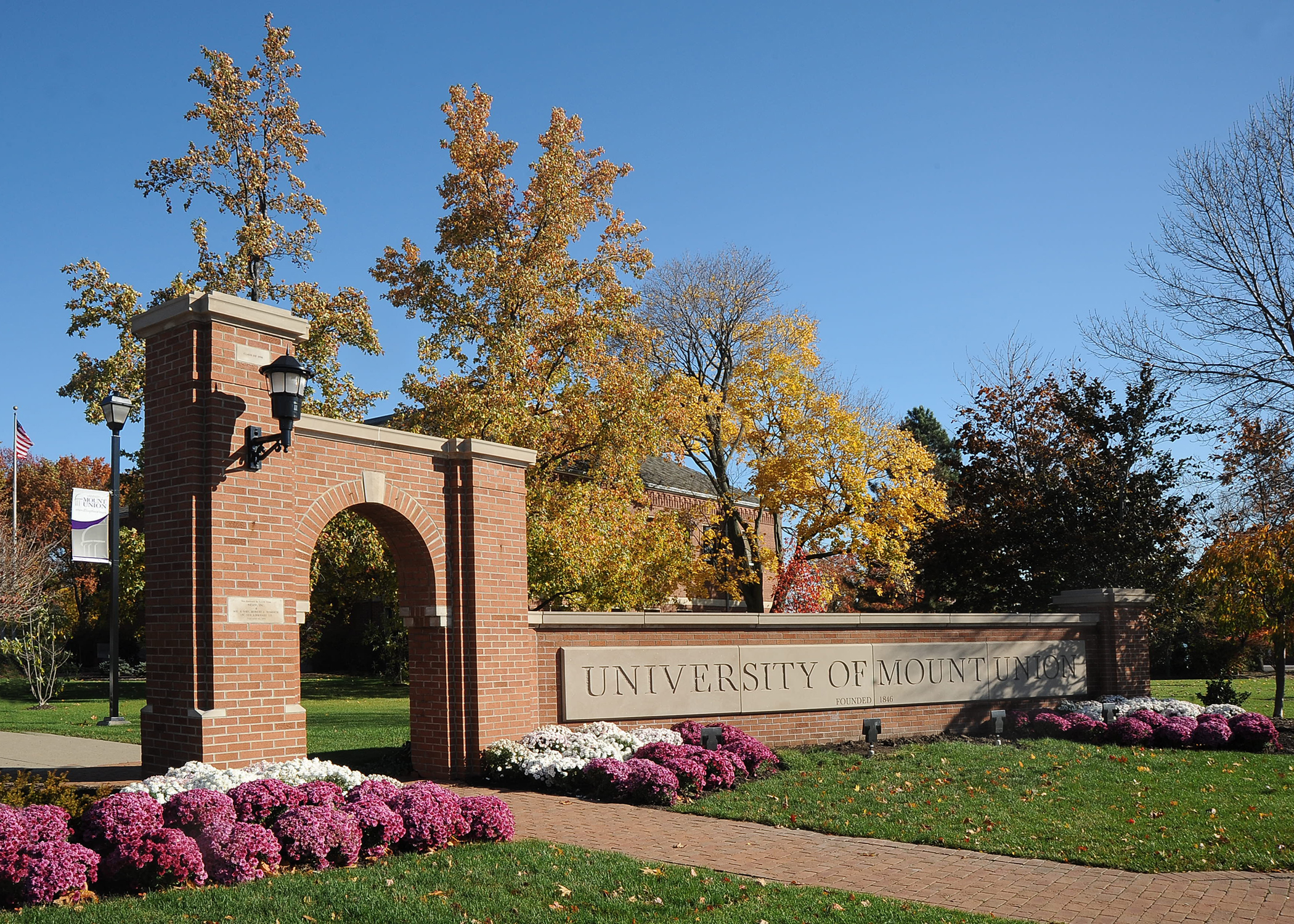
Dr. Colin Campbell serves as an Associate Professor of Physics and Astronomy within the Biochemistry, Chemistry, and Physics Department at the University of Mount Union. He also coordinates the university's data science program, bridging physics and interdisciplinary data-driven research. His teaching portfolio includes foundational courses such as General Physics II, Modern Physics, Thermodynamics and Statistical Mechanics, and Data Science Fundamentals, emphasizing active student engagement and collaborative learning environments. Campbell's research centers on complex systems and network science, applying computational and theoretical physics to diverse domains including ecology, cellular biology, and neuroscience. He investigates phenomena like electrical grid failures, immune system dynamics, and ecological community resilience through network topology and graph theory. His work often involves modeling biological networks using Boolean dynamics to understand emergent behaviors and system stability. Analysis of Campbell's recent publications (2015-2024) reveals a consistent focus on network-based modeling across disciplines. Key themes include plant-pollinator network robustness against species invasions, control strategies for complex networks, and medical physics applications like proton beam therapy optimization. His interdisciplinary collaborations span ecology, neuroscience, and oncology, highlighting the unifying power of network science in solving complex real-world problems. While no specific scientific awards are listed in available sources, Campbell actively mentors undergraduate students, co-authoring publications with them on topics ranging from ecological networks to medical physics. He champions active learning and maintains an 'open door' policy, fostering strong student-faculty interactions both inside and outside the classroom. The Biochemistry, Chemistry, and Physics Department at Mount Union provides research opportunities through faculty-led projects and student organizations. Campbell encourages student involvement in computational physics and data science initiatives, promoting a collaborative and supportive academic environment where students can explore their interests.
Joshua D. Rhodes serves as a Lecturer and Research Scientist at The University of Texas at Austin, with additional roles as a non-Resident Fellow at Columbia University and Founding Partner of IdeaSmiths LLC. His expertise centers on smart grid technology, bulk electricity systems, and energy policy within the Texas electricity market (ERCOT). His academic credentials include: Double Bachelor's in Mathematics and Economics from Stephen F. Austin State University Master's in Computational Mathematics from Texas A&M University Master's in Architectural Engineering from The University of Texas at Austin Ph.D. in Civil Engineering from The University of Texas at Austin Rhodes' research spans smart grid applications , resource planning , distributed generation , and energy storage , with emphasis on ERCOT grid dynamics. He investigates how energy efficiency retrofits, renewable integration, and climate change impact grid reliability, while analyzing policy effects on micro/macro economic efficiency. His work frequently combines spatial modeling with economic analysis to address infrastructure challenges. Analysis of his 40+ publications reveals dominant themes in Texas electricity infrastructure, including renewable integration economics, electrification impacts, and climate resilience. Key trends show increasing focus on Winter Storm Uri aftermath analysis, hydrogen infrastructure development, and optimal maintenance scheduling under climate change. His research consistently bridges engineering systems with policy implications, particularly regarding ERCOT's unique market structure. Rhodes actively engages public discourse as a Forbes contributor and AXIOS Expert Voice, while serving on the board of Catalyst Cooperative—a nonprofit advancing energy data transparency. His professional activities demonstrate strong integration of academic research with real-world energy policy applications.