معرفی
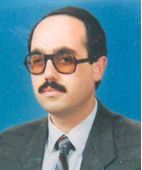
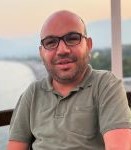
Bülent Haznedar is an Associate Professor in the Department of Computer Engineering at Gaziantep University's Faculty of Engineering, a position he has held since 2024. Previously, he served as Doctor Lecturer at Gaziantep University (2021-2024) and held academic positions at Hasan Kalyoncu University (2013-2021) and Erciyes University (2011-2013), where he progressed from Lecturer to Department Head.
His educational qualifications include:
- Doctorate in Computer Engineering from Erciyes University (2011-2017)
- Master's degree in Computer Engineering from Erciyes University (2007-2010, with thesis)
- Licence degree in Computer Engineering from Erciyes University (2003-2007)
Dr. Haznedar's research centers on Artificial Intelligence and Machine Learning applications, with significant contributions in hydrological modeling (streamflow forecasting using hybrid ANFIS algorithms), renewable energy (solar radiation optimization), medical diagnostics (thyroid nodule classification and cancer detection), and cultural heritage informatics (3D point cloud segmentation for historical buildings). His work consistently integrates fuzzy logic systems with metaheuristic optimization techniques to solve complex prediction problems.
Analysis of his 29 journal articles (2016-2024) reveals a dominant focus on Adaptive Neuro-Fuzzy Inference Systems enhanced by evolutionary algorithms (PSO, GA, ABC) across hydrology and medical domains, with recent expansion into sustainable energy and heritage preservation. His publications show increasing interdisciplinary collaboration, particularly in TUBITAK-funded projects.
His scientific recognition includes:
- TUBITAK Publication Encouragement Awards (2018, 2023)
- TUBITAK PhD Scholarship (2011)
- TUBITAK Master's Scholarship (2008)
Dr. Haznedar has supervised eight master's theses on AI applications in streamflow forecasting, energy prediction, cancer classification, and heritage modeling. His research is supported by seven projects, most notably the TUBITAK 1001 project (2019-2023) developing Heritage Building Information Modeling for Turkey's cultural heritage restoration. He also contributed to TUBITAK's Digital Prosthesis Workshop initiative.
While specific laboratory affiliations aren't detailed, his leadership in the TUBITAK cultural heritage project indicates active collaboration with multidisciplinary teams spanning engineering, computer science, and heritage conservation disciplines.