معرفی
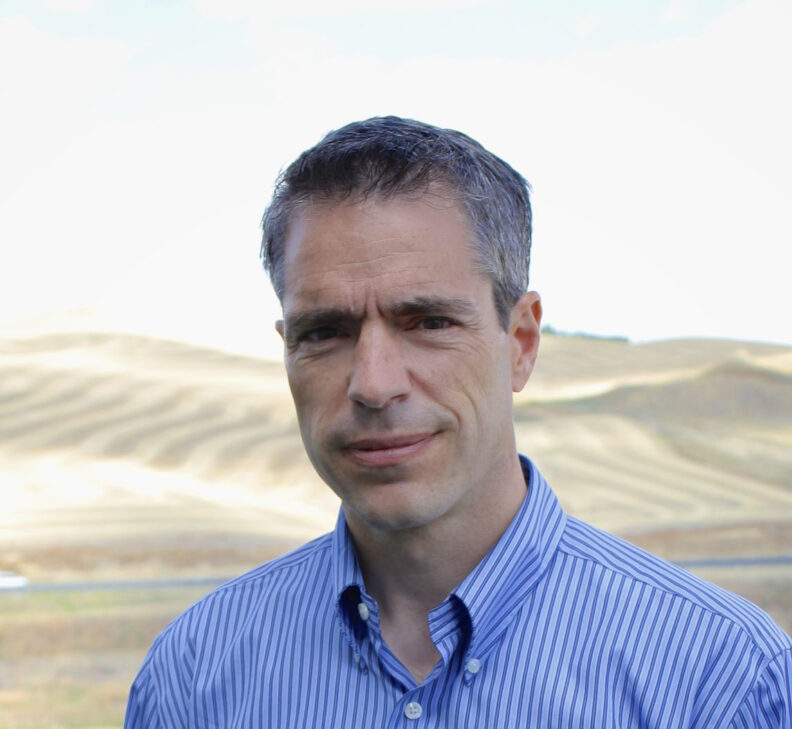
Dr. Colin Campbell serves as an Associate Professor of Physics and Astronomy within the Biochemistry, Chemistry, and Physics Department at the University of Mount Union. He also coordinates the university's data science program, bridging physics and interdisciplinary data-driven research. His teaching portfolio includes foundational courses such as General Physics II, Modern Physics, Thermodynamics and Statistical Mechanics, and Data Science Fundamentals, emphasizing active student engagement and collaborative learning environments.
Campbell's research centers on complex systems and network science, applying computational and theoretical physics to diverse domains including ecology, cellular biology, and neuroscience. He investigates phenomena like electrical grid failures, immune system dynamics, and ecological community resilience through network topology and graph theory. His work often involves modeling biological networks using Boolean dynamics to understand emergent behaviors and system stability.
Analysis of Campbell's recent publications (2015-2024) reveals a consistent focus on network-based modeling across disciplines. Key themes include plant-pollinator network robustness against species invasions, control strategies for complex networks, and medical physics applications like proton beam therapy optimization. His interdisciplinary collaborations span ecology, neuroscience, and oncology, highlighting the unifying power of network science in solving complex real-world problems.
While no specific scientific awards are listed in available sources, Campbell actively mentors undergraduate students, co-authoring publications with them on topics ranging from ecological networks to medical physics. He champions active learning and maintains an 'open door' policy, fostering strong student-faculty interactions both inside and outside the classroom.
The Biochemistry, Chemistry, and Physics Department at Mount Union provides research opportunities through faculty-led projects and student organizations. Campbell encourages student involvement in computational physics and data science initiatives, promoting a collaborative and supportive academic environment where students can explore their interests.