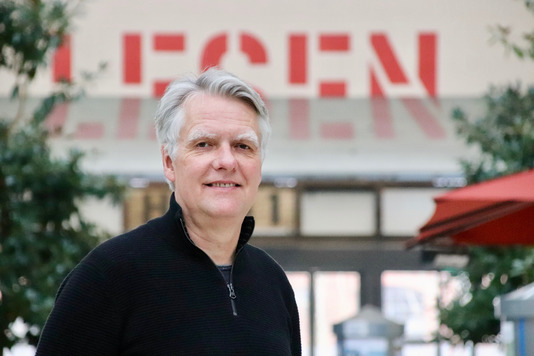
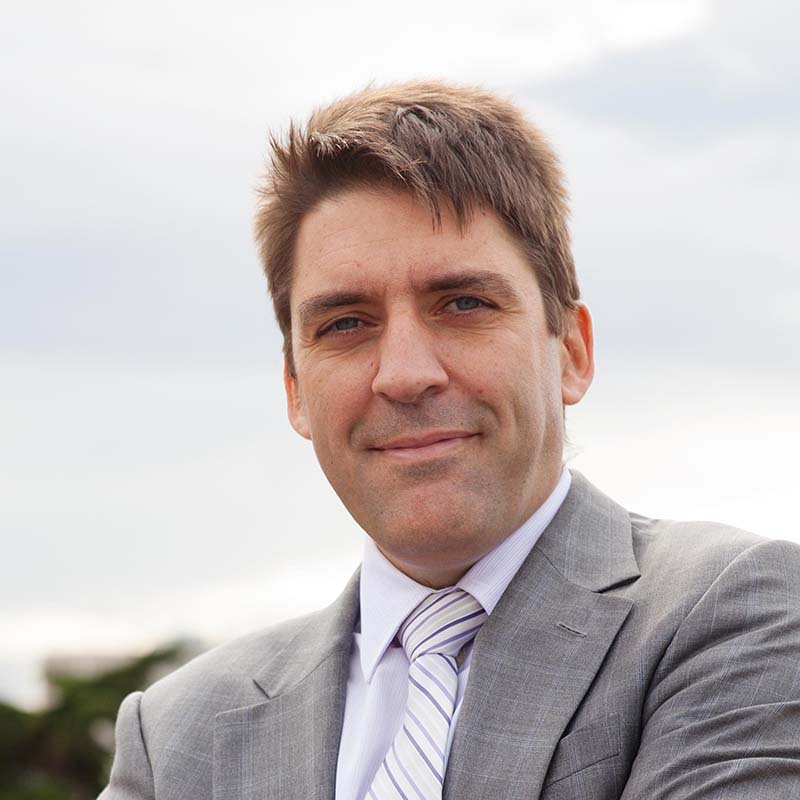
Kent Bertilsson is a Professor and Director of Studies at the Department of Computer and Electrical Engineering (DET) at Mid Sweden University . He serves as a Deputy Prefect and specializes in Power Electronics , with a focus on Embedded Systems , Power Converters , and Fiber Installation Equipment . His research includes projects like DeHigh (electrification of work vehicles) and STORE (electrical energy storage). His work spans High-Frequency Converters , Planar Magnetics , and Multilevel Inverters , with applications in Electric Vehicles and Renewable Energy Systems . He has extensively published in journals like IEEE Transactions on Power Electronics and Energies , emphasizing component optimization and energy efficiency. Notable projects include 48 V Drive Systems and Smart Industry Sweden .
Prof. Dr. Reinhold Fuhrberg serves as Professor of Communication Management with a focus on Public Relations at the Faculty of Management, Culture and Technology, Osnabrück University of Applied Sciences, Lingen campus. His academic career spans over three decades with significant contributions to communication theory and practice. PhD in Communication Sciences Studied Public Relations, German Studies, and Economics at universities in Salzburg, Mainz, and Berlin (1981-1987) Extensive professional experience in PR consulting and academic teaching Professor Fuhrberg's research focuses on strategic communication, organizational communication, and public participation processes, particularly in infrastructure projects. His work bridges theoretical frameworks with practical applications in political communication, risk management, and behavioral economics. He has made significant contributions to understanding agency-client relationships in communication services and the ethical implications of behavioral economics in public communication. His recent publications reveal a strong emphasis on infrastructure project communication, particularly analyzing public participation in energy grid expansion projects. The research demonstrates expertise in coorientation theory, conflict communication, and justice perceptions in participatory processes. His work increasingly integrates behavioral economics concepts like nudging into communication management frameworks. Professor Fuhrberg has held significant professional roles including membership in the DPRG federal board (1997-2000), chairing the certification commission of DPRG/PZOK (2000-2016), and serving on the jury for the Albert-Oeckl junior award (2000-2012). He leads the research project 'Net Future Niedersachsen' analyzing citizen participation in power grid expansion in Lower Saxony (2014-2019). His teaching portfolio includes Strategic Communication, Communication Controlling, External Communication Consulting, and Crisis/Conflict Communication. Professor Fuhrberg maintains strong connections with professional practice through ongoing consulting work in political communication, tourism, and transportation sectors.
Carlos Batlle is an Associate Professor at Comillas Pontifical University in Madrid. He also serves as a Part-Time Professor at the Florence School of Regulation (FSR) and a Research Affiliate at MIT CEEPR . His academic and professional roles focus on energy economics, regulation of electric power systems, and modeling of electricity markets. Key Affiliations : Comillas Pontifical University (Associate Professor, Institute for Research in Technology) Florence School of Regulation (Part-Time Professor, Training Program for European Energy Regulators) MIT Center for Energy and Environmental Policy Research (CEEPR) (Research Affiliate) Advisory Academic Panel of Ofgem (UK National Regulatory Authority) Research Interests include: Regulation and market design of electric power systems Integration of renewable energy sources Tariff structures and end-user rate design Capacity mechanisms and grid reliability Energy poverty and consumer protection Smart distribution systems and grid modernization Recent Publications highlight trends in electricity market reform, decarbonization strategies, and regulatory frameworks. Key themes include balancing efficiency and equity in residual cost allocation, evolving bidding formats in day-ahead markets, and addressing energy poverty during global crises. His work spans empirical analyses, policy critiques, and taxonomy development for energy systems.
Pierluigi Leone is a Full Professor at the Department of Energy (DENERG) of Turin Polytechnic University , with a focus on energy access, decarbonization, and renewable gases. He coordinates Africa development strategies under the University Strategic Plan and serves as a member of the Interdepartmental Energy Center Lab. His academic rank is Professor in the Industrial Technical Physics discipline (Area 0009 - Industrial and Information Engineering). SDG7: Affordable and Clean Energy SDG9: Industry, Innovation, Infrastructure SDG11: Sustainable Cities SDG13: Climate Action His research integrates hydrogen , biomethane , and power-to-gas technologies into energy networks and sector coupling . He supervises PhD students in energy engineering and leads projects like SH2AMROCK (hydrogen mobility) and SHIMMER (gas network resilience). He teaches courses including Global Energy Trends and Thermal Design Optimization , with a focus on industrial decarbonization and renewable integration . External collaborations include Erasmus+ Capacity Building initiatives in Africa and Central Asia, along with commercial projects such as biomethane decarbonization studies and synthetic methane feasibility in cement industries.
Peyman Afzali Gorouh is a Postdoctoral Researcher in the Applied Power Electronic Systems group within the Faculty of Engineering and Science at Aalborg University, Denmark. His research focuses on developing innovative models for energy communities, smart grids, and renewable energy integration. Dr. Afzali's research interests span power engineering, smart grid technologies, renewable energy systems, and energy communities. His work particularly emphasizes prosumer economics, peer-to-peer energy trading, risk modeling in power systems, and energy democracy frameworks. He has developed novel approaches for optimizing energy communities while considering socio-economic-environmental factors, demand response, and uncertainty management. His recent publications (2020-2024) demonstrate a consistent focus on energy community modeling, with particular emphasis on peer-to-peer trading mechanisms, risk-constrained optimization, and multi-objective planning. His work bridges technical power system challenges with socio-economic considerations, creating integrated models that address both engineering and human aspects of modern energy systems. Dr. Afzali maintains an active research profile with numerous publications in high-impact journals including IEEE Transactions on Engineering Management, Energy and Buildings, Applied Sciences, and Sustainable Cities and Society. His research shows strong international collaboration, particularly with researchers from Iranian institutions.
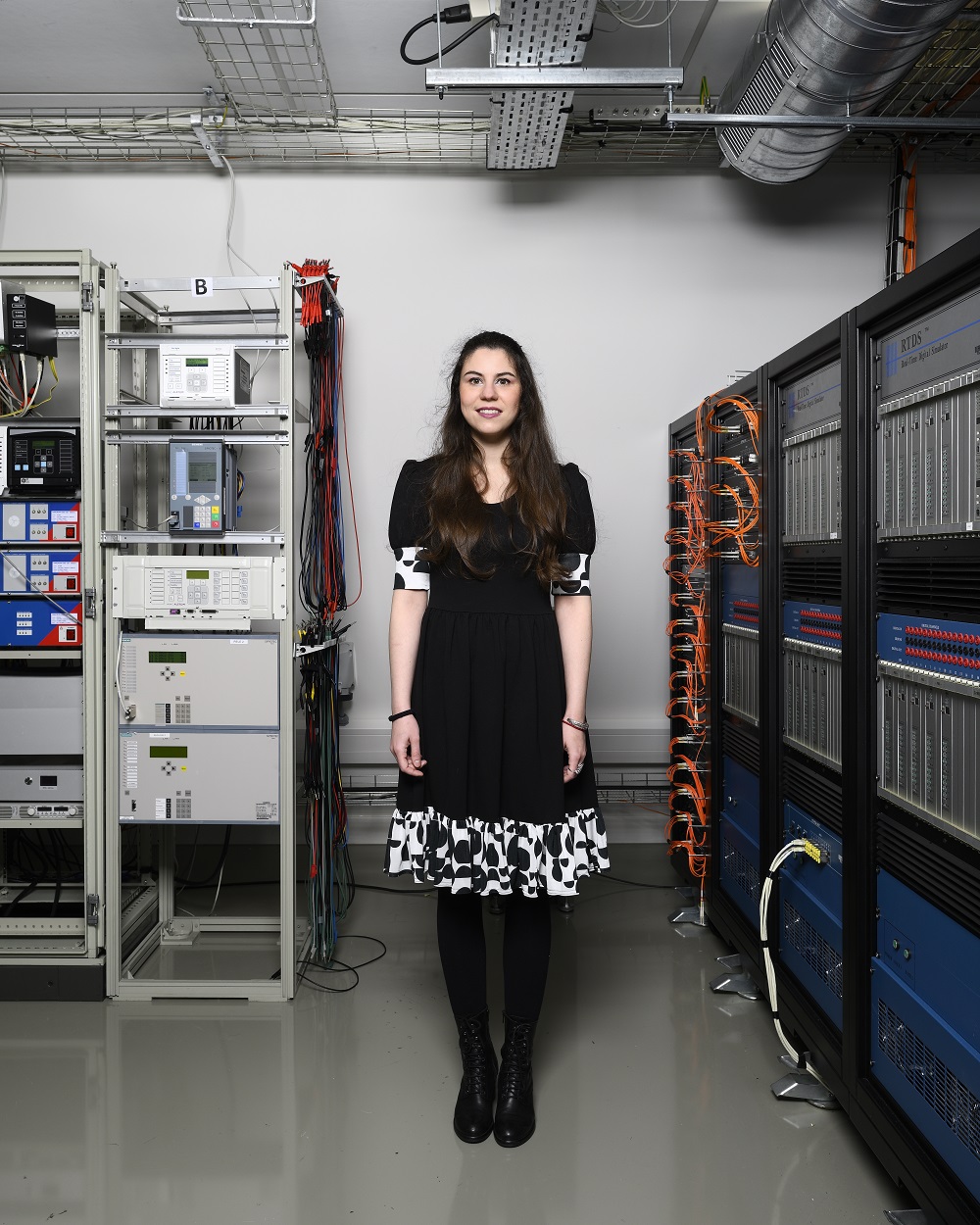
Aleksandra Lekić is a researcher at the Electrical Sustainable Power Lab within the Faculty of Electrical Engineering, Mathematics and Computer Science (EEMCS) at Delft University of Technology (TU Delft). Her work focuses on digital replicas of energy systems and real-time simulations for stability analysis. Fields of Interest : Energy Transition, Power Systems, Digital Twins, Renewable Energy Integration, Control Systems, Real-Time Simulation, Offshore Wind Farms, Grid Stability Research Focus : She develops digital twin models to simulate extreme scenarios in power systems, particularly for offshore wind farm networks. Her control systems research aims to stabilize energy grids under overgeneration conditions by redirecting excess energy. This work supports North Sea countries' collaborative energy transition goals. Advising : Aleksandra supervises a diverse group of students and researchers working on energy transition technologies. Labs & Teams : She contributes to the Electrical Sustainable Power Lab, leveraging supercomputers for real-time simulations of hypothetical energy systems.
Erik Ahlgren is Professor of Energy Technology at Chalmers University of Technology, Sweden. His research centres on energy-system transitions across scales, integrating techno-economic and systems-dynamics modelling to address urban and rural energy challenges in both Nordic and East African contexts. Research focus Energy-system transitions connecting technology, economy and environment Urban energy systems and sector coupling Rural electrification and mini-grid planning in East Africa District heating and cooling futures Clean cooking with biogas He leads or co-leads 25 projects funded by the Swedish Energy Agency, Swedish Research Council (VR), SIDA, the EU and other bodies, and collaborates closely with Addis Ababa University, University of Rwanda and Eduardo Mondlane University. Teaching & outreach Responsible for the public digital evening course Climate – the science, measures and policy . Grants & projects Buildings in the integrated energy system (2024–2028, Swedish Energy Agency) A multiperspective analysis of cost-efficient batteries in rural mini-grids (2023–2026, VR) PhD Programme in Electrical Power and Control Engineering with Addis Ababa University (2018–2025, SIDA) BREEMRES – research training partnership programme (2018–2025, SIDA) Flexibility for Smart Urban Energy Systems (FlexSUS, 2019–2024) Collaborations & networks Active in international consortia including the Strategic Research Centre for 4th Generation District Heating (4DH), FutureGas, and numerous East African capacity-building initiatives.
Sverker Molander is a Full Professor at the Environmental Systems Analysis group at Chalmers University. His research integrates systems approaches to analyze human-induced environmental change and its mitigation, with a focus on chemical risk assessment, material flows, and renewable energy systems. He actively collaborates with social scientists to examine technology-society-ecosystem interfaces and participates in international programs like Sida's collaboration with Universidade Eduardo Mondlane in Mozambique. SETAC Global Science Committee member Baltic Sea Foundation research delegation Kamprad Family Foundation scientific reviewer His work employs environmental risk assessments, life cycle analyses, and substance flow modeling, particularly examining: Toxicological impacts of nanomaterials Renewable energy environmental interactions Chemical exposure limit inconsistencies Multidisciplinary approaches to sustainability Risk communication in chemical supply chains Climate-chemical pollution intersections Recent publications demonstrate expertise in: Ecotoxicity extrapolation methods Machine learning for toxicity prediction Circular tungsten flows Marine energy collision risks Climate-adapted chemical management His research connects technical systems with societal and ecological considerations, emphasizing indicator development and interdisciplinary collaboration.
Dr Xiandong Ma is a Reader in Power and Energy Systems at Lancaster University's School of Engineering, where he has been a faculty member since December 2008. His research focuses on intelligent condition monitoring and fault diagnosis of power systems, with particular expertise in wind energy systems and smart grid technologies. His educational background includes: BEng in Electrical Engineering from Jiangsu University (1986) MSc in Power Systems and Automation from Nanjing Automation Research Institute (1989) PhD in Partial Discharge based High-voltage Plant Condition Monitoring from Glasgow Caledonian University (2002) Dr Ma's research spans intelligent condition monitoring and fault diagnosis/prognosis of wind power systems and electrical assets, condition-based operations and maintenance of power and energy systems, modeling, optimization, and control of smart/micro grids with renewable energy resources, power conversion and renewable energy integration, and associated machine learning and AI technologies and digital twin solutions. His work bridges theoretical advances with practical engineering applications in the renewable energy sector. His recent publications demonstrate a strong focus on quantum machine learning applications for wind turbine monitoring, electric vehicle-grid integration challenges, wave energy conversion systems, and nuclear fuel inspection technologies. The research shows a clear trajectory toward more sophisticated AI-driven solutions for energy systems, with increasing emphasis on multi-physics modeling and cross-domain applications. Dr Ma has received several prestigious recognitions: Chartered Engineer Fellow of the Institution of Engineering and Technology (FIET) Fellow of the Higher Education Academy (FHEA) Member of EPSRC Peer Review College KTP Fellowship awarded by University of Technology Sydney (2018) Ranked in the world's top 2% scientists by Stanford University He actively supervises numerous PhD students and postdoctoral researchers, with current projects including the Leverhulme Trust-funded "Self-Aware Power Networks: Autonomous Operation at Scale" and several EPSRC-funded initiatives. Dr Ma has secured significant research funding and collaborates extensively with industry partners to translate research into practical applications. Dr Ma leads research within Lancaster's Energy research group, focusing on the integration of advanced sensing, AI, and control techniques for next-generation power and energy systems. His team works closely with industrial partners including ALSTOM Power and various renewable energy companies to develop innovative solutions for real-world energy challenges.
Professor Nebojsa Mitrović is a distinguished faculty member at the Electronic Faculty of the University of Niš, Serbia, where he serves as a Professor in the Department of Power Engineering. With decades of academic and research experience, he has established himself as a leading expert in electric motor drives and power electronics. His work bridges theoretical research with practical industrial applications, particularly in crane systems and power quality issues. Professor Mitrović's research interests span electric motor drives, power electronics, control systems for electrical machines, induction motors, voltage sag effects on electrical drives, crane applications, renewable energy systems, and electromechanical energy conversion. His work demonstrates a consistent focus on improving the performance and reliability of electrical drive systems, particularly in industrial settings where power quality issues can significantly impact operations. He has made substantial contributions to understanding how voltage sags affect various types of motor drives and has developed innovative control strategies to mitigate these effects. His extensive publication record shows a clear research trajectory focusing on electric motor drives and power electronics. The most recent publications (2020-2023) demonstrate continued innovation in grid-connected converters, microgrid stability, and modern testing methodologies for electric drives. Earlier works (2006-2017) established foundational knowledge in direct torque control, multi-motor drive systems for cranes, and voltage sag effects on industrial drives. His research consistently addresses practical engineering challenges while advancing theoretical understanding in the field. Professor Mitrović has contributed significantly to academic literature through numerous journal articles, conference papers, and book chapters. His 2009 monograph "Implementacija algoritama za upravljanje momentom i fluksom asinhronih motora" (Implementation of Algorithms for Torque and Flux Control of Induction Motors) and the 2012 book chapter "Electrical Drives for Crane Application" in Mechanical Engineering published by InTech represent substantial contributions to the field. He has also co-authored educational materials including solved problem collections and laboratory exercises for electric motor drives courses. Professor Mitrović actively supervises student research and has been involved in numerous technical projects, including the development of laboratory setups for testing vector controlled induction motor drives. His work has practical applications in various industries, particularly in crane systems and industrial drive applications. He has collaborated extensively with colleagues including Vojkan Kostić, Milutin Petronijević, and Bojan Banković on research projects funded by various Serbian research initiatives. His laboratory work includes the development of testing systems for electric drives and the implementation of advanced control algorithms for industrial applications. Professor Mitrović is associated with the Power Engineering Department at the University of Niš, where he teaches courses including Electric Motor Drives, Selected Topics in Electric Motor Drives, Electrical Machines, Electromechanical Energy Conversion, and Modeling of Electrical Machines and Drives. His teaching reflects his research expertise and provides students with both theoretical knowledge and practical skills in electric drive systems.
Prof. Dr. Wolfgang Lippmann is a Senior Scientist at the Institute of Process Engineering and Environmental Technology, Chair of Hydrogen and Nuclear Energy at Technical University of Dresden. He has maintained continuous affiliation with TU Dresden since 1974, progressing from student to professorial status, with his current role beginning in 2021 after decades as Scientific Staff member. From 2017-2020, he served as Substitute Chair for Prof. Antonio Hurtado during Hurtado's tenure as Vice-Rector for University Development. His academic journey includes: 1974-1978: Studies of energy technology at Technical University of Dresden 1978-1983: Scientific assistant at Chair of Nuclear Energy Technology 1984: PhD on reactor containment stress analysis during cooling loss scenarios 1989: Post-doctoral thesis on pressurized-water reactor containment stress Lippmann's research bridges nuclear engineering with hydrogen technologies through innovative laser-based applications. His work spans reactor safety analysis, high-temperature ceramic materials, and nuclear-hydrogen system integration. He has pioneered laser joining techniques for silicon carbide ceramics in nuclear applications, developed laser decontamination systems for nuclear decommissioning, and conducted safety analyses of hydrogen systems coupled with nuclear power plants. His research integrates fundamental materials science with practical engineering solutions for next-generation energy systems. Analysis of his recent publications reveals three dominant research thrusts: nuclear-hydrogen integration (particularly PEM electrolysis coupled with nuclear plants), laser-based nuclear technologies (decontamination and ceramic joining), and advanced safety analysis of energy systems. His work demonstrates increasing focus on cross-sector energy integration while maintaining strong foundations in nuclear materials and safety engineering. Lippmann leads multiple significant research initiatives including TE-Cer (ceramic composites for thermo-electrical systems), F-Bridge (GEN IV fuel design), MANOLA (laser ablation systems), eJoin and CeraJoin (ceramic joining technologies), DELTA (integrated electrolyzer-hydrocarbon systems), LaDECO (laser decontamination), TE-K-SYSTEM (thermoelectric modules), and SYNKOPE-flex (energy carrier coupling). His laboratory at George-Bähr-Straße 3b in Dresden houses specialized equipment for laser processing, materials characterization, and thermal testing of nuclear components.
Bülent Haznedar is an Associate Professor in the Department of Computer Engineering at Gaziantep University's Faculty of Engineering, a position he has held since 2024. Previously, he served as Doctor Lecturer at Gaziantep University (2021-2024) and held academic positions at Hasan Kalyoncu University (2013-2021) and Erciyes University (2011-2013), where he progressed from Lecturer to Department Head. His educational qualifications include: Doctorate in Computer Engineering from Erciyes University (2011-2017) Master's degree in Computer Engineering from Erciyes University (2007-2010, with thesis) Licence degree in Computer Engineering from Erciyes University (2003-2007) Dr. Haznedar's research centers on Artificial Intelligence and Machine Learning applications, with significant contributions in hydrological modeling (streamflow forecasting using hybrid ANFIS algorithms), renewable energy (solar radiation optimization), medical diagnostics (thyroid nodule classification and cancer detection), and cultural heritage informatics (3D point cloud segmentation for historical buildings). His work consistently integrates fuzzy logic systems with metaheuristic optimization techniques to solve complex prediction problems. Analysis of his 29 journal articles (2016-2024) reveals a dominant focus on Adaptive Neuro-Fuzzy Inference Systems enhanced by evolutionary algorithms (PSO, GA, ABC) across hydrology and medical domains, with recent expansion into sustainable energy and heritage preservation. His publications show increasing interdisciplinary collaboration, particularly in TUBITAK-funded projects. His scientific recognition includes: TUBITAK Publication Encouragement Awards (2018, 2023) TUBITAK PhD Scholarship (2011) TUBITAK Master's Scholarship (2008) Dr. Haznedar has supervised eight master's theses on AI applications in streamflow forecasting, energy prediction, cancer classification, and heritage modeling. His research is supported by seven projects, most notably the TUBITAK 1001 project (2019-2023) developing Heritage Building Information Modeling for Turkey's cultural heritage restoration. He also contributed to TUBITAK's Digital Prosthesis Workshop initiative. While specific laboratory affiliations aren't detailed, his leadership in the TUBITAK cultural heritage project indicates active collaboration with multidisciplinary teams spanning engineering, computer science, and heritage conservation disciplines.
Dr. Vangelis Marinakis is an Assistant Professor at the School of Electrical and Computer Engineering (ECE) of the National Technical University of Athens (NTUA). His academic background includes an Electrical and Computer Engineering degree and a PhD in Decision Support Systems for Sustainable Energy Planning from NTUA. PhD in Decision Support Systems for Sustainable Energy Planning (NTUA) Electrical and Computer Engineer (NTUA) His research focuses on designing methodologies for intelligent energy management across Smart Homes, Buildings, Cities, and Districts, leveraging technologies like IoT, AI, and Big Data. He has contributed to over 25 European (Horizon Europe, H2020) and national projects, with more than 50 journal publications and book chapters. Key research areas include Decision Support Systems , Energy Efficiency , and Renewable Energy Integration . He has led research in AI-driven energy forecasting, federated learning for privacy-preserving data models, and blockchain applications in energy markets. His work explores the intersection of Smart Grids , Building Informatics , and Climate Resilience . Dr. Marinakis has developed frameworks for: Decarbonization-as-a-Service in building renovations Scalable Big Data architectures for smart buildings Multi-criteria optimization of EV charging stations Explainable AI in energy decision-making Climate resilience assessment for urban housing
Sri Niwas Singh serves as Chair Professor in the Department of Electrical Engineering at the Indian Institute of Technology, Kanpur, where he has established himself as a leading expert in power systems engineering with significant research contributions spanning multiple critical areas. His educational qualifications include: PhD in Electrical Engineering from IIT Kanpur (1995) M.Tech in Electrical Engineering from IIT Kanpur (1989) B.Tech in Electrical Engineering from KNIT Sultanpur (1987) Professor Singh's research program focuses on Power System Restructuring, FACTS Technology, Optimal Power Dispatch and Security Analysis, Power System Dynamics, Operation and Control, Distribution System Planning and Demand Side Management, and Application of Genetic Algorithms and Artificial Neural Networks in Power Systems. His work bridges theoretical concepts with practical applications, particularly in smart grid technologies and renewable energy integration. His publication record reveals a consistent research trajectory addressing evolving power system challenges, with increasing emphasis on renewable energy integration and computational intelligence techniques. The progression from traditional power system analysis toward smart grid technologies and AI applications demonstrates his ability to adapt research focus to emerging industry needs. His significant professional recognitions include: 2013 IEEE Educational Activities Board Meritorious Achievement Award in Continuing Education Three PhD theses supervised by him receiving the POSOCO Power System Award (2012) Humboldt Research Fellowship (awarded 2005 and 2007) INAE Young Engineer Award (2000) C.B.I.P. Young Engineer Award (1996) Professor Singh has mentored numerous graduate students, with three of his PhD students receiving the prestigious POSOCO Power System Award in 2012. His research has attracted substantial funding and collaboration opportunities, supporting advanced work in power systems analysis and control. His laboratory focuses on power system simulation, renewable energy integration studies, and smart grid technology development, with a research team comprising PhD scholars and industry collaborators working on cutting-edge power engineering problems.
Pourya Shamsi serves as an Associate Professor in the Department of Electrical Engineering at Missouri University of Science and Technology, where he is affiliated with the Center for Intelligent Infrastructure. His research focuses on power electronics and smart grid technologies, with particular emphasis on DC-DC conversion systems and renewable energy integration. Education: B.Sc. in Electrical and Computer Engineering, University of Tehran, Tehran, Iran (2007) Ph.D. in Electrical and Computer Engineering, University of Texas at Dallas, TX (2012) Dr. Shamsi's research spans several critical areas in modern power systems, with primary focus on smart grids, microgrid stability assessment, energy management systems, and advanced power conversion technologies. His work on switching power converters, particularly VHF/UHF dc-dc converters and motor drives, addresses key challenges in renewable energy integration and electric vehicle charging infrastructure. His research has strong practical applications in improving grid stability and enabling extreme fast charging capabilities. Analysis of Dr. Shamsi's recent publications (2021-2025) reveals a consistent research trajectory focused on high step-up DC-DC converters, with particular emphasis on innovative topologies incorporating coupled inductors, voltage multiplier cells, and soft-switching techniques. His work demonstrates strong connections between theoretical power electronics design and practical applications in photovoltaic systems, DC microgrids, and electric vehicle charging infrastructure. The research shows increasing focus on modular and extendable converter designs that can scale for different power applications while maintaining high efficiency. Dr. Shamsi is actively involved in research through the Center for Intelligent Infrastructure at Missouri S&T, where his work contributes to advancing power conversion technologies for modern energy systems. His research has direct applications in renewable energy integration, grid stability enhancement, and next-generation charging infrastructure.