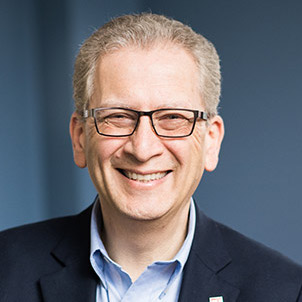
Baikun Li serves as a Professor in the School of Civil and Environmental Engineering at the University of Connecticut's College of Engineering, where he conducts pioneering research at the intersection of environmental engineering and advanced sensing technologies. His work addresses critical global challenges in water security and sustainable resource management through innovative technological solutions. His educational foundation includes a Ph.D. earned from the University of Cincinnati in 2002, establishing the technical expertise that underpins his current research trajectory. Professor Li's research program centers on four interconnected domains with significant environmental impact: Biological Wastewater Treatment : Developing next-generation biological processes that enhance treatment efficiency while reducing energy consumption and sludge production. Bioenergy Production : Creating integrated systems that convert waste streams into renewable energy sources, advancing circular economy principles in environmental engineering. Environmental Biotechnology : Engineering biological systems for environmental remediation and resource recovery applications. Biosensor Development : Designing novel sensing platforms for real-time, continuous environmental monitoring with applications in water quality assessment and pollution control. Analysis of his recent publication record reveals a pronounced shift toward intelligent environmental systems, characterized by the integration of machine learning algorithms with high-fidelity sensor networks. His work increasingly addresses emerging challenges in resource recovery (particularly lithium extraction), decentralized water infrastructure, and the water-energy-food nexus, demonstrating both technical depth and systems-level thinking. No specific scientific awards were documented in the provided source materials. As a faculty member, Professor Li maintains an active research group focused on bioenergy and environmental biotechnology, as evidenced by his dedicated research website. His program likely involves graduate student mentorship and competitive research funding, though specific grant details were not provided in the source text. The Bioenergy Research Laboratory (indicated through his research website) serves as the operational hub for developing cutting-edge sensor technologies, microbial fuel cells, and bioelectrochemical systems. This facility supports experimental work on real-time monitoring platforms, resource recovery processes, and sustainable treatment technologies with direct applications to municipal and industrial wastewater challenges.