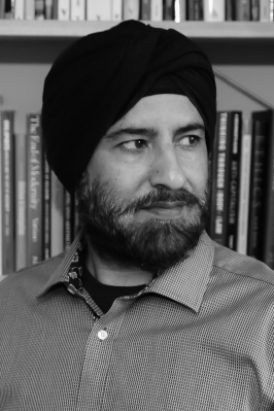
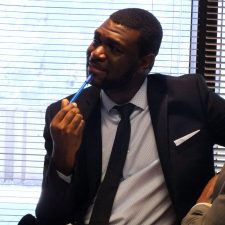
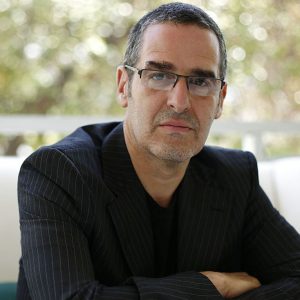
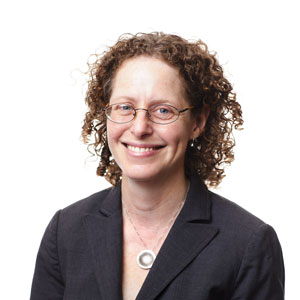
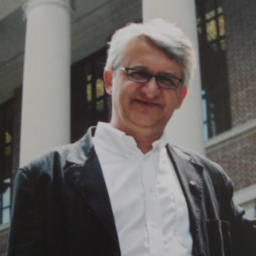
Prerna Agarwal is a Research Fellow at the Leibniz-Zentrum Moderner Orient and holds a Marie Skłodowska Curie Action Fellowship at the Centre for Modern Indian Studies, University of Göttingen . Her work bridges Modern South Asian History , Global Labour History , and Postcolonial State Formation . Education : PhD in History (King’s College London, 2013-2018), MSc in Political Economy of Development (SOAS, 2011-2012), MA in Philosophy (University College London, 2009-2010), BA (Honors) in Economics (Miranda House, University of Delhi, 2006-2009). Her research explores the interplay between labour politics and state authoritarianism in postcolonial India, with a focus on events like the 1974 railway strike and the 1975 Emergency . She situates these within broader frameworks of crisis in the Third World and labour welfarism . The 2022-2024 period dominates her recent publications, covering topics from Calcutta dockworkers to plague responses . These works intersect social history , political economy , and authoritarianism studies . Scientific Awards : Marie Skłodowska Curie Action Fellow (2023-2026) Gerda Henkel Fellow (2022-2023) Teaching Fellow (Ashoka University, 2020) LSE Fellow (2017-2019) Prerna has taught courses on historical methods , European history , and economic history at institutions including the Indian Institute of Science , Ashoka University , and London School of Economics . Her research is funded by prestigious organizations, and she contributes to debates on democracy vs. authoritarianism in India.
Arvind-Pal S. Mandair is a Professor in the Department of Asian Languages and Cultures at the University of Michigan. He holds the Tara Singh and Balwant Kaur Chattha, Gurbax Singh and Kirpal Kaur Brar Professor of Sikh Studies and serves as Associate Faculty in Asian/Pacific Islander American (A/PIA) Studies. His academic work bridges Global Philosophies, Postcolonial Theory, and Religious Studies, with a focus on Sikh and South Asian traditions. Education: Ph.D. and MA in Philosophy/Religion (University of Warwick, UK, 1999); Ph.D. and B.Sc. in Chemistry (University of Aston, CNAA, 1989) Key research areas include cross-cultural philosophy, decolonial theory, consciousness studies, and the intersections of religion and politics. He founded the journal Sikh Formations: Religion, Culture and Theory and co-edits book series on Critical Sikh Studies and Translation and Religion. His recent publications explore themes such as the Śabad in Sikh philosophy, diasporic identities, and sociopolitical dimensions of Sikh thought. He has also authored influential works like Violence and the Sikhs (2022) and Sikh Philosophy (2022), which interrogate colonial legacies and modern theological frameworks. Mandair’s teaching integrates neuroscience, spirituality, and political theory, particularly in courses like Race, Religion and Caste in India and the USA and Exploring Consciousness . He co-founded the Geophilosophies project, which pluralizes philosophical inquiry beyond Eurocentric paradigms.
Dr. Yimin Zhao is an Assistant Professor in the Department of Geography at Durham University, specializing in urban peripheries, spatial politics of urban change, and authoritarian urbanism in China and Asia. He employs interdisciplinary lenses of language, materiality, and everyday life to analyze urban transformations. Editor of City and Corresponding Editor of International Journal of Urban and Regional Research Trustee of the Urban Studies Foundation Founder and Co-Editor of 城识 UrbanSense, a WeChat-based platform for critical urban knowledge His research spans three interconnected themes: (1) spatio-temporal dynamics of urban peripheries in Asian cities, (2) global-local articulations of Chinese urbanism, and (3) authoritarian urban governance. He has contributed to debates on speculative urbanism, micropolitics of infrastructure, and translational urban theory. Recent publications include studies on Beijing’s green belts, Forest City in Malaysia, and Chengdu’s pandemic-era street governance. Zhao’s work often intersects with state theory, political economy, and critical sociology. While no formal scientific awards are listed in his profile, his editorial and knowledge mobilization efforts highlight his disciplinary leadership.
Guy Azebové Tetang is a Lecturer at the Faculty of Law of the University of Montreal, specializing in comparative constitutional law with a focus on sub-Saharan Africa. His research explores the interplay between constitutional 'standards' (universalism) and 'localisms' (relativism), particularly in Francophone Africa. He holds a PhD from the University of Montreal (2023), supervised by Professors Jean-François Gaudreault-Desbiens and Pierre Noreau. Education: Doctor of Law (PhD), Université de Montréal (2023). Research Interests: Constitutional transplants, African political imaginaries, legal hybridity, postcolonial constitutionalism, and the tension between global legal norms and local practices. His work analyzes how African states navigate constitutional borrowing from Western models while reinterpreting them through local contexts. Key themes include constitutional polymorphism, legal reappropriation, and the 'constitutional threshold' as a space of cultural negotiation. Notable Achievements: 2024 AHJUCAF Special Mention Prize (for doctoral thesis), exceptional mention for thesis defense (2023), and Pierre Noreau/Jean-François Gaudreault-Desbiens doctoral scholarship (2016). His publications include chapters in *From One Threshold to Another* (2017) and *Secrets of States* (2017), exploring constitutional dynamics in Africa and Canada. He has presented at conferences such as *Les après-midis de la Justice* (2022) and the CRDP Young Researchers' Lunchtime Conferences (2020), discussing topics like Cameroon's social justice challenges and judicial power excess. Current Affiliations: CRDP (Centre de recherche en droit public), where he contributes to research groups on law and new social relations. His work intersects with legal pedagogy, interdisciplinary collaboration, and global justice studies.
Mark Mazower is the Ira D. Wallach Professor of History at Columbia University, where he has established himself as a leading historian specializing in modern Greece, 20th-century Europe, and international history. He also serves as the Stavros Niarchos Foundation Director of the Columbia Institute for Ideas and Imagination in Paris, which brings together scholars with leading artists, writers, composers and filmmakers from around the world to foster innovative interdisciplinary collaboration. His educational background includes a D.Phil. from Oxford University (1988), an M.A. from Johns Hopkins University (1983), and a B.A. from Oxford University (1981). This strong academic foundation has positioned him as a preeminent historian with expertise spanning multiple historical periods and geographical regions. Mazower's research focuses on modern Greek history, 20th-century European history, and international history, with recent work examining the historical evolution of the Greek islands over the very long term. His scholarship bridges academic rigor with public engagement, as he frequently contributes commentary on international affairs and book reviews to major publications including the Financial Times , The Nation , the London Review of Books , and the New York Review of Books . In 2016, he expanded his public engagement through the film Techniques of the Body , a meditation on the refugee crisis in Greek history created with director Constantine Giannaris. His publications reveal a consistent focus on understanding the complex interplay between national histories and broader international frameworks. Mazower's work often examines how local experiences intersect with global forces, particularly in the context of war, occupation, state formation, and the development of international institutions. His approach combines deep archival research with conceptual innovation, making significant contributions to our understanding of European history, Greek history, and international relations. Mazower's scholarly achievements have been recognized with numerous prestigious awards: Gennadius Prize (2023) Honorary Citizenship from the Republic of Greece (2022) Fellow of the British Academy (2019) D. Litt., honoris causa , Catholic University of Leuven (2019) D. Litt., honoris causa , University of Athens (2015) Dido Sotiriou Award of the Hellenic Authors Society (2012) Society of Columbia Graduates Great Teacher Award (2011) Fellow, American Academy of Arts and Sciences Hitler's Empire: Trilling Award and LA Times Book Prize for History (2009) Salonica, City of Ghosts: Duff Cooper Prize (2005) As an educator at Columbia University, Mazower has mentored numerous students in the Department of History, guiding research in modern European history, Greek history, and international history. His leadership extends to directing the Columbia Institute for Ideas and Imagination in Paris, which has received significant funding from the Stavros Niarchos Foundation to support interdisciplinary collaboration between scholars and creative artists from around the world. At the Columbia Institute for Ideas and Imagination, Mazower has created a unique intellectual environment where historians work alongside artists, writers, and filmmakers to explore new approaches to understanding complex historical and contemporary issues. This innovative space reflects his commitment to bridging academic scholarship with creative expression and public engagement, fostering dialogue across disciplinary boundaries to address pressing global challenges.
Ajay Parasram is an Associate Professor cross-appointed to the Department of International Development Studies, Department of History, and Department of Political Science at Dalhousie University in the Faculty of Arts and Social Sciences. His work critically examines the colonial present through the lens of structural violence related to race, caste, class, and patriarchy. Dr. Parasram's educational background includes a BA (Honours) from Dalhousie University, an MA from Carleton University, and a PhD from Carleton University. His transnational, multigenerational experience as a byproduct of empire deeply informs his research and teaching approach. Parasram's research focuses on three primary interconnected areas: pluriversal sovereignty with particular attention to 19th century Sri Lanka's entanglements in the British empire; settler-colonial studies and decolonial options grounded in his experience as an immigrant to Mi'kma'ki; and a SSHRC-funded project examining the racialization of Asian international students to Canadian universities. His scholarship challenges conventional narratives of development, sovereignty, and citizenship, arguing that many contemporary structural forms of violence have roots in imperial encounters that have been sanitized of their colonial histories. His extensive publication record demonstrates consistent engagement with themes of coloniality, sovereignty, and racialization. Recent work shows an increasing focus on pluriversal approaches to sovereignty, settler-colonial critique, and the application of decolonial theory to contemporary political challenges. His scholarship bridges historical analysis with urgent contemporary concerns about racial justice, Indigenous sovereignty, and alternative political imaginaries. Among his notable recognitions are: SSHRC Insight Grant as Co-Investigator and project lead for the Halifax case study on racialization of Asian international students Founding Fellow at the MacEachen Institute of Public Policy and Governance (2019-2021) Chair and Program Chair of the Global Development Section of the International Studies Association (2019-2020) Parasram actively mentors graduate students interested in colonial, postcolonial, anti-colonial, and decolonial studies. His teaching includes courses on the colonial foundations of development studies, M.K. Gandhi, postcolonial politics, and activism. He has received research funding through competitive grants like the SSHRC Insight Grant, which supports his work on racialization experiences of Asian international students in Canadian universities. As a scholar-activist, Parasram engages with public discourse through media commentary, podcasts, and public speaking on issues of racial justice, colonial legacies, and decolonial possibilities. His work bridges academic scholarship with public engagement, challenging dominant narratives while offering alternative frameworks for understanding sovereignty, citizenship, and justice.
James Robert Brennan is an Associate Professor in the Department of History and the Center for African Studies at the University of Illinois, Urbana-Champaign. His research focuses on African history, particularly modern Tanzania, colonialism, and decolonization. He holds significant awards including the Conrad Humanities Scholar (2019-2024) and the Bethwell A. Ogot Book Award (2013). His work explores themes such as Islamic politics, print culture, and Cold War-era intelligence networks. Notable publications include Taifa: Making Nation and Race in Urban Tanzania (2012) and co-edited volumes on Dar es Salaam's urban history. Brennan’s research bridges historical analysis with critical engagement on colonial legacies and postcolonial governance. He has held prestigious fellowships including the ACLS Ryskamp Research Fellowship (2012–2015). His recent scholarship addresses topics like Islamic authority in Tanzania, Cold War political intelligence, and postcolonial urban intellectual networks. Brennan actively contributes to academic discourse through peer-reviewed articles and book reviews, emphasizing interdisciplinary approaches to African history. He is also a co-editor of the Journal of Eastern African Studies .
Megan J. Elias is an Associate Professor of the Practice and Director of the Food Studies Program at Boston University. She holds a PhD from the City University of New York (CUNY), an MA from San Francisco State University, and a BA from Cornell University. Her research explores the intersection of food, culture, and history, with a focus on food writing, markets, home economics, and gender. Dr. Elias is the author of seven books, including *Food on the Page: Cookbooks and American Culture* (2017) and *Food in the United States, 1890–1945* (2009), which received the American Library Association’s Outstanding Academic Text award. She serves as editor-in-chief of *Food, Culture & Society* and has been a co-recipient of multiple National Endowment for the Humanities grants. Elias teaches courses such as *History of Food*, *Introduction to Gastronomy*, and *Food and Gender*, emphasizing interdisciplinary approaches. Her work bridges historical analysis with public engagement, including contributions to Sundance Channel’s *Love/Lust* series and collaborations on museum podcasts like the *Making Objects Speech* project. Her research interests span business history, cultural history, food technology, and the scholarship of teaching and learning. In grants and fellowships, she secured $350,000 as Lead Faculty Mentor for the *Bridging Historias* program and a $74,937 NEH grant for the *Foodways and Humanities Project*. Her awards include the CUNY Chancellor’s Fellowship (2014) and the Culinary Historians of New York Amelia Scholars Grant (2007). She actively mentors faculty and curricular development, reflecting her commitment to academic innovation and educational equity.
Tomide Oloruntobi is an Assistant Professor at the Hugh Downs School of Human Communication, Arizona State University. His research focuses on transnational communication, media activism, cultural adaptation, and the intersections of power in global contexts. He explores themes such as African diasporic communities' media practices, public health misinformation dynamics, and queer identity frameworks. Key research interests include: Global media flows and decolonial approaches Cross-cultural adaptation and identity negotiation Social media's role in activism and public health Queer studies and spatial politics Recent work highlights transnational African media (e.g., Nollywood), vaccine misinformation in Nigeria, and family roles in minority health decisions. His publications bridge communication theory with critical social analysis. No scientific awards or grants are explicitly listed in the provided text. He has no recorded advisees or lab affiliations in the current data.
Michael Hawkins serves as Associate Professor and Department Chair in the Department of History within Creighton University's College of Arts and Sciences. His research centers on empire, Islam, and agency in Asia with particular focus on historical time and Southeast Asian colonial dynamics. Education: PhD (2009) Northern Illinois University MA (2004) Boise State University BA (2002) Brigham Young University Hawkins' scholarship critically examines colonial power structures through lenses of time, gender, and cultural representation. His work reveals how imperial forces constructed notions of historical progress while indigenous communities negotiated agency within colonial frameworks. Special attention is given to American military rule in the Philippines' Muslim South, where he analyzes intersections of violence, masculinity, and temporal frameworks that shaped colonial governance. Recent publications demonstrate consistent thematic evolution from early examinations of Bud Dajo massacre narratives toward contemporary analyses of counterinsurgency warfare and colonial exhibitions. His research trajectory shows deepening engagement with spatial-temporal dimensions of empire, moving from textual analysis of historical consciousness to material studies of world's fair exhibits and military operations. Professional recognition includes: Magis Faculty Research Grant (2014) supporting Southeast Asian historical research Magis Core Development Grant (2013) for curriculum innovation J. William Fulbright Research Grant (2007-2008) enabling extended fieldwork in the Philippines Hawkins maintains active mentorship of undergraduate researchers while directing departmental operations. His grant portfolio reflects sustained institutional investment in Philippine and Southeast Asian studies, with particular emphasis on decolonizing historical methodologies. The authorship of both specialized linguistic resources (Tagalog Verb Dictionary) and broad historical analyses (Making Moros) demonstrates methodological range across cultural, military, and intellectual history.
Laurier Turgeon is Professor of Ethnology and History and holds the Canada Research Chair in Ethnological Heritage at Université Laval, Quebec, Canada. He is a leading scholar in cultural and intangible heritage, with extensive international collaborations, including visiting positions at Harvard University and the MIT Media Lab. He directs the Laboratory for Ethnological and Multimedia Inquiry (LEEM) and has held leadership roles at the Institute of Cultural Heritage (2005–2012) and the interuniversity research center CELAT (1994–2000). Canada Research Chair in Ethnological Heritage Professor, Department of Ethnology and History, Université Laval Director, Laboratory for Ethnological and Multimedia Inquiry (LEEM) Editor-in-Chief, Ethnologies journal Co-director, Encyclopedia of the Cultural Heritage of French America His research focuses on the socio-political dimensions of cultural heritage, including transmedia narratives, food heritage, digital documentation, and the role of communities in heritage practices. He has pioneered innovative digital inventories of intangible heritage in partnership with Quebec’s Ministry of Culture and has led public exhibitions such as Manger Ensemble on Quebec’s food heritage. His work bridges academic research, public engagement, and policy development. The analysis of his recent articles reveals a strong thematic focus on critical heritage studies, with attention to borders, rights, ownership, and the political uses of heritage. His publications explore the tensions between formal heritage regimes and informal cultural practices, the role of art and media in heritage appropriation, and the spatial and territorial dimensions of cultural meaning-making. There is a consistent interdisciplinary approach, integrating anthropology, geography, law, and political theory. His scientific recognition includes: The Summit International Award for Creative Media—Visionnary Award (2014) Prix de l’Office de la langue française du Québec—Solutions mobiles (2014) Prix Marius Barbeau (2016) Laurier Turgeon actively mentors emerging scholars and collaborates with interdisciplinary teams. He has secured major grants for digital heritage projects and leads the development of mobile applications and online encyclopedias to democratize access to cultural knowledge. His future work continues to emphasize community-based heritage, digital innovation, and the global challenges of heritage preservation in a rapidly changing world. He leads the Laboratory for Ethnological and Multimedia Inquiry (LEEM), which specializes in multimedia documentation of intangible heritage, digital archiving, and public dissemination of research through exhibitions, mobile apps, and online platforms. The lab fosters collaboration between researchers, communities, and cultural institutions.
Diana Kudaibergenova is a Lecturer in Central Asian Politics and Society at the School of Slavonic and East European Studies (SSEES), University College London. She is a cultural and political sociologist specializing in power relations within authoritarian contexts, with particular expertise in Central Asian political systems and societies. Her academic profile reflects deep engagement with the complexities of post-Soviet political transformations across the region. Dr. Kudaibergenova earned her MPhil and PhD in Sociology from the University of Cambridge, where she previously served as an Assistant Professor in Political Sociology before joining UCL. Her educational background and early academic career at Cambridge provided the foundation for her extensive research on nationalism, authoritarianism, and political sociology in Central Asia. Her research program spans multiple interconnected domains including authoritarianism, political sociology, nationalism, and decolonial praxis. Kudaibergenova examines how power operates through state institutions, cultural production, and everyday practices in non-democratic contexts. She has developed innovative conceptual frameworks for analyzing 'everyday authoritarianism' and the resilience of dictatorial systems. Her work particularly focuses on Central Asia, where she has conducted extensive fieldwork across multiple countries, examining how citizens navigate and resist authoritarian rule through cultural expression, social movements, and digital activism. Her publications reveal consistent patterns of exploring how authoritarian regimes maintain control while citizens develop strategies of resistance and alternative meaning-making. Dr. Kudaibergenova has secured significant research funding including the Forces of Art joint grant by Hivos Foundation, Prince Claus Fund for Culture and Development, and European Cultural Foundation in 2018 for her work on protest art in Central Asia. She actively supervises graduate students and welcomes research projects that push disciplinary boundaries, employ innovative methodologies, and explore new conceptual ground in Central Asian studies. Her advisory work emphasizes decolonial approaches and creative methodologies for understanding complex political phenomena in the region. Her teaching portfolio at UCL includes modules on Central Asian Politics and Society, Post-Soviet Politics and Society, Political Sociology, and Political Art and Protest in Eurasia, reflecting the breadth and depth of her scholarly expertise and commitment to training the next generation of Central Asian specialists.
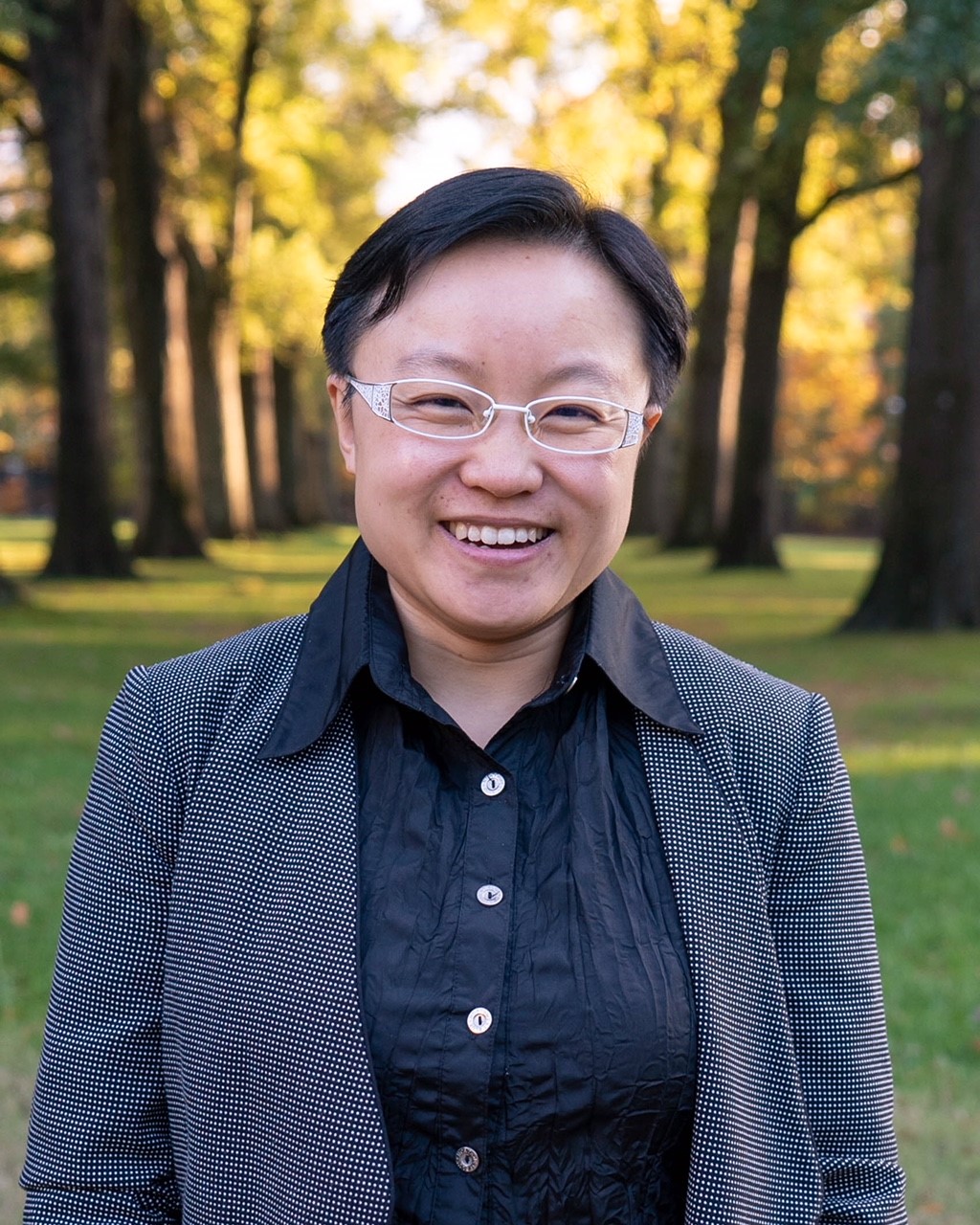
Dr. Shaolu Yu serves as Associate Professor of Urban Studies and Chair of Asian and Asian American Studies at Rhodes College, leveraging an interdisciplinary background developed through urban studies projects across China, the U.S., and Canada to advance comparative geographic research. Her academic foundation includes: B.S. in Resources, Environment, Urban Planning and Management from Qufu Normal University, China M.S. in Urban Geography from Beijing Normal University, China Ph.D. in Geography from the University of Connecticut, U.S.A. Dr. Yu's research centers on Urban Space and Place-making , Migration and Mobility , Race and Ethnicity , and Asian Urbanism , employing mixed methods and GIS for spatial analysis. Current projects investigate Chinese communities in the American South ( Triangulated Between White and Black ) and LGBTQ+ spatial dynamics ( Urban Queer Space in the South ), while examining globalization's impact on Asian cities. Her teaching portfolio spans Urban Planning, GIS applications, Transportation Geography, and Queering Cities. Recent publications reveal a consistent focus on racial triangulation, ethnic entrepreneurship, and transnational migration patterns across American and Asian urban contexts, demonstrating methodological versatility through cartographic analysis and qualitative fieldwork. This body of work bridges cultural geography, critical race studies, and urban planning. No scientific awards were documented in available materials. Dr. Yu's academic leadership as Chair of Asian and Asian American Studies complements her research mentorship and course development in Urban Studies. While specific grant details are unreported, her sustained publication record in top geography journals indicates active research funding. Her Rhodes College affiliation includes collaborative work with the Media Studies and Chinese Studies programs. Information regarding dedicated research laboratories or formal research teams was not present in source materials.
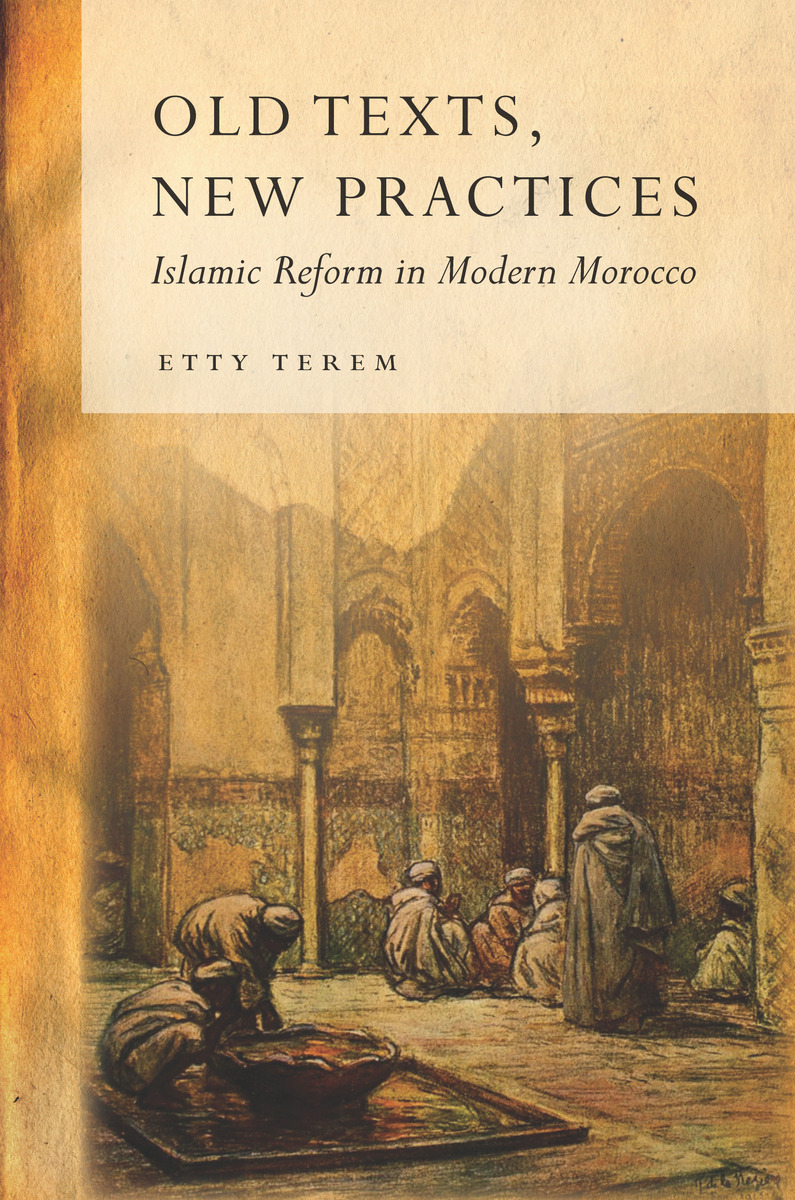
Etty Terem is Professor of History and J.J. McComb Chair of History at Rhodes College, specializing in Modern Middle East and North Africa with emphasis on Morocco. She teaches courses including The Making of the Modern Middle East and The Algerian Revolution , fostering critical analysis of historical presuppositions and contemporary relevance. Her educational credentials feature: Ph.D. in History, Harvard University (2007) M.A. in History, Tel Aviv University (1998) B.A. in History, Tel Aviv University (1993) Terem's research interrogates Islamic modernity through Moroccan reform movements, examining tradition-modernity dynamics, gender in colonial contexts, and Muslim perspectives on change. Her work critically analyzes primary sources to uncover historical content of transformation in Muslim societies, with increasing focus on women's roles in Maghribi modernization. Her 12 publications (2007-2023) reveal consistent engagement with Moroccan history across precolonial, colonial, and postcolonial eras. Key trends include Islamic legal reinterpretation, gendered modernity, cultural appropriation, and statecraft evolution. Recent works (2021-2023) intensify focus on women's agency in identity formation and decolonization. As an educator, Terem mentors undergraduate researchers in historical methodology and critical theory. While specific grant details are unreported, her sustained scholarly output demonstrates active research engagement. She also contributes to academic discourse through specialized book reviews in major historical journals. Terem maintains field expertise through extensive Middle Eastern travel including Jordanian trekking, Moroccan expeditions, and cultural immersion in Cairo and Istanbul, complementing her scholarly focus with firsthand regional experience.
Li Chen is Associate Professor of History and Global Asia Studies in the Department of Historical and Cultural Studies (UTSC) at the University of Toronto, with cross-appointments to the Graduate Department of History and the Faculty of Law. He served as Chair of the Department of Historical and Cultural Studies (2016–2019) and as President of the International Society for Chinese Law and History (2014–2017). His scholarship focuses on late-imperial and modern Chinese legal history, Sino-Western relations, and comparative legal cultures. Education J.D., University of Illinois, magna cum laude Ph.D., Chinese History, Columbia University Research Interests Chen’s work interrogates the intersection of law, empire, and culture in China from the 15th to the 20th centuries. He explores how legal knowledge was produced and circulated among private specialists in the Qing juridical field, how international law shaped Sino-Western encounters, and how colonial discourses constructed images of Chinese law and sovereignty. His current SSHRC-funded monograph, Invisible Power and Technocratic Governance , offers the first comprehensive study of Confucian-literati-turned-legal-advisors who quietly administered Qing local justice. Publications & Impact Chen’s 2016 monograph Chinese Law in Imperial Eyes received the Joseph Levenson Book Prize (pre-1900 China) and honorable mention for the Peter Gonville Stein Book Award. His articles in Law & History Review , Journal of the History of International Law , and Late Imperial China have been translated into Chinese and Korean, influencing scholarship across East Asia and North America. Awards & Honors Joseph Levenson Book Prize, Association for Asian Studies (2018) Peter Gonville Stein Book Award – Honorable Mention, American Society for Legal History (2017) Law and Society Association Article Prize – Honorable Mention (2011) Grants & Projects He is principal investigator on a multi-year SSHRC Insight Grant supporting archival research in China, Taiwan, Japan, the United Kingdom, and France for his forthcoming book on Qing legal specialists and their role in shaping imperial governance and legal culture.