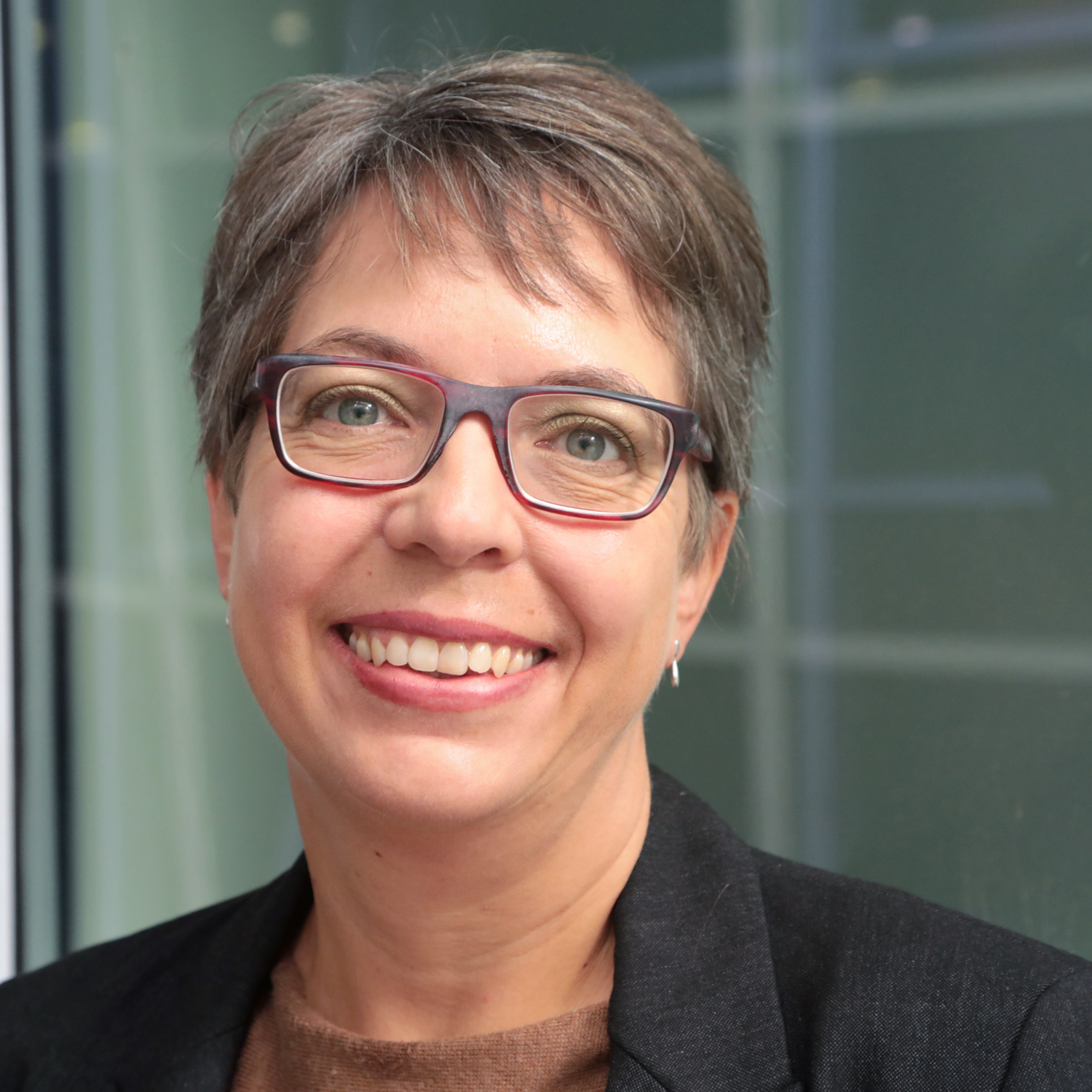
Stefanie Walter is a Full Professor for International Relations and Political Economy at the Department of Political Science (IPZ) of the University of Zurich. Her research focuses on international and comparative political economy , with specializations in globalization, European integration, financial crises, and disintegration processes . She leads the ERC-funded project DISINTEGRATION , analyzing the mass politics of disintegration bids like Brexit. Education: PhD in Political Science, ETH Zurich (2007) Fritz-Thyssen Fellowship, Harvard University (2008-09) Key Research Areas: Distributional conflicts in globalization Public opinion on international institutions Contagion effects of disintegration Globalization's impact on policy preferences Scientific Awards: ERC Consolidator Grant (2019-2024) Honorable mention, EPS Best Book Prize (APSA European Politics and Society Section) Publications: The Politics of Bad Options (Oxford UP, 2020) Financial Crises and the Politics of Macroeconomic Adjustment (Cambridge UP, 2013) Teaching: Political Systems and Theories Backlash Against Globalization International Politics Datasets: European attitudes on Brexit (six-wave cross-sectional survey) Swiss public opinion on international cooperation (five-wave panel survey)
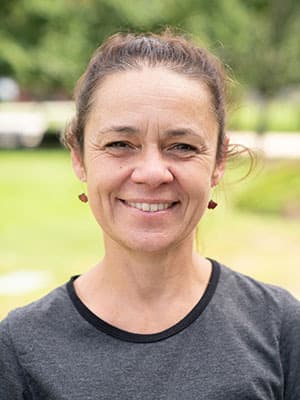
Laura M. Furlan is an Associate Professor in the Department of English at the University of Massachusetts Amherst, within the College of Humanities and Fine Arts. Her scholarly work centers on Native and Indigenous Studies, American Studies, and creative nonfiction, with a strong focus on urban Indian narratives and autobiographical forms. Education: B.A. in American Studies, University of Iowa M.A. in English, San Diego State University Ph.D. in English, University of California, Santa Barbara Her research explores the intersections of Native identity, relocation histories, and literary expression, particularly in urban contexts. She is deeply engaged with Indigenous epistemologies, decolonial methodologies, and the role of archives in contemporary Native writing. Her interdisciplinary work spans literary criticism, cultural studies, and creative nonfiction. Her publications reflect a sustained commitment to amplifying Native voices through scholarly and editorial projects, including special issues on new Native writing and critical analyses of memoirs like Bad Indians . Her book Indigenous Cities (2017) is a foundational contribution to the field of urban Native fiction. Scientific Awards: No awards listed in the provided text. Laura M. Furlan has co-edited significant special issues and published widely in journals such as Studies in American Indian Literatures , Intertexts , and Yellow Medicine Review . While specific grant funding is not mentioned, her editorial and publication record suggests active research support and scholarly leadership. She mentors emerging Native writers and contributes to academic discourse through interdisciplinary collaborations. She is affiliated with research communities focused on transnational Native American Studies and Indigenous literary production, though specific labs or formal research teams are not named in the text.
Ewa Chrusciel is a Professor at Colby-Sawyer College’s School of Arts & Sciences, joining the faculty in 2006. Holding the M. Roy London Endowed Chair, she specializes in world poetry, translation, and cognitive poetics, blending interdisciplinary and international approaches. Ph.D. in Literary Studies and Contemporary Poetry from Illinois State University M.A. in English Philology from Jagiellonian University, Poland Her research spans pre-modern, modern, and postmodern world poetry , comparative literature , and neurological theories of aesthetic experience . She teaches creative writing, world literature, and poetry, emphasizing bilingualism and translation. Recent academic work includes presentations on translating Polish poetry , religious references in verse , and cognitive embodiment in literary forms . Her poetry has been translated into Vietnamese, Hungarian, and Italian. 2016: Nomination for Best of Net Anthology 2014: Pushcart Prize nomination 2013: Second place in 'Nakręć wiersz' Poetry Competition 2011: Finalist in Sow’s Ear Poetry Contest 2009: Winner of Emergency Press Contest
Dr. Charlotte Backerra is a Senior Lecturer for Modern History at Alpen-Adria-Universität Klagenfurt, with academic affiliations at Georg-August-Universität Göttingen, Technische Universität Darmstadt, Universität Stuttgart, and Johannes Gutenberg-Universität Mainz. Her research and teaching focus on early modern European history, dynastic structures, economic history, diplomatic practices, and intelligence studies. PhD in History from Johannes Gutenberg-Universität Mainz Certificate for Teaching at Universities from TU Darmstadt Co-editor of Studies in Monarchy & Money book series Board member of International Intelligence History Association Speaker for Women in Economic History network Her research explores the intersection of cultural, political, and economic history, emphasizing dynastic economic strategies in the Holy Roman Empire (1550–1650), crisis management, and environmental history of premodern Europe. Recent projects include source editions on the Pragmatic Sanction and environmental history. She has published extensively in peer-reviewed journals and edited volumes, with a 2018 monograph on Anglo-Austrian relations (1727–1735). Articles span legal pluralism, intelligence case studies, royal economic power, and environmental history. Scientific Awards: Christine de Pizan Mentoring Distinction (Mainz, 2015) Backerra advises graduate students and collaborates in academic networks, including editorial roles for Royal Studies Journal and Transnational Histories of the 'Royal Nation' . She has designed historical exhibitions on Mainz Citadel and public history initiatives.
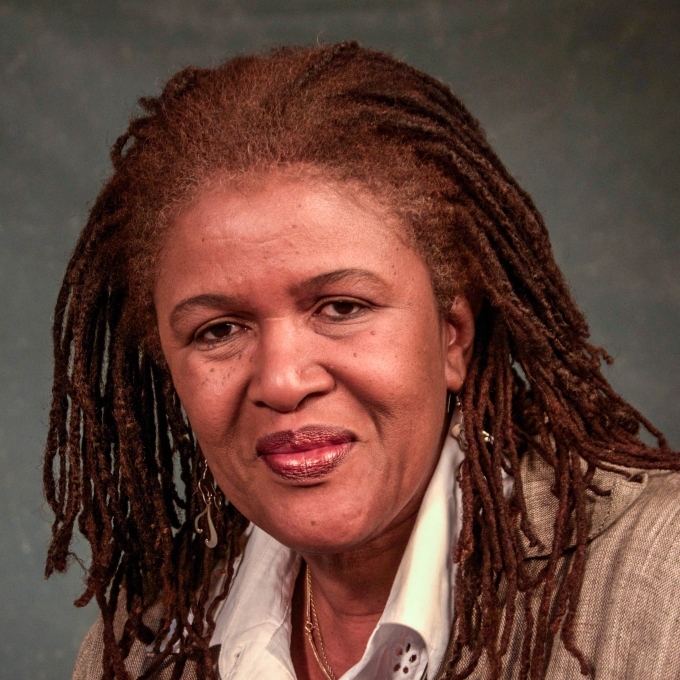
Brenda Flanagan, the Edward M. Armfield Sr. Professor of English at Davidson College, is an award-winning author and cultural ambassador with a profound impact on African American and Caribbean literature. She teaches courses in creative writing, Caribbean literature, and African American literature while completing a memoir about her formative year with Nina Simone. Education: Ph.D., University of Michigan M.A., University of Michigan B.A., University of Michigan Flanagan's research explores intersections of Caribbean and African American identities, civil rights history, and surrealist art. Her work as a U.S. cultural ambassador spans 20+ countries, including historic visits to Libya and Central Asia. She co-founded Davidson's Africana Studies curriculum and received multiple NEH Fellowships. Recent publications include analyses of African American poetry and collaborations on Czech surrealist dissent. Awards highlight her teaching excellence (Hunter-Hamilton Love of Teaching Award) and literary achievements (Hopwood Awards, Michener Fellowship). Her memoir-in-progress examines Nina Simone's enduring influence on her academic and creative trajectory.
Christopher Robert Rossi is a Professor at UiT The Arctic University of Norway's Faculty of Humanities, Social Sciences and Teacher Education. His research focuses on International Law , International Relations , Arctic Security , and US Foreign Policy . Specializes in territorial disputes and legal realism Active in Arctic governance and sovereignty research Contributing author to journals like University of Pennsylvania Journal of International Law and Harvard International Law Journal Recent publications address critical topics in Arctic geopolitics, water security, and international legal formalism. His work combines historical analysis with contemporary legal challenges, particularly in territorial disputes and sovereignty paradoxes . Articles frequently examine intersections of legal realism , spatial dynamics , and statehood criteria . Current research explores the structural problems of American democracy , virulent populism , and maritime security dialogues in Atlantic/Pacific Arctic contexts. Also investigating the emotional dimensions of international law through case studies like Kosovo and Nagorno-Karabakh.
Richard Marggraf Turley holds a Personal Chair as Professor in the Department of English & Creative Writing at Aberystwyth University, where he has been an active faculty member since 1994. He teaches undergraduate and postgraduate modules including Romantic Eroticism (EN38320), Literatures of Surveillance (EN35320), and Romanticism's Radical Cultures (ENM2540), while supervising PhD candidates in both Literary Studies and Creative Writing. Educated with a BA and PhD from the University of Leeds, his scholarly foundation in Romantic literature informs his dual career as critic and creative writer. His academic profile shows continuous research output since 1994 with 61 publications, including books on Keats, food studies, and creative writing pedagogy. Turley's research centers on Romantic-era poetry with pioneering work on literary topology, food representation, and surveillance theory. He has authored Keats's Boyish Imagination (2004), Bright Stars: John Keats, Barry Cornwall and Romantic Literary Culture (2009), and co-written Food and the Literary Imagination (2014). His forthcoming 2026 monograph Fantastic Shapes: Topology and Textuality in Romantic Poetry extends his spatial analysis of Romantic texts. As an award-winning poet, he published the Wales Book of the Year-winning collection Wan Hu's Flying Chair (2009) and the crime novel The Cunning House (2015), demonstrating his commitment to creative practice. Analysis of his 15 most recent publications reveals persistent engagement with Keatsian studies while expanding into interdisciplinary terrain. His work increasingly intersects with sustainability (via food/watermill projects), biometrics (The Quantified Romantics), and digital surveillance, showing how Romantic poetry offers frameworks for contemporary crises. The recurring focus on spatial theory across 2018-2023 outputs demonstrates his unique topology approach. His scientific awards reflect both scholarly and creative excellence: Keats-Shelley Prize for Poetry (First Prize, 2008) Wales Book of the Year 'People's Choice' Award (2010) for Wan Hu's Flying Chair ASLE/Inspire UKI Prize Essay (First Prize, 2013) shared with Archer and Thomas Turley supervises PhD students in Literary Studies and Creative Writing with 10 supervised works recorded. His grant capture includes externally funded projects like 'The Quantified Romantics: Arts and Biometrics' (2015, Arts and Humanities Research Council) exploring biometric analysis of Romantic poetry, and 'Edible Wales: Sustenance and locality' (2014, Creative Exchange Wales Network) investigating food sustainability through literary lenses. These grants demonstrate his successful bridging of humanities with scientific and social contexts. As Co-Director of the Keats Foundation International Keats Conference, he leads a major scholarly initiative, organizing annual conferences through 2025. His collaborative Arts-Science projects include BBC appearances and cross-disciplinary work with biometric researchers, while his role in the 'Supervised Work (10)' metric confirms active mentorship. Public engagement via 12 press/media contributions (including Netflix adaptation commentary) shows his commitment to translating academic work for broader audiences.
Ilaria Sicari is a Research Fellow at Ca' Foscari University of Venice, specializing in Slavic Studies with a focus on Soviet literature, cultural Cold War dynamics, and transnational literary circulation. She holds a PhD in Slavic Studies from Ca' Foscari University (2017) and has taught Russian literature at the Universities of Bologna, Florence, and Pisa. Her current Marie Skłodowska-Curie Global Fellowship explores Tamizdat (underground Soviet literature dissemination) through the TAMIZDAT project, collaborating with Stanford University and Leiden University. Research Institutes: Digital and Cultural Heritage, International Studies Key Projects: On the Two Sides of the Iron Curtain , Banned Books from Russia and Eastern Europe Her research emphasizes socio-cultural actors in literary circulation, including translators, editors, and dissidents. Major interests include Soviet censorship, dissident literature, and the reception of foreign literature in the USSR. She has published widely on Italo Calvino's Soviet reception, Soviet human rights movements, and Cold War cultural diplomacy. Recent articles examine Tamizdat publishing strategies in Italy, Soviet psychiatric abuse, and Cold War paratextual propaganda. She contributes to digital archives on banned Soviet texts and is affiliated with the Italian and international Slavic studies associations (AIS, ASEEES, AATSEEL).
Rossella Maspoli is an Associate Professor in Architectural Technology at the Department of Architecture and Design (DAD), Polytechnic University of Turin, where she has been a lecturer since 1995. She holds a PhD in "Building and Environmental Restoration" (1992) and has led numerous research and urban regeneration initiatives, including the UNESCO Creative City nomination for Turin and the Torino Automotive Heritage Network (TAHN). She is actively involved in PhD programs, editorial boards, and international heritage organizations. Her educational background includes a PhD in Building and Environmental Restoration (1992). She has held teaching and leadership roles in multiple master's and PhD programs at institutions including the University of Padua, University of Chieti-Pescara, and Polytechnic-COREP. Her research focuses on industrial heritage, sustainable urban regeneration, public space design, and the cultural valorization of automotive heritage . She investigates historical-technological analysis, adaptive reuse, pandemic-resilient urban living, and co-design methodologies. Her work emphasizes participatory approaches, social inclusion, and environmental sustainability in urban transformation. Her recent publications explore themes such as the symbolic value of industrial heritage, reinforced concrete in early automotive factories, post-pandemic urbanism, and the integration of public art in urban regeneration. These works reflect a consistent focus on industrial archaeology, urban resilience, and heritage tourism, bridging historical analysis with contemporary design innovation. Among her scientific recognitions is being named a Fellow of The International Committee for the Conservation of the Industrial Heritage (2012–2023). She also serves on the editorial committee of Industrial Heritage and has held advisory roles in cultural organizations. She supervises PhD students including Yuxuan Liu and Giacomo Girocchi , and has led externally funded research projects such as the PLAN National Pepper Fair and the Lingotto Automotive Heritage initiative. Her teaching spans architectural technology, cultural heritage, and sustainable design at both undergraduate and graduate levels. She leads the "Portici d’Artista" and "Arte in Transito" projects in Turin’s Borgo San Secondo, which use public art and community mapping to regenerate urban spaces. These initiatives involve collaboration with the Albertina Academy of Fine Arts, local associations, and municipal authorities, emphasizing co-design and civic engagement.
Katalin Szelenyi is an Associate Professor in the Department of Leadership in Education at the University of Massachusetts Boston, within the College of Education and Human Development. Her academic work bridges higher education policy, STEM education, and global citizenship, with a strong emphasis on equity and inclusion. Research Interests: Dr. Szelenyi’s research centers on higher education’s role in the public good, particularly in STEM fields. She investigates faculty and doctoral student experiences, focusing on work-life balance, identity formation, and academic capitalism. Her work critically examines gender, race, ethnicity, and national origin through an intersectional lens. She also explores the globalization of higher education and the experiences of international students. Publications and Research Trends: Her recent publications reflect a sustained focus on the interplay between institutional structures and individual experiences in academia. Themes include the commercialization of research, living-learning programs, and the socialization of STEM doctoral students. Her work combines qualitative methods with comparative and international perspectives, often highlighting systemic inequities and proposing policy-relevant insights. Scientific Awards: AERA Division J Exemplary Publication Award (2012) ASHE Council for International Higher Education Book Award (2013) Bobby Wright Dissertation Citation for Excellence Advising and Grants: While specific students are not listed, her involvement in the National Study of Living Learning Programs (NSLLP), funded by the National Science Foundation, highlights her experience with large-scale research projects. She has mentored junior researchers and served on editorial boards, including Research in Higher Education . Her leadership roles in AERA and ASHE demonstrate her national impact in the field. Labs and Teams: Dr. Szelenyi was a Post-Doctoral Research Associate on the NSLLP team at the University of Maryland, a major mixed-methods study. Though no current lab is mentioned, her collaborative research network includes scholars like Robert A. Rhoads, Nancy Denson, and Kristen Bresonis, indicating active engagement in research teams focused on higher education equity and policy.
Eileen Little is a Senior Lecturer in Photography/Documentary Photography within the Faculty of Business and Creative Industries. She is affiliated with the Creative Industries Research and Innovation Group (CIRI) and the eCPR research centre, and holds the status of Senior Fellow of the Higher Education Academy (UK). Her academic work bridges artistic practice and theoretical inquiry, particularly in the domains of photographic narrative, trauma, memory, and digital culture. Education: Ph.D. (Practice-Led), University of Leeds (Awarded: 8 Jul 2014) MFA, University of Colorado, Boulder (Awarded: 19 Apr 2023) BA (Hons) in English & History (Awarded: 19 Oct 2022) Her research interests focus on the philosophical and emotional dimensions of photography, particularly the interplay between image and text, the audio-visual, and the photographic bookwork. She explores identity politics, representation, and the affective impact of trauma in visual art. A current focus is the relationship between the maternal and the photographic punctum in post-traumatic cultures, as well as the transformation of mourning and privacy in the age of social media. Her work critically examines how human dignity is visually constructed and publicly negotiated on platforms like Facebook through likes, comments, and shared images. Her recent publications and presentations—including multiple iterations of “Mourning on Facebook” and works like “fireflies*” and “Archive Fever”—demonstrate a sustained engagement with trauma, memory, digital mediation, and feminist theory. These outputs span illustrated academic essays, conference papers, and book chapters, often blending artistic practice with scholarly analysis. Scientific Awards and Recognitions: Senior Fellow, Higher Education Academy (UK) Eileen Little has contributed significantly to academic service, including editorial work for Media and Communication journal (2016–2017), chairing HEA Fellow Review Panels (2017), and serving as an external examiner for Manchester Metropolitan University (2021–2026), Teesside University (2015–2019), and Southbank University (2003–2008). She has presented her work internationally at institutions such as Tate Modern, University of Westminster, and Aalto University, Finland. Her activities reflect deep engagement with both academic and public audiences through exhibitions, symposia, and conferences. She is actively involved in research communities, including the Association of Photography in Higher Education (APHE), College Art Association (USA), and Society for Photographic Education (USA). Her work contributes to broader societal goals, particularly in the area of education and cultural understanding, aligning with relevant UN Sustainable Development Goals.
Nora Hoffmann is the Head of the Writing Center at Goethe University Frankfurt and a prominent researcher in academic writing didactics. With a background in Modern German Literature and higher education didactics, she has held key roles at Johannes Gutenberg University Mainz and Eberhard Karls University Tübingen. Current: Head of Writing Center, Goethe University Frankfurt Past: Research Assistant at Mainz Center for Quality Assurance (2012–2018) Her research focuses on the didactics of scientific reading and writing, writing center evaluation, and AI integration in academic writing. She has pioneered frameworks like TeKoER for text quality assessment and explored chatbot applications in educational contexts. Recent work examines generative AI's impact on student creativity and writing processes, based on nationwide surveys (2023–2024). She co-developed position papers on writing competence institutionalization and maintains leadership roles in the Society for Writing Didactics (gefsus) and European Writing Centers Association (EWCA). Key contributions include: Coordinating writing workshops across disciplines Developing faculty training programs for writing instruction Advancing quality management frameworks for academic texts Leading Germany-wide writing center surveys
Professor Martin Paul Eve holds the position of Professor of Literature, Technology & Publishing at Birkbeck, University of London, where he also serves as Strategic Lead for Digital Education and Disability Lead for English, Theatre, and Creative Writing. He previously lectured at the University of Lincoln and the University of Sussex, completing his PhD there in 2013. Education: PhD (University of Sussex, 2013), MA (Queen Mary, 2009), BA (Queen Mary, 2008) Visiting roles: Visiting Professor of Digital Humanities at Sheffield Hallam University His research focuses on contemporary American fiction (Pynchon, DeLillo, Egan), technology's role in scholarly publishing, and open access policies. He has pioneered initiatives like the Open Library of Humanities and advised numerous organizations including the UK Parliament and Jisc. Key contributions include critical works on disability advocacy, digital preservation, and publishing ethics. Recent publications analyze AI's impact on academia, shadow libraries, and sustainable funding models for open access. His work bridges literary criticism and technical infrastructure, emphasizing equity and accessibility. Awards: Philip Leverhulme Prize (2019), KU Leuven Medal (2018), Shaw Trust Disability Power 100 (2021) Grants and leadership: Over £2M secured for Open Access initiatives; steering roles in OAPEN-UK, SCONUL, and the Open Knowledge Foundation. Active in policy-making through House of Commons evidence submissions and global advisory boards. Technical leadership at MESH Research (Knowledge Commons) drives infrastructural innovation. Collaborative projects include the COPIM collective and Humanities Book Infrastructure advisory work.
Florian Albrecht-Schoeck is a German artist and Researcher at the Offenbach University of Art and Design . His work bridges Photography , Artificial Intelligence , and Machine Learning , exploring themes of roots, identity, origin, and belonging within societal, political, and individual contexts . He co-teaches the Photography Fundamentals course with Prof. Martin Liebscher. Albrecht-Schoeck’s artistic practice involves analog, digital, and virtual photography . His series like Not Alone (2021/2022) and Squares (2023) analyze the medium’s evolving role in the age of AI. He integrates research into teaching , helping students navigate complex technologies through projects like No way Back: Photography without Photographs (2024/2025). He has received notable awards and scholarships , including the Brückenstipendium der Hessischen Kulturstiftung (2021) and Deutsche Börse Fotoförderpreis (2011). His works are housed in collections such as the Art Collection Deutsche Börse and the Museum für Kunst und Kulturgeschichte in Marburg . Key exhibitions include Roots Retropia Rage Repeat (2018) and Fotografie ohne Fotografie (2025). He also contributes to pedagogical projects , such as the annual ZuTaten publications and exhibitions (2024/2025).
Dr. Clara-Auguste Süß is a postdoctoral researcher and Associate Fellow at the Peace Research Institute Frankfurt (PRIF), where she contributes to the Research Department Intrastate Conflict and the Research Group Radicalization, Terrorism, and Extremism Prevention. Since May 2024, she has also served as Postdoctoral Research Fellow and Outreach & Transfer Manager at the Merian Centre for Advanced Studies in the Maghreb (MECAM), hosted by the German Institute for Global and Area Studies (GIGA). Her work bridges academic research and policy engagement in the fields of political violence, social movements, and extremism in North Africa. Education: PhD in Political Science, Goethe University Frankfurt (2023) M.A. in Political Science, Philipps University Marburg (2017) B.A. in Political Science and Communication Studies, TU Dresden (2014) Her research centers on Islamist radicalization processes, political transformation, and marginalization in Tunisia, particularly in the aftermath of the Arab Spring. She investigates how socioeconomic grievances, political opportunities, and framing processes contribute to radicalization, with a strong emphasis on empirical and policy-relevant analysis. Her work also explores co-escalation dynamics in contentious politics and the impact of global crises—such as the pandemic and the war in Ukraine—on extremist mobilization in the MENA region. Dr. Süß’s recent publications reflect a consistent focus on comparative studies of Egypt and Tunisia, the role of state and societal responses to extremism, and interdisciplinary approaches to peace and conflict research. Her articles span academic journals, policy briefs, and public commentary, demonstrating a commitment to knowledge transfer and public engagement. Scientific Awards and Recognitions: Friedrich Ebert Foundation Scholarship (2015–2017) She has actively contributed to academic governance as a Board Member of the EuroMeSCo Young Researchers Lab (2022–2023), Representative of the PRIF board for assistants (2021–2023), and member of the Leibniz PhD Network (2019–2021). Her advisory role is implied through collaborative publications and leadership in research projects, though no formal PhD students are listed. She has been involved in major research alliances such as PRIF’s Radicalization, Extremism, and Terrorism Prevention group and contributes to high-impact policy assessments like the Friedensgutachten. Her work is embedded in transnational research networks focused on the Maghreb, social movements, and conflict prevention.