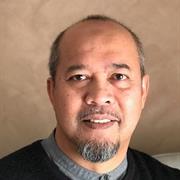
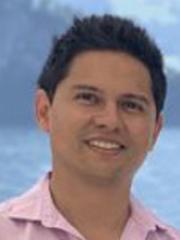
Dr. Louise Alexander is an Associate Professor in Mental Health Nursing at Deakin University's School of Nursing & Midwifery (Faculty of Health). She holds prior academic roles including Senior Lecturer (ACU, 2018–2023) and Lecturer positions (ACU and Holmesglen Institute). Her research focuses on mental health nursing workforce sustainability, stigma reduction, simulation-based education, and curriculum development. Key interests include nurse resilience, pandemic impacts on healthcare workers, and improving student attitudes towards mental illness. Education: PhD from Deakin University; GCHE qualification Certifications: University of Melbourne's Emerging Leaders & Management Program (2021–2022) Teaching: Leads courses in forensic mental health, therapeutic communication, and health promotion Research Highlights: Recent work examines pandemic trauma among nurses, alcohol consumption trends post-COVID, and leadership's role in workforce retention. Her studies emphasize qualitative methods and integrative reviews to address systemic challenges in mental health nursing education and practice. Awards/Grants: No explicit awards listed; research supported by institutional collaborations. Active in developing transition-to-practice programs and evaluating simulation-based training efficacy. Labs/Teams: Collaborates with interdisciplinary teams on mental health workforce resilience and stigma reduction initiatives. Engages in national and international nursing education networks.
Associate Professor Bambang Trigunarsyah holds a position at RMIT University since 2018, affiliated with the School of Property, Construction and Project Management (PCPM). He earned his BSc in Civil Engineering from Colorado School of Mines, a Master's in Civil Engineering (Construction Management) from the University of Indonesia, and a PhD in Engineering Project Management from the University of Melbourne. His career spans industry roles, including project engineering in Indonesia's oil and gas sector, academic leadership at the University of Indonesia, and international teaching/research appointments at Queensland University of Technology (QUT) and King Fahd University of Petroleum and Minerals in Saudi Arabia. Research interests focus on post-disaster reconstruction, infrastructure project governance, constructability of infrastructure, and project management in developing countries. Notable projects include risk management frameworks using blockchain, circular economy in Saudi construction, and BIPV energy solutions. He actively supervises HDR students in areas like public-sector project success determinants and thermal environment studies. Bambang serves as Higher Degree Research Delegate Authority (HDR DA) for the School of PCPM and teaches postgraduate project management programs. Professional memberships include AIPM, PMI, and ASCE. His industry advisory roles include Indonesia's National Construction Service Development Board (2002-2007) and Australia-Indonesia Centre's Infrastructure Cluster (2016-2018). Recent research emphasizes BIM applications in infrastructure preservation, risk assessment methodologies, and climate-resilient construction. His work bridges theory and practice, addressing challenges in emerging economies and complex project environments.
Professor Christhina Candido is Director of the Sustainable and Healthy Environments (SHE) Lab at the University of Melbourne's Melbourne School of Design. As a WELL Faculty member, she collaborates with GBCA, NABERS, and IWBI on building performance standards. Her research examines the intersection of building design, occupant experience, and environmental performance, with focus areas including: Post-occupancy evaluation methodologies Indoor environmental quality metrics Climate-responsive design in tropical/subtropical regions Wellbeing-certified workplaces Recent work analyzes post-pandemic work patterns, biophilic design effectiveness, and adoption challenges of WELL Building Standards. Her projects provide evidence-based frameworks for creating sustainable, healthy built environments.
Associate Professor Marcus Cattani is a faculty member at Edith Cowan University (ECU), affiliated with the School of Medical and Health Sciences and the Department of Occupational Health and Safety. He serves as Deputy Director of the WA Government-funded MARS Centre, focusing on Mental Awareness, Respect, and Safety initiatives. Since joining ECU in 2015, he has developed risk management and leadership programs for undergraduate/postgraduate programs and supervises PhD/Master's research. His research emphasizes injury risk reduction in industries like mining, oil/gas, and construction, with recent focus on agriculture safety and radiation exposure in Western Australian mining. Education: Doctor of Philosophy (Occupational Health and Safety), Murdoch University (2004) Master of Science, United Kingdom (1995) Research interests include occupational safety frameworks, real-time exposure assessment, fatigue management, and safety leadership tools. Current projects address critical controls for construction fatalities, radiation exposure in mining, and OHS systems for remote work. Over 30 years of industry experience as an occupational hygienist and HSE consultant informs his academic and applied work. Key collaborations involve government agencies (DMIRS, Water Corporation) and industry partners (Rio Tinto, Lifeline WA). Recent grants include MARS Centre initiatives and NORM exposure studies. His 2025 focus includes translating injury prevention techniques into agriculture contexts. Professional memberships include Australian Institute of Health and Safety (Chartered OHS Professional) and the Australian Institute of Occupational Hygienists.
Professor John Shields is a distinguished academic in Human Resource Management and Organisational Studies at the University of Sydney’s Business School. He holds a BA(Hons) from ANU and a PhD from the University of Sydney. As Academic Director International, he oversees global strategies for the Business School’s international partnerships and recruitment. His roles have included Associate Dean (Programs), Deputy Dean, and Chair of the Faculty Board, reflecting his extensive leadership within the institution. In research, Shields focuses on performance management, reward systems, corporate governance, and international education. He co-authored seminal textbooks like *Managing Employee Performance and Reward* and *Human Resource Management: Strategy and Practice*. Current projects explore performance management transformation, pay secrecy disclosure, and gaming’s psychological impacts. His teaching spans undergraduate and postgraduate courses such as Strategic HRM and Global Leadership. Shields has supervised over a dozen PhD students, with topics ranging from Saudi Arabian workplace dynamics to corporate governance in Australian firms. Recognized with the 2008 Wayne Lonergan Teaching Award, he actively contributes to professional bodies like the Australian Human Resources Institute. Publications highlight his influence in HRM theory and practice, including studies on CEO remuneration, board capital, and pandemic-era worker resilience. His interdisciplinary work bridges organizational behavior, economics, and policy, positioning him as a key figure in contemporary HRM research.
Dr. Amir Ghanbaripour is a Discipline Lead in Planning, Property, and Project Management at Bond University's Faculty of Society & Design, with a PhD in Construction Project Management (2020). He teaches postgraduate courses and leads the Project Management program. His expertise spans project management methodologies, systems thinking, organizational maturity, and gender equality in projects. He is an active member of the Project Management Institute (PMI) as Associate Director for Academic Outreach. Education: PhD in Construction Project Management (Bond University, 2020), MSc in Civil Engineering (Iran University of Science and Technology, 2012), BSc in Civil Engineering (Amirkabir University of Technology, 2009). Research focuses on project success models, agile methodologies, and technology integration in construction education. He leads research projects on megaprojects, sustainable practices, and gender diversity in the industry. Grants include the 2023 FSD Research Project Grant (focusing on construction project strategies) and the 2023 FSD Deans Award (exploring robotics in manufacturing). He supervises PhD candidates and collaborates with national/international organizations on project management innovation.
Kat Haynes is an Honorary Fellow at the School of Earth, Atmospheric and Life Sciences (SEALS) at the University of Wollongong. Her research focuses on environmental change, disaster risk reduction, and community resilience through participatory processes. She holds a Ph.D. in Environmental Sciences from the University of East Anglia (2005). Her work emphasizes youth and community-centered initiatives, including post-disaster investigations in Australia and volcano risk communication in Montserrat. Haynes has received significant recognition, including the Australian Academy of Science ASPIRE Award (2015) for contributions to disaster risk reduction and climate adaptation. She leads or collaborates on grants such as the NSW Bushfire Inquiry (2021), Re-walking and Reawakening Country (2021), and Indigenous cultural burning research (2020). She has advised on multiple higher-degree research projects, including geochemistry studies of historical fires. Her research spans natural hazards, environmental management, and human geography, with a focus on wildfire management, flood risk communication, and elderly resilience during disasters. She collaborates with government and NGOs to institutionalize child-centric disaster resilience strategies. Haynes also contributes to global initiatives like the Centre for Environmental Risk Management of Bushfires and has published extensively on disaster preparedness and recovery.
Associate Professor Jungsoo Kim holds a position in the School of Architecture, Design and Planning at the University of Sydney, specializing in Building Science. His research focuses on occupant-building interactions, particularly how environmental factors influence user behavior and energy demand. He teaches courses in architectural science and building performance. Key affiliations include membership in: NatHERS Technical Advisory Committee CSIRO's Thermostat Behavior Expert Group IEA-EBC Annexes 87, 69, and 66 NABERS Technical Working Group International Society of Indoor Air Quality and Climate Research interests span Indoor Environmental Quality (IEQ), occupant behavior modeling, building performance assessment, and translating research into building codes. Recent grants include studies on decarbonizing multi-residential buildings and work-from-home environments' impact on productivity. His lab, the IEQ Lab, explores acoustic comfort and thermal adaptation in workplaces and residential contexts. Notable work includes developing probabilistic behavioral models for HVAC usage and advancing adaptive thermal comfort theory.
Dr Hannah Gullo is a Senior Research Fellow at the School of Health and Rehabilitation Sciences , The University of Queensland . With a focus on neurorehabilitation, her work spans traumatic brain injury, stroke, Parkinson's disease, multiple sclerosis, and neurodevelopmental conditions. Masters (Coursework) of Occupational Therapy Studies, The University of Queensland Bachelor of Science, The University of Queensland Doctor of Philosophy, The University of Queensland Her research interests include: Cognitive assessment and intervention - exploring relationships between cognitive impairment, depression, and fatigue Technology-enhanced therapy - leveraging smartphones, smartwatches, and tele-rehabilitation Recent publications highlight her work in CO-OP approaches for Parkinson's , technology-enabled rehabilitation , and technology accessibility for vision impairment . Awards include NHMRC MRFF PPHR grants and Advance Queensland Women's Academic Fund support. She supervises PhD projects on: Smart technology for cognitive rehabilitation Remote occupational therapy delivery Metacognitive strategies in neurorehabilitation Current funding (2024-2027) focuses on co-creating virtual environments for brain injury recovery. She leads feasibility trials and validation studies in cognitive assessment tools.
Natasha Brusco is an Associate Professor (Research) and Director of the Rehabilitation, Ageing and Independent Living (RAIL) Research Centre at Monash University. She holds a PhD and has 20 years of experience as a senior physiotherapist and health service leader. Her academic career focuses on rehabilitation, health economics, and innovative cost-effective healthcare models. She is also a Health Economics and Evaluation consultant across government and healthcare sectors. Dr. Brusco leads three major programs: the My Therapy self-management program (increasing rehabilitation participation), the RAISE program (reducing staff injuries and patient falls), and weekend rehabilitation services (reducing costs and improving outcomes). She collaborates widely, leading or co-investigating 18 projects, including evaluations of assistive technology and falls prevention. Her research interests span rehabilitation economics, gerontology, and healthcare policy. She has received awards for her work, including the CoLab Excellence in Injury Management Award and FMNHS Dean's Award. Dr. Brusco actively engages in conferences and advisory roles, contributing to global initiatives like the World Health Organization's assistive technology roster.
Stephen Edward Guinea is a Researcher at the Australian Catholic University 's Faculty of Health Sciences , specializing in healthcare simulation and clinical education. His work focuses on improving patient safety, nursing and occupational therapy curricula, and simulation pedagogy. Developed the Tag Team Patient Safety Simulation methodology Created mnemonics for quality simulation practices Advocated for simulated clinical placements in occupational therapy His research spans Nursing Education , Clinical Simulation , and Healthcare Training Methodology , with significant contributions to evidence-based simulation design. Recent publications explore mental health simulation, embedded simulation models, and economic evaluations of simulation training. Guinea collaborates extensively with healthcare educators and institutions, emphasizing interdisciplinary approaches and competency development. Key collaborations include partnerships with Christine Imms (occupational therapy simulation), Tracey Levett-Jones (nursing safety frameworks), and Patrea Andersen (simulation design standards).
Scientia Professor Richard Bryant is a leading researcher in trauma psychology at the University of New South Wales, where he serves in the School of Psychology. With over three decades of research experience, he has established himself as a world authority on posttraumatic stress disorder (PTSD), prolonged grief disorder, and trauma-related mental health conditions. Professor Bryant received his B.A. (Hons.) from the University of Sydney in 1983, followed by his M.Clin. Psych. and Ph.D. from Macquarie University in 1986 and 1989 respectively. He was awarded a D.Sc. from UNSW in 2016, recognizing his substantial contributions to the field. His clinical training and academic background have positioned him at the forefront of trauma research and treatment development. Dr. Bryant's research primarily focuses on posttraumatic stress disorder, prolonged grief disorder, global mental health initiatives, cognitive behavior therapy applications, and clinical trials methodology. His work spans diverse populations including trauma survivors, refugees, first responders, and individuals affected by disasters. He has pioneered early intervention approaches following traumatic events and developed innovative treatments for persistent trauma reactions across various cultural contexts. An analysis of his recent publications reveals a strong emphasis on global mental health applications, particularly in conflict zones and with displaced populations. His research increasingly incorporates digital health solutions, examines cultural variations in trauma response, and investigates novel treatment approaches including memory specificity training and integration of technology in therapy delivery. His work consistently bridges clinical practice with research evidence to improve mental health outcomes worldwide. Professor Bryant maintains an active research program with numerous ongoing clinical trials and international collaborations. His work has significantly influenced clinical guidelines for trauma treatment globally, particularly through his contributions to World Health Organization interventions and evidence-based practice recommendations. Based at the University of New South Wales in Sydney, Professor Bryant continues to mentor emerging researchers while maintaining a robust publication record that demonstrates both depth and breadth across trauma psychology domains. His Mathews Building office serves as the hub for a productive research team investigating critical questions in trauma response and recovery.
Associate Professor Fiona Andrews is a leading academic at Deakin University , affiliated with the Faculty of Health and the School of Health and Social Development . As co-Leader of the HOME Research Hub, she bridges health, built environment, and social sciences to address Australia's housing crisis through interdisciplinary approaches. Doctor of Philosophy, University of Birmingham Master of Health Science, La Trobe University Diploma in Community Health, La Trobe University Bachelor of Science, University of Reading Her research focuses on the intersection of health and the built environment , emphasizing: Family-friendly apartment design Health impacts of housing quality Social integration in microvillages Public space equity Urban sustainability Qualitative methodologies (especially photo-narrative) Recent publications analyze: Kitchen design impacts on health Apartment communal spaces Co-housing models Future-proof hospital architecture Interim housing solutions Policy-informed urban planning Scientific Recognition : 2018 School of Health & Social Development Research Excellence Award She supervises doctoral candidates in architecture and health fields, chairs postgraduate thesis units, and secures grants from organizations including City of Greater Geelong and Lord Mayor's Charitable Foundation . Her work directly influences Victorian government housing policies through commissioned research.
Dr. Alejandro Melendez-Calderon is a Senior Lecturer at the University of Queensland (UQ), holding dual affiliations with the School of Electrical Engineering and Computer Science (primary appointment) and the School of Health and Rehabilitation Sciences. He also serves as a Principal Research Fellow at the Jamieson Trauma Institute, leading the Rehabilitation and Outcomes theme. With over 19 years of interdisciplinary experience in robotics, biomedical engineering, and clinical research, his work focuses on human augmentation technologies, neuromuscular control, and neurorehabilitation engineering. He earned his PhD in Robotics and Biomedical Engineering from Imperial College London (2011) and has held roles at institutions such as Northwestern University, ETH Zurich, and industry leader Hocoma AG. His lab, the NeuroEngineering, Rehabilitation and Medical Robotics Lab at UQ, develops innovative solutions for movement disorders, wearable robotics, and sensorimotor rehabilitation. Research interests include human-robot interaction strategies, computational modeling of motor control deficits, and clinical translation of assistive technologies. His recent work emphasizes adaptive robotic systems for gait training, competition-driven physical effort modulation, and sensor-based assessments for stroke and spinal cord injury populations. Publications highlight contributions to movement smoothness metrics, robotic exoskeleton control algorithms, and interdisciplinary frameworks for sensorimotor evaluation. Collaborations span academic, clinical, and industrial partners to bridge engineering innovation with clinical needs.
S. Alexander Haslam is a Professor of Social and Organizational Psychology and Laureate Fellow at the University of Queensland's School of Psychology, where he maintains an active research program with over 300 peer-reviewed articles and 15 authored or edited books. He currently serves as Associate Editor of The Leadership Quarterly and previously held the Chief Editor role for the European Journal of Social Psychology . His work bridges academia and real-world application through interventions like Groups 4 Health and More Than Sport, targeting mental health via social identity principles. Haslam's research centers on social identity theory and group processes across organizational, health, and social contexts. He examines how shared identities influence leadership, mental health outcomes, and collective resilience, with key applications in workplace stress, athletic performance, retirement transitions, and emergency response interoperability. His social identity model of leadership challenges traditional views by emphasizing group-based influence, while interventions such as social identity mapping directly address loneliness through community identification. The 2025 articles reveal three dominant trends: (1) mental health applications in high-stress occupations (construction, emergency services), (2) identity leadership in sports across cultures, and (3) organizational identity in crisis scenarios. Methodologically, they feature randomized controlled trials, longitudinal designs, and cross-national collaborations—particularly in Japan and Europe—validating the social identity approach for loneliness reduction, team performance, and ethical behavior. Common threads include psychological safety, group membership multiplicity, and intervention scalability. Scientific awards include Distinguished Contribution to Psychological Science from both the Australian Psychological Society and British Psychological Society, plus his 2022 appointment as a Member of the Order of Australia for 'significant service to higher education, particularly psychology, through research and mentoring.' While specific grant details are absent, his work is embedded in major collaborative projects like the Global Identity Leadership Development Project and pandemic response studies. He mentors researchers globally, with his leadership evident in large-scale cross-cultural teams (e.g., 25+ co-authors on Capitol attack analysis). Policy impact is demonstrated through advisory roles in social prescribing and mental health frameworks. Haslam co-leads the Groups 4 Health intervention team and develops tools including the Identity Leadership Inventory–Youth (ILI-Y) and Visual Identity Leadership Scale (VILS). His research group collaborates across sports, clinical, and emergency domains, with ongoing projects on psychedelic therapy, retirement transitions, and AI-human interaction. The BBC Prison Study remains a foundational reference for his organizational identity work.