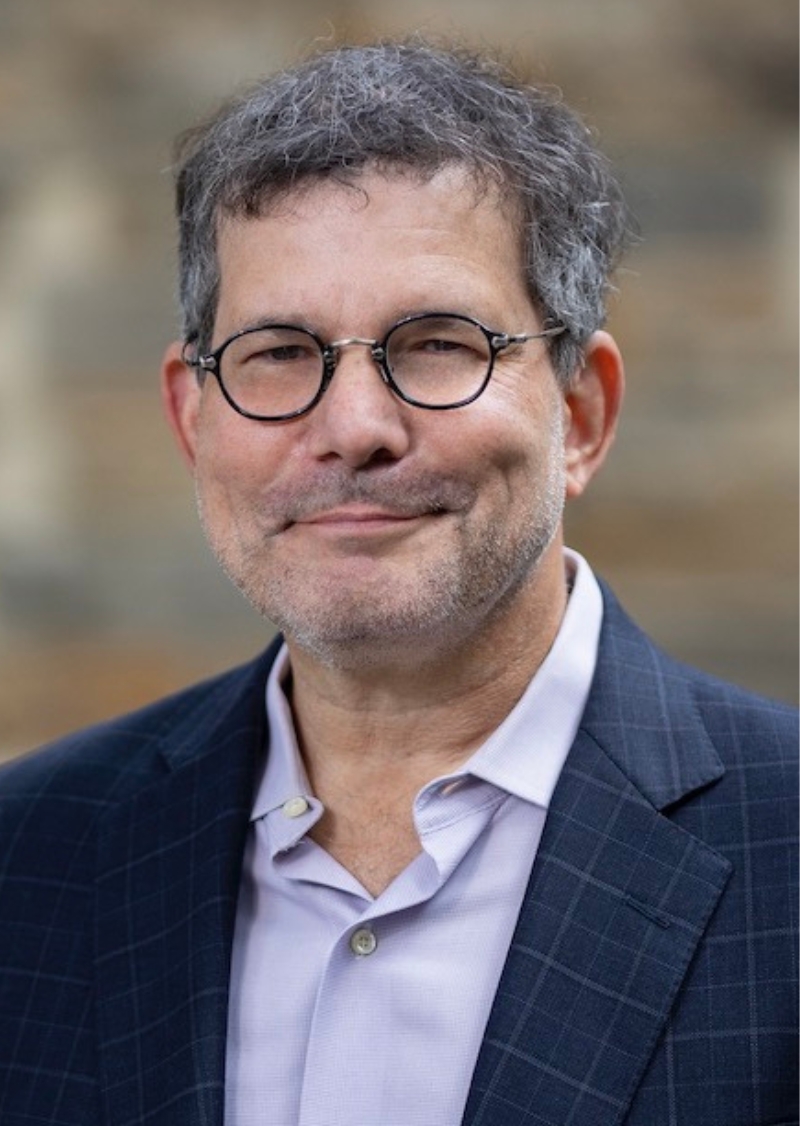
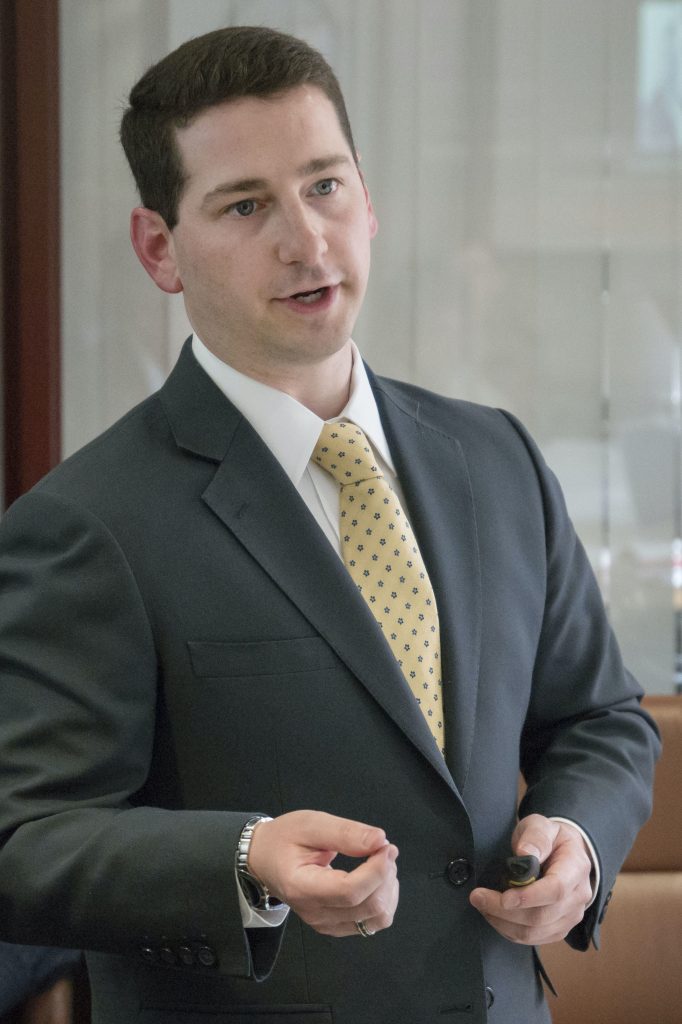
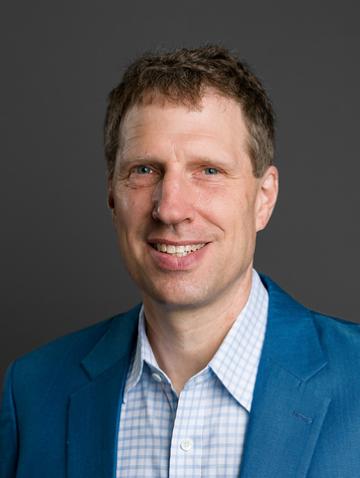
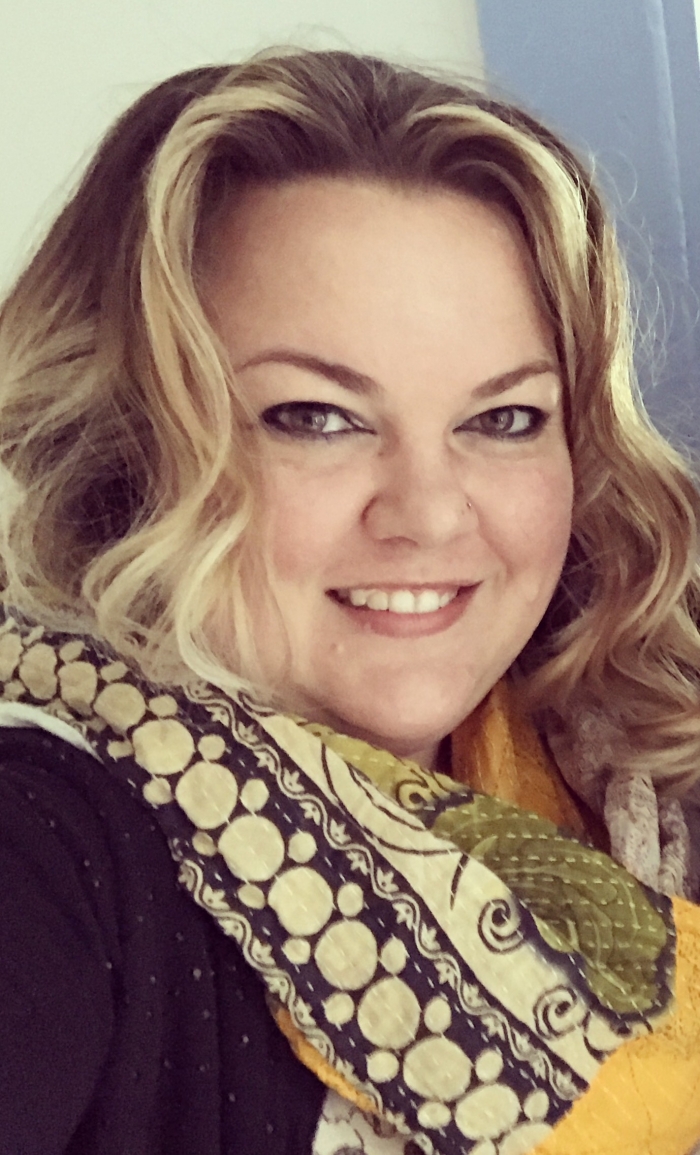
Hollie Nyseth Nzitatira is an Associate Professor in the Department of Sociology at The Ohio State University, affiliated with the College of Arts and Sciences. Her research focuses on genocide prevention, intervention, and post-violence reconciliation, with expertise in qualitative methods and collective memory. She leads study abroad programs in Rwanda and advises undergraduate thesis research. Education: PhD in Sociology (University of Minnesota), MA in Sociology (University of Minnesota), BA in Sociology & Political Science (University of Wisconsin-La Crosse) Her work bridges academic research and policy, serving as Global Editor-in-Chief of the International Association of Genocide Scholars' Policy Brief Initiative and consultant for federal instability prediction task forces. She collaborates with NGOs and governments on atrocity prevention and refugee advocacy. Award-winning educator, she teaches global crime, violence, and qualitative methods courses. Her recognitions include Ohio State’s highest teaching honor and a major genocide studies prize for engaged scholarship.
Zoë Berman is an Assistant Professor in the Department of Afroamerican and African Studies and a Postdoctoral Fellow in the Michigan Society of Fellows at the University of Michigan. Her research focuses on generational memory, transitional justice, and postcolonial theory in Rwanda. She holds a Ph.D. in Comparative Human Development from the University of Chicago (2024). Education: Ph.D., University of Chicago Department of Comparative Human Development (2024) Research Interests: Berman examines how Rwandan youth navigate ethnic identity, memory of conflict, and state-driven reconciliation. Her book project explores youth agency in redefining 'Rwandanness' post-genocide. Ongoing work includes a study on Rwanda’s mental health sector post-1994, co-developed with Rwandan social science collaborators. Publications & Awards: Her work appears in African Studies Review and Home Grown Solutions . Supported by grants from Fulbright, Wenner Gren, NSF, and the Rwandan National Commission Against Genocide. Grants & Collaborations: Berman’s research integrates ethnographic fieldwork and interdisciplinary partnerships. Her 2023 article critiques transitional justice frameworks in Rwanda, while earlier work (2014) highlights intergenerational dialogue’s role in healing.
Caroline Williamson Sinalo is Lecturer in World Languages at University College Cork, researching post-genocide memory, gender dynamics in Rwanda, and health narratives. Her fieldwork with the Aegis Trust investigates testimony disclosure practices and intergenerational memory transmission. Authored books include Rwanda after Genocide (CUP) and Transmitting Memories in Rwanda (launched during national Kwibuka commemoration). Current collaborations with Rwandan institutes examine media representations of conflict and COVID-19 narratives in Africa. Leads the Violence, Conflict and Gender research cluster and mentors doctoral researchers on exile journalism and migration.
Andrew I. Port is a Professor of History at Wayne State University, specializing in modern German history, genocide studies, and memory culture. He earned his PhD (2000) and MA (1995) from Harvard University, and B.A. from Yale University (1989). His research examines German responses to post-1945 genocides, East German labor dynamics, and the intersection of Holocaust memory with contemporary global conflicts. He is editor-in-chief of Central European History (2014–2019) and authored Never Again: Germans and Genocide after the Holocaust (2023), shortlisted for the Laura Shannon Prize. Awards include the DAAD Prize (2013) and Wayne State's President’s Excellence in Teaching Award (2012). His teaching spans courses on 20th-century Europe, modern Germany, and global post-1945 history. Recent articles address Gaza conflicts through German memory frameworks and Weimar parallels to U.S. political crises. He has held fellowships at Freiburg Institute of Advanced Studies (2016) and the Leverhulme Trust (2018). His next book will explore Germany's history from WWII to the present in Polity Press's 'Histories' series. Port's work frequently engages with transnational humanitarianism, Cold War diplomacy, and the ethical dimensions of historical scholarship. He contributes to Public Seminar and has been featured in media outlets like the New York Times and Jerusalem Post .
Olivier Nyirubugara is a Lecturer at the Department of Media and Communication, Erasmus School of History, Culture and Communication, Erasmus University Rotterdam, where he teaches journalism and media courses at both BA and MA levels. He is also a senior lecturer in Journalism, Media Theory, and Research Skills at The Hague University of Applied Sciences since 2013. His research centers on the ethics of journalism , particularly in war reporting and live-blogging, with a focus on the visual representation of children in conflict zones. He also investigates collective memory in post-genocide Rwanda, exploring how literature and media shape remembrance and forgetting of ethnic identities. His recent publications, including in Journalism Studies and Journal of the Royal Anthropological Institute , reflect a strong interdisciplinary engagement with media ethics, African studies, and memory politics. His work contributes to UN Sustainable Development Goals related to peace, justice, and quality education. Shooting Kids (2018): Examines child imagery in Syrian war coverage by RT and Al Jazeera Novels of Genocide (2017): Analyzes memory and ethnic portrayal in Rwandan fiction Gedigitaliseerd maar onbenut (2015): Explores digital heritage websites in history education Olivier has extensive professional experience as a journalist with major international outlets and led a pan-African citizen journalism project from 2007 to 2015, training over 100 grassroots reporters. He holds a PhD in Media Studies from the University of Amsterdam, completed in 2012. He is actively involved in media and communication research, with a strong footprint in topics such as journalism, Africa, Kinyarwanda, Tutsi identity, portrayal, and remembering. Though no formal advising or grant activities are mentioned, his work bridges academic scholarship and real-world media practice.
Professor Zachary D. Kaufman, J.D., Ph.D., is a faculty member at the University of Florida's Levin College of Law. His expertise spans Criminal Law, International Law, National Security Law, and Transitional Justice, with a focus on Rwanda, atrocity prevention, and human rights. He earned his J.D. from Yale Law School, D.Phil. and M.Phil. from Oxford University as a Marshall Scholar, and a B.A. from Yale University. Education: J.D., Yale Law School D.Phil. (Ph.D.), Oxford University (Marshall Scholar) M.Phil., Oxford University (Marshall Scholar) B.A., Yale University Kaufman’s research examines atrocity crimes, bystander/upstander dynamics, and post-conflict legal frameworks. His scholarship analyzes transitional justice mechanisms in Rwanda, Japan, and Darfur, emphasizing accountability, reconciliation, and institutional design. His recent publications (2023–2019) address policing reforms, digital-age bystanders, and legislative approaches to atrocity prevention. Earlier works focus on comparative tribunal structures, historical justice mechanisms, and genocide prevention strategies. Scientific Awards: Marshall Scholar
Shadrack Wanjala Nasong'o serves as Professor of International Studies at Rhodes University, teaching core courses in comparative politics and international relations with specialized focus on African political systems. His academic profile integrates classroom instruction with rigorous scholarship examining democratization challenges and identity conflicts across Eastern Africa. His educational qualifications include: Ph.D. in Public and International Affairs from Northeastern University (2004) M.A. in International Relations from the University of Nairobi (1995) B.A. (Honors) in Political Science and Linguistics from the University of Nairobi (1990) Nasong'o's research establishes critical linkages between political marginalization and ethnic mobilization, arguing that governmental responses determine whether grievances escalate to violence. His seven authoritative books—including Contending Political Paradigms in Africa and The Roots of Ethnic Conflict in Africa —analyze democratization processes through elite strategic calculations within transitional political contexts, while his human rights scholarship investigates institutional implementation gaps in Kenya. Recent publications (2021-2024) demonstrate methodological expansion into diaspora studies and interdisciplinary frameworks while maintaining core focus on Kenyan political evolution. His editorial leadership in The Palgrave Handbook of Kenyan History and The Palgrave Handbook of Contemporary Kenya synthesizes historical legacies with current governance challenges, revealing persistent tensions between democratic aspirations and authoritarian practices across political, economic, and environmental domains.
Rachel Ibreck is a Senior Lecturer in the Department of Politics and International Relations at Goldsmiths, University of London. Her research focuses on human rights, justice, and memory in conflict-affected African contexts, particularly Eastern Africa. She combines ethnography, collaborative action, and archival methods to study interactions between local activists, authorities, and international interventions. Research Interests: Human rights, conflict, genocide, humanitarian response, migration, African politics, legal systems in war zones. Key Projects: Director of the British Institute in Eastern Africa; funded by Volkswagen Stiftung, Social Science Research Council, Global Challenges Research Fund, Justice and Security Research Programme (LSE). Teaching: Global Governance and World Order (second-year course); supervises research on human rights, conflict, genocide, and African politics. Recent Article Trends: Her 2024 work examines counter-archiving migration and gender-based violence in UN sites. Earlier studies analyze customary justice systems in South Sudan, hybrid social movements in Africa, and memory politics in Rwanda and Ethiopia. Collaborations: Frequently works with Alex de Waal, Naomi Pendle, Peter Rees, and Martina Tazzioli. Co-editor of the Journal of Genocide Research.
Dr. Carolina Bottari is a Full Professor in the Occupational Therapy Program at the School of Rehabilitation, University of Montreal. She conducts her research at the Interdisciplinary Research Centre in Rehabilitation of Metropolitan Montreal (CRIR) and the University Institute for Rehabilitation in Physical Disabilities of Montreal (IURDPM). Her work focuses on cognitive rehabilitation with particular emphasis on vulnerable populations affected by brain injuries. Her educational background includes: B.Sc. Occupational Therapy, School of Physical and Occupational Therapy, McGill University (1986) M.Sc. Biomedical Sciences, School of Rehabilitation, University of Montreal (2001) Ph.D. Biomedical Sciences, School of Rehabilitation, University of Montreal (2007) Postdoctoral fellowship, Baycrest Hospital, Toronto University (2007) Postdoctoral fellowship, Montreal Neurological Institute and Hospital, McGill University (2010) Dr. Bottari's research spans multiple critical areas in rehabilitation science. She has pioneered work in designing care ecosystems for women who are victims of domestic violence and at risk of having suffered traumatic brain injuries, examining how brain injuries impact empowerment processes and developing integrated support systems. Her research on homelessness among people with brain injuries has documented systemic barriers and developed practical solutions. She is a leader in cognitive assistive technology development, particularly the COOK system for meal preparation support, with multiple studies on usability and implementation in real-world settings. Additionally, she has conducted important work on pandemic response in brain injury services and neurorehabilitation for conditions like myotonic dystrophy. Analysis of Dr. Bottari's publication record (2020-2025) reveals a strong interdisciplinary approach combining rehabilitation science, neuroscience, technology development, and social services. Her work consistently focuses on practical applications in real-world settings, often employing mixed-methods approaches that bridge quantitative measurement with qualitative insights. The publications demonstrate a clear trajectory toward increasingly complex implementation research, moving from technology development to ecosystem design for vulnerable populations. Dr. Bottari leads multiple significant research projects: Preventing and Reducing Homelessness Among People with Acquired Brain Injury (2023-2025) Telemonitoring of activities of daily living for older people (2024-2028) Sustainable Ecosystem of Care for Women with Brain Injury from Intimate Partner Violence (2024-2026) Co-design of support ecosystems for domestic violence victims with TBI (2024-2027) Understanding CNS impairments in myotonic dystrophy (2024-2025) Strengthening Parenting Practices in Rwanda post-genocide (2022-2027) Brain Injury Pandemic Preparedness (2021-2024) Development of smart housing for seniors (2020-2024) These projects are funded by major organizations including Canadian Institutes of Health Research, Brain Canada, Quebec Ministry of Health, and International Development Research Center. Her research is conducted through CRIR and IURDPM, where she collaborates with multidisciplinary teams to develop innovative rehabilitation approaches that address medical, functional, and social dimensions of recovery.
Dr. Georgina Holmes is a researcher at the University of Reading , focusing on gender studies , international relations , and peacekeeping . Her work critically examines gender norms in military contexts, particularly in post-genocide Rwanda, and explores feminist institutionalism within international organizations like the United Nations.
David J. Simon serves as Assistant Dean for Graduate Education and Senior Lecturer in Global Affairs at Yale University's Jackson School of Global Affairs, while directing the Genocide Studies Program within the MacMillan Center for International and Area Studies. His leadership spans academic administration, teaching, and specialized research initiatives focused on mass atrocities. Simon earned his Ph.D. in Political Science from UCLA (1999) and B.A. from Princeton University (1991). His scholarly work centers on mass atrocity prevention and post-atrocity recovery, with deep regional expertise in African contexts including Rwanda and Cote d'Ivoire. He pioneers research at the intersection of genocide studies and digital technology, examining how digital memorialization transforms historical memory and prevention frameworks. Recent publications reveal a decisive shift toward analyzing technology's role in atrocity contexts, with over 60% of his 2020-2025 output addressing AI, digital archives, and memorialization. Simultaneously, he maintains rigorous comparative analysis of historical cases like Rwanda and emerging crises such as the Rohingya persecution, consistently linking empirical research to policy applications through UN collaborations. As Director of the Genocide Studies Program, Simon oversees research training for scholars from genocide-affected regions and co-founded the Mass Atrocities in the Digital Era initiative. This program convenes experts across genocide studies, international law, and data governance to develop concrete responses to technology-enabled atrocities, reflecting his commitment to transdisciplinary solutions.
Dr Nicola Palmer is a Reader in Law at King’s College London and a Research Associate at the Centre for Criminology, University of Oxford, with additional affiliation to Public International Law @ Oxford. Her scholarship focuses on transitional justice, international criminal law, and criminology, with a particular emphasis on post-genocide Rwanda. Education DPhil in Law, University of Oxford (2011), Rhodes Scholar Undergraduate degrees in Law and Economics, Rhodes University, Makhanda, South Africa Research Interests Her research interrogates the intersections of international criminal law with border control, resistance to mass violence, and legal pluralism. She employs interdisciplinary and methodological approaches to transitional justice, often with an empirical focus on Rwanda. Recent work has examined the legal and political ramifications of UK immigration policy after the Rwanda asylum plan, exploring how international legal obligations are re-configured through diplomatic and financial incentives. Grants & Projects Dr Palmer’s projects have been supported by the British Academy, the Leverhulme Trust, the Economic and Social Research Council (ESRC), and the Rhodes Trust. She convened the Oxford Transitional Justice Research (OTJR) network while serving as Global Justice Research Fellow at St Anne’s College, University of Oxford. Labs & Networks She is an active member of the Oxford Transitional Justice Research network and collaborates across the Centre for Criminology and Public International Law groups at Oxford, fostering interdisciplinary dialogue on justice and accountability.
Dr. Sally Ann Cruikshank serves as a Professor in the School of Journalism and Strategic Media at Middle Tennessee State University, specializing in digital media instruction and research on press freedom within post-genocide and post-conflict societies across Rwanda, Ethiopia, and Myanmar. Her academic credentials include: Ph.D. from Ohio University (2013) M.S. from Ohio University (2009) B.S. from West Virginia University (2003) Dr. Cruikshank's research examines media dynamics in societies recovering from mass violence, with particular focus on oppressive structures in post-genocide Rwanda, U.S. coverage of the Southern Sudan conflict, and urban-rural divides in news agendas. Her work bridges theoretical analysis of press freedom with practical innovations in journalism education through mobile learning technologies. Her publication trends reveal consistent emphasis on African conflict zones and international news coverage patterns, highlighting tensions between governmental control and media independence while documenting evolving journalistic practices in challenging environments. Recognition for her scholarly contributions includes: Top Paper Award (2015) for "Mobile Learning: Rethinking the Future of Journalism Practice and Pedagogy" in Journalism & Mass Communication Educator Though specific advising details are not listed, her active research agenda involving international fieldwork suggests ongoing mentorship of graduate students and potential grant-funded projects supporting her work in global media contexts.
Thorsten Rogall serves as a Researcher at Uppsala University's Department of Peace and Conflict Research, focusing on empirical analysis of mass violence, genocide dynamics, and post-conflict societal recovery. His work bridges economics and political science through rigorous quasi-experimental methodologies applied to African contexts, particularly Rwanda. Core research areas include: Genocide Studies : Investigating mobilization mechanisms and preparatory processes in mass killings Conflict Economics : Analyzing voter control in non-democracies and community meeting dynamics Post-Conflict Development : Examining gendered recovery pathways and childhood skill formation amid armed conflict His methodological approach emphasizes causal inference in high-stakes political environments using natural experiments. Recent publications (2020-2025) demonstrate an evolving focus from genocide mobilization toward intersectional recovery processes, incorporating drought impacts and women's empowerment. Rogall consistently employs interdisciplinary frameworks that connect micro-level household behaviors with macro-level conflict dynamics, with increasing attention to gendered outcomes and child development in crisis settings.
Alexandre Dauge-Roth is Professor of French and Francophone Studies and Department Chair at Bates College. His scholarship examines testimonial literature, cinema, and documentaries related to collective trauma, particularly the Genocide against the Tutsi in Rwanda. His research focuses on the interplay between personal memory and historical trauma, representations of social exclusion, and identity politics in contemporary French and Francophone contexts. Recent work explores metaphors of migration and belonging in literature. Professor Dauge-Roth holds a PhD from the University of Michigan and directs courses on borders and identity in Francophone film, documentary approaches to genocide, and justice representations. He has organized international conferences on Rwandan genocide representation and leads community-engaged learning projects with genocide survivors.