معرفی
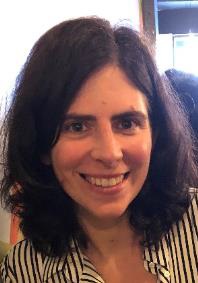
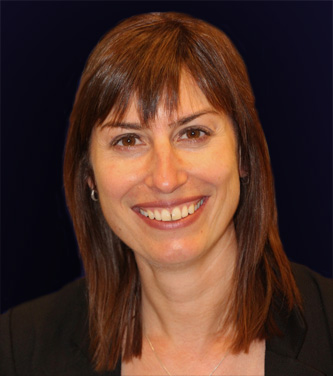
Dr. Carolina Bottari is a Full Professor in the Occupational Therapy Program at the School of Rehabilitation, University of Montreal. She conducts her research at the Interdisciplinary Research Centre in Rehabilitation of Metropolitan Montreal (CRIR) and the University Institute for Rehabilitation in Physical Disabilities of Montreal (IURDPM). Her work focuses on cognitive rehabilitation with particular emphasis on vulnerable populations affected by brain injuries.
Her educational background includes:
- B.Sc. Occupational Therapy, School of Physical and Occupational Therapy, McGill University (1986)
- M.Sc. Biomedical Sciences, School of Rehabilitation, University of Montreal (2001)
- Ph.D. Biomedical Sciences, School of Rehabilitation, University of Montreal (2007)
- Postdoctoral fellowship, Baycrest Hospital, Toronto University (2007)
- Postdoctoral fellowship, Montreal Neurological Institute and Hospital, McGill University (2010)
Dr. Bottari's research spans multiple critical areas in rehabilitation science. She has pioneered work in designing care ecosystems for women who are victims of domestic violence and at risk of having suffered traumatic brain injuries, examining how brain injuries impact empowerment processes and developing integrated support systems. Her research on homelessness among people with brain injuries has documented systemic barriers and developed practical solutions. She is a leader in cognitive assistive technology development, particularly the COOK system for meal preparation support, with multiple studies on usability and implementation in real-world settings. Additionally, she has conducted important work on pandemic response in brain injury services and neurorehabilitation for conditions like myotonic dystrophy.
Analysis of Dr. Bottari's publication record (2020-2025) reveals a strong interdisciplinary approach combining rehabilitation science, neuroscience, technology development, and social services. Her work consistently focuses on practical applications in real-world settings, often employing mixed-methods approaches that bridge quantitative measurement with qualitative insights. The publications demonstrate a clear trajectory toward increasingly complex implementation research, moving from technology development to ecosystem design for vulnerable populations.
Dr. Bottari leads multiple significant research projects:
- Preventing and Reducing Homelessness Among People with Acquired Brain Injury (2023-2025)
- Telemonitoring of activities of daily living for older people (2024-2028)
- Sustainable Ecosystem of Care for Women with Brain Injury from Intimate Partner Violence (2024-2026)
- Co-design of support ecosystems for domestic violence victims with TBI (2024-2027)
- Understanding CNS impairments in myotonic dystrophy (2024-2025)
- Strengthening Parenting Practices in Rwanda post-genocide (2022-2027)
- Brain Injury Pandemic Preparedness (2021-2024)
- Development of smart housing for seniors (2020-2024)
These projects are funded by major organizations including Canadian Institutes of Health Research, Brain Canada, Quebec Ministry of Health, and International Development Research Center. Her research is conducted through CRIR and IURDPM, where she collaborates with multidisciplinary teams to develop innovative rehabilitation approaches that address medical, functional, and social dimensions of recovery.