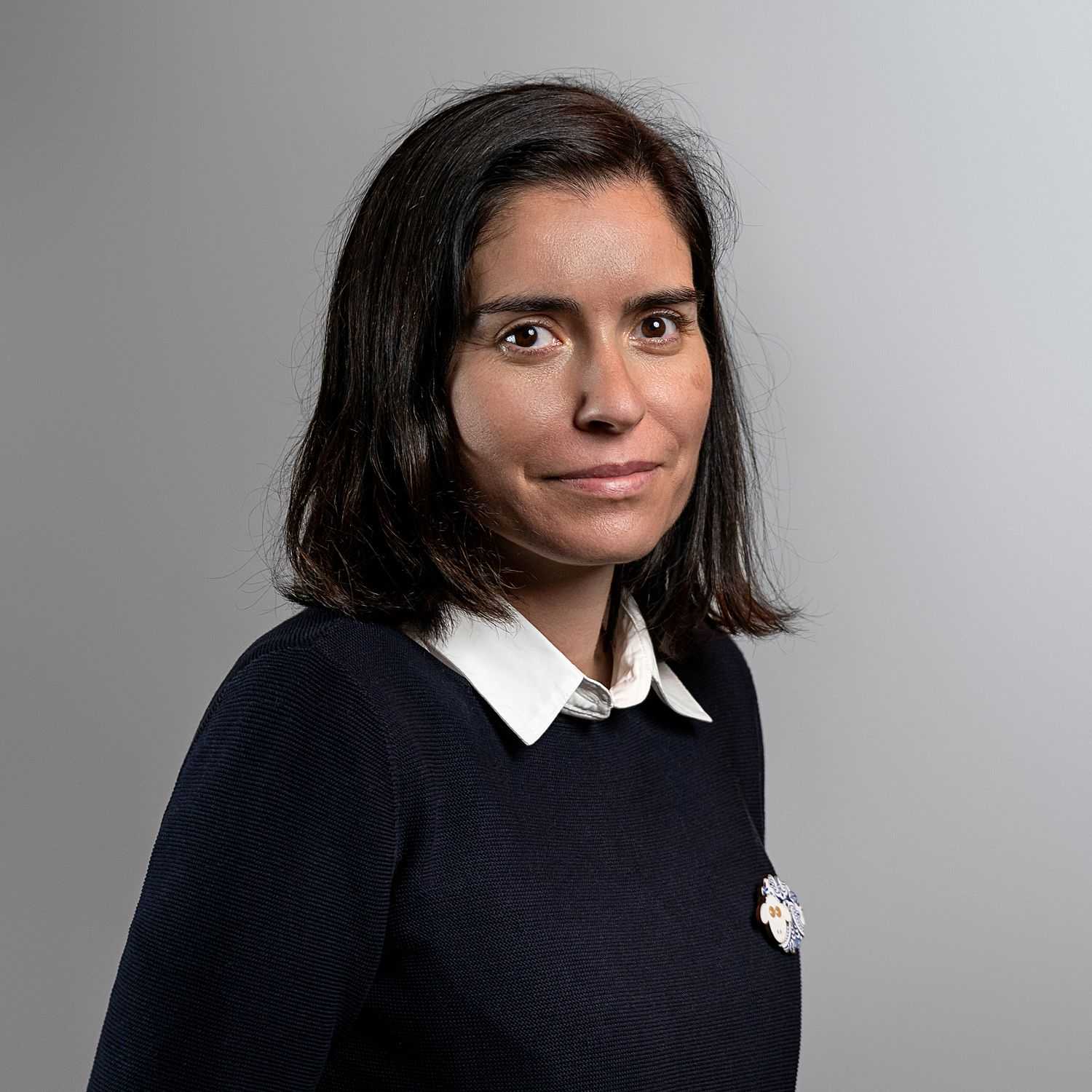
Marta Portela Garcia is an Associate Professor at the University Carlos III de Madrid, where she holds a position in the Academic Department of Electronic Technology. She is affiliated with the Microelectronic Design and Applications (DMA) research group and the University Institute on Gender Studies. Her expertise bridges hardware design, fault tolerance, and embedded systems reliability, with a focus on aerospace and medical technologies. Her research spans fault-tolerant hardware architectures, radiation effects on electronic circuits, affective computing for wearable devices, and cryptographic techniques for secure communication. Recent work includes advancing post-quantum cryptography for sensor networks and improving dependability in edge computing systems. Publications emphasize innovations in circuit hardening, fault injection methodologies, and FPGA-based co-design solutions. Notable contributions include radiation-resistant systems for space applications and emotion recognition via physiological signals. While no formal advisees are listed, her collaborative projects and research groups suggest strong involvement in academic mentorship. Grants and funding details are not explicitly stated in the provided texts. She actively contributes to the DMA research group and the University Institute on Gender Studies, integrating interdisciplinary approaches to solve challenges in microelectronics and technology ethics.
Professor James Covington is a Professor in Electronic Engineering at the University of Warwick's School of Engineering, serving as Associate Head of Department (Impact & Industry). His research focuses on developing chemical/biological sensors for environmental pollutants and medical applications, leading to the creation of the Biomedical Sensors Laboratory in 2010. He has pioneered low-cost chemical sensors licensed to AMS and collaborates with industries like Sony, IBM, and Roche. His work spans sensor fundamentals, instrumentation, and applications in agriculture, automotive, and security sectors. Research interests include artificial olfactory systems, gas phase analysis, clinical biomarker detection, and low-cost sensor materials. Notable projects include VOC-based diagnostics for pancreatic cancer, UTIs, and Alzheimer’s disease, as well as non-invasive preterm birth prediction. He chairs the International Society of Chemical Sensors and contributes to global sensor standards via IEEE and IET. Key grants include Innovate UK funding for antibiotic resistance diagnostics and Wellcome Trust support for urinary tract infection analysis. His sensor systems address urgent healthcare needs while advancing environmental and industrial monitoring. The Biomedical Sensors Laboratory drives interdisciplinary innovation, combining electronics, materials science, and clinical applications.
Dhritiman Bhattacharya is an Assistant Professor in the Department of Electrical & Computer Engineering at Rowan University, affiliated with the Henry M. Rowan College of Engineering. He holds a Ph.D. in Mechanical and Nuclear Engineering from Virginia Commonwealth University (2020) and a B.Sc. in Electrical and Electronic Engineering from Bangladesh University of Engineering and Technology (2013). Prior to his current role, he was a Postdoctoral Fellow in the Department of Physics at Georgetown University. His research focuses on overcoming energy limitations in CMOS-based computing through spintronic innovations, leveraging magnetic nanostructures and non-volatile materials to develop novel neuromorphic and memory technologies. Key areas include voltage-controlled skyrmions, magneto-ionic devices, and neuromorphic computing architectures. He has published over 25+ journal articles and received the 2021 Best Paper Award at the ASME Smart Materials Conference, alongside recognition as an Outstanding Reviewer for the Institute of Physics. His articles explore topics such as magnetic nanostructure design, strain-mediated switching, and reservoir computing with frustrated nanomagnet arrays. Notable contributions include studies on 3D interconnected nanowire networks and physically secure logic locking mechanisms. Professional memberships include IEEE and the American Physical Society.
Cezar Zota is a Lecturer at École Polytechnique Fédérale de Lausanne (EPFL) , affiliated with the EDMI-ENS unit under the VPA-AVP-DLE structure. He is actively involved in teaching and advising PhD students. Research Interests include nanoscale semiconductor devices and post-CMOS electronics, reflecting his expertise in advanced materials and applied physics for electronic applications. PhD Students: Alberto Ferraris, Soujanya Madasu
Prof. Dr. Heidemarie Krüger serves as the Head of the Research Department Photonics and Quantum Detection at the Leibniz Institute of Photonic Technology (Leibniz-IPHT) in Jena, Germany. Her work bridges advanced materials science with applied physics and electronics, focusing on photonic and quantum detection systems. Academic Rank: Professor Email: heidemarie.krueger@leibniz-ipht.de Research Interests span photonics, quantum detection, memristor technology, and nanomaterials. She investigates: Electrochemically grown porous platinum for electrocatalysis and optical applications Resistive switching dynamics in multiferroic thin films Magnetooptical properties of ferromagnetic materials Stability enhancements in organic solar cells via amphiphilic additives Memristor-based security solutions like true random number generators Impedance chip development for biochemical monitoring Recent Publications (2024–2025) highlight her interdisciplinary expertise, with trends in: Magnetotransport phenomena in superconductors Optimization of memristive devices for neuromorphic and cryptographic applications Electrochemical and optical engineering of nanostructured materials Stability mechanisms in renewable energy technologies
Seth Copen Goldstein is an Associate Professor in the Computer Science Department at Carnegie Mellon University's School of Computer Science. His research spans multiple interdisciplinary domains focusing on ensembles - large collections of interacting agents. He has made significant contributions to reconfigurable computing, molecular-scale devices, programmable matter, and more recently, the impact of technology on labor markets and alternative monetary systems. Education: PhD in Computer Science, University of California at Berkeley BS, Princeton University Goldstein's research agenda has evolved from reconfigurable computing to molecular-scale devices and programmable matter, and most recently to social technology and alternative monetary systems. His early work focused on compiling high-level programming languages directly into configurations for computing ensembles of gates. He then investigated molecular-scale circuits and programmable matter - ensembles of computing elements that can be programmed to change physical properties. Since returning from a startup, he has shifted focus to ensembles of people, studying technology's impact on labor markets and innovation, and developing social technologies to reduce poverty and inequality. His publication trends show a consistent focus on modular robotics, distributed systems, and programmable matter. The research spans theoretical foundations, hardware implementation, and programming languages for large-scale ensembles. Recent work emphasizes energy efficiency, distributed algorithms, and novel programming paradigms for heterogeneous systems. The interdisciplinary nature of his work connects computer science, electrical engineering, and social sciences. Research Leadership: Claytronics project - creating ensembles of cooperating submillimeter robots Development of Meld and LDP programming languages for ensemble systems Phoenix project - computing without processors Building on Local Trust (BoLT) initiative Goldstein has advised numerous PhD students who have gone on to positions at major technology companies including Microsoft Research, Sun Microsystems, and NEC Labs. His work has been supported by significant research grants focusing on modular robotics, programmable matter, and distributed computing systems. He has taught core computer science courses including Compiler Design, Introduction to Computer Systems, and Cloud Computing.
Walter Leon-Salas, Ph.D. is an Associate Professor at the School of Engineering Technology at Purdue University, where he directs the tinyLab research group focused on the integration of electronic circuits with sensors and wireless communications. He received his B.Sc. in electronic engineering from Universidad Nacional de San Agustín in Peru, and his M.Sc. and Ph.D. in electrical engineering from the University of Nebraska-Lincoln in 2001 and 2006, respectively. His educational background includes: B.Sc. in Electronic Engineering, Universidad Nacional de San Agustín, Arequipa, Peru M.Sc. in Electrical Engineering, University of Nebraska-Lincoln (2001) Ph.D. in Electrical Engineering, University of Nebraska-Lincoln (2006) Dr. Leon-Salas' research focuses on low-power analog design, CMOS image sensors, solar energy harvesting, optical communications, and data compression. His work explores innovative ways to integrate electronic circuits with sensors and wireless communication systems, particularly through energy harvesting techniques that allow devices to operate with minimal external power sources. His research group has developed novel applications including Optical Frequency Identification (OFID) technology using solar cells for wireless communication, wireless soil health monitoring systems, and reconfigurable energy-harvesting CMOS image sensors. His recent publications (2023-2025) show a strong trend toward sustainable energy applications, particularly in the areas of solar cell-based optical communications, environmental monitoring systems, and energy-efficient technologies for agricultural and high-altitude applications. His work bridges electrical engineering with environmental sustainability, food-water-energy nexus research, and practical IoT implementations. His scientific achievements have been recognized with several prestigious awards: National Science Foundation CAREER Award (2011) Outstanding Faculty in Discovery, School of Engineering Technology, Purdue University (2014) Leadership Excellence Achievement Program (LEAP) Award from the Missouri Society of Professional Engineers (2011) Outstanding Doctoral Dissertation Award from UNL College of Engineering (2007) Best runner up live demo award at IEEE ISCAS conference (2018) Dr. Leon-Salas actively mentors students at all levels, from undergraduates to post-doctoral researchers, and has secured significant grant funding for his research. He serves as Co-Director of the Arequipa Nexus Institute for Food, Energy, Water and the Environment and as Secretary of the IEEE Sensory Systems Technical Committee. His teaching responsibilities include Analog IC Design, Mixed-Signal IC Design, Logic Design, Advanced Digital Design, and Digital Signal Processing courses. His tinyLab research group maintains several active projects including Optical Frequency Identification (OFID), Wireless Soil Health Monitoring, Solar Radiation Sensors, Circuit Printing, Reconfigurable Energy-Harvesting CMOS Image Sensors, RFID-based Corrosion Sensor, Optical Stimulator for Fruit Flies, and LED Lighting Testing for Airport Taxiways.
Paolo Motto Ros is an Assistant Professor at the Department of Electronics and Telecommunications at Politecnico di Torino, with the MiNES (Micro&Nano Electronic Systems) group. He holds a Ph.D. in electronic engineering from Politecnico di Torino (2009), following an M.Sc. (2005). His career spans roles at Neuronica Laboratory (2009-2012), Istituto Italiano di Tecnologia (2012-2019), and since 2019 at Politecnico di Torino as Senior Post-Doctoral Researcher and Adjunct Professor. He is an IEEE member and has organized conferences like BioCAS, ICECS, and ISCAS satellite events. Currently, he supervises 6 PhD students in projects related to wireless power systems and biomedical devices. Education: M.Sc. and Ph.D. in Electronic Engineering (Politecnico di Torino, 2005/2009) Research Interests focus on: Event-driven digital integrated circuits and systems Low-power smart sensor networks Bio-inspired electronics for robotics and medicine Wireless power transfer for implants and wearables Human motion applications and agrifood electronics Publication Trends show expertise in biomedical device design, neural interfaces, wireless power systems, and bio-inspired wearables. He leads the NerveRepack EU-funded project (2023-2027) for neural exoprosthetics. His lab affiliations include the VLSILAB group, and he serves on editorial boards for Frontiers in Bioengineering and Biotechnology . No scientific awards are mentioned in the provided texts.
Jérôme Borme is a Staff Researcher and Principal Investigator at the International Iberian Nanotechnology Laboratory (INL), where he leads the 2D Materials and Devices group within the Alpuim Research Group. He joined INL in 2011 as a fellow and played a key role in establishing the cleanroom facility, specializing in nanopatterning processes for sub-micron magnetic sensor devices. His current work focuses on scaling graphene device fabrication for industrial integration. His academic background includes: Engineer degree from École Centrale de Lyon (France), 2002 Master's in Condensed Matter Physics from Université Claude-Bernard-Lyon-1 PhD in Physics from CEA and Université Grenoble-Alpes Previous professional experience encompasses a post-doctoral researcher position at INESC-MN in Lisbon, Portugal, and a visiting scientist role at Max-Planck-Institut für Mikrostrukturphysik in Halle (Saale), Germany. His research centers on graphene field-effect transistors with electrolyte gating for biosensing applications, achieving record low detection limits for DNA, proteins, and small molecules through functionalization with immunoglobulins, nucleic acids, and aptamers. He also develops graphene radiofrequency transistors and explores 2D materials for electronics and optoelectronics, with current efforts targeting 200 mm-scale homogeneous fabrication for CMOS integration. His publication record (76 papers as of 2023, h-index 19) demonstrates consistent innovation in nanofabrication and biosensor development, with recent work emphasizing tunnel magnetoresistance in graphene transistors (2021), cleanroom lithography for biosensors (2020), and attomolar DNA detection (2019). These contributions highlight his expertise in bridging nanomaterial properties with practical sensing and electronic applications. No scientific awards were documented in the source material. As facility manager for electron lithography and X-ray diffraction equipment, Borme supports institutional capabilities in nanofabrication and materials characterization. No student advising or grant details were provided in the text. He remains actively engaged in advancing 2D materials research through the Alpuim Research Group, with ongoing projects focused on industrial-scale graphene device manufacturing and CMOS integration pathways.
Dimitrios Skarlatos is a Professor in the Department of Physics at the University of Patras, specializing in Micro-Nanoelectronics and Semiconductor Physics with applications in Microelectronics. His academic career spans over two decades, with progressive appointments from Assistant Professor to his current position as full Professor since August 2023. He maintains extensive research collaborations with institutions including EKETE Demokritos, international universities, and semiconductor research centers across Europe. Skarlatos earned his Doctoral Degree from the Department of Physics of the School of Sciences at Aristotle University of Thessaloniki in 2000, with a thesis on "The role of point and extended silicon defects in the operation of MOS transistors." Prior to this, he completed a Postgraduate Diploma in Condensed Matter Physics from the University of Crete (1993) and his undergraduate degree in Physics from the University of Athens (1990). His research focuses on Group IV semiconductor materials (Silicon, Strained Silicon, Germanium) for CMOS technology applications. Key areas include experimental study of extended defects, ion implantation and dopant diffusion/activation, MOS gate dielectric development, and novel memory device architectures (nanocrystal memories, MANOS, ReRAM). His work combines advanced cleanroom processing techniques with electrical characterization and simulation methods. Analysis of his recent publications reveals a strong focus on germanium-based semiconductor devices, with particular attention to dopant behavior, interface engineering, and memory applications. His research has evolved from traditional silicon processing to emerging germanium technologies and novel memory architectures, demonstrating consistent innovation in semiconductor materials science. Skarlatos has supervised 3 completed doctoral dissertations (with 1 in progress), 5 postgraduate theses, and 12 undergraduate theses. He has led multiple research projects including EU-funded initiatives (ESPRIT, GROWTH, IST) and national research programs (GGTE, HERACLES II), focusing on semiconductor front-end processes, memory technologies, and solar cell applications. His laboratory work involves advanced cleanroom processing (ALD, thermal processing, optical lithography), electrical characterization (C-V, G-V, I-V), and collaboration with TEM facilities. He maintains strong connections with semiconductor research centers including CEMES/CNRS in Toulouse and has extensive experience with TCAD simulation tools.
Nicolas Wyrsch is a Researcher at the Laboratory of Photovoltaics and Electronic Thin Films (PV-LAB) within the School of Engineering (STI) at École Polytechnique Fédérale de Lausanne (EPFL). He holds a dual role as a lecturer for a course on 'Large-area electronics: Materials and devices.' His career includes a PhD from the University of Neuchâtel in 1991 and post-doctoral research at Princeton University. Wyrsch leads research in particle sensors, photovoltaic module efficiency, energy system digitalization, grid integration of renewables, and electric mobility infrastructure. He has authored/co-authored over 200 publications and advised numerous PhD students. Education: Physics diploma (ETH Zurich, 1984), PhD (University of Neuchâtel, 1991). Research Interests : Particle detection technologies, photovoltaic systems optimization, energy grid modernization, and sustainable mobility solutions. His work bridges material science, electronics, and energy policy to address global sustainability challenges. Labs/Teams : PV-LAB at EPFL, focusing on advanced photovoltaic materials and energy systems.
Yiorgos Tsiatouhas is a Professor in the Department of Computer Science and Engineering at the University of Ioannina. He holds a B.Sc. in Physics (University of Athens, 1990), M.Sc. in Informatics and Telecommunications (University of Athens, 1993), and Ph.D. in Informatics and Telecommunications (University of Athens, 1999). His research focuses on VLSI circuit design, reliability engineering, and secure computing. He teaches courses such as 'Electronics' (MYY404), 'VLSI Circuits' (MYE018), and 'Reliable Integrated Systems' (Y2), emphasizing topics like CMOS technology, radiation-hardened electronics, and testing methodologies. His research interests span secure computing architectures, fault-tolerant systems, and aging monitoring in integrated circuits. Recent work includes developing radiation-hardened latches, PUF-based security solutions for SoCs, and novel testing algorithms for phase-change memories. He has also contributed to visible light communication (VLC) systems, addressing challenges like anti-reflective obstacle detection and adaptive signal decoding in non-line-of-sight (NLOS) environments. Teaching activities include supervising student projects, maintaining an active lab for SPICE-based circuit simulation, and integrating industry-standard tools like Cadence into coursework. His lab focuses on designing and testing analog/digital circuits, emphasizing practical skills in SPICE simulation and layout design.
Dr. Sally Gowers is a Research Associate in the Department of Bioengineering at Imperial College London's Faculty of Engineering. She specializes in developing advanced biosensors and analytical tools for real-time clinical monitoring and biomedical applications. Her affiliations include the Biomedical Sensors group, the Centre for Antimicrobial Optimisation, and the Ovarian Cancer Tumour Heterogeneity and Bioengineering initiative. Her research focuses on integrating microfluidic, nanotechnology, and electrochemical methods into wearable and implantable devices. Key areas include biosensors for metabolic monitoring (e.g., glucose/lactate), neurochemical analysis in traumatic brain injury, and antibiotic quantification. She has pioneered microneedle-based devices and microdialysis systems for applications ranging from organ transplantation to sports medicine. Recent work emphasizes clinical translation, such as Phase I trials for lactate-monitoring microneedle patches and validation of real-time kidney viability assessment during transplantation. Her innovations bridge engineering and medicine, addressing critical needs in patient monitoring, organ preservation, and antimicrobial resistance. Dr. Gowers collaborates across disciplines, leveraging Imperial’s engineering and clinical expertise. Her lab develops both hardware (e.g., 3D-printed microfluidic devices) and software systems for data analysis, aiming to improve diagnostic accuracy and patient outcomes through continuous, minimally invasive monitoring.
Wei He is a Teaching Assistant Professor at the University of Illinois at Urbana-Champaign (UIUC), affiliated with the Department of Electrical & Computer Engineering within the College of Engineering. His research focuses on nanotechnology, semiconductor materials, and environmental engineering, particularly in semiconductor device manufacturing and biochar-based solutions for nutrient and contaminant management in agricultural systems. He has contributed to advancing sustainable agricultural practices through innovative technologies like biochar-amended systems for phosphorus capture and wastewater treatment. He teaches courses such as ECE 110 (Introduction to Electronics), ECE 340 (Semiconductor Electronics), and ECE 445 (Senior Design Project Lab), emphasizing practical engineering applications and technology management. His work bridges semiconductor engineering with environmental sustainability, addressing challenges in water quality, agricultural drainage, and climate mitigation through interdisciplinary approaches. Wei He's research highlights include developing bioreactor-biochar systems to reduce nutrient losses in tile-drained fields and investigating pharmaceutical contaminant fate in environmental systems. His studies often emphasize translating laboratory findings into scalable real-world applications. He has been recognized for his contributions to UIUC, joining as part of a cohort of new teaching and tenure-track faculty members in recent years.
Natalia Seoane Iglesias serves as an Associate Professor in the Department of Applied Physics at the University of Santiago de Compostela's College of Physics. Her research integrates semiconductor device physics with high-performance computing to address challenges in next-generation electronics and energy conversion systems. B.Sc. in Physics, University of Santiago de Compostela (Spain) Ph.D. in Physics, University of Santiago de Compostela (2007) Postdoctoral research: University of Glasgow (2007-09), University of Edinburgh (2011), Swansea University (2013-15) Her research focuses on semiconductor device simulation , nanoscale variability analysis , and laser power conversion systems . She develops advanced computational tools combining 3D finite-element modeling with machine learning techniques to optimize device performance. Current projects target ultra-high efficiency (>80%) SiC-based laser converters for space applications and statistical variability studies in sub-10nm transistor architectures. Her publication portfolio reveals strong trends in machine learning-enhanced TCAD and high-concentration photovoltaics . Recent work demonstrates how vertical epitaxial heterostructures with SiC/GaN materials can overcome traditional efficiency barriers in wireless power transfer systems, while her nanoscale variability studies provide critical insights for future CMOS scaling. Key scientific contributions include: Development of MLFoMpy for semiconductor data post-processing Novel Pelgrom-based predictive models for device variability Breakthrough laser power converter architectures exceeding 80% efficiency Comprehensive studies of metal grain effects in nanosheet FETs She leads the rePowerSiC project (2024-2028) developing space-qualified laser power systems and contributes to multiple EU-funded initiatives in high-performance computing. Her team employs advanced simulation frameworks including VENDES and Silvaco Atlas for device characterization, with applications ranging from satellite power systems to refinery monitoring drones.