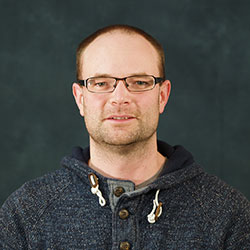
Valery Chernoray is a Research Professor at the Division of Fluid Dynamics, Chalmers University of Technology. Since 1996, he has specialized in experimental fluid dynamics with extensive expertise in modern flow analysis and measurement techniques. He currently leads the Chalmers Laboratory of Fluid and Thermal Science, a university-wide research infrastructure facility that provides equal access to flow, temperature, and motion measurement capabilities for researchers across all engineering disciplines at Chalmers. Professor Chernoray's research encompasses several key areas in fluid dynamics: Experimental validation of computational models using Particle Image Velocimetry (PIV) Turbomachinery aerodynamics, particularly turbine rear structures and outlet guide vanes Bearing lubrication systems and multiphase flow in mechanical components Active flow control applications for automotive and marine systems Wind engineering for urban and marine environments Heat transfer analysis in complex engineering systems His recent publications (2022-2024) reveal a strong emphasis on experimental validation of computational models, with particular focus on lubrication systems in bearings and gearboxes, turbine aerodynamics, and active flow control. His work consistently bridges theoretical fluid dynamics with practical engineering applications, demonstrating expertise in both fundamental research and industrial problem-solving. As head of the Chalmers Laboratory of Fluid and Thermal Science, Professor Chernoray oversees comprehensive experimental facilities supporting research across multiple engineering disciplines. The laboratory provides critical infrastructure for experimental work in air, water, and solid object measurements, serving as a hub for interdisciplinary collaboration at Chalmers University.
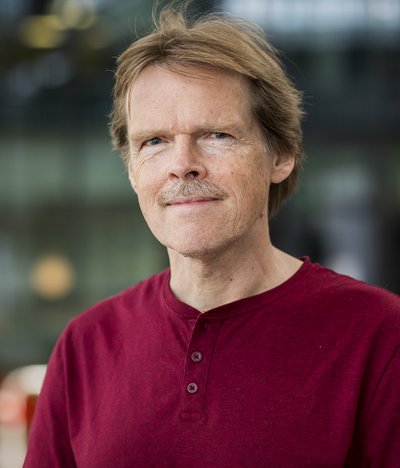
Dr. Matilda Mroz is a Lecturer in Film Studies at the University of Sydney's Faculty of Arts and Social Sciences, where she also serves as Honours Coordinator and School Social Inclusion Representative. She joined the University of Sydney in October 2020 after holding positions as Senior Lecturer in Film Studies at the University of Sussex and Programme Leader for the BA (Hons) Film Studies at the University of Greenwich, London. Dr. Mroz is a member of both the Sydney Environment Institute and the Charles Perkins Centre. Dr. Mroz earned her BA (Hons) from the University of Sydney and completed her PhD at the University of Cambridge (Faculty of English) in 2008. Her doctoral research formed the basis of her first monograph, Temporality and Film Analysis (Edinburgh University Press, 2012). Between 2008-2011, she held a British Academy Postdoctoral Research Fellowship at Cambridge and was the Charles and Katherine Darwin Research Fellow at Darwin College (2009-2011). Dr. Mroz's research focuses on film theory, philosophy and aesthetics, with particular emphasis on global cinematic engagements with violence, genocide and death, Polish cinema, filmed environments and ecologies, and animals in film. Her work explores how film represents traumatic historical events, particularly the Holocaust in Polish visual culture, and how cinematic representations negotiate complex relationships between humans, animals, and environments in post-conflict spaces. She employs interdisciplinary approaches drawing from film-philosophy, eco-criticism, and memory studies to examine these topics. Her recent publications demonstrate a consistent focus on Polish cinematic responses to historical trauma, particularly regarding Polish-Jewish relations and Holocaust memory. The publications reveal a trajectory from early work on cinematic temporality to more recent explorations of posthumous ecologies and the materiality of violence in Holocaust film and art. Her research increasingly incorporates elemental approaches to world cinema, examining how earth, fire, water, and air function as cinematic elements across global film cultures. Dr. Mroz has received numerous prestigious awards throughout her career: British Academy Mid-Career Fellowship (2019-2020) British Association for Slavonic and East European Studies Women's Forum Article Prize, Honorable Mention (2019) Research Pump Priming Award, University of Greenwich (2015) British Academy Small Grants (2013-2015) Early Career Research Excellence Award, University of Greenwich (2013) Charles and Katherine Darwin Research Fellowship, Darwin College, University of Cambridge (2010-2011) British Academy Postdoctoral Research Fellowship, University of Cambridge (2008-2011) Dr. Mroz currently supervises PhD students including Audrey MITCHELL, whose research examines "Gesture, Conversation, and 'Vision': Ethical Nodalities and Contemporary Cinema," and Lee STEENBERGEN, researching "Changing the Nature of Consumption in Documentary: The Foragers." She has secured significant research funding through British Academy fellowships and grants, focusing on Polish visual culture's engagement with Holocaust memory and post-conflict landscapes. Dr. Mroz serves on the editorial board of Film-Philosophy and is an active member of several scholarly associations including the British Association of Film, Television and Screen Studies, the British Association for Slavonic and East European Studies, and the Society for Cinema and Media Studies. Her current research projects include "Framing the Holocaust in Polish Aftermath Cinema: Posthumous Materiality and Unwanted Knowledge," which examines how Polish film and visual culture has responded to recent historical scholarship concerning Polish acts of violence against Jewish neighbors during the Holocaust, and "Posthumous ecologies," which explores how moving images negotiate global histories of violence and conflict through the complex networks between human remains, landscapes, and their cinematic representation.
Christos Manopoulos is an Assistant Professor at the School of Mechanical Engineering, National Technical University of Athens (NTUA), Greece, within the Fluids Section. His roles include Director of the Biofluid Mechanics & Biomedical Technology Laboratory and Health and Safety Officer for the Fluid Mechanics Section. He holds a PhD in Biomedical Engineering (2009) and M.Sc.E. in Biomedical Engineering (1999) from NTUA and University of Patras, alongside a Mechanical Engineering Diploma (1995). Professional Experience: Includes senior researcher roles, postdoctoral fellowships, and teaching positions at multiple institutions since 1998. Research Focus: Biofluid mechanics, biomedical device design, and cardiovascular hemodynamics. Specializes in computational modeling of valveless pumping, arterial wall mechanics, and endovascular repair systems. His work integrates experimental, theoretical, and computational methods. Key Research Trends: Recent articles emphasize patient-specific computational studies of aortic aneurysms, novel biomedical device designs, and fluid dynamics in medical systems. Topics include finite element analysis, peristaltic pumps, and pulsatile flow modifications. Awards: Doctoral Excellence (2009), Thomaideio awards (2012, 2005–2010), and a patent for a mechanical ventilator component (2021). Labs/Teams: Leads the Biofluid Mechanics Lab at NTUA, focusing on translational biomedical engineering and computational modeling.
Jari Vepsäläinen is an Assistant Professor at Aalto University's Department of Energy and Mechanical Engineering under the College of Engineering. He serves as Director of the Fluid Power group and specializes in mechatronics design, energy efficiency, and generative design methodologies. Research focuses on physics-based modeling for energy recovery AI/ML applications in electromechanical system design Applications in robotics, heavy machinery, and sustainable transportation His recent publications demonstrate expertise in hybrid systems, fluid power optimization, and AI-driven engineering, with a strong emphasis on electrification and efficiency across automotive, maritime, and industrial domains. Key areas: Mechatronics, Energy Systems, Generative Design Technologies: Digital Twins, IoT, Machine Learning Current projects involve thermal energy systems, electric motor optimization, and advanced control algorithms for mobile machinery.
Massimo Rundo is an Associate Professor at the Polytechnic of Turin 's Department of Energy (DENERG) and coordinator of the Fluid Power Research Laboratory (FPRL) . With over 70 Scopus-indexed publications, his work focuses on modeling, simulation, and experimental validation of fluid power systems. Research Interests: Positive displacement pumps (gerotor, gear, vane, piston) Hydraulic valves (flow forces, pressure control) Mobile hydraulics (excavators, telehandlers) CFD and lumped parameter modeling Incomplete filling phenomena at high speeds Recent Publications analyze flow dynamics in pumps, vibration-based fault detection, and energy-efficient hydraulic architectures through 1D/3D simulations. He has coordinated industry-funded projects with companies like Casappa and Pierburg Pump Technology. Honors: MDPI Energies Editor's Choice (2018) SAE Excellence in Oral Presentation (2004) SAE Certificate of Appreciation (2000) Rundo teaches graduate courses in Mobile and Industrial Fluid Power and advises master's theses, while serving as Associate Editor for the International Journal of Fluid Power and committee member for major conferences including ASME/BATH Symposium and International Maha Fluid Power Conference.
Dr. Kevin Worrall is a Senior Lecturer in Robotics and Control at the University of Glasgow's School of Engineering, Aerospace Sciences division. He holds affiliations with both the Space Engineering and Technology group and the Centre for Medical and Industrial Ultrasonics. His academic journey includes a BEng in Electronics and Electrical Engineering from Glasgow (2003), an MSc in Robotics and Embedded Systems from the University of Essex (2004), and a PhD from Glasgow (2008) focusing on optimization algorithms for mobile robot guidance. Research interests span mechatronic systems for extreme environments (space, underground, Antarctica), precision medical applications, and agricultural robotics. His work integrates control theory, machine learning, and hardware development across: Spacecraft attitude control and satellite systems Ultrasonic drilling and granular material handling Medical ultrasound classification using ML Autonomous planetary exploration technologies Publications demonstrate strong focus on aerospace control systems (inverse simulation, attitude control), planetary drilling technologies, and medical imaging AI. Recent work shows increasing emphasis on machine learning applications in both space systems and healthcare diagnostics. Grant leadership includes: ERC: Interglacial Collapse of Ice Sheets (£339k, CoI) ESA: Drill for Extensive Exploration of Planetary Environments (£253k, CoI) UKSA: Roving with Rosalind (£30k, CoI) EC H2020: Robot for Underground Operations (£477k, CoI) Multiple PI-led industry collaborations in positioning systems and image testing Current PhD supervision covers fault-tolerant space algorithms, planetary rover navigation, spacecraft plume interactions, and infrastructure monitoring. He leads research within the Space Engineering and Medical Ultrasonics research groups.
Dr. Yiqin Xue is a Lecturer at the Cardiff University School of Engineering . With a focus on control systems and mechatronics, their work bridges automotive engineering, energy recovery systems, and combustion dynamics. Research spans 2001-2024 with recent work on sliding mode control optimization for linear DC motors. Key collaborations include Industrial Vision Systems Ltd and Harman Becker Automotive Systems . Research Interests include: Advanced control algorithms for mechanical systems Energy recuperation in regenerative braking Combustion instability mitigation Hydraulic/pneumatic system modeling Publications (2001-2024) demonstrate expertise in: Electro-hydraulic actuator control Combustion-acoustic interaction Neural network predictive modeling Automotive system optimization Time-delay system compensation Energy-efficient actuation methods Grants & Collaborations : Multiple Royal Academy of Engineering travel grants (2001-2005) Institution of Mechanical Engineers conference support Industrial projects with Harman Becker Automotive Systems and Industrial Vision Systems
Aladin M. Boriek is a Professor of Medicine and Integrative Physiology and Biophysics at Baylor College of Medicine, and an Adjunct Professor of Mechanical Engineering at Rice University. He holds tenured positions and has adjunct roles across multiple departments, including Mechanical Engineering and Biomedical Engineering at Rice. His research focuses on mechanical signal transduction in skeletal muscles, the role of Sirt1 in muscle physiology, and respiratory muscle dysfunction in muscular dystrophy. He has extensive collaborations with institutions like Mayo Clinic and The W.M. Keck Center for Computational Biology. Education includes a Ph.D. in Computational Mechanics from Rice University (1990), followed by postdoctoral training in Respiratory Muscle Mechanics at Baylor College of Medicine. His professional experience spans over three decades, with roles in computational biology, mechanical engineering, and molecular physiology. Research interests include anisotropic regulation of mechanosensitive genes (e.g., Ankrd2), Sirt1’s antioxidative role under mechanical stress, and diaphragm mechanics in dystrophic models. His work bridges biomechanics and molecular biology, with implications for muscle diseases and aging. Publications span topics like mechanotransduction pathways, muscle dysfunction in genetic models, and respiratory mechanics. His lab investigates the structural and functional basis of respiratory muscle performance, leveraging interdisciplinary approaches. Grants and advising include training students like Michael Lopez (PhD thesis on titin mutations), and collaborations on projects funded by NIH and other agencies. He contributes to academic boards and serves as a visiting scientist at the Mayo Clinic.
Katharine Fraser is a Senior Lecturer in the Department of Mechanical Engineering at the University of Bath, affiliated with the Centre for Therapeutic Innovation and the Centre for Bioengineering & Biomedical Technologies (CBio). Her research focuses on improving mechanical circulatory support devices for heart failure patients, with expertise in ventricular assist devices (VADs), cardiovascular fluid dynamics, and novel imaging techniques like Ultrasound Imaging Velocimetry. She collaborates with companies such as Calon Cardio-Technology Ltd and CorWave SAS, and her work supports regulatory bodies like the FDA. Her research spans three core areas: optimizing VAD design using CFD and blood damage models, investigating interactions between mechanical circulatory support and the native cardiovascular system, and developing new diagnostic methods. She leads projects funded by EPSRC and industry, including studies on pediatric LVADs, fluidized bed bioreactors, and hemocompatibility assessment platforms. Fraser has supervised doctoral students and mentors teams like Team Bath Heart, fostering engineering talent in medical device innovation. Notable awards include the John Willis Award (2018) and the 2024 Doctoral Recognition Award. Her publications address topics like hemolysis modeling, secondary blood flows in rotating systems, and personalized cardiovascular modeling for pediatric care. She actively contributes to advancing medical technology through interdisciplinary research, education, and industry partnerships.
Arris Tijsseling is an Associate Professor at Eindhoven University of Technology (TU/e), affiliated with the Department of Mathematics and Computer Science. His research focuses on fluid transients, computational fluid dynamics, and multiphase flow modeling with applications in pipeline systems. He has contributed to advanced numerical methods like smoothed particle hydrodynamics (SPH) and fluid-structure interaction (FSI) analysis. Notable work includes Lagrangian particle models for transient pipe flows and studies on manhole cover dynamics. His teaching responsibilities include courses on computational science and calculus. Key research themes involve transient flow analysis in pipelines with moving boundaries, cavitation effects in pumps, and structural responses under fluid-induced loads. His work bridges theoretical fluid dynamics with experimental validation, as seen in large-scale pipeline filling/emptying experiments. Collaborative efforts span international teams, addressing challenges in pipeline safety and computational efficiency. Publications highlight innovations in SPH for multiphase flows, hybrid numerical schemes for transient flows, and historical contributions to fluid mechanics. His research often emphasizes practical engineering applications, such as improving pump models and understanding wavefront behavior in fluid systems.
Tuncay Alan is an Associate Professor at Monash University's College of Engineering, Department of Mechanical & Aerospace Engineering, and affiliated with the Victorian Heart Institute (VHI). He holds a PhD in Engineering from Cornell University and has held positions such as Visiting Scientist at Paul Scherrer Institute (2016), Research Fellow at London Centre for Nanotechnology (2010), and Honorary Research Fellow at University College London (2010-2011). His work focuses on microsystems , microfluidics , and biomedical engineering , with applications in renewable energy systems and medical diagnostics . PhD, Engineering, Cornell University BSc, Civil Engineering, Middle East Technical University Alan's research explores acoustofluidic synthesis , ultrasonic atomization , and microfluidic drug delivery , often integrating nanofabrication and graphene-based sensors . Recent work includes 3D-printed molecular templates for perovskite patterning and ultrasensitive bacterial detection in biofluids using resazurin markers. His publications highlight advancements in acoustic microfluidics , nanoparticle assembly , and point-of-care diagnostics . Key projects involve developing low-cost wireless sensors and next-generation nebulizers for asthma treatment, earning recognition at the 2023 Designers Australia Awards and Good Design Awards. He also holds a Collegium Helveticum Senior Fellowship (2023). Alan contributes to microelectromechanical systems (MEMS) and nanoscale displacement sensing , with patents in acoustic trapping and droplet control technologies . He mentors PhD students and leads projects like the PALM device , aiming to revolutionize personalized aerosol drug delivery and autonomous medical systems .
Dr. William Dempster is a Senior Lecturer in Mechanical & Aerospace Engineering at the University of Strathclyde. His expertise spans thermodynamics, two-phase flow analysis, heat exchanger design, safety valve systems, and thermal system modelling. He currently leads the 'DEVELOPMENT OF DEM PARTICLE METHODS FOR THE MITIGATION OF EROSIVE WEAR IN TURBOMACHINERY' project (2023-2026) and contributes to multiple interdisciplinary research initiatives focusing on thermal energy storage and biomedical engineering applications. Key areas of research include: Cavitation effects in fluid systems CFD-based validation of safety critical components Thermal management for renewable energy systems Biomedical device simulation (vascular stents and endografts) Dr. Dempster has published extensively on topics such as pump modelling, relief valve design, and transient flow phenomena, with notable contributions to journals like Journal of Pressure Vessel Technology and Annals of Biomedical Engineering . His work bridges fundamental fluid mechanics with industrial applications in energy, aerospace, and medical engineering sectors.
Yves Perriard is an Adjunct Professor at École Polytechnique Fédérale de Lausanne (EPFL), where he serves as director of the Laboratory of Integrated Actuators (LAI) within the School of Engineering and Institute of Microengineering. His academic career spans over three decades, with significant contributions to actuator design and related electronic devices. Professor Perriard's research focuses on electric drives, linear transducers, complex system optimization, invasive blood pumps, piezo electric motors, and smart materials (EAP, SMA). His laboratory's research mission centers on transducers, electric drives, motor design, transportation, contactless energy transmission, and medical applications. Recent work has particularly emphasized dielectric elastomer actuators for medical applications including facial paralysis treatment, cardiac assistance, and diabetes management. His extensive publication record demonstrates a clear evolution from fundamental actuator design toward increasingly sophisticated medical applications. The most recent publications reveal a strong emphasis on cardiovascular engineering, soft robotics for medical applications, and smart materials for healthcare solutions, with significant funding including a 12 million CHF grant from the Werner Siemens Foundation to establish a Center for Artificial Muscles. Best paper awards at IEEE Conference on Electrical Machines and Systems (2014, three separate awards) Student awards for best teacher of the STI Faculty (2005, 2006) Elected to Senior Grade of the IEEE Society (2005) Professor Perriard has supervised 87 Master's projects at LAI across three sections (SMT, SEL, SME) between 2001-2014. His laboratory received significant funding including a 12 million CHF grant from the Werner Siemens Foundation in 2017 to establish a Center for Artificial Muscles. He serves as Associate Editor for IEEE Transactions on Industry Applications and the IEE Journal of Electrical Engineering, and has held numerous leadership positions including Past-President of the EPFL School Council. The Laboratory of Integrated Actuators (LAI) under Professor Perriard's direction has evolved into a leading research center focusing on advanced actuator technologies with strong medical applications. The lab maintains active collaborations with institutions including Zhejiang University in China and has expanded its focus to include cardiovascular engineering, diabetes management technologies, and facial reanimation systems.
Aleksandar Josifovic serves as a Teaching Fellow within the Department of Design, Manufacturing and Engineering Management at the University of Strathclyde's Faculty of Engineering. His academic role integrates teaching with research in mechanical and chemical engineering systems, focusing on sustainable industrial process design and optimization. His research spans mechanical engineering, chemical engineering, and environmental sustainability, with core expertise in positive displacement pump dynamics, additive manufacturing applications, and data-driven process characterization. Josifovic develops experimental methodologies for 3D-printed flow reactors and optimization techniques for reducing environmental impacts in hydraulic fracturing operations, emphasizing fluid dynamics and sustainable engineering solutions. Analysis of his publication record reveals a consistent trajectory toward integrating additive manufacturing with biopharmaceutical processes, particularly in coiled flow inverter systems for viral inactivation. His work bridges computational fluid dynamics, experimental validation, and environmental impact reduction across chemical and mechanical engineering domains. Josifovic contributes to academic service as a peer reviewer for Elsevier publications and participates in the non-funded Engineers Without Borders UK: Engineering for People Design Challenge project (2023-2025), supporting engineering education initiatives through practical design challenges.
Aleksandar Kovacevic is a Professor at City, University of London, specializing in mechanical engineering with a focus on fluid dynamics and positive displacement machinery. With over two decades of research experience since completing his doctoral studies at City University London in 2002, he has established himself as a leading expert in screw compressor technology and computational fluid dynamics. Dr. Kovacevic's research spans multiple areas of mechanical engineering with particular emphasis on: Computational Fluid Dynamics (CFD) modeling of positive displacement machines Screw compressor design, optimization, and performance analysis Grid generation methodologies for complex rotary machinery Thermodynamic analysis of fluid systems Experimental validation of computational models His extensive publication record demonstrates consistent research productivity, with recent work focusing on advanced optimization techniques including Gaussian process regression and Bayesian methods applied to multi-stage screw compressors. His research shows a clear evolution from fundamental CFD modeling to increasingly sophisticated performance optimization and lifecycle cost analysis, with applications across multiple industries including HVAC, refrigeration, and industrial compression systems. Dr. Kovacevic has received recognition for his contributions to the field of positive displacement machinery, with numerous collaborations spanning academic institutions and industrial partners. His work has practical applications in energy-efficient compressor design and optimization, contributing to advancements in sustainable engineering solutions. Throughout his career, Dr. Kovacevic has mentored numerous researchers and students, many of whom have gone on to contribute to the field of mechanical engineering and fluid dynamics. His research has been supported by various grants enabling both fundamental and applied investigations into compressor technology. His laboratory work focuses on the development and validation of advanced CFD models for positive displacement machinery, combining computational approaches with experimental techniques such as Particle Image Velocimetry and infrared thermography for comprehensive system analysis.