معرفی
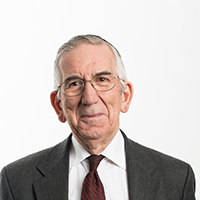
Aleksandar Kovacevic is a Professor at City, University of London, specializing in mechanical engineering with a focus on fluid dynamics and positive displacement machinery. With over two decades of research experience since completing his doctoral studies at City University London in 2002, he has established himself as a leading expert in screw compressor technology and computational fluid dynamics.
Dr. Kovacevic's research spans multiple areas of mechanical engineering with particular emphasis on:
- Computational Fluid Dynamics (CFD) modeling of positive displacement machines
- Screw compressor design, optimization, and performance analysis
- Grid generation methodologies for complex rotary machinery
- Thermodynamic analysis of fluid systems
- Experimental validation of computational models
His extensive publication record demonstrates consistent research productivity, with recent work focusing on advanced optimization techniques including Gaussian process regression and Bayesian methods applied to multi-stage screw compressors. His research shows a clear evolution from fundamental CFD modeling to increasingly sophisticated performance optimization and lifecycle cost analysis, with applications across multiple industries including HVAC, refrigeration, and industrial compression systems.
Dr. Kovacevic has received recognition for his contributions to the field of positive displacement machinery, with numerous collaborations spanning academic institutions and industrial partners. His work has practical applications in energy-efficient compressor design and optimization, contributing to advancements in sustainable engineering solutions.
Throughout his career, Dr. Kovacevic has mentored numerous researchers and students, many of whom have gone on to contribute to the field of mechanical engineering and fluid dynamics. His research has been supported by various grants enabling both fundamental and applied investigations into compressor technology.
His laboratory work focuses on the development and validation of advanced CFD models for positive displacement machinery, combining computational approaches with experimental techniques such as Particle Image Velocimetry and infrared thermography for comprehensive system analysis.