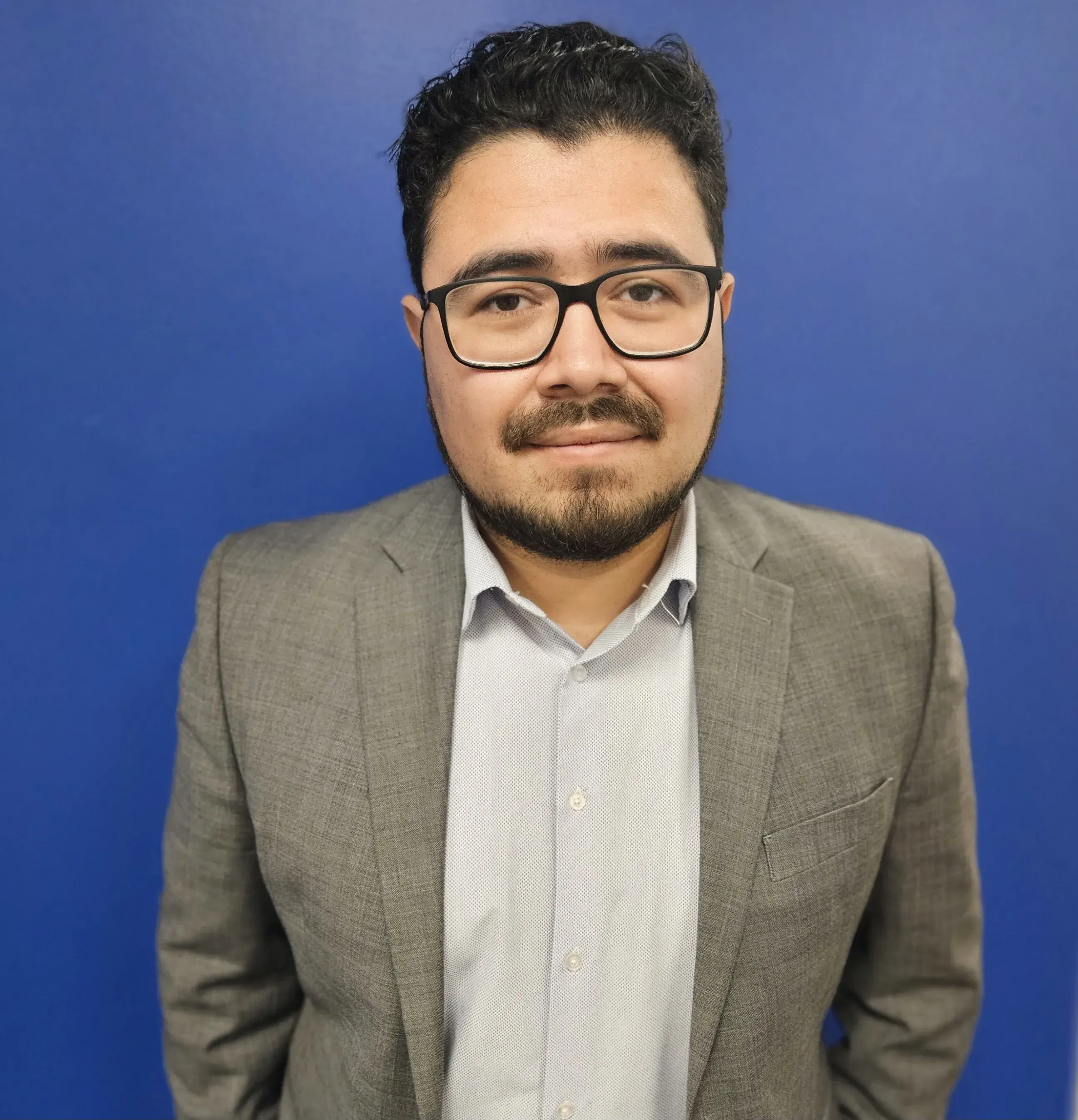
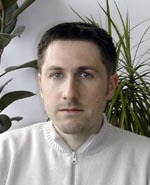
Karina Arcaute is a Senior Lecturer at Old Dominion University's Batten College of Engineering and Technology. She holds a Ph.D. in Materials Science & Engineering (2008) and an M.S. in Mechanical Engineering (2004) from The University of Texas at El Paso. Ph.D. in Materials Science & Engineering, The University of Texas at El Paso, 2008 M.S. in Mechanical Engineering, The University of Texas at El Paso, 2004 Her research focuses on Engineering Education , STEM Education , Additive Manufacturing , and Biomaterials . She is particularly known for developing educational programs integrating 3D Printing and Advanced Manufacturing into naval training initiatives. Her academic work spans biomedical applications of stereolithography , including nerve regeneration scaffolds and hydrogel constructs, alongside military and educational applications of additive manufacturing . Her publications highlight a consistent focus on 3D Printing , Biomaterials , and Custom Medical Devices since 2003.
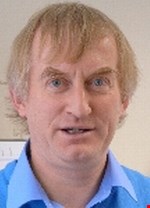
Dr. Michael Warby is a Lecturer in the Department of Mathematics at Brunel University London, affiliated with the College of Engineering, Design and Physical Sciences. He holds a PhD in Mathematics from Brunel University London (1984), an MSc in Numerical Analysis (1981), and a BSc in Mathematics (1980) from the University of Kent. His research focuses on Computational Solid Mechanics , particularly using the Finite Element Method to model industrial processes like thermoforming (involving large deformations, contact mechanics, and nonlinear material behaviors such as hyperelasticity , viscoelasticity , and elasto-plasticity ). Recent work emphasizes goal-oriented error estimation for discretization and modeling errors. Additional interests include viscoelastic fracture mechanics and numerical conformal mapping techniques. Analysis of his 15 most recent publications reveals a consistent focus on computational mechanics applied to industrial and scientific challenges, including membrane inflation , wire strand contact mechanics , and polymer thermoforming . Methodologically, his work integrates finite element discretization , error estimation , and viscoelastic material modeling across multiple engineering domains. Dr. Warby has participated in EPSRC-funded research on computational modeling of thermoforming processes and is a member of the Brunel Institute of Computational Mathematics (BICOM) . He has collaborated extensively with researchers like Prof. Simon Shaw, Dr. J.A. Kirby, and Dr. W-G. Jiang.
Corrado Sciancalepore is a fixed-term researcher at the Department of Industrial and Systems Engineering (DISTI), University of Parma. He teaches materials science and design courses across multiple degree programs, including Sustainable Design for Food Systems and Engineering for the Food Industry. His research interests lie in materials science and engineering, particularly in advanced materials for food industry applications. He focuses on bio-based polymer composites, 3D printing technologies (FDM and VAT systems), and innovative thermal management solutions for power electronics. Recent work includes applying machine learning to optimize 3D printing parameters and developing self-adhesive sericin electrodes for biosignaling. He also investigates dynamic boronate ester networks to improve isotropy in printed components. He contributes to the Lab. of Materials and Technologies for the Food Industry and has published extensively on materials engineering topics in 2025. No scientific awards are mentioned in available data.
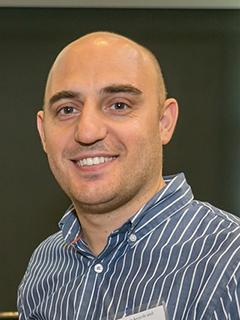
Alberto Giubilini is a Research Fellow in the Department of Management and Production Engineering (DIGEP) at Politecnico di Torino, where he also serves as an external lecturer and teaching assistant. He is a member of the Interdepartmental Center IAM@PoliTo – Integrated Additive Manufacturing, contributing to cutting-edge research in sustainable and advanced manufacturing technologies. His academic affiliations span multiple programs, including Mechanical Engineering, Materials Science, Automotive Engineering, and Design and Communication. His research is centered on additive manufacturing , with a strong emphasis on environmental sustainability and the use of biopolymers, bioresorbable composites, nanocellulose, and recycled polymers . Key technologies in his work include fused filament fabrication, selective laser sintering, twin-screw extrusion, and high-pressure homogenization. His expertise bridges materials science and industrial process engineering, particularly in polymer and metal additive manufacturing. The recent publications (2024–2025) highlight a clear trend toward sustainable material development and process optimization in 3D printing. His work explores biocomposite fabrication, energy efficiency in filament production, laser processing of reflective metals like copper, and simulation of metal printing distortions. These studies reflect a multidisciplinary approach combining materials innovation, process scalability, and environmental impact assessment. Alberto Giubilini actively contributes to teaching across various degree programs. He has served as a course collaborator in subjects such as Additive Manufacturing and Reverse Engineering , Additive Manufacturing Systems and Materials , and Advanced Computer-Aided Mold Design , demonstrating his commitment to engineering education. He is also a recipient of the Open Badge Learning to Teach (L2T), underscoring his pedagogical development. He is involved in the IAM@PoliTo research center, which fosters interdisciplinary collaboration in additive manufacturing, integrating materials, design, and production engineering. This environment supports innovation in both academic and industrial applications of 3D printing technologies.
Arild Saasen is a Professor in drilling and well fluids at the Department of Energy and Petroleum Technology, Faculty of Science and Technology, University of Stavanger. He is actively engaged in research and academic activities related to petroleum engineering, particularly in drilling operations and fluid systems. His research interests span drilling engineering , well fluids , rheology , zonal isolation , cementing , plug and abandonment , geothermal drilling , and hole cleaning . His work emphasizes experimental validation and real-world applicability, often involving flow loop tests, material characterization, and field data analysis. He investigates the behavior of both oil-based and water-based drilling fluids under high-pressure, high-temperature (HPHT) conditions, as well as the performance of novel materials like geopolymers for downhole applications. The recent articles highlight a strong trend in magnetic ranging technology for directional drilling and geothermal applications, barite sag and cuttings transport in horizontal wells, and geopolymer-based cementing systems for improved zonal isolation and abandonment operations. His publications frequently appear in SPE, ASME, and Nordic Rheology Society venues, reflecting both industry relevance and academic rigor. While no scientific awards are explicitly mentioned, his extensive publication record in high-impact journals such as SPE Journal , Journal of Petroleum Science and Engineering , and ASME OMAE indicates significant scholarly contribution. He has supervised or collaborated with numerous early-career researchers, suggesting an active role in mentoring. His work is supported by experimental facilities and likely industry partnerships, given the applied nature of his research. He is involved in multiple research teams focusing on drilling fluid optimization , wellbore integrity , and advanced cementing technologies . These teams conduct laboratory experiments and field-relevant simulations to improve drilling safety, efficiency, and environmental performance.
Prof. Hakan Durmaz is a faculty member in the Department of Chemistry at Istanbul Technical University (ITU). His research focuses on polymer chemistry, click chemistry, and the development of functional materials, particularly flame-retardant polymers, bio-based polymers, and sustainable materials. He has been active in publishing since 2005, with over 114 research outputs and 17 projects. His work integrates novel synthetic strategies, such as thiol-ene/-yne click reactions and multicomponent reactions, to design advanced materials. Key affiliations: ITU Ayazaga Campus, Istanbul, Turkey. Research interests include click reaction mechanisms, polymerization techniques (e.g., thiol-dibromomaleimide), and applications in flame retardancy, biomedical scaffolds, and renewable resources. His contributions span areas like polythioether synthesis, thioacetal chemistry, and bio-composite fabrication. Recent articles highlight innovations in flame-retardant epoxy thermosets, degradable polythioethers, and facile modifications of bio-derived polymers. His projects often involve post-polymerization modification strategies and green synthesis methods. Notable awards: FABED Eser Tümen Award (2015), Science Academy BAGEP Award (2020). Grants and projects include funding for flame-retardant polymer development, bio-based monomer synthesis, and electrospun nanocomposites. His work emphasizes interdisciplinary approaches to material design, with applications in energy storage, biomedical engineering, and industrial coatings.
Dr. Thomas Gennett is a University Professor at the National Renewable Energy Laboratory (NREL) within the Chemistry and Nanoscience department. His career spans over two decades, focusing on advanced materials for energy applications, particularly hydrogen storage and carbon dioxide capture technologies. Research interests include hydrogen storage in nanoporous materials Development of covalent organic frameworks Investigations into borohydride chemistry Gas separation and storage systems Thermal stability of magnesium-based compounds Direct air CO2 capture materials His publications from 2016 to 2025 demonstrate expertise in metal-organic frameworks, covalent organic frameworks, and borohydride systems. While no formal awards are publicly documented, his work has been cited over 250 times. He holds multiple patents related to hydrogen storage and electrochemical devices.
Anna Lagunas Targarona is a researcher in the Nanobioengineering department, focusing on interdisciplinary applications of nanotechnology in biomedical contexts. Her work spans biosensor development, drug delivery across the blood-brain barrier, and engineering nanotopographic substrates for cell studies. Research Interests: Nanotechnology, Alzheimer's disease, biosensors, stem cell differentiation, regenerative medicine, and mechanobiology. Key Projects: Development of BBB-on-a-chip systems, functionalized nanoparticles for neurodegenerative therapies, and nanoscale ligand patterning to study cell communication. Her recent publications (2025-2022) highlight innovations in nanoparticle design, microfluidic devices, and molecular gradients for cell adhesion studies. Collaborations with institutions like IBEC and projects such as Fibrosens (funded by AFM-Telethon) underscore her translational focus. She employs advanced techniques including nano-emulsion templates, TEER monitoring, and 3D bioprinting to address challenges in neurodegenerative disease modeling and musculoskeletal regeneration.
Aaron David Price is an Associate Professor in the Department of Mechanical and Materials Engineering at Western University. He holds a Ph.D. in Mechanical Engineering from the University of Toronto, an M.A.Sc. in Mechanical Engineering from the University of Ottawa, and dual undergraduate degrees in Mechanical Engineering and Computing Technology from the University of Ottawa. Dr. Price is a licensed Professional Engineer (P.Eng.) who leads the Organic Mechatronics & Smart Materials Laboratory and is actively involved with Western's Bone & Joint Institute and the Western Cluster of Research Excellence in Musculoskeletal Health. Dr. Price's research focuses on smart materials, particularly electroactive polymers, shape memory alloys, and advanced additive manufacturing techniques. His work bridges mechanical engineering with biomedical applications, developing innovative solutions for drug delivery systems, wearable medical devices, and advanced sensors. His laboratory specializes in creating nanoscale actuator arrays, 3D printed electroactive polymer structures, and biodegradable composites for medical applications. His publication record shows a strong trend toward applying additive manufacturing techniques to create advanced smart materials with applications in biomedical engineering, energy storage, and industrial automation. His most cited works focus on 3D printing approaches for battery technologies and smart material actuators, demonstrating significant impact in both materials science and engineering applications. Dr. Price actively mentors graduate students including PhD candidates, Master's students, and undergraduate researchers working on projects related to smart materials, biomedical devices, and advanced manufacturing. His students are engaged in diverse research activities from developing tremor suppression devices for Parkinson's patients to creating pH-responsive drug delivery systems. He teaches courses including MME 9624 (Actuator Principles, Integration and Control), MME 2259 (Product Design and Development), and MSE 3380 (Mechanical Components Design for Mechatronic Systems), focusing on practical applications of mechatronics and smart materials in engineering design.
Richard W. Gurney is a Professor and Chair of the Chemistry and Physics Department at Simmons University , where he has pioneered green chemistry education for over two decades. His work focuses on developing sustainable laboratory curricula through Course-Based Undergraduate Research Experiences (CURE) and creating environmentally benign polymers with antimicrobial/antiviral properties.
Jordan Garcia is an Assistant Professor at the University of Kentucky's Paducah Campus, affiliated with the Stanley and Karen Pigman College of Engineering. His current role began in 2024, following previous appointments as an Assistant Professor and Lecturer at Murray State University from 2022 to 2024. Education: Ph.D. in Mechanical Engineering from the University of Kentucky (2023). Research Interests: Dr. Garcia's work focuses on the mechanical behavior and optimization of 3D-printed composite materials. He investigates anisotropic properties, dynamic mechanical responses, and design methodologies for additive manufacturing using carbon-fiber polymers and open-source printers. His research bridges material science, structural analysis, and manufacturing innovation. Publications Overview: His publications span 2019–2023, emphasizing the anisotropic characteristics of 3D-printed composites, comparisons of additive and conventional manufacturing, and design strategies for enhancing material performance. Key themes include composite material modeling, process optimization, and structural integrity. Contact: Email: Jordan.Garcia@uky.edu
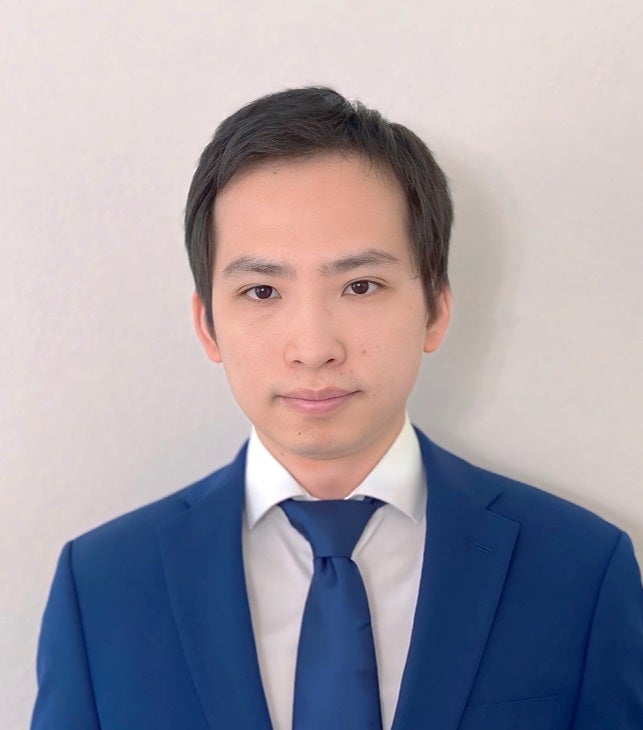
Yang Lin is an Assistant Professor at the University of Rhode Island , affiliated with the Department of Mechanical, Industrial & Systems Engineering . His research focuses on Microfluidics , Acoustofluidics , and Organ-on-a-Chip technologies, with applications in Environmental Monitoring , Food Safety , and Human Health . Education : Ph.D. in Mechanical Engineering (2019) and M.S. in Mechatronic Engineering (2015) from the University of Illinois at Chicago, and B.S. in Mechanical Design Manufacturing and Automation (2012) from Beijing Information Science and Technology University. Research Interests include: Acoustofluidics : Developing non-invasive, biocompatible fluid manipulation techniques using acoustic bubbles and membranes. AI-Enhanced Diagnostics : Leveraging convolutional neural networks for sample-to-answer diagnostic systems in public health. 3D Printed Microfluidics : Expanding additive manufacturing for low-cost, complex physiological structures in healthcare. Environmental Microfluidics : Detecting microplastics and contaminants in water and food systems. Publications highlight advancements in 3D printed microneedles , machine learning for nanoplastic detection , and magnetofluidic biosensors . Lab Members include current Ph.D. students and alumni who have completed M.S. and B.S. degrees under his mentorship.
Joris Remmers is an Associate Professor of Composite Materials at the Department of Mechanical Engineering, Eindhoven University of Technology (TU/e). He leads the Mechanics of Materials research group and contributes to EAISI High Tech Systems, focusing on improving mechanical properties of fiber-reinforced composites and 3D printed materials through multi-scale numerical techniques. Education : MSc in Aerospace Engineering (1998) and PhD (2006) from TU Delft. Research Interests : His work bridges computational mechanics, additive manufacturing, and AI-driven optimization, investigating process-structure-property relationships in engineered materials. Publication Trends : Recent articles highlight applications of multi-task neural networks for real-time simulations, reinforcement learning in 3D printing path optimization, and high-resolution additive manufacturing for microelectronics, reflecting interdisciplinary expertise in AI, material science, and multi-physics modeling. Scientific Awards : Emerging DMD Based Systems and Applications Best Paper Award (2025). Advising & Collaborations : Supervised Marwan Aarab's Bachelor thesis on additive manufacturing simulations. Collaborates with TNO Holst Centre and participates in the NXTGEN Hightech program. Grants include EU-funded LEE-BED GA 814485 for nanomaterials development (2019-2023).
Emrah Celik is an Associate Professor in the Department of Mechanical & Aerospace Engineering at the College of Engineering, University of Miami. His research focuses on advanced manufacturing techniques, particularly in the area of additive manufacturing of composite materials and their multifunctional properties. Dr. Celik's research interests span multiple cutting-edge areas of materials science and engineering: Additive manufacturing of polymer and fiber-reinforced composites Electrical and mechanical properties of 3D printed composites Carbon fiber reinforced polymer (CFRP) composites Thermoelectric materials and energy harvesting Multi-functional composite structures Advanced characterization techniques for composite materials Analysis of Dr. Celik's recent publications reveals a strong focus on pushing the boundaries of additive manufacturing for composite materials. His work demonstrates significant advancements in controlling fiber alignment in 3D printed thermoset composites, developing novel methodologies for electrical network activation, and enhancing mechanical performance through innovative printing techniques. A notable trend is his exploration of in-situ activation of electrical properties in printed composites, which opens new possibilities for structural health monitoring and self-sensing capabilities. His research also extends to thermoelectric materials, where he has achieved record-breaking performance metrics for 3D printed copper sulfide materials. Dr. Celik's work bridges fundamental materials science with practical aerospace applications where lightweight, high-performance materials are critical. Dr. Celik has established himself as a leading researcher in advanced composite manufacturing with numerous publications in high-impact venues. His innovations include the development of nozzle oscillation infill patterns that improve electrical conductivity by 27% while enhancing dimensional accuracy, and bi-modal fiber alignment approaches that increase mechanical performance by 16% with improved fracture resistance. His laboratory at the University of Miami focuses on Direct Ink Writing processes for thermoset composites, investigating how process parameters affect microstructure formation and resulting material properties. Current research explores new frontiers in multifunctional composite systems with integrated sensing capabilities and spatially controlled electrical properties.
Mirsad Trobradović is an Associate Professor at the Faculty of Mechanical Engineering , University of Sarajevo , Bosnia and Herzegovina, where he conducts research and teaches in the broad domain of mechanical and automotive engineering. His office is located in room 523, and he welcomes consultations every working day by appointment. Education & Academic Standing: While the page does not detail his prior degrees, his current academic rank of docent (equivalent to Associate Professor) and the title doc. dr. indicate completion of a doctoral degree and fulfilment of all requirements for tenure-track advancement at the University of Sarajevo. Research Interests: Trobradović’s work centres on automotive engineering , electric mobility , additive manufacturing , polymer materials , 3D scanning technologies , and finite element analysis . He explores how electrification of transport affects national energy demands, investigates durability and failure mechanisms of 3D-printed polymer gears, and integrates advanced scanning techniques into furniture manufacturing processes. Additional interests include the biomechanical performance of medical fixation devices, emission reduction in diesel engines, and the mathematical modelling of dynamic systems. Publication Trends: Across more than 15 peer-reviewed articles and book chapters since 2005, Trobradović demonstrates a clear trajectory from foundational vehicle dynamics and alternative fuels toward cutting-edge topics such as electric-vehicle energy regeneration, 3D-printed component reliability, and digital transformation of manufacturing. His most recent 2025 contributions focus on quantifying the electrical-energy impact of vehicle electrification in Bosnia and Herzegovina and on assessing service life of additively manufactured polymer gears. Scientific Awards: No specific awards or distinctions are listed on the University of Sarajevo page. Advising & Projects: Although individual student names are not disclosed, Trobradović collaborates extensively with colleagues such as Adis Muminović, Nedim Pervan, and Vahidin Hadžiabdić, indicating active supervision of graduate researchers and participation in multi-institutional projects. Detailed project listings are absent, yet the breadth of co-authored works suggests ongoing grant activity. Laboratory & Teams: He carries out his investigations within the research environment of the Faculty of Mechanical Engineering, leveraging laboratories for automotive testing, additive manufacturing, and computer-aided engineering simulation.