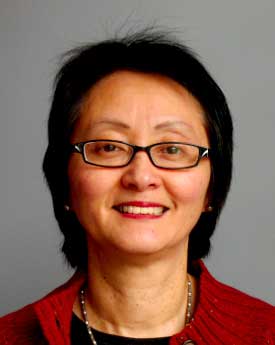
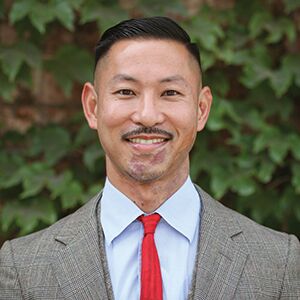
Brandon Boatwright is an Assistant Professor in the Department of Communication at Clemson University's College of Behavioral, Social and Health Sciences. He also serves as Director of the Social Media Listening Center, focusing on the intersection of sports, social media, and opinion leadership. His research explores digital communication trends, crisis narratives, and public relations strategies. Ph.D. in Communication & Information from the University of Tennessee (2020) M.A. in Communication, Technology, & Society from Clemson University (2013) B.A. in Communication Studies from Clemson University (2010) Dr. Boatwright’s work spans sports communication, social media strategy, and crisis management. His publications address topics like athlete activism, healthcare storytelling during crises, and digital identity formation. He has taught courses on sport and society, public relations in sports, and qualitative research methods. His recent research trends include analyzing social media’s role in political movements (e.g., #MeToo), crisis communication during national events (e.g., Ukraine-Twitter analysis), and opinion leadership in sports contexts. These studies often employ computational methods, semantic network analysis, and case studies. Dr. Boatwright mentors students in communication theory and practice, with a focus on digital engagement. He collaborates with interdisciplinary teams across public health and political science, contributing to journals like Public Relations Review and Computers in Human Behavior .
Gaute Barlindhaug serves as an Assistant Professor in the Department of Language and Culture at UiT The Arctic University of Norway, within the Faculty of Humanities, Social Sciences and Teacher Education. His academic work bridges artistic practice with scholarly research in sonic arts and cultural documentation. His research interests span Sonic Arts , Sound Studies , Music Technology , and Digital Humanities , with particular focus on the ontological status of sound recordings, the intersection of traditional and digital sound technologies, and the preservation of cultural heritage through both artistic and technological approaches. His work often examines how sonic mediations transform aesthetic experiences and cultural expressions. Analysis of his publications reveals a consistent trajectory exploring the relationship between technology and sonic expression, with recent work incorporating artificial intelligence applications in document preservation. His research demonstrates an interdisciplinary approach that combines artistic practice with scholarly inquiry, particularly evident in his contributions to the Journal for Artistic Research. Barlindhaug is actively involved in multiple research initiatives: Engaging Conflicts in a Digital Era (ENCODE) Worlding Northern Art LAMCOM – Libraries, archives, and museums in the community His scholarly output includes both traditional academic publications and creative works, reflecting his position at the intersection of artistic practice and academic research. His contact information is available through the university directory at gaute.barlindhaug@uit.no.
Xue Gong is an Assistant Professor and Coordinator of the Master of Science in International Political Economy program at the S. Rajaratnam School of International Studies , Nanyang Technological University, Singapore. She is also a Nonresident Scholar at Carnegie China , focusing on contemporary China's strategic, economic, and ideological interactions with Southeast Asia and the Global South. PhD, Nanyang Technological University MS, Nanyang Technological University BS, Nanjing Normal University Her research explores China's economic statecraft, regional governance in the Indo-Pacific, geoeconomics, and the intersection of development and security cooperation. Recent work analyzes the Belt and Road Initiative, Chinese biotech expansion, and bilateral relations amid U.S.-China competition. Her publications highlight trends in China's engagement with Southeast Asia, emphasizing local adaptations and evolving strategies under global supply chain pressures. She contributes to leading journals and think tanks, with a focus on policy-relevant analysis. Areas of expertise include economy, East Asia, and Indo-Pacific studies. She is fluent in English and Mandarin Chinese.
David Beer is a Professor of Sociology at the University of York, specializing in the intersections of culture, media, politics, and data-driven societies. His research critically examines how technological and media transformations reshape social structures, with recent focus on the politics of data and metrics, as well as the future of social thought. Email: david.beer@york.ac.uk His work spans interdisciplinary collaborations, including projects on algorithmic risk-profiling in housing and data ethics in the creative economy. He actively contributes to editorial boards for journals like Big Data & Society and Information, Communication & Society . Scientific Awards Shortlisted for the 2008 BSA Sage Prize for Innovation and/or Excellence
Vanessa Leonardi serves as an Associate Professor in the Department of Methods and Models for Economy, Territory and Finance at Sapienza University of Rome. She teaches English language courses across multiple degree programs including Geographic Sciences and Technologies for the Environment and Health (3rd year), Modern Philology (2nd year), Sustainable Tourism Sciences (1st/2nd year), Literature Music Entertainment (1st year), and Linguistics (1st year). Her research centers on the ideological dimensions of language and translation, with particular emphasis on gender representation in legal and medical texts, corpus-based analysis of academic discourse, and pedagogical innovations for English language instruction. She investigates how power structures manifest in translated materials through linguistic choices and cultural adaptation strategies. Recent publications (2024-2025) demonstrate sustained focus on corpus-driven legal translation studies, intralingual translation in children's literature, and digital communication challenges including emoji translation. Her work consistently examines the intersection of gender ideology with translation practices across diverse text types from EU legal documents to children's books. Dr. Leonardi maintains Wednesday office hours by appointment and is contactable at vanessa.leonardi@uniroma1.it . No scientific awards or student advising information appears in the available records.
Professor Peter Asaro is an Associate Professor at The New School's School of Media Studies, specializing in the philosophy of science, technology, and media. His work focuses on artificial intelligence, robotics, and the ethical, legal, and social implications of autonomous systems. He serves as Co-Founder and Co-Chair of the International Committee for Robot Arms Control (ICRAC) and has held research positions at Princeton University, Rutgers University, Umeå University, and the Austrian Academy of Sciences. Education: PhD, MCS, MA, BA His research spans military robotics, AI ethics, surveillance, and the societal impacts of automation. He has contributed to influential publications in journals like IEEE Technology & Society and Robot Law , with a focus on lethal robotics, legal liability, and privacy. Recent work includes critiques of predictive policing algorithms and autonomous weapons systems. Notable awards include the 2010 SXSW Web Interactive Awards for Technical Achievement and Best of Show for his contributions to Apple’s Siri and Microsoft’s Bing math query interfaces. He is currently writing a book on robotics and ethical intersections. Scientific Awards: 2010 SXSW Web Interactive Award for Technical Achievement 2010 SXSW Web Interactive Award for Best of Show Asaro leads funded projects like the Oral History of Robotics (IEEE & NEH) and Regulating Autonomous Artificial Agents (Future of Life Institute). He also contributes to public discourse on technology through his blog and affiliation with 4TU.Ethics and ICRAC.
Professor Rajneesh Narula holds the position of John H. Dunning Chair of International Business Regulation at Henley Business School, University of Reading. He serves as Director of the Dunning Centre for International Business and maintains active engagement with multiple international organizations including the European Commission, UNIDO, UNCTAD, and the OECD. He also holds honorary appointments at UNU-MERIT, Norwegian School of Business, and Oxford University. Professor Narula's research focuses on the role of multinational firms in development, innovation and industrial policy, technological change in developing countries, R&D alliances, and outsourcing. His work bridges theoretical international business concepts with practical policy implications, particularly examining how multinational enterprises influence economic development in host countries. His research often employs interdisciplinary approaches that integrate economics, political science, and management perspectives. Analysis of Professor Narula's recent publications reveals consistent thematic focus on global value chains, multinational enterprise strategies, and the intersection of industrial policy with international business. His work increasingly addresses contemporary challenges such as pandemic recovery, sustainability, and the evolving role of intellectual property rights in global innovation systems. The publications demonstrate methodological diversity spanning systematic reviews, theoretical development, and empirical analyses of multinational enterprise behavior across different institutional contexts. Professor Narula's distinguished contributions to business research were recognized with an OBE in January 2018 for services to business research. His extensive publication record includes over 100 articles and book chapters in leading journals such as the Journal of International Business Studies, Research Policy, and Journal of Management Studies. Professor Narula actively mentors doctoral students including Mohammad Shakil Wahed (researching Global Value Chains and MNEs in Bangladesh), Sabreena Zaman (studying Organizational slack in EMNEs), and Jill Jurgensen (examining SMEs and Innovation). His research has been supported by numerous grants, particularly those focused on promoting sustainable growth in developing countries through foreign investment. He regularly provides expert consultation to international organizations on matters related to multinational enterprises and development policy. As Director of the Dunning Centre for International Business, Professor Narula leads a research community dedicated to advancing understanding of international business phenomena. The Centre serves as a hub for scholarly exchange, hosting events such as the Academy of International Business Webinar series and facilitating collaboration between academics and policymakers concerned with multinational enterprise activities and their developmental implications.
Professor Iwo Amelung is a distinguished scholar of Sinology at the Johann Wolfgang Goethe University Frankfurt am Main, where he has served as Professor of Sinology since the winter semester of 2007. He previously held leadership roles including Vice Dean of the Department of Linguistics and Cultural Studies (2009-2012) and Dean of the Faculty (2012-2014). Amelung has also been Spokesperson of the SFB 1095 'Discourses of Weakness and Resource Regimes' from 2017 to 2019. His academic career includes significant international engagement, particularly with Chinese academic institutions, where he served as Managing Director of the European Center for Chinese Studies at Peking University (2003-2007) and as a Visiting Professor for Senior International Scientists at the Chinese Academy of Sciences (2011). Amelung's research focuses on the reception of Western knowledge in China during the late Qing Dynasty and early Republic period, the development of modern academic disciplines in China, and the relationship between science/technology and discourses on Chinese identity. His work explores how China integrated Western scientific concepts while maintaining cultural identity, with particular attention to historical narratives about national weakness and strength. His scholarship spans intellectual history, history of science, environmental history (particularly concerning the Yellow River), and the development of scientific terminology in Chinese. His extensive publication record reveals a consistent thematic trajectory examining how China engaged with Western knowledge systems while constructing its own scientific identity. The publications demonstrate increasing focus on discourses of weakness in modern China, resource regimes, and the localization of scientific knowledge. His work moves from specific historical case studies (like Yellow River flood management) toward broader theoretical frameworks analyzing Chinese intellectual responses to modernity. Professor Amelung has supervised numerous academic projects and conferences, particularly those exploring the intersection of Chinese history, science, and national identity. His leadership in the SFB 1095 research program demonstrates his commitment to collaborative, interdisciplinary research examining historical discourses of weakness and resource management in East Asia.
Dr Ngai-Ling Sum is a leading Honorary Researcher at Lancaster University 's School of Social Sciences. She co-directs the Cultural Political Economy Research Centre (CPERC) and serves as Programme Director for the MA in Globalization and the Information Age: Post-Disciplinary Perspectives. Her work bridges the regulation approach with post-structuralist insights, pioneering the concept of cultural political economy as both a methodology and field of study. Her research spans global governance , transnational business governance , corporate social responsibility , and the cultural political economy of competitiveness . She focuses on Asia , particularly the Pearl River Delta region, and comparative studies of BRIC countries . Her empirical work examines post-crisis developments in Asia, funded by major grants including the EU Framework Six 'Priority 7' Programme (2004-7), ESRC Seminar Series (2007-9), and British Academy BARDA Award (2008-10). Recent publications analyze the intersection of geopolitics and geoeconomics , notably China's 'One Belt One Road' imaginary and triple economic bubbles. Her 2013 book Towards a Cultural Political Economy (co-authored with Bob Jessop) extends her theoretical framework. She contributes to editorial boards of Pacific Review and Kasarinlan journals. Scientific Awards Gunnar Myrdal Prize (2007) for co-authored book Beyond the Regulation Approach Dr Sum's supervision interests include Cultural Political Economy , International Political Economy , and Globalization and Transnational Politics . Her work has been recognized for integrating critical policy studies with discourses of domination and metagovernance frameworks.
Dafna Zur is an Associate Professor at Stanford University in the Department of East Asian Languages and Cultures , with a courtesy appointment in Comparative Literature. She has served as Director of the Center for East Asian Studies (2019-2025) and Director of Undergraduate Studies (2017-present), while teaching courses on Korean literature, cinema, and popular culture. Education: Ph.D. in Asian Studies (2011), M.A. in Asian Studies (2002), B.A. in Asian Studies and General Studies (1998) Her research examines Korean children's literature and postcolonial cultural identity , with a focus on moral education in science fiction, cinematic childhood representations, and K-pop's transnational influence. She explores intersections of science and literature in East Asia, analyzing youth magazines and state-sponsored translation projects. Recent publications include work on North Korea's Anne Frank translation and Hebrew K-pop fan practices. She supervises graduate students and advises the Stanford Ethics Program (2013-2014). Awards include the Korea Times Translation Award and multiple Korea Foundation scholarships. Scientific Awards: Korea Foundation Fellowships (1998-2010) 35th Korea Times Translation Award (2004) New Translator Award, KLTI (2004) Outstanding Paper, Worldwide Consortium for Korean Studies (2009)
Jih-Fei Cheng is Associate Professor and Chair of the Department of Feminist, Gender, and Sexuality Studies at Scripps College, where he teaches and researches at the intersection of science, media, surveillance, and social movements. He holds a PhD in American Studies and Ethnicity with an emphasis in Visual Studies from the University of Southern California, an MA in Asian American Studies from UCLA, and a BA in Communication from UC San Diego. His interdisciplinary scholarship engages feminist, queer, and decolonial theories to analyze the political economies of virology, global health, and racial capitalism. His research centers on the historical and transnational entanglements of science, empire, and social justice. Key areas include the institutionalization of queer politics, the geopolitics of HIV/AIDS, and the racialized foundations of virology. His co-edited volume AIDS and the Distribution of Crises (Duke UP, 2020) rethinks the pandemic as a network of overlapping crises shaped by colonialism and neoliberalism. He is currently working on a book project titled Materialist Virology , which historicizes virology within Euro-American empire. Cheng’s recent publications span journals such as History and Technology , Radical History Review , and GLQ , with 2025 articles on financial contagion and reservoirs signaling his continued engagement with interdisciplinary frameworks linking finance, disease, and history. His work often collaborates with artists and activists, exemplified by writings on Candice Lin’s art and co-organized dialogues on care and intravention during the pandemic. He has been recognized with multiple awards, including the Lavender Graduation Award (2023, 2016), Professional Development Grants (2019–2020, 2016–2017), and fellowships from USC and the American Antiquarian Society. His teaching and service reflect a deep commitment to LGBTQIA inclusion, racial justice, and community-based scholarship. Lavender Graduation Award for providing safe and inclusive spaces for LGBTQIA students, Queer Resource Center, The Claremont Colleges (2023) Professional Development Networks Grant at The Claremont Colleges (2019–2020) Diversity Teaching Award Nominee, The Claremont Colleges (2018) EnviroLab Asia Research and Conference Award (2017–2018) Lavender Graduation Award (2016) Professional Development Networks Grant (2016–2017) Research Fellow, Summer Institute for the Center for Historic American Visual Culture, American Antiquarian Society (2014) Visual Studies Summer Research Award, USC (2014) New Directions Fellow, USC Center for Feminist Research (2011–2012) Tritia Toyota Fellowship (2001–2002) Cheng has advised and collaborated with numerous scholars and activists, though no formal advisees are listed. His work is deeply rooted in community engagement, having previously worked in HIV/AIDS social services and served on the Board of Directors at the HIV League. He was managing editor of American Quarterly (2010–2013) and has taught at UCLA and Hunter College. His research is supported by interdisciplinary networks and collaborative projects, including digital humanities initiatives and art-theory praxis. He is involved in multiple collaborative research and publishing projects, often working with artists like Candice Lin and scholars such as Alexandra Juhasz and Nishant Shahani. His recent special issue on 'Reservoirs' brings together scholars from anthropology, media studies, and philosophy to rethink historical and ecological crises. His lab-like collaborative environments include feminist media praxis collectives and interdisciplinary workshops on crisis, care, and decolonial knowledge.
Pamela Rutledge, PhD, is a Professor at Fielding Graduate University’s School of Psychology, Department of Media Psychology, since 2008. She combines 20+ years of media production experience with academic expertise, teaching brand psychology, audience engagement, and narrative meaning. Dr. Rutledge consults with major studios like 20th Century Fox and Warner Bros., while maintaining a Psychology Today blog and media commentator role. Research Interests: Her work focuses on media psychology’s intersection with technology, including: AI’s influence on emotional connection and decision-making Digital habits shaping mental energy and productivity Media-driven resilience and emotional regulation Generational dynamics in digital culture (e.g., granfluencers, youth interactions) Recent Article Trends: 2024-2025 publications highlight AI’s psychological impact (chatbots, social media regulation), stress management during politically charged periods (elections), and media’s role in identity formation (digital reputation, rewatching movies). Themes emphasize practical strategies for navigating technology’s emotional and behavioral effects. Education: She holds a PhD and MBA, though specific institutions and graduation dates are not detailed in the provided text.
Matthew C. Watson is an Associate Professor of Anthropology and Chair of Sociology and Anthropology at Mount Holyoke College . His work bridges feminist science studies, affect theory, and experimental ethnography, focusing on the historical and infrastructural conditions of ethnographic research in midcentury Chiapas. Education: Ph.D. and M.A. in Anthropology from the University of Florida, B.A. from Grinnell College Watson’s research examines the intersection of anthropology, science, and spirituality, particularly through projects like the Harvard Chiapas Project (1957–1980). His work highlights how technologies (e.g., roads, Land-Rovers, mainframe computers) and infrastructures shaped the study of Maya cultures and the development of feminist and cognitive anthropologies. His 2020 book Afterlives of Affect reimagines Maya decipherment as a spiritual and affective practice, while his 2023 publications analyze the political economy of U.S.-based anthropological projects in Mexico and the role of feminist scholars like Donna Haraway. Scientific Awards William S. Willis Jr. Fellow of the American Philosophical Society (2023) Watson teaches courses such as History of Anthropological Thought , Issues in Contemporary Anthropological Theory , and Science, Feminism, and Mount Holyoke , emphasizing the ethical and political dimensions of anthropological inquiry.
Steffen Dalsgaard is a Professor at the Technologies in Practice group at IT University of Copenhagen. As Head of Center for Climate IT, he leads initiatives exploring how digital technologies interact with climate change mitigation. He also contributes to the Center for Information Security and Trust. PhD in Anthropology and Ethnography (Aarhus University, 2010) Recipient of DFF Sapere Aude grant, ERC Consolidator Grant, and Carlsbergfondet funding Key research areas: climate data valuation, sociopolitical implications of IT, and comparative ethnography Research Focus: Investigates intersections between digital technologies, climate change, and sociocultural values through ethnographic studies in Denmark, Papua New Guinea, and Brazil. Examines carbon markets, environmental technoscience, and digital governance systems. Scientific Awards: ERC Consolidator Grant (DecouplingIT) DFF Sapere Aude grant Carlsbergfondet grant Key Collaborations: Works with Independent Research Fund Denmark, European Commission, and external bodies like the Academy for Technical Sciences (ATV). Leads multidisciplinary projects involving climate data analysis and sustainable technology implementation.
Didier Sornette is Professor of Entrepreneurial Risks at the Department of Management, Technology and Economics (D-MTEC), Swiss Federal Institute of Technology Zurich (ETH Zurich). He is also Professor of Finance at the Swiss Finance Institute, Associate Member of the Department of Physics and Department of Earth Sciences at ETH Zurich, Principal Investigator at the Future Resilient Systems Center at the National University of Singapore, and Specially Appointed Professor at the Institute of Innovative Research, Tokyo Institute of Technology. His research centers on the theory and application of complex systems, particularly focusing on the prediction and control of extreme events—termed 'dragon-kings'—in financial markets, geophysical systems, and socio-economic networks. He employs nonlinear dynamical models, statistical analysis, and feedback mechanisms to detect early warning signals of crises. The available publication highlights his work at the intersection of complexity science and democratic governance, suggesting a growing interest in applying systemic risk methodologies to societal structures. This reflects a broad trend in his research: leveraging quantitative models for real-world systemic instabilities across disciplines. Director, Financial Crisis Observatory (FCO) Co-founder, ETH Risk Center Principal Investigator, Future Resilient Systems, National University of Singapore Specially Appointed Professor, Tokyo Institute of Technology He leads interdisciplinary teams working on InnovWiki, a collaborative platform integrating idea development with prediction markets and data visualization. His lab initiatives emphasize open collaboration, crowd-based evaluation, and real-time risk monitoring. While specific awards and students are not listed in the provided text, his leadership in major research centers and global observatories underscores significant recognition and mentorship activity.