معرفی
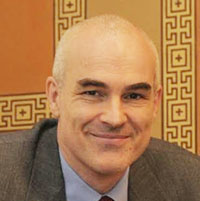
Professor Iwo Amelung is a distinguished scholar of Sinology at the Johann Wolfgang Goethe University Frankfurt am Main, where he has served as Professor of Sinology since the winter semester of 2007. He previously held leadership roles including Vice Dean of the Department of Linguistics and Cultural Studies (2009-2012) and Dean of the Faculty (2012-2014). Amelung has also been Spokesperson of the SFB 1095 'Discourses of Weakness and Resource Regimes' from 2017 to 2019. His academic career includes significant international engagement, particularly with Chinese academic institutions, where he served as Managing Director of the European Center for Chinese Studies at Peking University (2003-2007) and as a Visiting Professor for Senior International Scientists at the Chinese Academy of Sciences (2011).
Amelung's research focuses on the reception of Western knowledge in China during the late Qing Dynasty and early Republic period, the development of modern academic disciplines in China, and the relationship between science/technology and discourses on Chinese identity. His work explores how China integrated Western scientific concepts while maintaining cultural identity, with particular attention to historical narratives about national weakness and strength. His scholarship spans intellectual history, history of science, environmental history (particularly concerning the Yellow River), and the development of scientific terminology in Chinese.
His extensive publication record reveals a consistent thematic trajectory examining how China engaged with Western knowledge systems while constructing its own scientific identity. The publications demonstrate increasing focus on discourses of weakness in modern China, resource regimes, and the localization of scientific knowledge. His work moves from specific historical case studies (like Yellow River flood management) toward broader theoretical frameworks analyzing Chinese intellectual responses to modernity.
Professor Amelung has supervised numerous academic projects and conferences, particularly those exploring the intersection of Chinese history, science, and national identity. His leadership in the SFB 1095 research program demonstrates his commitment to collaborative, interdisciplinary research examining historical discourses of weakness and resource management in East Asia.
حوزههای پژوهشی