Jean-Christophe Couvenhes is a Lecturer at Sorbonne University (since 2007), specializing in Ancient Greek and Hellenistic military history. His work examines warfare, cultural identities, and political systems in classical antiquity, with emphasis on Athens, Sparta, and mercenary dynamics. Previously, he taught at the University of Tours (2000–2007) and was an ATER at University Paris I (1995–1999). Research Focus: His scholarship explores: Military structures of Hellenistic city-states Athenian defensive strategies in the Classical period Socio-political impacts of mercenary forces Cultural transfers through warfare Publications: Couvenhes has authored/edited 55+ works, with recent studies analyzing Hellenistic military alliances (2022), Spartan-Macedonian relations, and elite cavalry units. His articles frequently intersect with numismatics, epigraphy, and institutional history. Affiliations: He contributes to academic networks like SoPHAU (Society of Ancient History Professors) and collaborates on edited volumes examining war narratives and cultural practices.
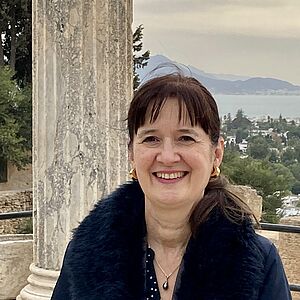
Sophie Lalanne is a permanent Lecturer in Ancient History at the Sorbonne School of History , University of Paris 1 Panthéon-Sorbonne, and a key researcher at ANHIMA (UMR 8210). Her work focuses on gender dynamics, cultural practices, and intellectual transmission in the Greek world under Roman rule. Contact: sophie.lalanne@univ-paris1.fr Key research areas: Greek novels, Second Sophistic educational models, women's societal roles Educational Background : École Normale Supérieure de Paris (Ulm) Classical Letters Graduate Master's & DEA in Greek Studies - Paris-Sorbonne University Doctorate in Ancient History - University of Paris 1 Postdoctoral Fellowship - Harvard University Research Year - Center for Hellenic Studies Her research explores gender construction through literary and material sources, particularly in Greek novels. She examines how narratives reflect or challenge real societal practices in the Roman East, focusing on education, civic honor systems, and knowledge transmission. Her recent 2024 publications in A History of Women in Europe analyze gender representation across multiple themes. Scientific Leadership : Head of GRECS program: The Greeks, Romans in the Empire: Culture and Society Created "Eurykleia" database: Named women in antiquity Key organizer of academic tributes like Pierre Vidal-Naquet commemoration Notable collaborations include co-edited volumes with Vincent Azoulay, Florence Gherchanoc, and David Konstan. Her work bridges literary analysis and historical interpretation, revealing how Greek novels both reflect and reshape societal norms about gender roles and educational practices.
Michal Habaj serves as Associate Professor in the Department of Classical Studies at Masaryk University's Faculty of Arts, Brno, with correspondence address at Arna Nováka 1/1, 602 00 Brno. His academic profile centers on rigorous analysis of ancient Greek and Roman civilizations, leveraging primary historical sources to explore political structures and military dynamics. His research spans Ancient historiography (particularly Herodotus and Thucydides) Spartan and Athenian political/military systems Roman Republican politics (Cicero, Mark Antony, Sulla) Empire formation and collapse in antiquity Climate's influence on ancient societies Recent work examines Persian War decision-making, Peloponnesian War consequences, and late Republican Roman strategies through textual analysis and contextual reconstruction. Analysis of his 15 most recent publications reveals consistent focus on leadership dynamics in crisis situations across Greek and Roman history. Key trends include reinterpretation of Herodotus' council debates, examination of Spartan decline post-Peloponnesian War, and reconstruction of political maneuvers during Rome's transition from Republic to Empire, often highlighting parallels between ancient and modern governance challenges. As a designated supervisor, Dr. Habaj mentors students in classical studies though specific advisees aren't publicly listed. His scholarly impact manifests through 37+ publications including peer-reviewed articles in Historia and Athenaeum , monographs on Sparta and Roman politics, and organization of academic forums like the Colloquium Brunense-Vindobonense fostering Czech-Slovak scholarly collaboration.
Simon Dorso is a postdoctoral researcher at Université Paris 1 Panthéon-Sorbonne, specializing in the archaeology and history of medieval Islamic societies with a focus on the Mediterranean world, the Horn of Africa, and the Levant. He is currently involved in multiple research programs including the ANR Ecomed (2024-2028), ANR InterMedÉ (2024-2028), and serves as co-director of the IFAO Kom el-Afrah project (2024-2025). His research spans from the medieval Levant (11th-14th century) to Ethiopia, examining Muslim settlements, funerary practices, and cultural interactions. PhD in History from Université Lyon 2 Lumière (2021) Previous teaching positions at Aix-Marseille University, University of Montpellier 3, and Université Lumière Lyon 2 Extensive field experience in archaeological excavations across Israel, Ethiopia, and Somaliland Dorso's research interests center on the archaeology of medieval Islamic societies, particularly focusing on settlement patterns, funerary practices, and cultural interactions between Muslim, Christian, and Jewish communities. His work examines how religious communities coexisted and interacted in shared landscapes, with special attention to sacred topographies and syncretic practices. He employs interdisciplinary approaches combining archaeological fieldwork, epigraphic analysis, and historical documentation to reconstruct social, economic, and religious dynamics of medieval societies. His recent publications demonstrate a strong focus on the archaeology of Muslim cemeteries in Ethiopia, medieval trade networks, and Crusader-period settlements. The research shows a consistent pattern of examining how material culture reflects religious identity, cultural exchange, and social organization in frontier regions. His work bridges regional studies of the Mediterranean, the Horn of Africa, and the Middle East, revealing interconnected historical processes across these areas. Dorso has organized numerous academic events including international conferences and exhibitions in Rome and Aix-en-Provence. He serves as a reviewer for multiple archaeological journals including Journal of Archaeological Methods and Theory and Revue des Mondes Musulmans et de la Méditerranée. His current research projects examine Mediterranean economies at the end of the Middle Ages (1350-1600) and interactions in medieval Ethiopia. As an active field archaeologist, Dorso has directed or participated in excavations at significant sites including the Christian cemetery of Atlit (Israel), Muslim cemeteries in Ethiopia (Bilet, Arra, Habera), and the medieval port of Zayla in Somaliland. His methodological approach emphasizes the importance of small finds and material culture in understanding daily life, trade networks, and cultural interactions in medieval societies.
Christine Hoet-Van Cauwenberghe is a Professor of Roman History at the University of Lille , affiliated with the Faculty of Humanities and History Department . She specializes in political and social history of the Late Republic and Early Roman Empire, with a focus on epigraphic studies. Current affiliation: University of Lille Research laboratory: UMR 8164 - History, Archaeology and Literature of the Ancient Worlds (HAL) Research Interests: Roman political and societal structures Greek and Latin epigraphy Belgian Gaul regional history Integration of archaeological and literary sources Publications: Recent works include the Chronicle of Belgian Gaul (2021) and a book on Rome and the Roman World for the French Society for Epigraphic Studies (2022). These publications emphasize provincial administration and epigraphic evidence.
Antonio PISTELLATO is a Lecturer at the Department of Humanities of Ca' Foscari University of Venice , specializing in classical studies and Roman history. Holding a PhD in "Ancient History and Archaeology, History of Art" (2007), his academic journey includes fellowships at University College London, Paris X-Nanterre, and Pavia's Cedant Centre. Since 2009, he has alternated research and teaching roles at Ca' Foscari, currently offering Latin language courses and classical studies for the School for International Education (SIE). Education: MA in Classics (Ca' Foscari, 2002), PhD in Ancient History & Archaeology (Ca' Foscari, 2007) His research focuses on Roman epigraphic memory , historiography circulation, and digital humanities , particularly forged epigraphs. His publications analyze Cassius Dio's political narratives, Latin poetic metrics, and textual authenticity issues. Recent scholarship examines: Digital preservation of forged inscriptions Comparative historiography (Historia Augusta vs Cassius Dio) Latin epigraphic models in provincial contexts Biblical Latin influences in Roman documentation Scientific Honors: Marie Curie Fellowship recipient Paris X-Nanterre postgraduate scholar Pavia Cedant Centre awardee As an educator, he coordinates the Latin 1 Laboratory and teaches Latin language/literature at both undergraduate and foundation levels. His office hours are held at Palazzina Briati, home of the School for International Education, with remote appointments available via email.
Eloisa Paganoni is a researcher at the Department of Humanities, Ca' Foscari University of Venice, specializing in Hellenistic history and digital humanities. She leads the Venice Squeeze Project for digitizing epigraphic casts and collaborates with international institutions like the École française d'Athènes and HiSoMA (Lyon). PhD in Historical, Geographical and Anthropological Studies (2017) from a joint program by Padua, Verona, and Venice Universities Research focuses on Asia Minor's non-Macedonian kingdoms, ancient historiography, and cultural heritage digitization Key projects include: Venice Squeeze Project (2017-2025) E-STAMPAGES (2016-2022) Humboldt-funded Asia Minor research (2022-2024) PRIN 'Hellenistic and Roman Multipolarity' (2024-2025) Her work bridges classical scholarship with digital innovation, maintaining expertise in ancient Greek (written: native, spoken: native), English (advanced), German (intermediate), and French (intermediate). She contributes to editorial boards and technical databases while analyzing historical narratives through epigraphic evidence. Scientific Contributions Specializes in Bithynian history and Hellenistic political structures Recipient of Alexander von Humboldt Foundation grant (2022) Key publications on Strabo's geography, Priene decrees, and Memnon's historiography Develops digital tools for epigraphic document enhancement Research Themes Asia Minor's political landscapes (3rd-1st century BC) Local historiography and cultural identity Epigraphic analysis and digital preservation Hellenistic royal dynamics and diplomatic practices
Kerstin Droß-Krüpe is a Senior Lecturer in Ancient History at the University of Kassel, specializing in Roman Egypt's economic and social structures through papyrological analysis. Her research bridges textile production, gender dynamics, and reception studies, particularly focusing on Eastern monarchs in Baroque opera. Doctorate (Marburg, 2010) and Habilitation (Kassel, 2020) Awarded Privatdozentin title by Kassel University (2020) Senior Academic Councillor at Ruhr University Bochum (2021–2025) Her scholarship explores: Textile industry organization in Roman Egypt Gender roles in ancient economic systems Cultural transmission through Baroque opera adaptations Principal-agent theory in Roman trade Persian and Semitic dress as historical narrative tools Recent publications analyze: Textile terminology standardization Tax compliance mechanisms Color symbolism in imperial documentation Lease agreements for commercial spaces Apprenticeship contracts Recognitions include: Mariann-Steegmann Foundation support for habilitation monograph Pasold Research Fund grants for textile analysis DAAD funding for international conference participation She contributes to: Academic editorial boards (GIS.science, Archaeological Textile Review) Dictionary of Techniques in Antiquity steering committee EU DressID Project sub-teams
Professor Dr. Caroline Kreutzer is Acting Professor of Ancient History at the Otto-Friedrich University of Bamberg, Faculty of Humanities and Cultural Studies. She has been in this position since April 2025, following several years of service as Research Assistant and Academic Advisor at the same institution. Her academic journey began with a Bachelor's degree in European History from the University of Bayreuth (2008), continued with studies in Latin, Ancient History and European Ethnology at Bamberg University (2011), and culminated in a Master's degree in 'Classical Antiquity. History and Literature' from the University of Leipzig (2013), followed by her doctoral dissertation on wisdom and age in late antiquity. Professor Kreutzer's research spans multiple interconnected fields within ancient history, with particular expertise in Roman history of the late Republic and early Imperial period, Latin epigraphy, age studies in antiquity, and Hellenistic rule practices. Her groundbreaking monograph 'Wisdom and Age in Late Antiquity' (2021) established her as a leading scholar on conceptualizations of aging in late antique Christian thought. Her current project 'Itinera regum' investigates Hellenistic royal mobility as a political phenomenon, combining numismatic, epigraphic, and literary evidence to reconstruct the ceremonial aspects of royal travels. Her publication record demonstrates impressive breadth and depth across chronological periods, from Republican Rome to Late Antiquity, with a consistent methodological focus on conceptual history and the analysis of authority structures. Recent articles in 2024-2025 have particularly emphasized Hellenistic royal entries and Ptolemaic administration, reflecting the direction of her current research project. Her work consistently bridges philological analysis with broader historical questions about power, representation, and cultural transmission. Step by Step scholarship recipient of the Women's Representative of the Otto-Friedrich University of Bamberg (2019-2019) Certificate in Higher Education Teaching from Bavarian Universities (Basic Level, 2017) Certificate in Higher Education Teaching from Bavarian Universities (Advanced Level, 2019) Professor Kreutzer has been actively involved in academic governance, serving on committees for teaching quality and student affairs from 2023-2025. She has organized outreach activities including children's workshops on Roman history and coins (2023) and a 'Children's University' session on imperial leadership (2024). Her research has taken her to major archaeological institutes including the German Archaeological Institute in Athens (2024, 2025) and the Austrian Archaeological Institute, reflecting her international scholarly engagement. She maintains regular office hours for students and continues to develop her research while fulfilling her teaching responsibilities at Bamberg.
Dr. İlgar Baharlu is a Lecturer and Institute Director at Nevsehir Haci Bektas Veli University, specializing in Alevism, Safavid history, and Ottoman studies. He holds a doctorate in History from Kirklareli University (2018) and a master's in Turkish Art from Ege University (2012). His administrative roles include directorship of the Haci Bektas Veli Research Institute and coordination of international academic exchange programs. His research explores Alevism-Bektashism , Kizilbash movements , and Safavid socio-cultural transformations . Recent publications analyze historical manuscripts, religious rituals like Sema, and gender roles in Turkic societies. His work integrates primary sources such as Ottoman texts, travelogues, and miniatures. Dr. Baharlu leads projects on cultural heritage preservation, including the development of educational programs for Hacibektaş archaeological sites. He teaches advanced seminars on Ottoman paleography and Alevi historiography at the graduate level.
Klaus Johan Myrvoll is a Professor of Nordic linguistics at the University of Stavanger, working within the Department of Cultural Studies and Languages in the Faculty of Arts and Education. He received his PhD in Old Norse philology with a focus on skaldic metre from the University of Oslo in 2015. His academic career centers on the intricate relationship between language, literature, and history in medieval Scandinavia. Professor Myrvoll's research interests span several interconnected fields of medieval Scandinavian studies. His primary focus is on Old Norse philology, particularly examining the metrical structures of skaldic poetry and the textual criticism of medieval manuscripts. He has made significant contributions to onomastics, investigating the origins and development of personal names and place names in the Norse world. His work on the etymology of Norway's name and the analysis of names like Erlingr and Erlendr demonstrates his expertise in historical linguistics. Additionally, he explores the historical contexts of sagas, challenging established theories about authorship and provenance, as seen in his work on Fagrskinna where he argues for a specifically Norwegian origin rather than the traditionally accepted Icelandic one. His publication record shows consistent scholarly output across multiple disciplines within medieval Scandinavian studies. Recent works examine everything from runic inscriptions on the Svingerud stone to the historical background of A.O. Vinje's writings. His research demonstrates both depth in specialized areas like dróttkvætt metre analysis and breadth across linguistic, literary, and historical aspects of Norse culture. Professor Myrvoll actively participates in the academic community through doctoral examinations, as evidenced by his role as second opponent for Þorgeir Sigurðsson's thesis defense. His work bridges linguistic analysis with historical and cultural interpretation, contributing to a more nuanced understanding of medieval Scandinavian literature and society.
Pilar Regueiro Suárez is a Postdoctoral Associate (Research Fellow) specializing in Mesoamerican historical anthropology, currently affiliated with an unspecified university's Department of Anthropology. She maintains active teaching positions at Universidad Nacional Autónoma de México (UNAM) in Art History and History Departments, and at Escuela Nacional de Antropología e Historia (ENAH) since 2019, with additional collaboration through UNAM San Antonio. Her educational foundation includes: PhD in Mesoamerican Studies, Universidad Nacional Autónoma de México (UNAM) M.A. in Mesoamerican Studies, Universidad Nacional Autónoma de México (UNAM) Dr. Regueiro Suárez's research pioneers interdisciplinary approaches to ancient Maya political organization, examining ritual performance as deliberate political strategy and analyzing New Spain's documentation of indigenous traditions through critical postcolonial frameworks. Her work significantly advances understanding of women's participation in 16th-century military conquests and cross-cultural exchanges during colonialism, with particular emphasis on indigenous agency and resistance. This scholarship bridges historical methodology with anthropological theory to reconstruct power dynamics in pre-Hispanic and early colonial Mesoamerica. Her recent publications (2021-2022) reveal consistent thematic focus across multiple formats: commemorative editions of conquest narratives, critical analyses of indigenous pictorial manuscripts like the Lienzo de Tlaxcala, and specialized studies of Maya ritual performance. These works collectively demonstrate sophisticated integration of archaeology, epigraphy, gender studies, and political anthropology, establishing her as a significant voice in reconceptualizing Mesoamerican political history beyond Eurocentric frameworks. While specific grant details are unavailable, her sustained publication output and institutional collaborations indicate robust research support. Her teaching across UNAM's Art History and History departments since 2019 demonstrates substantial student mentorship experience, though formal graduate advising isn't documented. Collaborative projects with Archivo de la Provincia Agustiniana de Michoacán and multi-author publications reflect active scholarly networking across Mexican academic institutions. Though no dedicated research laboratory is mentioned, her methodological approach combines archival research with anthropological field analysis, particularly evident in studies of ritual spaces and performance contexts. Her work with UNAM San Antonio suggests engagement with transnational scholarly communities focused on commemorative history and decolonial approaches to conquest narratives.
Davide Ambrogio Faoro is an Associate Professor of Roman History at the Department of Literature and Philosophy, University of Florence, where he has been teaching since March 2020. His academic journey began with a degree in Ancient History from the University of Bologna in 2002, followed by a PhD from the University of Udine in 2006. Prior to his current position, he held research positions at multiple Italian universities and participated in an ERC project at the University of Bordeaux-Montaigne from 2017 to 2019. His academic qualifications include: Classical High School Diploma from "G. Dal Piaz" in Feltre (1995/96) Degree in History, Ancient History major, University of Bologna (2002) with honors (110/110 cum laude) PhD in Ancient Sciences, University of Udine (2006) Professor Faoro's research focuses on Roman institutional history, particularly high imperial administrative structures. His work explores the prosopography of the equestrian order, the development of imperial property in Italy and Western provinces, and epigraphic studies of Alpine, Rhine, and Danube regions. His recent publications demonstrate a consistent focus on Roman provincial administration, governance structures, and the integration of frontier regions into the Roman Empire. His scholarly output shows a methodological approach combining epigraphic evidence with historical analysis to reconstruct administrative practices and territorial organization in the Roman world. His recent publications (2021-2025) reveal a strong emphasis on Roman administrative history, particularly regarding: The integration of Alpine populations into the Roman Empire Roman provincial governance and administration Equestrian officials and their roles in imperial administration Imperial property and its management Roman religious practices and their political dimensions Professor Faoro has received multiple research grants and fellowships throughout his career, including: Research grants from the Universities of Udine, Trento, and Bologna DAAD fellowships at the University of Cologne (2004, 2009) "Jacobi-Stiftung" fellowship at the German Archaeological Institute (2005) Participation in an ERC project at the University of Bordeaux-Montaigne (2017-2019) He has been an active participant in the academic community, presenting at numerous national and international conferences, including events in Pavia, Trento, Bordeaux, Naples, and Rome. His scholarly contributions have established him as a respected researcher in the field of Roman administrative history, particularly regarding the integration of frontier regions into the Roman Empire and the functioning of imperial administration.
Adalberto Magnelli is an Associate Professor of Greek History (SSD L-ANT/02) at the University of Florence, Department of Literature and Philosophy, a position he has held since October 1, 2017. His academic journey began with a Laurea in Classical Letters from the University of Florence in 1993, followed by a specialization in Greek Epigraphy and Antiquities at the Italian Archaeological School in Athens (1994-1998). He later earned two PhDs: one in Ancient Sicilian History from the University of Palermo (2004) and another in History and Civilization of the Ancient World from the University of Florence (2012). Professor Magnelli's research focuses on several interconnected areas within ancient history. His primary expertise lies in Cretan history, particularly through the analysis of epigraphic evidence from Gortyna and other Cretan sites. He has made significant contributions to the understanding of Greek historiography, especially regarding Strabo and fragmentary historians. Since 2011, he has developed a research line on Greek-Semitic bilingual inscriptions, exploring cultural interactions in the Hellenistic East. His work combines philological precision with historical analysis, often revealing insights into ancient law, religion, and social organization that complement literary sources. Professor Magnelli's extensive publication record includes the seminal work 'Gortina VII. Le iscrizioni: dall'età arcaica all'istituzione della Provincia romana' (2008), which supplements the Inscriptiones Creticae, and 'Strabone di Amasea: dai Commentari storici alla Storia Universale' (2012). His recent publications (2020-2023) continue his exploration of Cretan epigraphy, Greek-Semitic bilingual inscriptions, and late antique history, demonstrating sustained scholarly productivity. His work appears in respected journals such as Rendiconti dell'Accademia Nazionale dei Lincei, Sileno, and Erga Logoi. Abilitazione Scientifica Nazionale for associate professor position Abilitazione Scientifica Nazionale for full professor position Scholarship competition win with 104/120 points Professor Magnelli has maintained active teaching throughout his career, instructing courses in Greek Epigraphy and Greek History at multiple institutions including the University of Udine (1997-2000), the University of Florence, and the Kore University of Enna (2008-2015). He directed the Epigrafia lab at the University of Florence (2008-2010) and currently participates in the PRIN 2022 research project. His international collaborations include work with the Italian Archaeological School in Athens, the University of California San Diego, and participation in projects with Oxford University.
Dr. Oliver Grimm is a Research Fellow at the Leibniz-Zentrum für Archäologie (Leibniz Center for Archaeology) in Schleswig, Germany, working within the Competence Area for Early Medieval Archaeology and Byzantium. Previously affiliated with the Zentrum für Baltische und Skandinavische Archäologie (ZBSA) from 2008 to 2023, his research spans interdisciplinary approaches connecting archaeology, anthropology, and history to explore human-animal relationships in Northern Europe. Dr. Grimm's research interests form an interconnected web of inquiry: Human-Animal Studies, with particular focus on bears, birds of prey, beavers, and elk in prehistoric and early historic societies North European Archaeology, emphasizing maritime history, social organization, and power structures Falconry history across Europe from the 5th to 18th centuries Interdisciplinary methodologies connecting natural sciences with humanities Runology and cultural interpretations of ancient inscriptions His methodological approach combines meticulous archaeological evidence with theoretical frameworks to reconstruct social practices and cultural meanings. Dr. Grimm has organized numerous international conferences that have generated significant interdisciplinary publications on topics like 'Bear and Human' and 'Raptor on the Fist,' creating vital dialogue across multiple academic fields. His work often challenges conventional interpretations, such as demonstrating that bear skin burials included both male warriors and high-status women during the Migration Period. Dr. Grimm's academic achievements include extensive publication in leading archaeological journals and edited volumes. His monographs 'Roman Period Court Sites in Southwestern Norway' (2010) and 'Großbootshaus – Zentrum und Herrschaft' (2006) established his expertise in North European social organization, while his more recent work has significantly advanced understanding of human-animal relationships. His collaborative approach is evident in numerous co-authored publications with scholars across disciplines and national boundaries. As an active member of the archaeological community, Dr. Grimm maintains profiles on Academia.edu, ORCID, and ResearchGate, and continues to organize major international conferences, with upcoming events planned through 2025. His commitment to scholarly communication and interdisciplinary collaboration makes him a significant figure in contemporary archaeological research focused on Northern Europe.