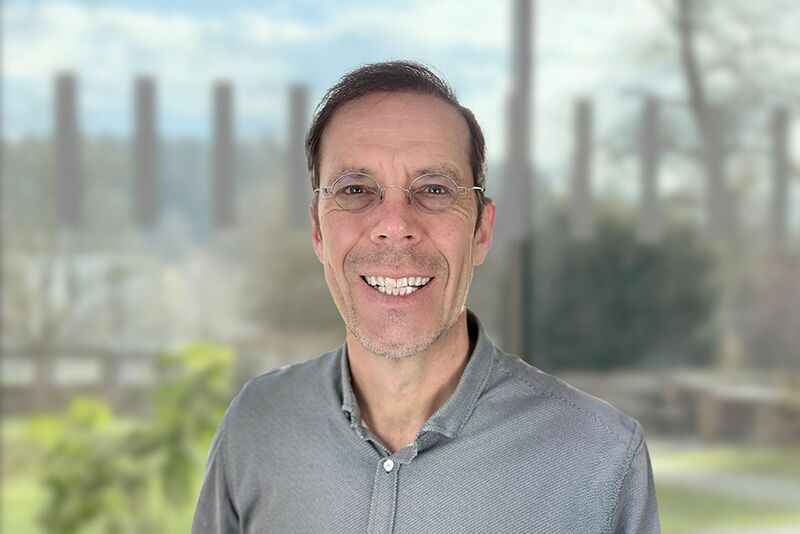
Jean-Noël Grad is a postdoctoral researcher at the Institute for Computational Physics , University of Stuttgart. His work focuses on computational physics and software engineering for soft matter simulations. Institute for Computational Physics, University of Stuttgart Research Interests: Grad specializes in computational physics and soft matter simulations, with a particular focus on molecular dynamics and simulation frameworks. He contributes to open-source software development and sustainability in research computing. Workshop Contributions: He regularly organizes and participates in workshops on soft matter simulation tools like ESPResSo, PyStencils, and LbmPy. His roles include co-organizer of events such as "Simulating soft matter across scales" and "Simulating energy materials with ESPResSo". Teaching Activities: Grad teaches the ESPResSo Block course annually, focusing on practical applications of soft matter simulation software. Software Contributions: Active in multiple software projects including ESPResSo (core contributor), pyMBE (co-developer), and tools like EESSI and waLBerla for cross-platform simulation environments.
Prof. Dr. Michael Bungert is a Professor of Marketing at the Baden-Württemberg Cooperative State University (DHBW) in Villingen-Schwenningen, Germany, where he has served since 2009. He also holds the position of International Affairs Officer for the university. Previously, from 2002-2009, he was Professor and International Advisor at the University of Cooperative Education Villingen-Schwenningen (now DHBW). His educational background includes a degree in Business Administration from the University of Mannheim (1989-1994), followed by doctoral studies at Johannes Gutenberg University Mainz (1996-2001), where he completed his PhD in 2003. He also had a research and teaching stay at Purdue University, USA in 1999. Research Focus: Empirical Research and Experimental Economics: Conducting rigorous empirical studies in economic behavior Game Theory Applications: Applying game theoretical models to marketing and strategic business decisions Pricing and Price Competition: Investigating pricing strategies and competitive dynamics Strategic Planning: Developing frameworks for strategic management and corporate planning International and Intercultural Marketing: Studying marketing strategies across cultural and national boundaries His research publications demonstrate a consistent focus on competitive market dynamics, price signaling, and strategic management, with applications spanning from pharmaceutical marketing to general business strategy. His work integrates theoretical frameworks with practical business applications. Professional Memberships: Schmalenbach Society - a leading German association for business economics Teaching Portfolio: Prof. Bungert teaches courses in general business administration (ABWL), strategic corporate management, market research with quantitative data analysis methods, intercultural knowledge and behavior, and marketing case studies with simulation games.
Gabriel Alves is a Brazilian computer science researcher affiliated with the University of Pernambuco and collaborating with institutions like Federal Higher Education Institutions and Pontifical Catholic University of Minas Gerais. His work focuses on performability evaluation, stochastic modeling, and learning analytics, particularly applied to education technology and transport logistics systems. Research Interests : Performability analysis, stochastic modeling, learning analytics, cyber-physical systems, cloud computing, and green supply chain optimization Key Contributions : Development of Tutoria platform for educational feedback, performability models for BRT systems, and frameworks for AI-driven instructor support tools His publications span journals like IEEE Transactions on Learning Technology and conferences including SMC and EC-TEL, with recent work exploring natural language processing for educational assessment. Current collaborations include researchers from Chile (Dragan Gasevic), Brazil (Rafael Ferreira Mello, Paulo Maciel), and Portugal (Taciana Falcão).
Ostap Okhrin serves as a Professor of Econometrics and Statistics at Dresden University of Technology, holding the Chair of Econometrics and Statistics with a special emphasis on Transportation Systems. His academic career is marked by a strong focus on methodological advancements in econometrics and statistics, applied to complex real-world problems in transportation and finance. Professor Okhrin's research interests span econometrics, statistical theory, copula modeling, time series analysis, and financial risk management. He has significantly expanded into machine learning and reinforcement learning applications for autonomous systems, with deep expertise in traffic flow modeling, autonomous driving, maritime navigation, and financial volatility estimation. His work bridges theoretical statistics with practical engineering challenges, particularly in transportation systems and risk forecasting, addressing high-dimensional data and dynamic environments through innovative methodological frameworks. Analysis of Okhrin's recent publications (2024-2025) reveals a pronounced interdisciplinary trajectory integrating reinforcement learning with transportation engineering. Key themes include drone-based trajectory data collection for traffic monitoring, algorithms for autonomous ships on inland waterways, and Sim2Real transfer frameworks for autonomous driving. Concurrently, he advances financial econometrics through high-frequency risk forecasting models incorporating realized moments. This dual focus demonstrates his ability to transfer statistical innovations across domains while maintaining rigorous theoretical foundations in copula theory and time series analysis.
Alexander Pahr is a doctoral candidate and research associate at the Chair of Production & Supply Chain Management at the Technical University of Munich (TUM). He has been actively involved in academic research since March 2019, contributing to areas such as mathematical modeling, inventory optimization, and deep reinforcement learning applications in food industry contexts. B.Sc. in Information Systems (2019), TUM M.Sc. in Management and Technology (2019), TUM B.Sc. in Global Business Management (2016), University of Augsburg His research focuses on mathematical modeling and optimization , deep reinforcement learning , and food industry supply chains , particularly for managing ameliorating inventory in perishable product environments like port wine and cheese aging. Publications highlight trends in deep reinforcement learning for inventory systems, dynamic scheduling under uncertainty, and stochastic optimization in food industry applications. He has supervised numerous academic projects including Master’s theses on blood platelet inventory, constraint programming for biopharma, and reinforcement learning applications, as well as Bachelor’s theses on perishable inventory management and stochastic programming for assembly lines.
Dr. Rasoul Yousefpour is an Assistant Professor (Akademischer Rat a. Z.) at the Chair of Forestry Economics and Forest Planning, Faculty of Environment and Natural Resources, University of Freiburg, Germany. He has been serving in this position since October 2014. Prior to this, he worked as a Postdoc Scientist at the Max-Planck-Institute for Meteorology in Hamburg and at the Danish Forest and Landscape Centre, University of Copenhagen. His educational background includes: Ph.D. (Dr. rer. nat.) in "Risk Management in Forestry" from the University of Freiburg (2005-2009) MSc in Forestry and Forest Economics from the University of Tehran, Iran (2000-2002) BSc in Natural Resources Engineering-Forestry from the University of Guilan, Iran (1996-2000) Dr. Yousefpour's research focuses on Operations Research in Forestry, including Optimization, Forest Modelling and Decision-making, Climate Change Risk Management, and Adaptive Forest Management. His work examines the Economic Implications of provisioning Ecosystem Goods and Services, particularly related to Biodiversity and Carbon. He also investigates Risk Analysis, Uncertainty Analysis, and Insurance in the context of forest management under climate change. His research integrates theories from Ecophysiology, Carbon cycle, Forest growth, Forest economy, and Decision science, using methods such as Data acquisition, Modelling, Simulation, and Optimization. An analysis of Dr. Yousefpour's recent publications reveals a strong focus on climate change adaptation in forestry, with particular emphasis on risk management and decision-making under uncertainty. His work spans multiple disciplines including Forest Economics, Climate Science, and Decision Theory. The research often employs sophisticated modeling techniques to address complex forestry challenges, particularly related to biodiversity conservation, carbon sequestration, and economic optimization under changing climate conditions. Many studies adopt a multi-criteria approach that balances ecological, economic, and social objectives in forest management. Dr. Yousefpour is actively involved in numerous research projects including EU Cost Action "PESFOR-W", EU Cost Action "CONVERGES", SNF NRP 73 "Sustainable Economy" Project "DIVES", and the EU Marie Skłodowska-Curie RISE action "SuFoRun" which he coordinates. He also serves as Coordinator of the IUFRO Working Group 4.04.07 "Risk Analysis" and as Associate Editor for the Annals of Forest Science.
Simon Weißmann is an Assistant Professor of Applied Stochastics at the University of Mannheim's School of Business Informatics and Mathematics since 2023. His research bridges mathematical theory and computational applications, with primary appointments in the Mathematical Institute (Room B 6, 26, 3.05). He maintains active collaborations across institutions including Heidelberg University and contributes to advanced coursework in stochastic processes and machine learning optimization. PhD in Mathematics (2020), University of Mannheim (supervised by Prof. Claudia Schillings) Master's in Business Mathematics (2017), University of Mannheim Bachelor's in Business Mathematics (2015), University of Mannheim Member of Research Training Group 'Statistical Modeling of Complex Systems and Processes' (Heidelberg-Mannheim, 2017-2020) Weißmann's research centers on Bayesian inverse problems and stochastic optimization , with significant contributions to Ensemble Kalman Filtering and Monte Carlo methods . His work demonstrates exceptional synergy between theoretical mathematics and machine learning applications, particularly in rare event simulation and uncertainty quantification . Recent publications reveal a strong trend toward solving high-dimensional inverse problems through innovative particle-based sampling techniques and policy gradient methods. Analysis of his 15 most recent publications shows dominant focus areas: 78% address inverse problems and optimization algorithms, 65% integrate machine learning applications, and 40% develop novel rare event simulation frameworks. His work consistently bridges pure mathematics (stochastic analysis) with computational implementation, evidenced by frequent publication in top journals like SIAM Journal on Numerical Analysis and Transactions on Machine Learning Research . Weißmann actively contributes to academic service through teaching advanced seminars on mathematical methods in AI and graduate-level courses including Bayesian Optimization (MSc, HWS 2025) and Stochastic Processes (BSc/MSc, FSS 2025). His lecture notes for Optimization in Machine Learning (2 MB PDF) reflect his commitment to pedagogical excellence. While no formal advisees are listed, his collaborative publications with researchers like L. Döring and J. Zech indicate active mentorship within research teams. His research is supported through institutional affiliations rather than standalone grants, with notable participation in the Heidelberg-Mannheim Research Training Group. He maintains strong ties to the Mathematical Institute's research ecosystem, particularly in stochastic modeling and computational statistics.
Jens Dreßler is a Professor of Secondary School Pedagogy at the Institute for Pedagogy , Faculty of Human Sciences , Julius-Maximilians-University Würzburg. His research focuses on the theoretical foundations of school governance , pedagogical anthropology , educational theory , and the interplay between theory and practice in pedagogy . Key article trends include analyses of digital media in teacher education , responsiveness in teaching , economic critique in education , and historical learning processes . Subfields span pedagogical theory , digitalization's impact on education , media ethics , human-animal relationships in curricula , interdisciplinary teacher training , and anti-utilitarian educational models .
Prof. Dr. Marc Deissenroth-Uhrig is a Professor at htw saar (Saarland University of Applied Sciences), specializing in renewable energy systems. He teaches courses in Renewable Energies Wind Energy and Photovoltaics Energy Economics Electrical Engineering fundamentals with a focus on practical experiments in PV and wind technology. His research spans renewable energy market integration, agent-based modeling of energy systems, and fundamental physics experiments in neutron decay. Key publications include analyses of policy interactions, investment behaviors in renewables, and studies on neutrino/proton asymmetry parameters. He leads the Laboratory for Solar Energy Systems Laboratory for Wind Energy Technology at htw saar, and has collaborated with institutions like the German Aerospace Center (DLR) and University of Heidelberg.
Jeni Tennison is an expert in data governance, policy, and open data who serves as an Associated Researcher at the Bennett Institute for Public Policy at the University of Cambridge. She is also the founder and Executive Director of Connected by Data, a Shuttleworth Foundation Fellow, and co-chair of the Data Governance Working Group at the Global Partnership on AI. Her research focuses on challenging traditional notions of data ownership and consent, advocating for collective governance of data when processed in aggregate. She has a long-standing interest in open and web standards, having served on the W3C's Technical Architecture Group and co-chaired the W3C's CSV on the Web Working Group. Her work bridges academic research with practical implementation, having previously served as CEO of the Open Data Institute for nine years. Tennison's publications reveal a consistent focus on agent-based modeling of information economies, data governance frameworks, and the societal implications of data monopolies. Her work spans disciplines including computer science, economics, public policy, and information science, with particular emphasis on creating practical tools and frameworks for better data governance. OBE for services to technology and open data Shuttleworth Foundation Fellow As Executive Director of Connected by Data, she leads initiatives that put community at the heart of data narratives, practices, and policies. She serves on the Boards of Creative Commons, the Global Partnership for Sustainable Development Data, and the Information Law and Policy Centre. Her work involves substantial collaboration with governments, international organizations, and private sector entities to build trustworthy data ecosystems. She is also known for co-creating Datopolis, an open data board game that helps people understand data infrastructure concepts through gameplay.
Fabian Lohmar , a Researcher at the Chair of Information Systems and Strategic IT Management at the Faculty of Computer Science, University of Duisburg-Essen , focuses on sustainable urban mobility , logistics optimization , and energy systems . He earned a Master of Science in Energy Science and a Master of Arts in Sustainable Urban Development (both 2019) from the University of Duisburg-Essen, following a Bachelor of Science in Energy Science (2012-2017). His research spans system dynamics modeling for metropolitan mobility, stakeholder management in ports , and sustainability assessments of logistics networks . Publications include work on DESRIST 2025 and Sustainable Cities and Society , emphasizing practical applications in the Rhine-Ruhr region . He currently contributes to academic projects while maintaining affiliations with the Centre for Logistics and Traffic . Collaborations include partnerships with institutions like green|connector and House of Energy Markets and Finance , reflecting his interdisciplinary approach. His work integrates data-driven decision support and sustainable policy design for urban challenges.
Marcel Büttner is a clinical researcher at the Department of Radiation Oncology, Faculty of Medicine, University of Tübingen , focusing on neurooncology, medical imaging, and educational innovation in oncology. His work addresses glioblastoma radiotherapy, dose-escalation strategies, and interdisciplinary medical training. Research trends in his publications include: Optimization of FET PET for target volume delineation in glioblastoma Development of isotoxic dose-escalated radiotherapy protocols Simulation-based tumor board training for medical students Clinical trials like PRIDE (NOA-28) for glioblastoma Analysis of lateral pelvic lymph node irradiation in rectal cancer Evaluation of TSPO PET in reirradiation planning Key subfields span radiation oncology , neuroimaging , medical education , clinical trial design , and treatment protocol validation . His collaborations with institutions like the German Society for Radiation Oncology (DEGRO) highlight systemic improvements in oncology education and residency training.
Daniel Wegener is a researcher at the University Clinic for Radiation Oncology within the School of Medicine at the University of Tübingen . His work spans multiple disciplines, including radiation oncology, cancer biology, and social psychology. Research interests include: Radiation oncology for urogenital tumors Inhibition of RAS activation via SOS1 targeting Public health guidelines for tuberculosis prevention Psychological replication frameworks and attitude change theories Development of histone deacetylase inhibitor assays for drug screening Notable publication trends: 2024 : Contributed to tuberculosis isolation guidelines 2023 : Lifestyle interventions in maternal health 2022 : Chemical synthesis of stable tellurium compounds 2021 : MR-linear accelerator applications in prostate cancer 2020 : Validity-based replication in psychology 2003 : Histone deacetylase inhibitor screening 1997 : Foundational work on attitude change models His contributions also extend to computational neuroscience and statistical methodology, with collaborations across diverse fields.
Dr. Jörn Meyer is a Research Fellow at RWTH Aachen University's Faculty of Business and Economics, where he has been affiliated with the Chair of Operations Management since October 2022. His office is located at Kackertstraße 7 in Aachen, and he holds doctoral credentials (Dr. rer. pol., Dipl.-Wi.-Ing). Meyer coordinates his academic activities through scheduled email appointments. His research focuses on: Renewable fuels and chemical production systems Resilience modeling for supply chain networks Energy security assessment frameworks Techno-economic evaluation of emerging technologies Advanced optimization methods for sustainable operations Meyer's recent publications demonstrate strong emphasis on multi-objective optimization of bioenergy systems, life cycle assessment methodologies, and supply chain design for circular economies. Teaching responsibilities include: Plant Economics in the Process and Energy Industries (Summer semester) Supervision of scientific theses (Winter/Summer semesters) He has notably guided a Master's thesis examining maritime infrastructure potentials for hydrogen transport in future energy systems.
Bernhard Nietert is a full Professor leading the Finance and Banking Working Group at Philipps University of Marburg's Department of Economics. His research focuses on quantitative risk measurement and management, with specializations in arbitrage theory, portfolio selection, Islamic finance, and neuroeconomic foundations of decision-making. His research examines: Risk quantification methodologies across financial markets Theoretical frameworks for arbitrage and valuation Portfolio optimization under uncertainty Islamic finance risk structures Demographic risk modeling Neuroeconomic drivers of financial decisions Nietert's publications predominantly explore risk modeling in quantitative finance, with significant contributions to Islamic finance transparency, portfolio theory under volatility, and empirical corporate valuation. Recent works demonstrate increased focus on sustainable investment frameworks and crisis-responsive financial models. He actively supervises doctoral researchers, including current advisees: Cornelia Farzanegan, Muxin Li, Ali Rahnamae, Sarah Jayme, and Geun Hyun Kim. Completed dissertations under his supervision cover topics from hedge accounting to experimental risk aversion studies. He leads the Finance and Banking research group which develops theoretical models for risk analysis through calibration and simulation, explicitly excluding purely empirical approaches without theoretical foundations.