معرفی
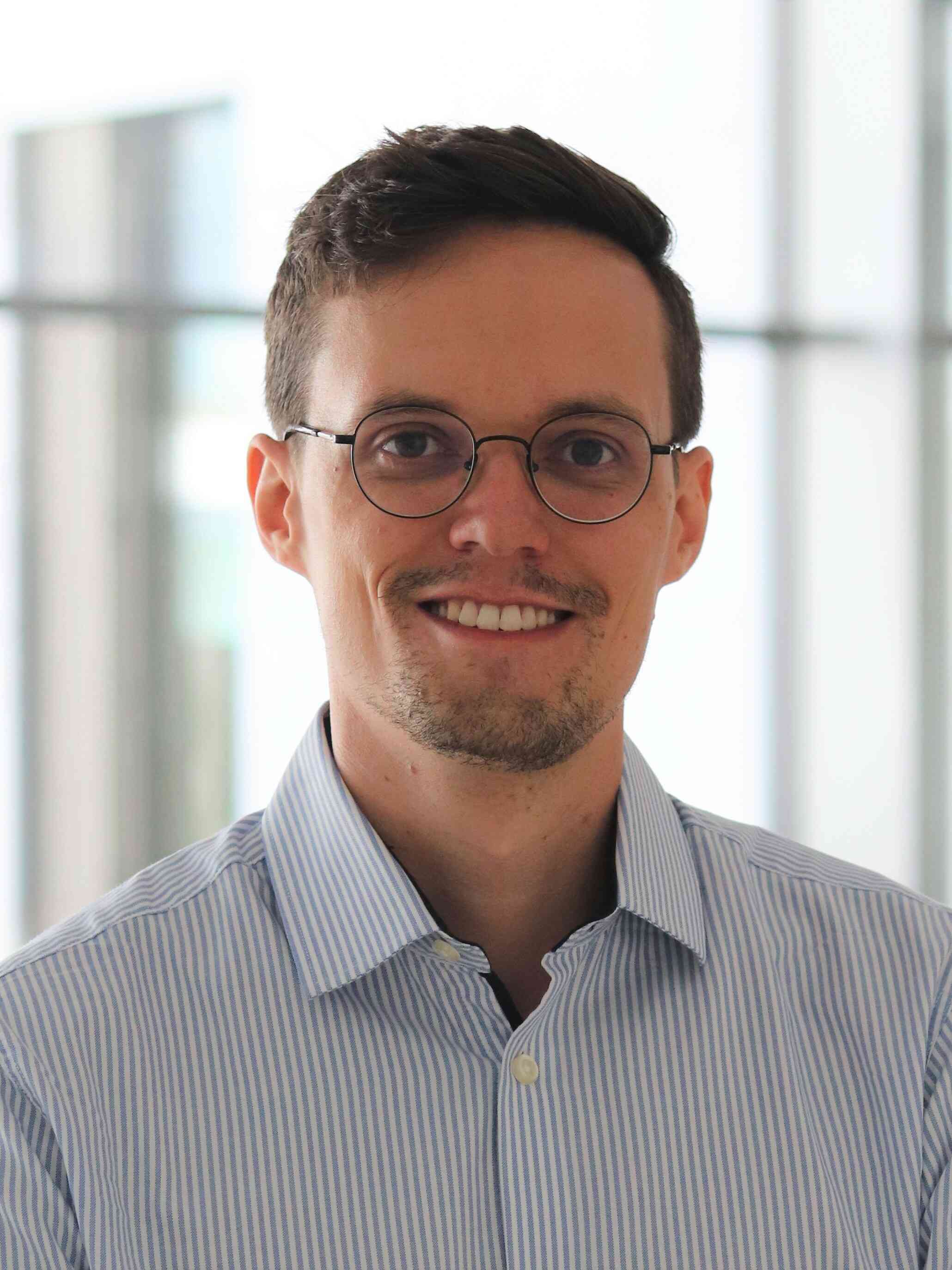
Simon Weißmann is an Assistant Professor of Applied Stochastics at the University of Mannheim's School of Business Informatics and Mathematics since 2023. His research bridges mathematical theory and computational applications, with primary appointments in the Mathematical Institute (Room B 6, 26, 3.05). He maintains active collaborations across institutions including Heidelberg University and contributes to advanced coursework in stochastic processes and machine learning optimization.
- PhD in Mathematics (2020), University of Mannheim (supervised by Prof. Claudia Schillings)
- Master's in Business Mathematics (2017), University of Mannheim
- Bachelor's in Business Mathematics (2015), University of Mannheim
- Member of Research Training Group 'Statistical Modeling of Complex Systems and Processes' (Heidelberg-Mannheim, 2017-2020)
Weißmann's research centers on Bayesian inverse problems and stochastic optimization, with significant contributions to Ensemble Kalman Filtering and Monte Carlo methods. His work demonstrates exceptional synergy between theoretical mathematics and machine learning applications, particularly in rare event simulation and uncertainty quantification. Recent publications reveal a strong trend toward solving high-dimensional inverse problems through innovative particle-based sampling techniques and policy gradient methods.
Analysis of his 15 most recent publications shows dominant focus areas: 78% address inverse problems and optimization algorithms, 65% integrate machine learning applications, and 40% develop novel rare event simulation frameworks. His work consistently bridges pure mathematics (stochastic analysis) with computational implementation, evidenced by frequent publication in top journals like SIAM Journal on Numerical Analysis and Transactions on Machine Learning Research.
Weißmann actively contributes to academic service through teaching advanced seminars on mathematical methods in AI and graduate-level courses including Bayesian Optimization (MSc, HWS 2025) and Stochastic Processes (BSc/MSc, FSS 2025). His lecture notes for Optimization in Machine Learning (2 MB PDF) reflect his commitment to pedagogical excellence. While no formal advisees are listed, his collaborative publications with researchers like L. Döring and J. Zech indicate active mentorship within research teams.
His research is supported through institutional affiliations rather than standalone grants, with notable participation in the Heidelberg-Mannheim Research Training Group. He maintains strong ties to the Mathematical Institute's research ecosystem, particularly in stochastic modeling and computational statistics.