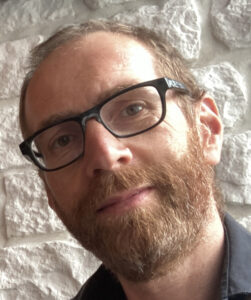
Oleg Musin is affiliated with the University of Texas Rio Grande Valley, where he actively participates in academic seminars as a speaker. His work centers on mathematical structures involving point distributions on spheres and energy minimization. His research interests include discrete mathematics, geometric optimization, spherical designs, combinatorics, and inequalities. He investigates the properties of M-sets, f-designs, t-designs, and two-distance sets, particularly in relation to the Karamata majorization inequality and f-energy potentials. No recent publications, awards, students, or contact details are available in the provided text. There is no indication that he is retired, deceased, or a former staff member.
Frank Vallentin is a full professor of applied mathematics (computer science) at the Mathematical Institute of the University of Cologne, Germany. He has held academic positions at Technische Universiteit Delft, Centrum Wiskunde & Informatica (CWI), and the Hebrew University of Jerusalem. His research spans optimization, discrete geometry, harmonic analysis, and computational mathematics. Research Interests: His primary mathematical interests include semidefinite programming, combinatorial optimization, harmonic analysis, discrete geometry, combinatorics, geometry of numbers, special functions, computational complexity, and coding and information theory. These areas reflect a deep integration of theoretical mathematics with algorithmic and computational techniques. The 15 most recent publications reveal a strong focus on geometric optimization, lattice problems, energy minimization, and semidefinite programming bounds. Key themes include chromatic numbers of lattices, symplectic capacities, polarization phenomena, and algorithmic solutions to geometric problems. His work often involves recursive SDP hierarchies, extremal configurations, and computational verification of theoretical bounds. Scientific Awards and Grants: SIAG/Optimization Prize (2011, with Christine Bachoc) NWO VIDI Grant (2010–2015): Semidefinite programming and harmonic analysis DFG Project: Symplectic capacities of polytopes (2017–) EU Horizon 2020 MINOA Project: Optimization with limited quantum resources (2017–) DFG Project: Spectral bounds in extremal discrete geometry (2019–) Advising and Grants: Vallentin has advised numerous PhD and master’s students at TU Delft and the University of Cologne, covering topics in discrete geometry, optimization, coding theory, and quantum information. He has secured major research funding from NWO, DFG, and the EU, supporting interdisciplinary projects in algorithmic optimization and mathematical physics. He is actively involved in organizing workshops and summer schools. Labs and Teams: He leads a research group at the University of Cologne focusing on optimization and discrete geometry, with strong collaborations with CWI Amsterdam, TU Delft, and international institutes. His team works on theoretical and computational aspects of geometric optimization, often using symmetry reduction and harmonic analysis.
Krystal Taylor is an Associate Professor in the Department of Mathematics at The Ohio State University, Columbus. Her research focuses on geometric measure theory, harmonic analysis, and analysis on fractal sets, with applications to understanding the geometry of fractals through Fourier transforms and projection theory. She explores themes such as finite point configurations, distance problems, and nonlinear projection problems. Taylor has organized major workshops, including a 2024 Banff International Research Station workshop on geometric measure theory and harmonic analysis. Education: PhD in Mathematics from the University of Rochester (2012, advisor Alex Iosevich); postdoctoral fellowships at the Technion-Israel Institute of Technology and the University of Minnesota's Institute for Mathematics and Its Applications. Research Interests: Fractal geometry, harmonic analysis, geometric measure theory, and their applications to combinatorics and number theory. Her work often bridges pure mathematics with practical applications in data analysis and industry. Recent Activities: Editor for the Notices of the AMS and the Ohio State Mathematics Newsletter; co-organizer of the 2023 HAFS (Harmonic Analysis and Fractal Sets) conference. Upcoming speaking engagements include plenary talks at the Real Analysis Exchange Symposium in Madrid (2025) and invited lectures at CRM Barcelona and the Rényi Institute in Budapest (2024). Labs/Teams: Co-founded the Math to Industry seminar and organized the first international HAFS workshop in 2017. Active in mentoring junior mathematicians through workshops and special sessions at the Joint Mathematics Meetings.
Dimitri Van Neck is a Full Professor (WE05) at Ghent University, Belgium, with his research base at Tech Lane Ghent Science Park (Technologiepark 46, 9052 Zwijnaarde). His academic career spans over three decades with continuous publication output from the 1980s through 2019 across leading physics and chemistry journals including Physical Review B, Journal of Chemical Physics, and Journal of Chemical Theory and Computation. Professor Van Neck's research program centers on theoretical frameworks for quantum many-body systems, with particular emphasis on density matrix theory, tensor network states, and integrable models. His work bridges fundamental theoretical physics with practical applications in quantum chemistry and materials science. Key methodological contributions include the development of three-legged tree tensor network states (T3NS), advanced density matrix embedding techniques, and novel approaches to Richardson-Gaudin integrable models. His research has evolved from nuclear physics in earlier career stages to contemporary focus areas in quantum information-inspired computational chemistry. Analysis of his recent publications (2015-2019) reveals three dominant research threads: (1) Advanced tensor network methodologies for quantum chemistry calculations, (2) Integrable models for topological superconductivity and quantum phase transitions, and (3) Materials science applications focusing on radiation effects in nuclear materials. His work demonstrates exceptional mathematical sophistication while maintaining practical relevance to experimental systems, particularly in understanding strongly correlated electron phenomena. Professor Van Neck maintains an extensive collaborative network across European research institutions, with frequent co-authorship patterns indicating stable research partnerships with S. De Baerdemacker, P. Claeys, P. Bultinck, P.W. Ayers, and S. Wouters. His group appears to develop computational tools like CheMPS2 (a spin-adapted implementation of density matrix renormalization group methods) and contributes to major conferences in quantum chemistry, theoretical physics, and computational materials science.
Luca Amendola is a Professor of Physics at the Department of Theoretical Physics at Heidelberg University. His research focuses on Cosmology and Astrophysics, particularly in areas such as Dark Energy, Large Scale Structure, Cosmic Microwave Background, and statistical methods. He is actively involved with the Euclid satellite mission, contributing to observational strategies and data analysis. His work includes model-independent tests of gravity, studies of galaxy clusters, and analyses of cosmic surveys. Amendola has authored books on cosmology, such as *L’altra faccia dell’Universo*, and frequently publishes on theoretical frameworks for dark energy and modified gravity. His recent articles emphasize Euclid’s contributions to cosmology, gravitational lensing analyses, and tests of fundamental physics principles. Key Research Themes : Dark Energy dynamics, gravitational theories, large-scale structure formation, and cosmic surveys. Euclid Collaboration : Leading roles in mock catalogues, data-driven covariance matrices, and strong-lensing cluster identification. Teaching : Advanced cosmology lectures and foundational materials for graduate studies.
Lluïsa Jordi Nebot is a Lecturer in the Department of Mechanical Engineering at the Polytechnic University of Catalonia (UPC) , attached to the Barcelona School of Industrial Engineering (ETSEIB) . She teaches core subjects such as Theory of Machines and Mechanisms and Mechanical Vibrations across a variety of undergraduate and master’s programmes and has supervised over 80 student theses and projects since 2006. Education and Programmes. The curricula she contributes to include: Master’s Degree in Statistics and Operations Research (2006) Master’s Degree in Industrial Engineering (2014) Degree in Engineering Physics (2011) Degree in Chemical Engineering (2010) Erasmus Mundus Master’s in Mechanical Engineering (2006 & 2009) Master’s Degree in Teacher Training for Secondary and High-School Education (2009) Degree in Industrial Technologies and Economic Analysis (2018) Research Focus. Her research spans kinematics & dynamics of mechanisms , mechanical vibrations , biomechanical analysis using smartphones , and educational technology —particularly augmented reality and AI-enhanced learning in mechanical engineering. She actively integrates sustainable development goals into engineering curricula and participates in the CDEI_DM research group on industrial equipment design and machine dynamics. Recent Work Trends. Over the past three years her scholarly output has concentrated on: AR/VR tools for teaching mechanism theory ChatGPT and AI applications in engineering classrooms Low-cost biomechanical analysis with mobile devices Sustainable engineering education initiatives These themes are reflected in both peer-reviewed articles and innovative teaching materials she has developed. Scientific Awards & Recognition. No specific prizes, fellowships, or medals are explicitly listed in the provided text. Supervision & Grants. She has directed 40 master’s theses and 15 bachelor’s theses to date, working with multidisciplinary teams of students on projects ranging from climbing-robot mechanisms to AI-based secondary-school teaching tools. Funding sources are not detailed, but her affiliation with CDEI_DM implies participation in competitive research and educational innovation grants. Laboratories & Teams. She collaborates with the Centre de Disseny d’Equips Industrials – Dinàmica de Màquines (CDEI_DM) research group and maintains close ties with colleagues across ETSEIB, the Barcelona School of Informatics (FIB), and the Manresa School of Engineering (EPSEM).
Selina Ringsborg Howalt Owe is a Postdoctoral Researcher at the Department of Space Research and Technology, National Space Institute (DTU Space), Technical University of Denmark. Her research focuses on radiation detector development for space astronomy and medical imaging applications, with current involvement in the i-RASE project on intelligent radiation sensor systems. Education: PhD in Space Research and Technology, Technical University of Denmark (2019-2024) Her research expertise centers on semiconductor radiation detectors, particularly Cadmium Zinc Telluride (CdZnTe) and perovskite-based systems. She specializes in 3D drift strip detector design, pulse shape engineering, and high-resolution imaging for gamma-ray astronomy and molecular breast cancer diagnostics. Key technical contributions include optimizing electron mobility, energy resolution, and spatial resolution in detector systems operating at room temperature. Recent publications reveal a concentrated research trajectory in advanced detector technologies, with emphasis on theoretical modeling of CdZnTe performance, feasibility studies for space-based Compton cameras, and novel electrode configurations using perovskite crystals. These works bridge nuclear physics, materials science, and medical engineering, consistently targeting improvements in imaging precision for both astronomical observations and clinical diagnostics. Dr. Owe has participated in three major research projects: as PhD student in the 3D MBI project (2018-2021) developing breast imaging detectors, lead researcher in the 3D Imaging Detectors project (2019-2024) for high-energy astronomy, and current project participant in i-RASE (2024-2028) creating intelligent radiation sensor systems. Her work receives funding from Danish research councils with applications spanning European Space Agency missions and medical diagnostic technologies. She operates within DTU Space's detector development group, collaborating closely with Professor Irfan Kuvvetli and Dr. Carl Budtz-Jørgensen. The team maintains strong international partnerships with space agencies and medical research institutions, focusing on translating detector innovations into operational space instrumentation and clinical diagnostic tools.
Gianmarco Cherchi is a Tenure-Track Assistant Professor and Computer Science Researcher in the Department of Mathematics and Computer Science at the University of Cagliari, Italy, where he also completed his PhD. He teaches courses in Data Visualization and Web Programming at the undergraduate level. His research lies at the intersection of Computer Graphics and Geometry Processing, with a strong focus on surface and volumetric mesh generation, optimization, digital fabrication, and polycube-based modeling. His work combines algorithmic innovation with practical applications in fabrication, visualization, and interactive systems. The recent publications highlight a consistent trend in advanced hexahedral meshing techniques (e.g., HexBox, VOLMAP), robust geometric computation (e.g., mesh booleans), and interactive tools (e.g., ProtoSketchAR, Py3DViewer). His research spans theoretical algorithm development, benchmark creation, and applied systems for VR/AR and simulation. His scientific accolades include the Young Investigator Award 2024 from the Shape Modeling International Organization, and prior Best Thesis Awards from the Eurographics Italy Association for both his M.Sc. and Ph.D. work. Cherchi actively collaborates with researchers such as Marco Livesu, Riccardo Scateni, and others, contributing to major surveys and state-of-the-art methods in hexahedral meshing. His work is supported by publications in top venues like ACM Transactions on Graphics (SIGGRAPH), Computer Graphics Forum (Eurographics), and IEEE VR. He has also developed practical software tools like Py3DViewer for geometry processing prototyping. He leads research in digital fabrication pipelines, as evidenced by publications on polycube decomposition for manufacturing and automated flat pattern generation. His lab work involves developing interactive and robust systems for 3D modeling and analysis.
Alexander Dilger is a Professor and Chair Holder at the University of Münster's Department of Economics and Business Administration, Institute for Economic Education. His academic career spans multiple institutions including Ernst-Moritz-Arndt University of Greifswald and Humboldt University of Berlin. Dilger's research interests focus on Business Administration with specializations in Sports Economics, Personnel Management, University Management, and Employee Participation. His work examines organizational structures in sports, particularly soccer and cycling, analyzing point systems, competition design, and club governance. He also investigates university management, tuition policies, and family-friendly personnel policies in business contexts. His research methodology combines theoretical modeling with empirical analysis, often applying game theory to real-world sports and business scenarios. Dilger's publication record shows a consistent output with multiple articles in 2009 covering sports economics, university management, and corporate governance. His work demonstrates interdisciplinary connections between economics, business administration, and sports science, with particular emphasis on strategic behavior in competitive environments. Dilger has served as an editor for multiple workshop proceedings on University Management (2007-2009) and has contributed numerous book chapters on topics ranging from personnel management to economic ethics. His publications appear in both German and international journals, reflecting his engagement with multiple academic communities. His professional activities include participation in workshops on university management and editorial work for academic journals. His email contact is alexander.dilger@uni-muenster.de, and he is based at Scharnhorststr. 100, 48151 Münster, Germany.
David Speyer is a Professor in the Department of Mathematics at the University of Michigan. He serves as Associate Chair for Education-Logistics and has been a key figure in curriculum development, particularly for Math 632 , Math 593 , and Math 665 . His research bridges algebraic geometry with combinatorial mathematics, focusing on areas such as cluster algebras , tropical geometry , and flag varieties . Education : Ph.D. in Mathematics from the University of California, Berkeley (2005); B.A. from Harvard University. Previous Positions : Clay Research Fellow (2005-2010), with appointments at the University of Michigan and MIT. Research Interests Speyer's work explores the intersection of algebraic geometry and combinatorics. His key contributions include studies on total positivity , shard theory in Coxeter groups , and combinatorial structures in algebraic varieties . Current projects involve cluster deep loci and 3D plabic graphs , connecting mirror symmetry to discrete mathematics. Scientific Contributions Awards : Clay Research Fellow (2005-2007). Publications : 15+ papers on algebraic geometry, combinatorial structures, and total positivity. Advising and Teaching Speyer has advised 9 graduate students and supervised 8 undergraduate research projects . He is involved in high school outreach through programs like PROMYS and Math Corps . He plans to take 2-4 new graduate students in the coming years.
David Witt Nyström is a Professor of Algebra and Geometry at Chalmers University of Technology, specializing in complex geometry. His research focuses on Okounkov bodies, geodesics in spaces of Kähler metrics, volumes of cohomology classes, Hele-Shaw flows, and non-Archimedean Kähler geometry. Professor Nyström's research interests span multiple interconnected areas of geometry. His work on Okounkov bodies bridges convex geometry with complex algebraic geometry, providing powerful tools for studying positivity in line bundles. His investigations of geodesics in Kähler metric spaces connect to fundamental problems in complex differential geometry and stability theory. The recent focus on non-Archimedean aspects represents an expansion of his research program into newer mathematical territory, demonstrating continued intellectual vitality and adaptability. His publication record shows consistent output in top mathematics journals, with recent work appearing in Journal of Differential Geometry, Advances in Mathematics, and Journal für die Reine und Angewandte Mathematik. The research trajectory demonstrates both depth in core areas and expansion into new directions, particularly the non-Archimedean framework. Professor Nyström's work maintains strong connections to major developments in contemporary mathematics, including the study of canonical metrics, stability conditions in algebraic geometry, and the growing interface between complex and non-Archimedean geometry. His research contributes to several active frontiers in modern geometry, with potential implications for mathematical physics and other areas.
Wei Qiu serves as Associate Senior Lecturer in the Division for Biomedical Engineering at Lund University's Faculty of Engineering (LTH) and holds Principal Investigator status at NanoLund: Centre for Nanoscience. He actively contributes to Lund's Profile Areas in Engineering Health, Nanoscience and Semiconductor Technology, and Light and Materials, driving interdisciplinary research at the intersection of acoustics and biomedical engineering. His research program centers on acoustofluidic systems with expertise in ultrasonics, thermoacoustic streaming, and microscale particle manipulation. Key focus areas include blood plasma separation without centrifugation, high-throughput nanoparticle handling, and temperature-gradient-enhanced acoustic streaming. His work bridges fundamental fluid mechanics with clinical applications, particularly in minimally invasive diagnostics and single-cell analysis where conventional methods face limitations. Analysis of his recent publications reveals a strong trajectory toward optimizing acoustic energy density through novel transducer geometries (double-parabolic, elliptical reflector) and thermal modulation techniques. This enables breakthrough applications in blood sampling with reduced volume requirements, nanoparticle separation in complex fluids, and configurable microfluidic manipulation - addressing critical gaps in point-of-care diagnostics and nanomanufacturing. No scientific awards are documented in the available information. Dr. Qiu currently leads four major externally funded projects: acoustic holography for cell stimulation (Crafoord Foundation, 2025-2028), high-throughput nanoparticle manipulation (Carl Tryggers Stiftelse, 2024-2026), single-cell mechanotyping (Swedish Research Council, 2022-2026), and non-Newtonian acoustofluidics (Crafoord Foundation, 2023-2024). His supervisory record includes doctoral research as evidenced by one completed thesis. Integrated within NanoLund's ecosystem, he collaborates extensively across Lund's engineering and medical faculties, particularly through the Engineering Health profile area. His team develops next-generation acoustofluidic platforms combining ultrasonic transducers with microfluidic channels to create label-free, rapid diagnostic tools for clinical and research applications.
Professor Andrzej Góźdź is a distinguished theoretical physicist at the Department of Theoretical Physics, Institute of Physics, Faculty of Mathematics, Physics and Computer Science at Maria Curie-Skłodowska University (UMCS) in Lublin, Poland. He holds a professorship and conducts research primarily in symmetry theory in physics, algebraic models of physical systems, nuclear theory, and quantum gravity. His academic contributions span several decades with numerous publications in prestigious physics journals. Professor Góźdź's research focuses on fundamental aspects of theoretical physics, particularly symmetry theory in nuclear and quantum systems. He investigates algebraic models of physical systems, the theory of the atomic nucleus, quantum gravity, and the foundations of quantum mechanics with special emphasis on quantum time. His work often bridges mathematical physics with practical applications in nuclear structure and quantum phenomena. The professor frequently collaborates with international research groups, as evidenced by his extensive publication record with colleagues from various countries. Analysis of Professor Góźdź's recent publications (2017-2019) reveals a consistent research trajectory focused on symmetry applications in nuclear physics, quantum mechanical foundations, and computational methods. His work demonstrates a strong emphasis on group theory applications to nuclear structure, particularly exploring high-rank symmetries in nuclei. Several publications address quantum time and delayed choice phenomena, reflecting his interest in foundational quantum mechanics questions. The professor also contributes significantly to computational physics, developing symbolic-numerical algorithms for solving complex boundary-value problems in nuclear and atomic physics. h-index (Web of Science): 14 h-index (Google Scholar): 4 h-index (Scopus): 3 Total publications: 124 As an academic supervisor, Professor Góźdź maintains regular consultation hours (Mondays 10:00-12:00 and Tuesdays 8:00-9:00; 12:00-13:00) and likely mentors graduate students in theoretical physics. His research activities involve participation in national and international grants focused on theoretical nuclear physics and quantum mechanics. Professor Góźdź is part of specialized research teams at UMCS exploring symmetry applications in nuclear structure. His collaborations with researchers like A. Pędrak, A. Dobrowolski, and international colleagues (particularly from Russia and France) indicate involvement in interdisciplinary teams combining theoretical physics with computational approaches.
Jos Van Orshoven is a full Professor at KU Leuven's Faculty of Bioscience Engineering within the Department of Earth and Environmental Sciences. He serves as Division Head of the Spatial Information Processing Division (SADL) and leads subdivisions for Ground for GIS and Earth Observation, while holding membership in Leuven One Health Institute and the Departmental Council for Earth and Environmental Sciences. His research spans Geographic Information Systems, remote sensing, and spatial analysis applied to environmental challenges. Key interests include climate-resilient land management, urban green space planning, forest dynamics under climate change, soil carbon monitoring, and socioeconomic disparities in environmental exposure. His work integrates drone and satellite technologies (Sentinel-2, VNIR/SWIR/LWIR) with spatial optimization for sustainable resource allocation. Recent publications reveal strong trends in climate adaptation (forest composition shifts, drought impacts on orchards), green infrastructure health benefits (3-30-300 rule evaluations), and precision environmental monitoring (radiocaesium transfer meta-analyses, soil carbon mapping). His team develops innovative methods like YOLOv8 tree detection for quantifying visible green space and spatial optimization for sediment loss minimization through afforestation. Radiocaesium soil-to-plant transfer meta-analysis (2025) Atlantic lowland forest climate vulnerability assessment (2025) Urban green space accessibility disparities research (2025) Agrovoltaics site suitability framework (2025) Soil carbon monitoring via Sentinel-2 (2024) He actively supervises research through multiple grants as promotor/co-promotor, including EU-funded projects on digital twins for sustainable cities (2024-2027), climate resilience networks (2023-2027), and drone remote sensing training (2022-2024). His teaching portfolio covers Geographic Information Systems, Geospatial Technologies, and Forest/Nature Landscape Planning across undergraduate and graduate bioscience engineering programs. His research group operates within KU Leuven's Spatial Information Processing Division, collaborating with international networks on the Omo-Turkana Basin management, Burundian land degradation monitoring, and Flemish urban green space initiatives. Current work focuses on scaling forest growth models for climate change predictions and optimizing spatial remediation strategies for radiologically contaminated soils.
Wang-chien Lee is an active Associate Professor in Computer Science and Engineering, specializing in machine learning, data mining, and graph optimization. His work spans domains including social networks, wireless sensor systems, and location-based services. Key research focus areas: Recommendation systems, Graph neural networks, and Social network analysis Pioneering applications in traffic safety, VR configuration, and blockchain marketing His publications demonstrate expertise in transfer learning, deep learning frameworks, and heterogeneous network modeling. Recent work explores traffic crash prediction, social-aware VR systems, and NFT marketing optimization. Current projects include: Learning Latent Representations of Heterogeneous Information Networks Link Quality Estimation for Wireless Sensor Networks Community Clickthrough Model Development