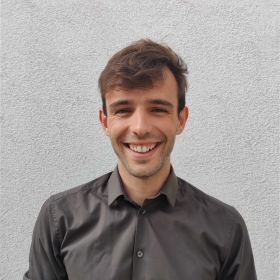
معرفی
Dimitri Van Neck is a Full Professor (WE05) at Ghent University, Belgium, with his research base at Tech Lane Ghent Science Park (Technologiepark 46, 9052 Zwijnaarde). His academic career spans over three decades with continuous publication output from the 1980s through 2019 across leading physics and chemistry journals including Physical Review B, Journal of Chemical Physics, and Journal of Chemical Theory and Computation.
Professor Van Neck's research program centers on theoretical frameworks for quantum many-body systems, with particular emphasis on density matrix theory, tensor network states, and integrable models. His work bridges fundamental theoretical physics with practical applications in quantum chemistry and materials science. Key methodological contributions include the development of three-legged tree tensor network states (T3NS), advanced density matrix embedding techniques, and novel approaches to Richardson-Gaudin integrable models. His research has evolved from nuclear physics in earlier career stages to contemporary focus areas in quantum information-inspired computational chemistry.
Analysis of his recent publications (2015-2019) reveals three dominant research threads: (1) Advanced tensor network methodologies for quantum chemistry calculations, (2) Integrable models for topological superconductivity and quantum phase transitions, and (3) Materials science applications focusing on radiation effects in nuclear materials. His work demonstrates exceptional mathematical sophistication while maintaining practical relevance to experimental systems, particularly in understanding strongly correlated electron phenomena.
Professor Van Neck maintains an extensive collaborative network across European research institutions, with frequent co-authorship patterns indicating stable research partnerships with S. De Baerdemacker, P. Claeys, P. Bultinck, P.W. Ayers, and S. Wouters. His group appears to develop computational tools like CheMPS2 (a spin-adapted implementation of density matrix renormalization group methods) and contributes to major conferences in quantum chemistry, theoretical physics, and computational materials science.