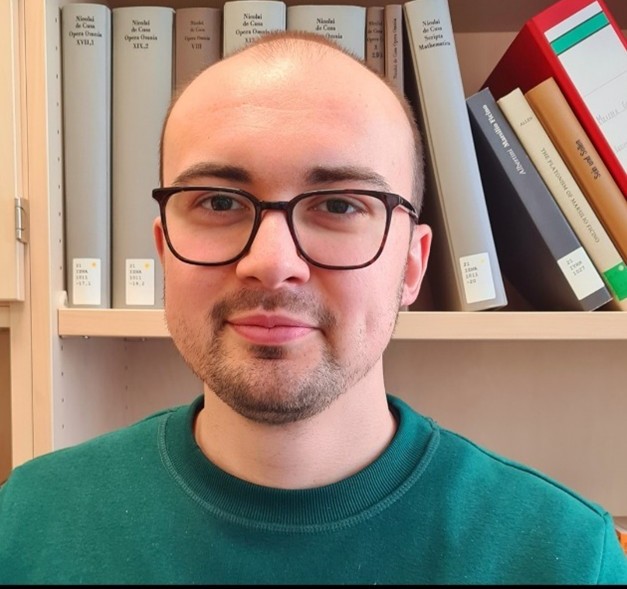
Fabian Marx is a Lecturer in the Faculty of Philosophy at the University of Siegen , Germany. Holding a Master of Arts degree in Philosophy, he specializes in historical and systematic aspects of philosophical inquiry, with a focus on the 15th century and Neoplatonism. Specialties : Nicholas of Cusa, Plotinus, Metaphysics, Logic Teaching : Courses include "Descartes and First Philosophy" (2025), "Reading Schelling – A Reading Course on the Freedom Writing" (2024/25), and "Plotinus" (2023). Research Areas : Historical : 15th-century philosophy, particularly Nicholas of Cusa; history of (Neo-)Platonic thought, especially Plotinus Systematic : Metaphysics, Logic, and the Theory of the History of Philosophy Publications highlight his expertise in analyzing medieval and early modern philosophical texts, with a focus on Cusa's syllogistic logic, marginalia in historical works, and historiographical methodologies. Contact: fabian.marx@uni-siegen.de
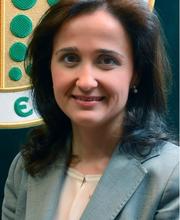
Dr. María José del Jesús Díaz is a researcher affiliated with the University of Jaén (ujaen.es). Her work spans multiple domains including Machine Learning, Artificial Intelligence, and Data Mining, with a strong focus on Explainable AI, Fuzzy Systems, and Evolutionary Computation. Research Interests Time Series Forecasting & Transfer Learning Multilabel Classification & Imbalance Handling Autoencoders & Feature Fusion Evolutionary Algorithms for Pattern Mining Explainable AI in Healthcare & Environmental Applications Scientific Contributions Developed resampling techniques for multilabel datasets (e.g., REMEDIAL-HwR, MLSMOTE) Created tools like mldr.resampling and KEEL 3.0 for data mining Explored hybrid models for AI interpretability Published extensively on autoencoder applications in data streams (2018–2023)
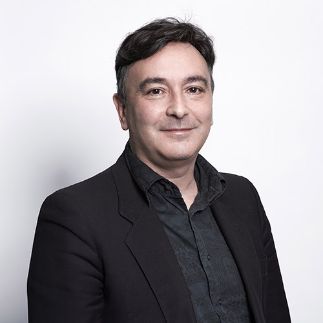
Monika Steffens is a Researcher at the Faculty of Philosophy of Heinrich-Heine-Universität Düsseldorf, specializing in the history and philosophy of classical and medieval thought. Her work focuses on ancient and medieval philosophical traditions, the evolution of Platonism, and figures such as Plato, Plotinus, Augustine, Albertus Magnus, Henry of Ghent, Nicholas of Cusanus, and Marsilio Ficino. She also explores political philosophy, ethics, and metaphysics within these frameworks. Her research interests include analyzing the philosophical developments across antiquity, the Middle Ages, and the Renaissance, with particular emphasis on key thinkers and their contributions to metaphysics, epistemology, and anthropological thought.
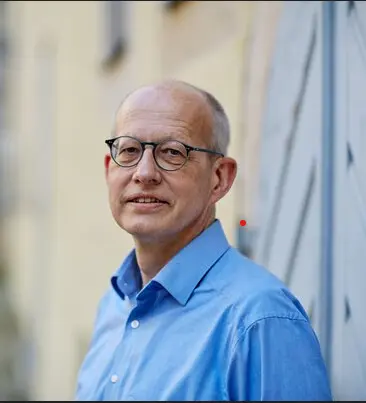
Alberto Bertozzi, PhD, is a Lecturer in the Department of Philosophy at Loyola University Chicago. His research focuses on Ancient Philosophy and the History of Philosophy, with particular attention to Neoplatonism and metaphysical concepts. He holds a PhD and contributes to academic discourse through publications and teaching. His notable works include Plotinus on Love (Brill, 2021), which explores metaphysical frameworks through Eros, and articles like 'Thoughts in Potentiality' (Philosophy Today, 2007), analyzing Agamben’s theories. His office is located at Crown Center 462, and he can be reached via email at abertoz@luc.edu.
Giuseppe Girgenti is an Associate Professor of Philosophy at the Faculty of Philosophy of Vita-Salute San Raffaele University in Milan, where he has taught since its founding in 2002. His research focuses on the history of ancient philosophy, particularly Platonism and its intersections with Christianity, medieval theology, and phenomenology. Girgenti holds a PhD from the Catholic University of Milan (1994) and has held academic positions at institutions including the International Academy of Philosophy in Liechtenstein. His work bridges historical-hermeneutic approaches with phenomenology, influenced by thinkers like Gadamer, Patocka, and Wojtyła. He has organized major philosophical events featuring scholars such as Hans-Georg Gadamer and has been editor for prestigious series like "Il Pensiero occidentale" and "Testi a fronte". His recent publications address AI ethics, ancient wisdom, and transfiguration concepts. Active in academic governance, Girgenti has served on doctoral committees (since 2015) and engages in public philosophy through lectures, radio programs, and school outreach. He is a member of the Italian Society for Ancient Philosophy and the Italian Society of Philosophy.
Cinzia Arruzza is the Maria Stata Professor of Classical Greek Studies and Professor of Philosophy at Boston University, appointed in 2024. She holds a dual focus in ancient philosophy and contemporary feminist/social theory. Previously, she taught at the New School for Social Research in NYC and held visiting positions at University of Rome Tor Vergata (her alma mater), University of Piemonte Orientale, and University of Rome La Sapienza. Her research spans the history of ancient Greek and Roman philosophy (specializing in Plato, Plotinus, and Aristotle), contemporary feminist theory, and Marxist thought. She has authored major works such as A Wolf in the City (OUP, 2018) analyzing Plato’s political philosophy, and Feminism for the 99% (Verso, 2019), a co-authored manifesto redefining socialist-feminist praxis. Awards: Two Alexander von Humboldt Foundation fellowships (both at University of Bonn) Current Projects: Book manuscript Socrates’ Women (OUP) and French translation of Plotinus’ Ennead III 6 (Vrin) Her work bridges ancient philosophical traditions with modern social theory, emphasizing intersectional approaches to ethics, power structures, and liberation movements.
Prof. Dr. Savu Totu is a faculty member at the University of Bucharest , specializing in the philosophy of culture, history of philosophy, and philosophy of religion. His work emphasizes Greek metaphysics and its connections to Christianity. His research focuses on Plato , Plotinus , and Neoplatonism , with extensive publications in specialized journals. He has taught undergraduate and graduate courses on these themes and co-edited three anthologies featuring Romanian philosophers.
Danny Muñoz-Hutchinson is a Professor of Philosophy at St. Olaf College, where he served as Department Chair from 2019 to 2023. His scholarship bridges ancient Western and Eastern philosophical traditions with a commitment to intellectual freedom in liberal arts education. Education: Ph.D., University of Pennsylvania His research centers on consciousness within Neoplatonism, culminating in the monograph "Plotinus on Consciousness" (Cambridge University Press, 2018). He pioneers cross-cultural analysis between Ancient Greek and Indian Buddhist philosophy, examining intellectual virtues like wisdom (phronēsis) and empathy (shu) as foundational to critical thinking. This work manifests in seminars such as Platonism and Yogācāra, which interrogate comparative metaphysical frameworks. Professor Muñoz-Hutchinson teaches core courses including Ancient Greek Philosophy (Phil 235), Asian Philosophy (Phil 249), and Confucius/Buddha/Socrates (Phil 117), alongside innovative integrations of martial arts and philosophy in his January term course Zen and the Art of Judo—reflecting his dual expertise as a black belt practitioner and scholar.
Ivana Nikolic is a lecturer at the University of Zadar's Department of Philosophy, born on September 30, 1992, in Split. She holds two Master's degrees: one in philosophy (2021) and another in ethnology and anthropology (2020) from the same university. Fields of Interest Contemporary philosophy Philosophy of knowledge Ethics She actively contributes to academic teaching through seminars such as "Life and Death in Ethical Judgment," "Plato and Plotinus - Selected Texts," "Descartes' Discourse on Method," and "The Phenomenon of Conscience and Human Action." Professional Affiliation Hegel Society, Zadar
Professor Christian Schäfer holds the Chair of Philosophy I at the Otto-Friedrich University of Bamberg within the Faculty of Humanities and Cultural Studies. He has been a full professor at Bamberg since 2009, following academic appointments at Ludwig Maximilian University of Munich (2004-2009), Justus Liebig University Giessen (2002-2003), and teaching positions in Ecuador and Colombia. His research interests span Ancient Philosophy, Medieval Philosophy, Scholastic Philosophy, Platonism, Philosophy of Religion, History of Philosophy, Ethics, and Philosophy of Evil. Professor Schäfer's work demonstrates a trajectory from ancient to medieval thought, with particular expertise in Plato, Thomas Aquinas, and Dionysius the Areopagite. His recent scholarly output shows consistent engagement with foundational philosophical texts, with monographs published in 2006, 2013, and 2022 addressing Dionysius the Areopagite, Thomas Aquinas's treatment of evil, and Plato's Symposium respectively. These works reflect his dual expertise in ancient Greek philosophy and medieval scholastic thought. Professor Schäfer is actively involved in collaborative research, particularly through the 'Sources and Studies on Philosophy in New Spain' project, which connects his scholarly work to the Bamberg Research Center's focus on 'Methods of Norm Justification.' His international academic network includes collaborations with scholars in Mexico, the United States, and across Europe. His academic journey began with studies in Catholic Theology, Philosophy and Political Science at LMU Munich and Roman institutions, followed by doctoral work on Xenophanes of Colophon and habilitation research on the origin of evil in Plotinus, Augustine and Dionysius of the Areopagite, establishing the foundation for his current research trajectory.
Lorenzo Ferroni is an Associate Professor of Greek Language and Literature at the Department of Literature and Philosophy, University of Florence. His academic career spans multiple international institutions including Université Laval (Canada), KU Leuven (Belgium), and CNRS (France), where he conducted research on Neoplatonic philosophy and classical philology. His educational background includes: Graduation from Liceo Classico 'Michelangiolo' in Florence (1995) Diploma in Humanities from Scuola Normale Superiore in Pisa (2000) PhD in Greek and Latin Philology from the University of Florence (2006) Professor Ferroni's research focuses on Classical Philology with special emphasis on textual criticism and the history of ancient text traditions. His primary areas of interest include Plato studies (particularly manuscript traditions and text constitution), Neoplatonic thought (especially Plotinus), Attic oratory (focusing on Andocides), and Aristophanes' comedy. His work bridges philological precision with philosophical interpretation, examining how ancient texts were transmitted and interpreted through centuries. His scholarly contributions include numerous publications on Plotinus' Enneads, critical editions of Plato's dialogues (particularly the Ion), and studies on Maximus Planudes' compendia of Platonic works. Professor Ferroni has received significant research funding, most notably a Marie Curie IEF Fellowship for the 'Plotinus against Gnostics: a New Survey' (PaGaNS Project). Among his notable awards and recognitions: Marie Curie IEF Fellowship (2015-2017) National Scientific Qualification (Abilitazione Scientifica Nazionale) in Greek Language and Literature (2021-2030) National Scientific Qualification in Classical and Late Antique Philology (2018-2027) Qualification as Maître de conférences in Ancient Languages and Literatures in France (2015) Professor Ferroni is actively involved in organizing international scholarly events, having co-organized numerous conferences and workshops on Plotinus, Plato, and textual criticism methods. His teaching at the University of Florence includes Greek Language and Literature courses focusing on classical texts and their historical contexts. His research continues to advance our understanding of Neoplatonic philosophy and the textual transmission of ancient Greek literature.
Tatjana Aleknienė is a Habilitated Doctor of Humanities, Professor, and Chief Researcher at the Department of Ancient and Medieval Culture Research, Lithuanian Institute of Culture Research since 2020. She maintains concurrent academic appointments as Visiting Fellow at Mykolas Romeris University's Centre for Aristotelian Studies, Member of Vytautas Magnus University's PhD program in History of Art, and Consultant at the Lithuanian Bible Society, while continuing lecturing roles at multiple universities. Her educational background includes a Bachelor's degree in Classical Philology from Moscow Lomonosov University (1988) and a PhD from Vilnius University (1997) with a dissertation on 'The Concept of the Parts of the Human Soul in Ancient Greek Literature.' She completed doctoral studies at École Pratique des Hautes Études (Paris) and Vilnius University, with internships at EPHE (2008, 2010) and University of Fribourg (2014-2016). Professor Aleknienė's research centers on Greek philosophical ethics, Plato's dialogues, the Platonic tradition, Philo of Alexandria, and Plotinus, with particular focus on soul theory, mystical experience, and exegetical strategies in Late Antiquity. Her work bridges Hellenistic philosophy, Jewish thought, and early Christian interpretation, examining concepts like 'flight to the fatherland' and 'mystical ecstasy' across cultural boundaries. Her publication record shows consistent output in international journals, with recent work increasingly focusing on Plato's epistemology (Theaetetus, 2022), ancient diplomacy-philosophy intersections (2020), and Plotinian metaphysics. The research demonstrates deep philological analysis combined with philosophical interpretation, often revealing connections between Greek philosophical concepts and Jewish-Hellenistic exegesis. The Most Productive Researcher at Lithuanian University of Educational Sciences (2016) She has supervised three completed PhD dissertations and currently mentors two doctoral candidates. Her research leadership includes international projects like 'Exegetical traditions in ancient philosophy, Judaism and Christianity' (2016) and national translation projects on Plato's dialogues. Professor Aleknienė actively contributes to academic infrastructure through editing the 'Philosophica' and 'Christiana tempora' series, organizing the annual 'Ancient and Medieval Studies' conference, and participating in international Plotinus seminars since 2002. Her scholarly ecosystem integrates textual scholarship, philosophical analysis, and cross-cultural interpretation, centered at the Department of Ancient and Medieval Culture Research where she leads research on the philosophical foundations of ancient Mediterranean civilizations.
Peter Scott Adamson is an American philosopher and intellectual historian currently holding dual academic appointments as Professor of Philosophy in Late Antiquity and in the Islamic World at the Ludwig Maximilian University of Munich and Professor of Ancient and Medieval Philosophy at King's College London. He has worked at King's College London since 2000, becoming professor there in 2009, and obtained his joint appointment at Ludwig Maximilian University of Munich in 2012. Adamson's educational background includes a Bachelor's degree summa cum laude from Williams College (1994), and both Master's and PhD degrees in Philosophy from the University of Notre Dame (2000). His academic journey reflects a deep commitment to philosophical scholarship across multiple cultural traditions. Adamson's research focuses on the history of philosophy with particular expertise in ancient philosophy , Islamic philosophy , medieval philosophy , and Neoplatonism . His work emphasizes cross-cultural philosophical traditions, challenging the Eurocentric narrative of philosophy's history. He advocates for respecting religion as inseparable from philosophical inquiry, viewing religious thought as 'philosophically fascinating and fruitful.' Peter Adamson is best known for his 'History of Philosophy Without Any Gaps' project, which began as a podcast in 2010 and has since grown into a seven-volume book series. The project has surpassed 25 million downloads as of 2019 and covers philosophical traditions from ancient Greek through Islamic, European, Indian, Africana, and Chinese philosophical traditions. This comprehensive approach reflects Adamson's commitment to presenting philosophy as a global human endeavor rather than a purely Western tradition. His notable awards include: Philip Leverhulme Prize (2003) for 'outstanding research achievements of young scholars of distinction and promise based in UK institutions' Nearly £250,000 grant from the Leverhulme Trust (2010) Schelling Prize from the Bavarian Academy of Sciences (2020) for work on multiculturalism in historical perspective Adamson has established himself as a leading figure in making philosophical history accessible to broad audiences while maintaining scholarly rigor. His work on the 'History of Philosophy Without Any Gaps' demonstrates both his academic expertise and his commitment to public engagement with philosophy. He has published extensively on Islamic philosophy, particularly on figures like al-Kindi, and has recently expanded his research to include Africana philosophy, culminating in his 2025 publication 'Africana Philosophy from Ancient Egypt to the Nineteenth Century.' Based in Munich with his Bavarian wife and children, Adamson continues to bridge academic and public spheres through his teaching, writing, and podcasting, making significant contributions to how philosophy's history is understood and taught globally.