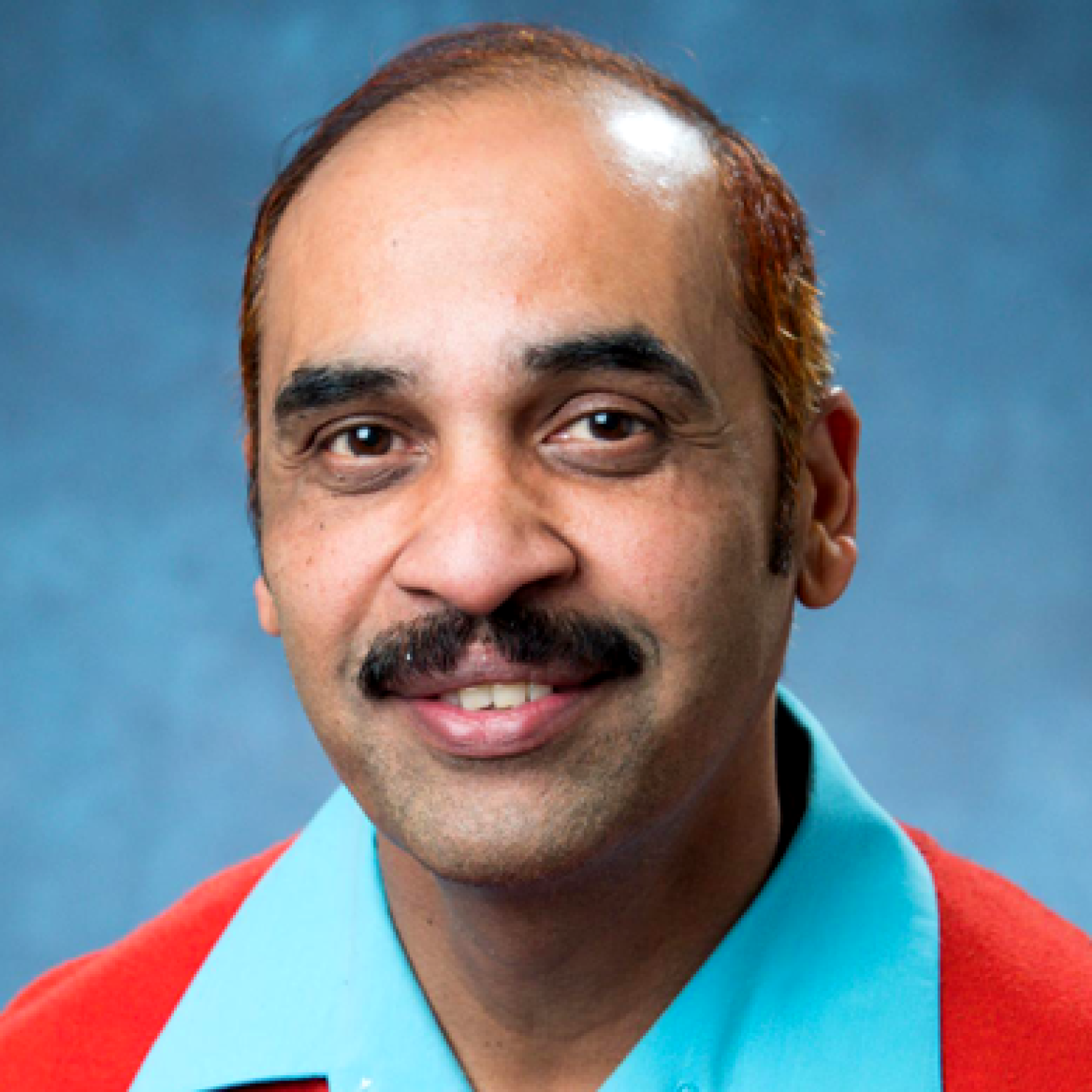
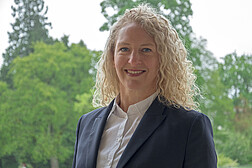
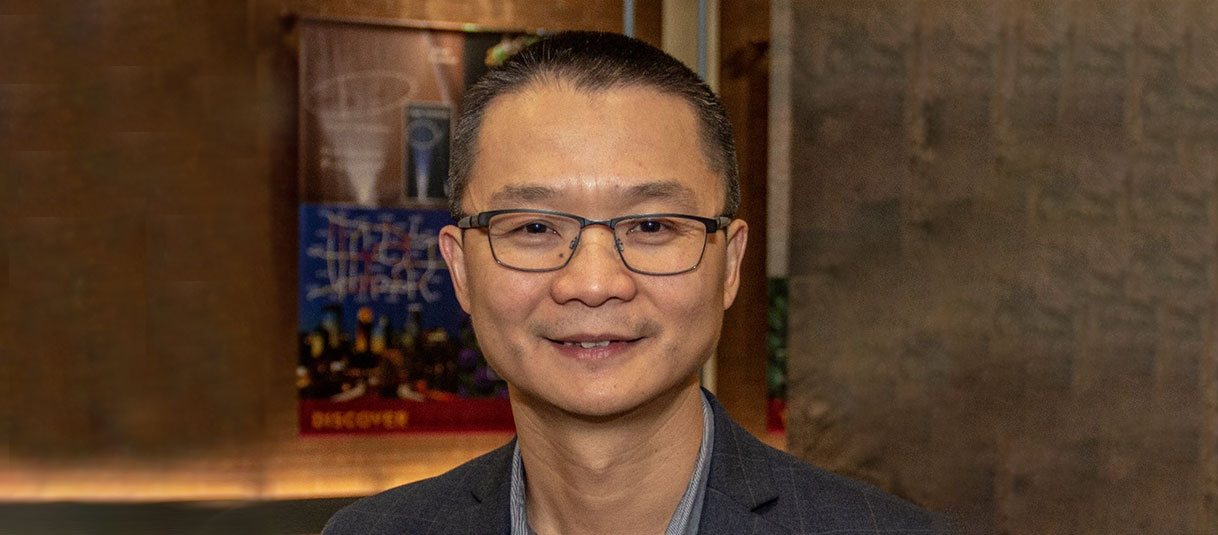
Rui Vinhas da Silva is a Full Professor at ISCTE-IUL and an Associate Professor at the University of Manchester Business School. With a career spanning over two decades, he has contributed extensively to research in national competitiveness, corporate reputation, and sustainable business practices through publications, books, and executive training programs. Education: PhD and Postdoctoral Fellow at the University of Manchester; MBA and Master of Economics from UK and Canada Research Focus: National competitiveness, sustainability in business, marketing strategy, and organizational behavior His recent articles explore topics like AI's role in society, caravan tourism regeneration, and sustainable business models. He has received teaching accolades at ISCTE and leads research initiatives in European networks like COST-CHERN. Silva's work bridges academic rigor with practical applications in consulting and executive education.
Sophia Natasha Wilson is a Research Fellow in the Department of Computer Science (DIKU) at the University of Copenhagen, specializing in machine learning applications across interdisciplinary domains. She is affiliated with the SCIENCE AI Centre and holds a cross-departmental position at the Niels Bohr Institute . Her research bridges theoretical machine learning with practical implementations in healthcare, quantum computing, and environmental sustainability. University of Copenhagen Department of Computer Science (DIKU) Niels Bohr Institute SCIENCE AI Centre Her research focuses include: Quantum-enhanced machine learning algorithms Explainable AI for healthcare applications Environmental sustainability in computing Emotion-aware language models Quantum computing hardware optimization Public health risk modeling Her recent publications demonstrate cross-disciplinary work in quantum machine learning (hybrid optical processors, qubit stabilization), health informatics (hypothyroidism analysis, nursing values evaluation), and ethical AI (sustainable AI, fairness in recommender systems). Technical work also appears in non-Euclidean generative models and real-time adaptive systems . Current projects include quantum dot array simulation (QDarts platform) and federated learning for personalized medicine . She contributes to the TreeSense center for remote sensing of global tree resources and works on climate-aware AI frameworks.
Christoph Dellago is a full Professor of Computational Physics at the Faculty of Physics of the University of Vienna, where he has been a faculty member since 2003. He currently serves as Director of the Erwin Schrödinger Institute for Mathematics and Physics, Head of the Computational and Soft Matter Physics Group, and Project lead of EuroCC Austria - National Competence Centre for Supercomputing. Previously, he served as Dean of the Faculty of Physics (2009-2012) and Coordinator of the Doctoral College Advanced Functional Materials (DCAFM). Full Professor, Faculty of Physics, University of Vienna (2003-present) Director, Erwin Schrödinger Institute for Mathematics and Physics (2017-present) Head, Computational Physics and Soft Matter Group (2024-present) Coordinator, Doctoral College Advanced Functional Materials (DCAFM) Austrian Representative, Council of CECAM Dellago received his PhD in Physics from the University of Vienna in 1996, followed by postdoctoral research at UC Berkeley as a Schrödinger Fellow of the Austrian Science Foundation. His research focuses on developing computational methods to study rare events in condensed matter systems, particularly transition path sampling methodology for simulating nucleation, chemical reactions, and biomolecular reorganizations. He has pioneered the application of machine learning to molecular structure recognition and potential energy surfaces. Recent work examines self-assembly of nanocrystals, biopolymer folding, aqueous interfaces, phase separation in alloys, thermo-polarization, cavitation, and freezing phenomena. Analysis of Dellago's recent publications (2023-2025) reveals a strong emphasis on machine learning applications in computational physics, particularly neural network potentials for simulating water interfaces, crystal defects, and phase transitions. His work bridges traditional statistical mechanics with modern computational techniques, creating powerful tools for studying complex dynamical processes that occur on timescales far beyond conventional molecular dynamics simulations. The publications demonstrate increasing integration of machine learning with rare event sampling methods, reflecting the cutting-edge direction of computational statistical mechanics. Förderpreis der Stiftung Futura zur Förderung junger Südtiroler im Ausland (1997) The Raymond and Beverly Sackler Prize in the Physical Sciences (2005) UNIVIE Teaching Award of the University of Vienna (2014) Dellago leads an active research group with multiple PhD students and postdocs, focusing on computational statistical mechanics. His group develops trajectory-based sampling methods and machine learning approaches for molecular simulation. He has secured significant funding through EuroCC Austria and various research platforms including the Research Platform Accelerating Photoreaction Discovery and the Research Platform Erwin Schrödinger International Institute for Mathematics and Physics. His research has been supported by numerous grants enabling advanced computational infrastructure for high-performance simulations. The Dellago Group operates within the Computational and Soft Matter Physics division at the University of Vienna, with strong connections to the Research Network Data Science. The group collaborates extensively with international research institutions and maintains close ties with the Erwin Schrödinger Institute, which Dellago directs. Their research environment combines theoretical physics, computational chemistry, and machine learning expertise to tackle fundamental questions in condensed matter physics and soft matter systems.
Pasquale De Sena is a Full Professor in the Department of Jurisprudence at the University of Palermo , specializing in international law, human rights, and European integration. His academic activity includes teaching courses on International Law and International Protection of Human Rights , with office hours available via Teams and in-person during exam sessions. Research Interests : International Law Norms Human Rights Enforcement European Constitutional Dynamics Migration and Maritime Law Modern Slavery and Dignity Technological Governance Publication Trends : His recent works analyze the interplay between international law and domestic systems, focusing on human dignity, pandemic governance, hate speech regulation, and European monetary policy. Articles explore both theoretical foundations and practical applications of international norms. Contact : pasquale.desena@unipa.it | Phone: +39 09123892009
Sally Pusede is an Associate Professor in the Department of Environmental Sciences at the University of Virginia's College of Arts & Sciences, where she directs atmospheric chemistry research and co-leads the Repair Lab. Her work bridges atmospheric science and environmental justice through measurements from ground, aircraft, and satellite platforms in urban and agricultural environments. Dr. Pusede earned her Ph.D. from the University of California Berkeley in 2014. Her educational background established the foundation for her interdisciplinary approach combining chemical measurements with community engagement. As an atmospheric chemist, Pusede investigates reactive nitrogen cycles, greenhouse gas emissions (particularly nitrous oxide), and neighborhood-level air pollution disparities. Her research employs spatial and temporal variability analysis to derive mechanistic insights into urban atmospheric processes, with emphasis on how pollution adversely affects human health and ecosystems. She is co-director of UVA's Repair Lab, which develops community-based solutions to environmental justice issues like coal dust pollution in Hampton Roads and industrial swine facility impacts in North Carolina. Analysis of her 15 most recent publications (2022-2025) reveals three dominant research thrusts: 1) Quantifying air pollution inequality using satellite remote sensing (especially nitrogen dioxide and ammonia), 2) Investigating reactive nitrogen chemistry in urban-agricultural interfaces, and 3) Developing community-driven repair frameworks for environmental justice. Her work consistently demonstrates how neighborhood-level pollution disparities contribute to health outcomes and ozone formation, particularly in communities of color. Dr. Pusede's scientific contributions have been recognized with prestigious awards including: Presidential Early Career Award for Scientists and Engineers (PECASE), Biden Administration, 2024 Future Horizons in Climate Science Turco Lectureship, American Geophysical Union, 2022 National Science Foundation (NSF) CAREER Award, 2021 NASA New Investigator Program Award, 2021 Environmental Sciences Organization Faculty Teaching Award, University of Virginia, 2016 She mentors graduate students through the Pusede Lab while securing major grants from NSF, NASA, and the White House Office of Science and Technology Policy. Her teaching portfolio includes EVSC 4380 (Air Pollution and Environmental Justice), EVSC 4490/7490 (Air Pollution), EVSC 5350 (Atmospheric Chemistry), and EVSC 3300 (Atmosphere and Weather). The Repair Lab operates as an interdisciplinary environmental justice hub where Pusede collaborates with community practitioners, embedding researchers in Virginia communities through its practitioner-in-residence program. This lab focuses on coal dust pollution in Hampton Roads and industrial swine facility impacts in Eastern North Carolina, using satellite data to document environmental injustices while co-developing solutions with affected residents.
Nicole L. Beebe is a Professor at the Alvarez College of Business, The University of Texas at San Antonio , specializing in cybersecurity, cyber analytics, and digital forensics. With over two decades of experience spanning academia, government, and industry, she has contributed extensively to research on insider threats, IoT security, and threat hunting. Ph.D. in Business Administration (Information Technology), UTSA MS in Criminal Justice, Georgia State University BS in Electrical Engineering, Michigan Technological University Her research explores cybersecurity challenges in emerging technologies, including quantum computing, IoT, and large language models. She has pioneered studies on cyberbullying dynamics, forensic automation, and AI-driven threat detection. Recent publications focus on adversarial image obfuscation , VR for security operations , IoT forensic methodologies , and deepfake detection frameworks , reflecting interdisciplinary work at the intersection of security, AI, and digital evidence. 2022 Best Paper Award, Journal of Network & Computer Applications Senior Member, IEEE and ACM Senior Fellow, Information Systems Security Association As an Associate Editor for Computers & Security , she shapes the field through peer review. Her $14M+ in funding from NSF, DHS, and DoD underscores her impact on advancing cybersecurity research and education.
Prof. Venkat N. Krovi serves as the Michelin Endowed Chair Professor of Vehicle Automation in the Departments of Automotive Engineering and Mechanical Engineering at Clemson University's College of Engineering, Computing and Applied Sciences (CECAS). He directs the Automation, Robotics and Mechatronics Laboratory (ARMLab) at the International Center for Automotive Research (CU-ICAR), focusing on smart embedded systems for autonomy in challenging environments. He earned his Ph.D. in Mechanical Engineering and Applied Mechanics from the University of Pennsylvania in 1998. His research leverages distributed autonomy and human-robot synergy to extend human capabilities, with applications spanning plant automation, consumer electronics, automobile, defense, and healthcare. The work emphasizes lifecycle treatment (design through verification) of robotic systems under uncertainty. Recent publications (2024-2025) demonstrate strong trends in digital twin frameworks for autonomous vehicle validation, sim2real transfer via reinforcement learning, and integration of large language models for editable simulations. Key themes include scalable cloud-based architectures, Koopman operator theory for robustness, and containerization for reproducible robotics development. His accolades include: National Science Foundation (NSF) CAREER Award Petro-Canada Young Innovator Award Multiple best paper awards at conferences and journals ASME Dedicated Service Award (2024) Prof. Krovi has advised doctoral students including Dr. Srivatsan Srinivasan (2024). His research receives substantial funding from NSF, DARPA, ARO, and industrial partners like Michelin. He leads the NSF I/UCRC RoSeHuB center and the AutoDRIVE ecosystem for autonomous driving education. As ARMLab director, he oversees projects including OpenCAV, the Robotics for AV Systems Bootcamp, and containerized terramechanics simulations. The lab specializes in mechatronic design, verification/validation frameworks, and human-autonomy coexistence studies for next-generation mobility solutions.
Shivakant Mishra is a Professor in the Department of Computer Science at the University of Colorado, Boulder, and currently on leave as a Program Director at the NSF's CSR (Computer Systems Research) program. He holds roles as Site Co-Director of the NSF IUCRC Pervasive Personalized Intelligence Center and co-founded the Colorado Research Center for Democracy and Technology. Affiliations: Department of Computer Science, College of Engineering and Applied Sciences Professional Roles: NSF Program Director, Center Leadership Education: Ph.D. in Computer Science (University of Arizona), M.S. (Southern Illinois University), B.Tech. (IIT Bombay). Research focuses on distributed systems, edge computing, socio-technical systems for environmental justice, CyberSafety, and technology's role in democracy. Key projects include the C70 community impact study and smart agriculture systems. His work integrates technology with societal challenges, such as mitigating highway construction impacts and combating cyberbullying. Teaching includes courses on operating systems, distributed systems, and special topics like democracy through technology. Advised Ph.D. students Fei Hu and Jinpeng Miao. Professional activities include organizing conferences (e.g., DSN 2017, CyberSafety workshops) and serving on NSF panels.
Martina Vandebroek is Full Professor of Statistics and Operations Research at KU Leuven, Faculty of Economics and Business, where she leads methodological work within the Operations Research and Statistics Research Group (ORSTAT). She also serves as senior academic staff on the Faculty Council and the Campus Councils for Leuven and Kortrijk, and is a member of the LStat General Assembly. Research Interests Discrete choice experiments (design & analysis) Optimal and sequential experimental design Multivariate statistics and modelling of preference heterogeneity Random regret minimisation and attribute non-attendance Applications in health economics, transport, marketing, and food science Her methodological innovations enable more efficient data collection and richer behavioural insights in stated-preference surveys, while her applied projects translate patient and consumer preferences into actionable evidence for policy makers and industry. Recent Publications Overview Between 2022 and 2024 Vandebroek (co-)authored 15 key articles. These contributions advance both the statistical machinery of choice modelling—such as mixed random regret models, design-efficient sample-size rules, and consideration-set heuristics—and substantive applications in oncology patient preferences, inflammatory bowel disease treatments, meat-substitute adoption, and food-quality valuation. The work repeatedly integrates sophisticated econometric techniques with real-world stakeholder data, reflecting an overarching commitment to methodological rigour and societal impact. Scientific Awards & Recognition No specific awards are listed in the provided material; however, her sustained publication record in top journals (Journal of Choice Modelling, Food Quality and Preference, Frontiers in Oncology, Stata Journal) attests to significant scholarly recognition. Advising & Grant Activities Promotor (PI) of FWO project “Discrete choice models including screening rules: modeling and design” (2017-2021) Promotor of KU Leuven project “Efficient Online Choice Experiments” (2017-2020) Co-promotor of IWT/FWO project “Empirical and methodological challenges in choice experiments” (2017-2023) Co-promotor of VLAIO project “Development, Validation, and Valorization of a Patient Preference Platform” (2023-2026) Teaching & Service Vandebroek teaches master-level courses “Applications of Statistics” (Dutch and English iterations) and contributes to the Leuven Statistics Research Centre (LStat) educational programme.
Prof. Dr. Caroline Ruiner is a Professor of Sociology at the University of Hohenheim since 2019. Her research focuses on the impact of digital transformation on work, sustainability transitions, AI ethics, and labor market organizations. Previously, she held positions at the University of Trier and Ruhr University Bochum, where she conducted groundbreaking work on freelance workers and cooperative labor structures. Her interdisciplinary research spans sociology, organizational studies, and digital ethics. Education: PhD in Sociology from the University of Augsburg Studies in Business Administration and Sociology at Goethe University Frankfurt Habilitation in Social Sciences at Ruhr University Bochum (2018) Research Interests: Workplace digitalization and its societal implications Designing ethical AI systems for fair labor practices Twin transformation (digitalization + sustainability) New labor market structures like cooperatives and platform economies Key Projects: AIBBA (AI for Business/ Business for AI) Andromeda (Autonomy in high-reliability organizations) KARAT (AI and driving professions) NewWork4KeyWorker (systemic workforce design) Awards: Recipient of the Teaching Prize from the German Sociological Association for her textbook Arbeits- und Industriesoziologie (UTB 2016). Consultation: Her work bridges academic research and practical applications, addressing labor law challenges, digital ethics frameworks, and sustainable work design. She collaborates internationally with institutions in Europe, Japan, and the U.S.
Fulya Acikgoz is an Assistant Professor of Marketing at the University of Sussex Business School, UK. She holds a PhD from the University of Bristol. Her research focuses on technology marketing, innovation management, and the application of AI and blockchain in business contexts. Her work has been published in high-impact journals such as Technovation , R&D Management , and Journal of Hospitality and Tourism Research . She co-authored the book Blockchain for Tourism and Hospitality Industries . Her research interests include AI-driven service innovation, blockchain adoption in hospitality, and crisis-driven business model innovation. She teaches courses on Innovative Technologies in Contemporary Marketing and New Product Development Strategy . Notable contributions include frameworks for generative AI in tourism and studies on obsolescence risk in consumer electronics. Her recent work explores trust in AI technologies and the role of dynamic capabilities in R&D teams.
Marco Nie is a Professor and Chair of the Department of Civil and Environmental Engineering at Northwestern University, where he has been a faculty member since 2006. His research focuses on Transportation Systems Analysis, emphasizing interdisciplinary approaches that integrate optimization, network science, traffic flow theory, economics, and statistics to address complex interactions between human activities, infrastructure, and urban networks. He teaches three courses: an undergraduate/graduate introduction to transportation engineering, and two graduate courses on analytical and computational tools for surface transportation systems design. Education: Marco Nie earned a BS in Structural Engineering from Tsinghua University (Beijing), followed by graduate studies in Transportation at the National University of Singapore (NUS), and a PhD in Transportation from the University of California, Davis. Research interests include improving transportation efficiency, sustainability, and equity through policy and technology. Recent work explores autonomous vehicles, modular transit systems, congestion pricing, and data-driven solutions for EV charging and ride-hail platforms. He has expressed challenges in securing research funding, noting its critical role despite inherent flaws in evaluating research impact through monetary metrics. Scientific Awards: He received the 2021 Transportation Science Meritorious Service Awards . Marco also serves on editorial boards, including Service Science (2023), and actively publishes on topics like urban mobility, freight logistics, and policy analysis. Advising & Grants: While no specific students or grants are listed, he highlights the importance of funding mechanisms for research. His work often involves collaborations with sponsors and stakeholders to address real-world transportation challenges. Labs/Teams: Affiliated with the Center for Science and Protection of Engineered Environments and engages in interdisciplinary research groups focusing on sustainable and equitable urban systems.
Dr. Sena Ozdemir is a Senior Lecturer in Marketing and PhD Director at the Department of Marketing, Lancaster University Management School. Her research focuses on strategic alliances in new product development (NPD), digital innovation leveraging Big Data Analytics, and sustainable/social innovation across B2B, B2C, and C2C contexts. She is affiliated with the Centre for Marketing Analytics and Forecasting. **Education & Roles**: Serves as editorial board member of Journal of Business-to-Business Marketing , and has reviewed for journals like Journal of Product Innovation Management and Technovation . Currently co-editing a special issue on 'Social Innovation through Strategic Alliances in B2B Relationships'. **Research Interests**: Cross-disciplinary studies in marketing, strategy, and operations. Key areas include global NPD practices, digital technologies in innovation, and stakeholder-driven collaborative innovation. Her work bridges academic scholarship and industry practices for marketing managers and policymakers. **PhD Supervision**: Supervised over 5 completed PhDs in NPD capabilities, brand trust, and B2B network dynamics. Current focus includes strategic alliances and Big Data Analytics in Oil and Gas innovation. Supervision areas span manufacturing and retail/service sectors. **Awards & Grants**: While no specific awards listed, her extensive editorial and peer-review contributions highlight scholarly recognition. **Labs/Teams**: Active in the Centre for Marketing Analytics and Forecasting, contributing to data-driven marketing research.
Devrim Murat Yazan is an Associate Professor at the University of Twente, affiliated with the Department of Industrial Engineering & Business Information Systems and the Digital Society Institute. He holds a PhD from the Interpolytechnic School of Doctorate (Politecnico di Bari, Politecnico di Milano, and Politecnico di Torino, 2011, Italy). His research focuses on sustainable supply chain management, circular economic business models, industrial symbiosis networks, and decision-making frameworks for transitioning to a circular economy. Methodologies include input-output modeling, game theory, and agent-based simulation. He leads the 'Sustainable Circular Economy' research group, supported by a Horizon 2020 grant (€725k contribution from UT). The group explores decision-making in industrial symbiosis, efficient network operations, and cost/benefit-sharing mechanisms. Recent work includes developing matchmaking platforms for circular construction ecosystems and analyzing greenwashing impacts on brand perception. Awards include the CIOB Award (2024). His teaching includes courses like 'Sustainable Business Development' and 'Sustainable Supply Chains for Consumer Products'. His work contributes to UN Sustainable Development Goals related to responsible consumption and production (SDG 12) and climate action (SDG 13). Grants and collaborations involve EU Horizon 2020 and diverse institutions. Research outputs span 62 peer-reviewed articles, with a focus on circular economy implementation, industrial symbiosis dynamics, and decision-support tools.
Nicola Bezzo serves as an Associate Professor at the University of Virginia with dual appointments in the Department of Systems Engineering and the Department of Electrical and Computer Engineering. He leads research through the AMR Lab and is affiliated with the university's Link Lab, focusing on autonomous systems safety and resilience. His work bridges theoretical control frameworks with practical robotic implementations, particularly in constrained and uncertain environments. Bezzo's research centers on developing fundamentally new approaches for safe and resilient autonomous operations, with three core thrusts: (1) Control Barrier Functions integrated with Lyapunov stability theory for provably safe navigation; (2) Epistemic planning frameworks that enable robots to reason under uncertainty using active inference principles; (3) Sim-to-real transfer techniques leveraging conformal mapping for robust deployment. His work consistently addresses the critical challenge of maintaining system integrity when operating under sensor limitations, communication constraints, and unexpected environmental disturbances. Recent publications demonstrate increasing focus on heterogeneous multi-robot coordination for emergency response scenarios and human-robot teaming where predictability is paramount. Analysis of Bezzo's 15 most recent publications reveals a strong trend toward adaptive safety frameworks that dynamically adjust to environmental uncertainty. Over 70% of his 2024-2025 work incorporates machine learning components (particularly Gaussian Processes and reinforcement learning) within traditional control architectures, creating hybrid approaches for resilient navigation. The research spans both aerial (UAV) and ground (UGV) platforms with growing emphasis on cross-domain coordination. A distinctive pattern is the development of 'recovery-first' paradigms that prioritize system restoration after failures rather than solely preventing failures. Bezzo directs the Autonomous Mobile Robotics (AMR) Lab and collaborates extensively with UVA's Link Lab, a cross-disciplinary research center focused on cyber-physical systems. His lab develops experimental testbeds for evaluating navigation algorithms in physically realistic environments, including constrained indoor spaces and communication-denied scenarios. Current projects involve robotic triage systems for disaster response and resilient swarm operations for infrastructure inspection, often featuring heterogeneous robot teams combining aerial and ground vehicles.