Elizabeth M. Brannon is the Edmund J. and Louise W. Kahn Term Chair in the Natural Sciences and Director of Undergraduate Studies in Psychology at the University of Pennsylvania. Her research focuses on the evolution and development of numerical cognition, exploring how humans and nonhuman animals process quantitative information through behavioral, neuroimaging, and electrophysiological methods. She investigates how innate number sense influences mathematical learning and applies this to educational neuroscience. Education: BA in Biological Anthropology (University of Pennsylvania), MA and PhD in Psychology (Columbia University). She teaches courses in Developmental Psychology (PSYC 181) and advanced seminars (PSYC 480). Her work at the Developing Minds Lab integrates behavioral studies with neurobiological tools to trace cognitive and neural changes in mathematical thinking across ages. Current projects explore interventions to enhance math skills using foundational number sense training. Notable advisees include Chuyan Qu, who secured a Western Postdoctoral Fellowship. Recent accolades include NIH-funded research and student recognitions such as Phi Beta Kappa inductions.
Jeff Brazell is a Lecturer in the Department of Marketing at the David Eccles School of Business, University of Utah. He also serves as Director of the Center for Strategic Analytics, leveraging his expertise in marketing research and predictive analytics to bridge academic theory with industry practice. Doctorate: PhD in Marketing Science, University of Sydney (2000) Teaching Experience: University of Utah (1993-1994, 2019–present), University of Sydney (1994–1999) His research focuses on decision-based analytics for marketing challenges, including conjoint analysis, choice modeling, and economic valuation of product features. He has co-authored a textbook and published extensively in top journals like the Journal of Marketing Research and the Journal of Law and Economics. The 15 most recent publications highlight his work in choice modeling, Bayesian statistics, market share analysis, and predictive analytics. These articles span applications in consumer behavior, economic feature valuation, and hierarchical effects in advertising, reflecting his interdisciplinary approach to solving complex market problems. CEO of the Year, Utah (2016) Best Paper, AMA Advanced Research Techniques Forum (2009) Teaching Recognition Award, University of Sydney (1996) Outstanding Marketing Scholar, University of Utah (1993) Multiple Teaching Excellence Awards (1994) Honor Society Memberships: Phi Kappa Phi, Beta Gamma Sigma, Phi Beta Kappa As founder of The Modellers, sold to Omnicom (2010), he has translated academic research into commercial success for Fortune 500 clients. His ongoing work emphasizes improving executive decision-making through data-driven insights and advanced market intelligence tools.
University of North Carolina at Chapel HillUnited States
Kimberly Powers, PhD, is an Associate Professor in the Department of Epidemiology at the University of North Carolina at Chapel Hill's Gillings School of Global Public Health. Her research focuses on infectious disease transmission, particularly HIV and SARS-CoV-2, using epidemiological and mathematical modeling to inform public health strategies. She has contributed to understanding the HIV care continuum, optimizing HIV prevention interventions, and modeling SARS-CoV-2 transmission dynamics. Dr. Powers has received multiple awards, including the Teaching Excellence and Innovation Award (2020) and the Postdoctoral Award for Research Excellence (2011). Education background includes a PhD in Epidemiology from UNC (2010), a Visiting Scholar position at Imperial College London (2010), and a BA in Mathematics from Hamilton College (1998). She teaches courses such as EPID 755: Introduction to Infectious Disease Epidemiology and EPID 894: Infectious Disease Seminar . Her research interests span HIV surveillance, acute HIV infection dynamics, and the application of mathematical models to public health challenges. Notable work includes frameworks for the HIV care continuum, analyses of SARS-CoV-2 household transmission, and evaluations of HIV prevention strategies in sub-Saharan Africa. Awards and recognitions include membership in the Delta Omega Honorary Society and Phi Beta Kappa. Her work has been featured in high-impact journals like The Lancet and PLoS ONE, focusing on topics ranging from opioid overdose risk to maternal HIV prevention during pregnancy.
Dolly Chugh is the Jacob B. Melnick Term Professor and Faculty Director of the Leadership Accelerator at the New York University Stern School of Business. She joined NYU Stern in 2006 and has made significant contributions to the fields of behavioral ethics, organizational behavior, and social psychology. Her research focuses on bounded ethicality, implicit bias, and strategies for fostering inclusive and ethical organizations. Chugh earned her Ph.D. in Organizational Behavior from Harvard University, an M.A. in Social Psychology and an MBA from Harvard Business School, and a B.A. in Psychology and Economics from Cornell University. Prior to her academic career, she worked in finance at firms including Morgan Stanley, Merrill Lynch, and Time Inc. Her research interests include bounded ethicality, implicit bias, diversity and inclusion, negotiation, leadership, and ethical decision-making. She explores how well-intentioned individuals and organizations can still perpetuate bias and injustice due to cognitive limitations and social dynamics. Her work emphasizes the importance of humility, learning, and systemic interventions to promote equity. The 15 most recent publications reflect a strong focus on gender and racial bias, organizational ethics, diversity thresholds, and psychological tools for social change. Her work spans experimental studies, theoretical models, and public scholarship, often bridging academic research with real-world applications in media, policy, and organizational practice. SPSP Fellow, Society of Personality and Social Psychology (2018) Academy of Management Journal Best Paper Award (2020) Distinguished Teaching Award, New York University (2020) Dr. Martin Luther King Jr. Faculty Award, New York University (2013) Top 100 Most Influential People in Business Ethics, Ethisphere Magazine (2014) Siena Medal, Theta Phi Alpha (2021) Top 25 TED Talks of 2018 Chugh has advised numerous students and contributed to academic and public discourse through her books, media appearances, and speaking engagements. Her books The Person You Mean to Be (2018) and A More Just Future (2022) have been widely recognized. She has received multiple teaching awards and research grants, including from the Russell Sage Foundation. Her work has been featured in major media outlets such as the New York Times , Wall Street Journal , NPR, TODAY Show, and TED. She leads the Leadership Accelerator at Stern and is actively involved in public scholarship, translating behavioral science for broader audiences. Her TED Talk has nearly 5 million views, and she contributes regularly to public conversations on ethics, identity, and inclusion.
Stephanie B. Kors serves as Assistant Professor of Psychology at Loyola University Maryland and lecturer at Harvard Medical School, Cambridge Health Alliance, with research spanning developmental psychopathology, intergenerational trauma transmission, and clinical training pedagogy. Her work critically examines substance use disorders (particularly opioid addiction in pregnancy), psychotherapy outcomes, and systemic barriers to trauma-informed mental healthcare for underserved populations. Dr. Kors' academic credentials include: B.A. in Psychology (cum laude, Phi Beta Kappa) from University of Georgia M.A. and Ph.D. in Clinical Psychology from University of Tennessee, Knoxville Pre-doctoral Internship and Post-doctoral Fellowship at Harvard Medical School, Cambridge Health Alliance Her research program integrates three interconnected domains: (1) Etiology of opioid misuse in pregnancy through childhood trauma and attachment lens; (2) Structural barriers affecting treatment-resistant underserved populations; (3) Curriculum innovation for undergraduate and graduate clinical training. Current NIH-funded projects investigate how early drug use experiences influence addiction trajectories and parent-child relationships. Analysis of her 11 publications (2017-2021) reveals consistent focus on borderline personality features, intergenerational child maltreatment cycles, and perinatal substance use disorders. Methodologically, she employs longitudinal cohort studies, mediation analyses, and meta-analytic techniques across clinical psychology and public health journals. Research support includes principal investigator roles for two Harvard Medical School grants on psychotherapy training and external funding from the American Psychological Foundation (APF) and International Psychoanalytical Association (IPA) for clinical education initiatives. Dr. Kors teaches PY 600 (Assessment and Appraisal), PY 601 (Cognitive Assessment), PY 845 (Psychodynamic Psychotherapy), and PY 920 (Individual Therapy Supervision) while maintaining a part-time private practice serving children, adolescents, and adults through individual, family, and couples therapy. She collaborates extensively with Dr. Judy Macfie's research team at Loyola and Harvard, with co-authored works appearing in Personality Disorders: Theory, Research, and Treatment and Journal of Affective Disorders, focusing on trauma transmission mechanisms and treatment adaptations.
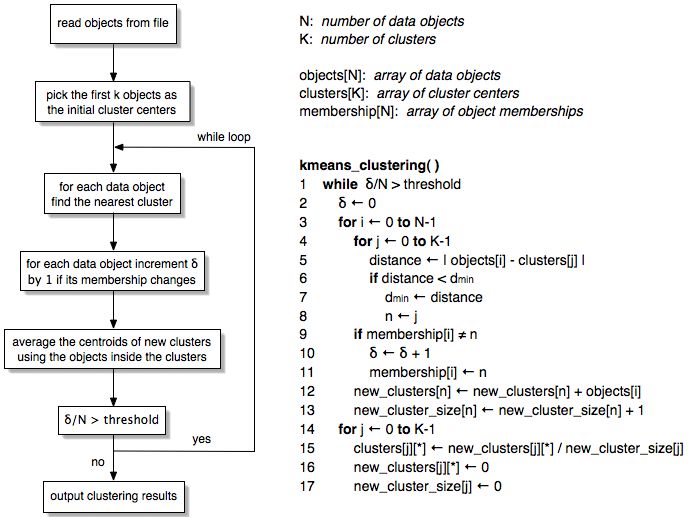
Wei-keng Liao is a Research Professor in the Department of Electrical Engineering and Computer Science at Northwestern University's McCormick School of Engineering. His research spans high-performance computing with a focus on parallel and distributed systems. Dr. Liao's research interests include parallel and distributed file I/O and storage system design, data mining algorithm design and their parallelization, data management for large-scale scientific applications, and computational model design for large-scale applications on parallel and distributed environments. He is a key contributor to the Parallel netCDF project, which provides parallel I/O capabilities for scientific applications. His recent work shows strong trends in high-performance computing infrastructure, particularly in optimizing I/O systems for scientific applications, parallel data clustering algorithms, and machine learning acceleration in distributed environments. His publications span computational science, parallel computing, and data-intensive applications across various scientific domains including materials science, astrophysics, and healthcare. Best Paper Award at IEEE International Conference on Cluster Computing (2016) for Parallel DTFE Surface Density Field Reconstruction Dr. Liao has supervised numerous research projects funded by DOE, NSF, NASA, and Argonne National Laboratory, with recent work focusing on data libraries for exascale science, machine learning-driven resilience for extreme-scale systems, and scalable data clustering for scientific computing. He leads research on the Parallel K-means Data Clustering software package and is a principal developer of Parallel netCDF. His work connects multiple research groups through the Center for Ultra-scale Computing and Information Security (CUCIS) at Northwestern University, where he collaborates with scientists across disciplines to develop scalable computing solutions for complex scientific problems.
Dr. Ahmed El-Sayed is an Associate Professor in the Department of Electrical and Computer Engineering at the School of Engineering, University of Bridgeport. He holds a Ph.D. in Computer Science and Engineering (2016) and M.Sc. degrees in Computer Engineering (2011) and Engineering Mathematics (2006). Ph.D. in Computer Science and Engineering, University of Bridgeport (2016) M.Sc. in Computer Engineering, University of Bridgeport (2011) M.Sc. in Engineering Mathematics, Alexandria University (2006) B.Sc. in Electrical Engineering, Alexandria University (2003) His academic work focuses on robotics , artificial intelligence , and computer vision , with specific emphasis on fuzzy systems , machine learning , and soft computing . His research spans theoretical developments and practical implementations in autonomous systems , medical imaging , and industrial automation . The 15 most recent publications highlight his contributions to generative models , medical diagnostics , disassembly sequencing , and high-dimensional feature analysis . These works intersect disciplines such as robotics , machine learning , and sustainable manufacturing . Professional Memberships: IEEE ASEE Phi Kappa Phi Upsilon Pi Epsilon Egyptian Engineering Syndicate (lifetime member) He teaches courses including Embedded Systems Design , Computer Vision , and Introduction to Autonomous Vehicles .
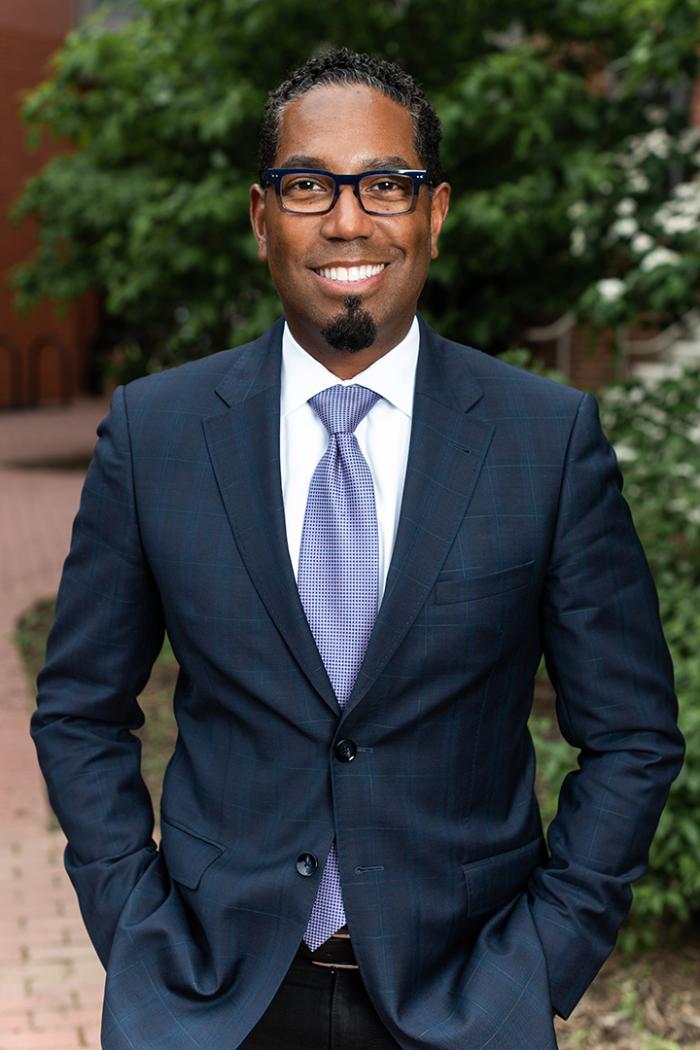
Christopher A. Bracey is a Professor of Law at The George Washington University Law School, where he has been teaching since 2008. An internationally recognized expert in U.S. race relations, individual rights, and criminal procedure, Professor Bracey contributes significantly to legal scholarship and public discourse on constitutional matters. Professor Bracey's research interests focus on: The legal history of U.S. race relations Constitutional law and interpretation Criminal procedure and civil liberties Civil rights and racial justice Equal protection jurisprudence His scholarly work examines the intersection of race, law, and American society, with particular attention to dignity, material equality, and the historical development of racial discourse in constitutional interpretation. Professor Bracey's research reveals how legal frameworks have shaped and been shaped by racial dynamics throughout American history. Professor Bracey's publications demonstrate consistent engagement with critical questions of race jurisprudence, moving from historical examinations of figures like Louis Brandeis to contemporary analyses of race discourse in American culture. His work shows a progression from historical legal analysis to more theoretical explorations of dignity and materialism in race jurisprudence, with recurring themes of antisubordination and constitutional interpretation. Professor Bracey has received significant media attention for his expertise, with interviews and features in major publications including The New York Times, Washington Post, Chicago Tribune, and appearances on ABC, CBS, NBC, MSNBC, Fox News, CNN, BBC, and NPR. His notable works include: "Saviors or Sellouts: The Promise and Peril of Black Conservatism, from Booker T. Washington to Condoleezza Rice" (Beacon Press 2008) Co-author of "The Dred Scott Case: Historical and Contemporary Perspectives" (Ohio University Press Forthcoming 2009) Professor Bracey received his undergraduate degree magna cum laude and Phi Beta Kappa from the University of North Carolina, and his law degree from Harvard Law School, where he served in editorial positions on multiple law reviews. He clerked for Judge Royce C. Lamberth and practiced at Jenner & Block before teaching positions at Northwestern University School of Law and Washington University School of Law.
Casey Lew-Williams is a Professor and Department Chair at Princeton University, where he leads the Princeton Baby Lab. His research focuses on how infants learn from dynamic communicative environments, integrating experimental, descriptive, computational, and social neuroscience approaches. He collaborates with institutions like Concordia University to study bilingual language acquisition and has developed tools like iCatcher+ for automated gaze analysis. His work spans typical development, adversity, and bilingual contexts. Research Interests: Language acquisition, bilingualism, infant cognition, caregiver-child interactions, neural synchrony, and computational modeling of learning processes. Recent Article Trends: His publications address sociodemographic reporting standards, emotion dynamics, caregiver speech variability, and open science methodologies in developmental research. Awards: Phi Beta Kappa Award President’s Award for Distinguished Teaching Excellence in Mentoring Graduate Students Advisees: Kennedy Casey Brooke Ryan Bianca Santi His lab emphasizes translating theoretical insights into community-focused applications to support child development.
Susana Béjar is an Associate Professor in the Department of Linguistics at the University of Toronto, Faculty of Arts and Science. Her research focuses on syntax, morphology, and linguistic theory, particularly exploring topics like DP recursion, phi-features, copular clauses, and language acquisition. She holds a PhD, MA, and BA from the University of Toronto. Her work examines syntactic structures, formal feature theory, and the acquisition of complex NPs in child language. Béjar has collaborated on numerous projects, including studies on Inuttitut corpus development and split ergativity in Kurdish varieties. She actively participates in research networks and has presented at conferences such as NWAV and LSA. Research Interests: Syntax, Morphology, Linguistic Theory, Language Acquisition, Phi-Features, Copular Clauses, DP Recursion. Recent Work Trends: Her publications emphasize syntactic recursion, feature-driven operations, and cross-linguistic agreement patterns. Notable contributions include analyses of copular clauses and the role of phi-features in syntactic dependencies. Grants: Over 30 grants secured from SSHRC and other agencies, including projects on case agreement in Laki, possessive extraction in English, and corpus development for Inuttitut. Labs/Teams: Collaborates with the Department of Linguistics research groups at U of T and participates in international research networks on syntax and language acquisition.
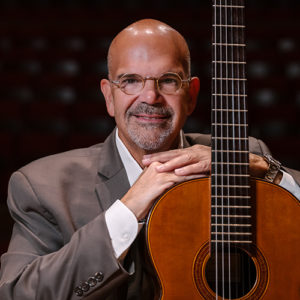
Nicholas Goluses is a Professor of Guitar at the Eastman School of Music, University of Rochester, where he received the Eisenhart Award for Excellence in Teaching. He holds a Doctor of Musical Arts from Manhattan School of Music,曾获Pablo Casals Award and Faculty Award of Distinguished Merit there. His career spans global performances with orchestras such as the Rochester Philharmonic, New Jersey Symphony, and Los Angeles Philharmonic, alongside duo collaborations with flutist Bonita Boyd and the Ying Quartet. Recognized for his virtuosic interpretations of classical and contemporary works, he has premiered over 100 compositions and recorded albums for Linn, Naxos, and Albany Records. Goluses actively engages in masterclasses worldwide and has mentored students who have won major competitions like Grammy and Fulbright grants. His research focuses on expanding the guitar’s repertoire through new commissions and historical transcriptions, blending technical mastery with expressive interpretation. Notable recordings include From Afar (2019), featuring works by Britten and Ponce, and the 2018 Linn Records release of Samuel Adler’s guitar concerto. Upcoming projects include the album Across the Horizon (2025) with the Eastman Wind Ensemble. Education: Doctor of Musical Arts (Manhattan School of Music) Awards: Fulbright International Specialist (2019–2024), NARAS Membership, Musician of the Year (Mu Phi Epsilon) Collaborations: Regular partnerships with the American String Quartet, Juliana Athayde, and Eastman Virtuosi As an educator, Goluses has shaped generations of guitarists holding professorships globally, emphasizing both traditional technique and innovative performance practices.
Dr. Randall Schaetzl serves as a University Distinguished Professor in the Department of Geography, Environment, and Spatial Sciences at Michigan State University. He holds joint appointments in the Department of Earth and Environmental Science at MSU and with the Wisconsin Geological and Natural History Survey. His career has focused on soils, geomorphology, and Quaternary processes , particularly in the Great Lakes region. Michigan State University Department of Earth and Environmental Science (MSU) Wisconsin Geological and Natural History Survey Dr. Schaetzl's research spans four decades and integrates pedogenesis, glacial geology, and eolian sediment dynamics . He emphasizes fieldwork and GIS applications, producing innovative spatial analyses of loess deposits, glacial retreat patterns, and soil-landform relationships. His work on podzolization and lessivage has redefined understanding of clay translocation processes. Analysis of his 15 most recent publications reveals consistent focus on loess deposition mechanisms , glacial lake dynamics , and climate-soil interactions . Key trends include: Integration of luminescence dating with geomorphological analysis Quantitative GIS-based mapping of surficial deposits Interdisciplinary studies linking soils with archaeological features Focus on Holocene and Late Pleistocene landscapes Collaborative research across North America and Europe Scientific recognition includes Fellowships in both the Geological Society of America and Soil Science Society of America, as well as membership in Phi Beta Kappa and Sigma Xi. He has mentored numerous graduate students and directed funded research projects examining soil dynamics in glaciated landscapes. His teaching portfolio includes advanced courses like Seminar in Physical Geography (GEO 871) and Soil Geomorphology Field Study (GEO 408) , the latter involving intensive field work across Michigan's diverse glacial terrains. The Quaternary Landscapes Research Group at MSU benefits from his leadership and methodological expertise.
Keith Allen is a Professor and Head of Department in the Department of Philosophy at the University of York, a position he assumed in 2024 after serving as Senior Lecturer and Lecturer since joining the university in 2007. He holds significant administrative roles including Equality Champion, Chair of the Athena Swan committee, and University Research Champion for Culture and Communication. Education: University of Cambridge University College London Allen's research centers on the philosophy of colour, where he defends a naïve realist (primitivist) theory asserting colours as mind-independent properties distinct from scientific descriptions, as detailed in his 2016 Oxford University Press monograph A Naïve Realist Theory of Colour . His work extends to broader philosophy of perception, early modern philosophy (particularly Locke and theories of ideas), and phenomenology (including Merleau-Ponty). He actively bridges historical and contemporary perspectives, emphasizing how perceptual experience connects to scientific understanding. Analysis of his 15 most recent publications (2019-2025) reveals a dominant focus on colour and vision within philosophy of perception, increasingly incorporating experimental methods (e.g., perceptual averaging studies, folk belief surveys). A strong secondary thread examines historical contexts, especially early modern theories of ideas, while recent interdisciplinary work explores sociocultural dimensions of perception. The research consistently engages with naïve realism and its relationship to science. Scientific Awards: None documented in available sources. Allen mentors PhD students in philosophy of mind, perception, and history of philosophy, welcoming new candidates. His research is supported by multiple active grants including the White Rose Centre for the History of Philosophy (CHi-Phi) and projects like Art and the Limits of Perception and Purpose and Procedure in the Philosophy of Perception , reflecting sustained external funding for collaborative work. He co-directs CHi-Phi (with Robert Stern) and participates in SPIN (Sense Perception in the North), a cross-institutional network connecting philosophers of perception at York, Leeds, and Durham. His current work explores transcendental naïve realism and its implications for science.
Erin Thompson serves as a Professor at John Jay College of Criminal Justice, part of the City University of New York (CUNY) system, and is recognized as America's only professor specializing in art crime. Her interdisciplinary work bridges art history, legal studies, and criminology with a focus on illicit cultural transactions. Her educational background features: Juris Doctor (J.D.) from Columbia Law School (2010) Doctor of Philosophy (Ph.D.) in Art History from Columbia University (2010) Certificate in Global Business Law through a joint program with Columbia Law School, Sciences Po, and Sorbonne University Bachelor of Arts (B.A.) in Art History and Philosophy from Barnard College (2002), magna cum laude and Phi Beta Kappa Professor Thompson's research examines critical intersections between art and criminal activity, including art theft networks, monument controversies, wartime cultural destruction, and ethical dilemmas in digital heritage reproduction. Her investigations extend to art created in constrained environments like Guantánamo Bay detention facilities. She actively contributes to public discourse through outlets such as Art in America , Hyperallergic , Smithsonian Magazine , and the New York Times , translating academic research for broader audiences. Her scholarly output includes the award-recognized book Possession: The Curious History of Private Collecting from Antiquity to the Present (Yale University Press, 2016), named a Best Book of 2016 by NPR, and Smashing Statues: The Rise and Fall of America’s Public Monuments (W.W. Norton, 2022), which analyzes America's contentious monument history through historical, legal, and social lenses. No scientific awards or honors were documented in the source material. The available information does not specify student advising activities, research grants, laboratory facilities, or collaborative research teams.
Brian Berkey is an Associate Professor in the Legal Studies & Business Ethics Department at the Wharton School , University of Pennsylvania. He is also affiliated with the Philosophy Department and the Institute for Law and Philosophy at Penn Law School, as well as a faculty affiliate at Perry World House . Previously, he held visiting positions at Georgetown University and Harvard University. Education: Ph.D., University of California-Berkeley M.A., New York University (Humanities and Social Thought) B.A., New York University (Philosophy and Politics, summa cum laude, Phi Beta Kappa) His research spans moral and political philosophy , focusing on business ethics, climate change ethics, exploitation, effective altruism, and methodological issues in ethics. Recent projects include analyses of autonomous vehicle ethics, corporate obligations of justice, and the moral distinctiveness of terrorism. His publications appear in leading journals like Philosophy & Public Affairs , Ethics , and Business Ethics Quarterly , with recurring themes in business ethics, environmental ethics, and moral demandingness. Scientific Awards : Berggruen Fellowship, Harvard University Wolpow Family Endowed Faculty Scholar Award Wharton Teaching Excellence Award Penn Integrating Sustainability Program He teaches courses such as Ethics & Social Responsibility (LGST1000, LGST1008, LGST2200), Ethics in Business & Economics (LGST9200), and Seminar in Law & Society (LGST2990). Media outlets like Reuters , Business Insider , and Knowledge@Wharton frequently feature his insights on ethics, climate change, and corporate responsibility.






.jpg)