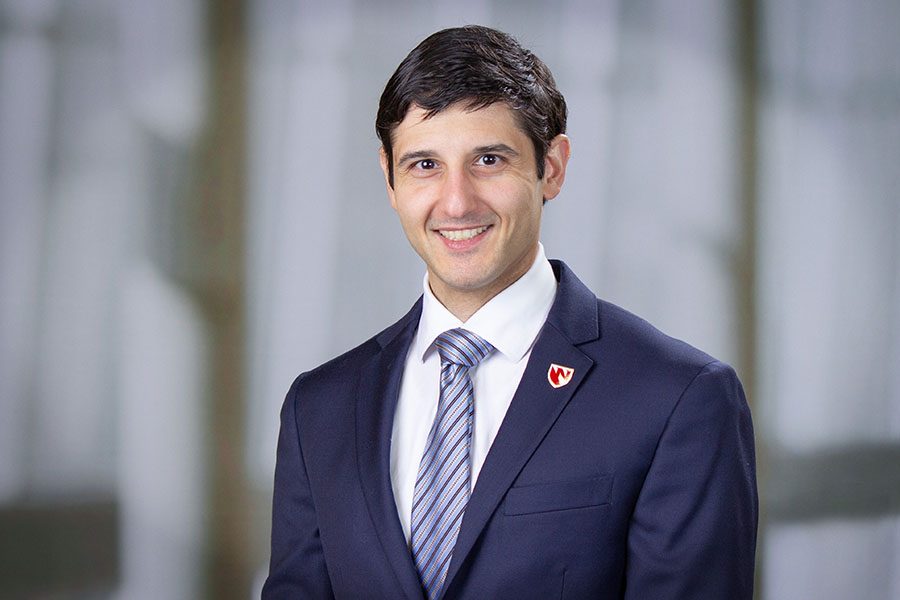
Rudra Channappanavar, DVM, PhD is an Associate Professor in Viral Immunology and Veterinary Pathology at the College of Veterinary Medicine, Oklahoma State University. He also serves as faculty for the Oklahoma Center for Respiratory and Infectious Diseases (OCRID). His research focuses on coronavirus-host interactions, mechanisms of protective and pathogenic immunity, and development of antiviral therapeutics. Dr. Channappanavar earned his DVM from Veterinary College, KVAFSU, India, his MVSc in Veterinary Pathology from Indian Veterinary Research Institute, and his PhD in Biology with a focus on Immunology and Infectious Diseases from Oakland University. He completed postdoctoral training at the University of Iowa in Coronavirus Immunobiology and Virology. His research program has three primary focuses: (1) Understanding coronavirus-host interactions and mechanisms of protective and pathogenic immunity, using in vitro and in vivo approaches including knockout and transgenic mouse models; (2) Improving immune responses to human coronavirus infections and vaccinations in the elderly, investigating the role of interferons and monocytes-macrophages in age-related susceptibility; and (3) Identifying and evaluating antiviral and anti-inflammatory agents to reduce coronavirus disease severity, with work on compounds like Camostat Mesylate and amniotic fluid-derived extracellular vesicles. Analysis of his recent publications (2021-2025) reveals a strong focus on SARS-CoV-2 pathogenesis, particularly investigating TLR-mediated immune responses, macrodomain functions in viral replication, and therapeutic approaches including nanoliposome drug delivery systems. His work spans basic molecular virology to translational therapeutic development, with a consistent emphasis on understanding dysregulated immunity in severe coronavirus disease. Dr. Channappanavar has secured significant funding for his research, including multiple NIH grants such as 'Role of ERK1/2 signaling in SARS-CoV-2-induced dysregulated immunity and lung pathology' (2024-2029) and 'Myeloid cell TRAF6 signaling in SARS-CoV-2-induced dysregulated lung immunity' (2024-2026). He also contributes to the Oklahoma Center for Respiratory and Infectious Diseases (OCRID), a NIH-funded Center of Biomedical Research Excellence (CoBRE). As an educator, he teaches PhD Research and Dissertation courses and Undergraduate Research Problems, mentoring the next generation of veterinary and biomedical researchers. His laboratory serves as an important training ground for students interested in viral immunology and respiratory infectious diseases.