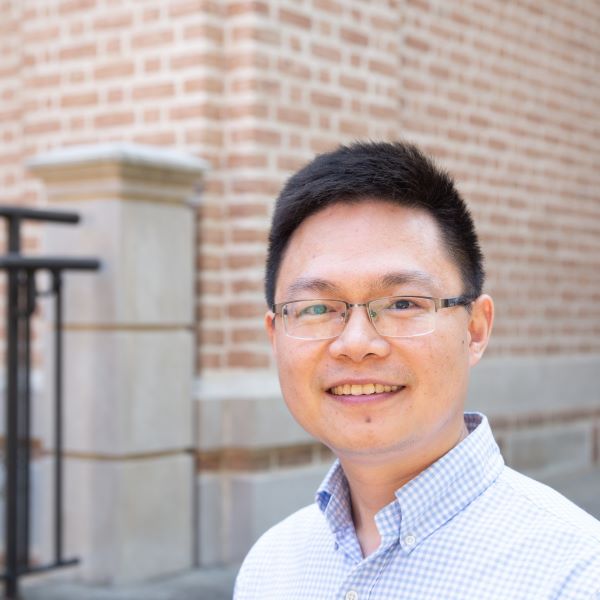
Dr. Kai Gong is an Assistant Professor of Civil and Environmental Engineering at Rice University, with affiliations at the Rice Advanced Materials Institute and Ken Kennedy Institute. His research focuses on sustainable infrastructure materials, environmental sustainability, and materials science. He holds a Ph.D. in Civil & Environmental Engineering and Materials Science from Princeton University, an MEngSci from Monash University (Australia), and dual B.S. degrees from Monash University and Central South University (China). Research Interests: Development of durable, sustainable infrastructure materials Waste encapsulation and conversion to value-added products Carbon mineralization and utilization Advanced characterization techniques (synchrotron/neutron scattering) Data-driven modeling and atomistic simulations Notable Awards: 2023 Le Chatelier Medal (Cement and Concrete Research) 2024 Giatec Award for Best Paper in Sustainability Walbridge Fund Graduate Award (2019) His work integrates computational methods (e.g., molecular dynamics) with experimental techniques to address decarbonization challenges in infrastructure. The Gong Research Group actively seeks motivated researchers for opportunities in sustainable materials innovation.
Caitriona M. O'Driscoll is Professor and Chair of Pharmaceutics at University College Cork's School of Pharmacy, Ireland. With over four decades of academic experience, she previously served as Head of the School of Pharmacy at UCC from 2003-2009 and 2010-2013. Her established drug delivery research team spans from pre-formulation through to production and manufacture of prototype delivery systems suitable for clinical trial, with strong industry links underpinning many research projects. Her research interests focus on translational drug delivery with emphasis on 'problem' drugs including poorly water soluble compounds and biopharmaceuticals like peptide/protein drugs, plasma DNA and siRNA. She develops nano-sized delivery constructs that are robust enough to survive processing, stable on storage, and achieve cell/site specific delivery in vivo. Greater than 40% of new chemical entities are poorly water soluble Biopharmaceuticals now approach 50% of all new drugs in development Major barrier is design of efficient delivery systems Special focus on oral drug delivery despite challenges Analysis of her recent publications reveals a strong emphasis on targeted nanodelivery systems for cancer therapy, particularly prostate and colorectal cancer, as well as neurodegenerative diseases like Huntington's. Her work demonstrates expertise in cyclodextrin-based nanoparticles, siRNA delivery, and disease-specific formulations that account for conditions like Crohn's disease that affect drug delivery. Scientific awards include: 'Person of the Year award' by Parenteral Drug Association (Ireland Chapter) in 2013 'Award for Professional Excellence' by Helix Health in 2007/2008 'Award for Pharmacist of the Year' by Helix Health in 2007/2008 With €10.5M in career research income and 25 PhDs graduated, Professor O'Driscoll's work has attracted funding from diverse sources including Science Foundation Ireland, Enterprise Ireland, and industry partners. Her research group maintains strong links with Pharmaceutical Chemistry and Process & Chemical Engineering at UCC, creating a unique strength for drug development research from design through to clinical trial. She has served as external examiner for multiple universities and as PhD thesis examiner at institutions worldwide. Her research team operates within UCC's drug delivery group, which has established expertise spanning from pre-formulation through to production and manufacture of prototype delivery systems. The group maintains strong industry connections and offers various PhD positions, focusing particularly on translational research with product-driven applications.
Jouni Hirvonen is a Professor in the Division of Pharmaceutical Chemistry and Technology at the University of Helsinki's Faculty of Pharmacy. He serves as Supervisor for doctoral programmes in both the Doctoral Programme in Drug Research and the Doctoral Programme in Materials Research and Nanosciences. With an extensive publication record spanning over three decades, Hirvonen has contributed 384 research outputs and participated in 3 major research projects. His research interests focus on pharmaceutical technology, particularly in drug delivery systems, nanoparticles, and drug dissolution and absorption. His work bridges pharmaceutical chemistry with cutting-edge nanotechnology applications, developing innovative delivery systems for therapeutic agents. His research spans from fundamental pharmaceutical sciences to translational applications in regenerative medicine, immunotherapy, and cardiovascular pharmacology. The analysis of his recent publications reveals a strong focus on advanced drug delivery platforms, particularly utilizing nanoparticles, lipid-based systems, and biomaterials for targeted delivery. His work increasingly integrates microfluidic technology for precise nanoparticle preparation, with applications spanning cancer immunotherapy, cardiovascular repair, tendon regeneration, and inflammatory disease treatment. The trend shows a growing emphasis on combination therapies, RNA delivery, and cell-mediated drug delivery approaches. Hirvonen has received several prestigious awards throughout his career: CRS/Eurand Grand Prize Award on Innovations in Oral Drug Delivery Technologies (2007) Suomen Valkoisen Ruusun Ritarikunnan I luokan ritarimerkki (2013) The Young Scientist in the University of Kuopio (1993) University of Helsinki Quality Teaching Unit, Faculty of Pharmacy (2005) Visiting Professor award (2015) With 25 instances of supervising doctoral theses and numerous academic activities including conference organization, committee memberships, and editorial work, Hirvonen has made significant contributions to academic mentorship and institutional development. His research has been supported by projects including Generation Green, 3i REGENERATION, and IVIVRe. His work appears to involve collaboration with multiple research teams focusing on drug delivery applications across various therapeutic areas.
Stephen W. Hoag is a Professor in the Department of Pharmaceutical Sciences at the University of Maryland School of Pharmacy. His research spans pharmaceutical formulation, process development, and analytical technologies, with a strong emphasis on solid oral dosage forms and controlled release systems. University: University of Maryland School: School of Pharmacy Department: Department of Pharmaceutical Sciences Email: shoag@umaryland.edu Phone: (410) 706-6865 Fax: (410) 706-0346 Address: 20 North Pine Street, Baltimore, MD 21201 Education: B.S. in Biochemistry, University of Wisconsin–Madison, 1982 Ph.D. in Pharmaceutics, University of Minnesota, Twin Cities, 1990 Dr. Hoag's research is centered on two primary areas: (1) the development of systematic methods for formulating immediate and controlled release tablets, utilizing instrumented tablet presses, shear cell analysis, and process analytical technology (PAT) such as Near-Infrared (NIR) and Raman spectroscopy; and (2) the application of mathematical models to understand mass transport in hydrogels, including calcium alginate and silk-elastinlike protein polymers. His work on folic acid supplementation and prenatal vitamins has important public health implications due to the role of folic acid in preventing neural tube defects. Although no recent publications are listed in the provided text, his research output is evident through his co-editorship of the widely used reference work Pharmaceutical Dosage Forms: Tablets (3rd edition, 2008), and his leadership in developing best practices for PAT in pharmaceutical manufacturing. Scientific Awards: No specific awards mentioned in the provided text. Dr. Hoag has actively mentored a large number of graduate students, postdoctoral fellows, and visiting scientists, contributing significantly to pharmaceutical education and workforce development. His laboratory is equipped with state-of-the-art instrumentation for preformulation, formulation, tableting, coating, dissolution testing, and analytical characterization. The lab supports both non-clinical and GMP-level manufacturing research, enabling translational development of dosage forms. He also leads a hands-on short course on tablets and capsules, further extending his educational impact. Research Facilities: Thermal analysis (DSC, MDSC) Solubility and viscosity measurement Moisture analysis (Karl Fisher, LOD) Mechanical testing (Instron) Flow characterization (shear cell, angle of repose) Particle size analysis (laser diffraction, SEM, sieve) Tablet presses (Stoke’s B2, Manesty Beta, fully instrumented) Coating systems (fluid bed, pan coaters) UV/Vis, HPLC, GC, MS instrumentation Environmental stability chambers Granulation, milling, blending equipment Dissolution testing with autosampler
Jakub Kostal is an Associate Professor of Chemistry and Director of the MS Environmental and Green Chemistry Program at George Washington University. He leads the Kostal Research Group, focusing on computational chemistry, green chemistry, and predictive toxicology. His work aims to develop computer models to predict chemical toxicity and design safer, sustainable chemicals. Education: PhD from Yale University (2012), B.A. from Middlebury College (2006). He collaborates with the Lapkin Group at the University of Cambridge on sustainable process engineering using AI. His research team includes graduate students Jillian Brejnik, Diana Garnica Acevedo, and Geetesh Devineni. Research interests center on reducing chemical hazards through computational methods, including predicting environmental persistence, optimizing chemical reactions for sustainability, and advancing machine learning tools for toxicity prediction. His team’s contributions include refining models for pesticide safety and designing bio-based alternatives. Publications highlight advancements in quantum mechanics modeling, in silico toxicity prediction, and sustainable chemical design. He actively engages with policymakers, including speaking at the White House on sustainable chemistry strategies.
Dr. Xinying Liu is a Researcher at the University of Sydney's School of Chemical and Biomolecular Engineering, specializing in Computational Fluid Dynamics (CFD), Fluid-Structure Interaction (FSI), and biomedical engineering applications. She is a member of the University of Sydney Nano Institute and holds a PhD (2023) and bachelor's degree (2017) from the same institution. Education: Bachelor's Degree: The University of Sydney (2017) PhD in Chemical and Biomolecular Engineering: The University of Sydney (2023) Research Focus: Dr. Liu's work addresses biomedical challenges through advanced modeling techniques, including cardiovascular hydrodynamics, gastric flow systems, and bioinspired polymeric heart valve design. She bridges engineering and medicine to develop personalized healthcare solutions and non-thermal plasma technologies for PFAS remediation. Her projects emphasize multiphysics simulation and interdisciplinary collaboration. Current Projects: Polymeric heart valve replacements with growth capability Non-Thermal Plasma applications for PFAS remediation Advising & Collaborations: Dr. Liu advises Parham VATANKHAH on flow dynamics in human aortas. Her collaborations span computational modeling, experimental validation, and industry partnerships for healthcare innovation. Labs & Affiliations: Member of the University of Sydney Nano Institute, actively contributing to bioengineering and materials science research.
Emilie Carretier is a Professor at Aix-Marseille University (AMU) , affiliated with the Procédés Membranaires research team. Her work focuses on membrane separation technologies, particularly for industrial applications in pharmaceuticals, water treatment, and nuclear waste management. Research Interests : Membrane processes (pervaporation, reverse osmosis), solvent regeneration, radioactive effluent treatment, catalyst recovery, and industrial sustainability. Publications highlight advancements in ceramic membranes, VOC removal, and membrane aging studies, with applications in pharmaceuticals, microelectronics, and nuclear industries. Laboratory : Active within the M2P2 research center, specializing in membrane process innovation for complex industrial matrices.
J J Keating is a Lecturer in the School of Pharmacy at University College Cork (UCC), Ireland. His research focuses on impurity profiling of amphetamine-type drugs of abuse, particularly newly emerging hallucinogenic amphetamines, and their forensic applications. He has contributed significantly to understanding synthetic routes of illicit drugs and their toxicity. Keating holds a PhD in Medicinal Chemistry from Trinity College Dublin and has extensive postdoctoral and research experience. Education: BSc (Pharm) from Trinity College Dublin, PhD in Medicinal Chemistry, and advanced teaching qualifications including an MA in Teaching and Learning in Higher Education from UCC. Research Grants: Secured over €289,667 in funding, including projects on forensic impurity profiling and synthesis of hallucinogenic amphetamines. Awards: Recognized with Top 100 Dynamic Irish Pharmacists (2013/2014), UCC Teaching Award (2013), and several best presentation/poster awards in pharmacy and chemistry colloquia. His teaching spans medicinal and organic chemistry, with a focus on integrating pharmacy education into the UCC BPharm curriculum. He actively contributes to continuing professional development for pharmacists and chairs key committees, including the Pharmacy Mature Student Entry Route. Collaborations include work with Dr. Dara Fitzpatrick on Broadband Acoustic Resonance Dissolution Spectroscopy.
Dr. Hao Lou is an Assistant Professor in the Department of Pharmaceutical Chemistry at the University of Kansas School of Pharmacy. His research integrates computational modeling and experimental approaches to advance drug formulation design, with emphasis on subcutaneous delivery systems for biologics and oral formulations. Research focuses on: Computational pharmaceutics using machine learning and molecular dynamics Subcutaneous delivery of monoclonal antibodies and protein therapeutics In vitro emulation of subcutaneous absorption (ESCAR system) Formulation optimization for cyclic peptides and biologics Protein stabilization and drying techniques Recent publications demonstrate novel applications of molecular dynamics simulations in predicting peptide properties, optimizing high-concentration protein formulations, and developing biorelevant dissolution methods. Work appears in pharmaceutical sciences journals covering formulation design and computational modeling. Developed innovative platforms including an Emulator of Subcutaneous Absorption and Release (ESCAR) and protein-hyaluronic acid precipitation techniques. Contributes to advancing dry powder processing for inhaled formulations.
Anne Seidlitz is a Professor of Pharmaceutical Technology at the Free University of Berlin since October 2024, previously holding the same position at Heinrich Heine University Düsseldorf (2021-2024). Affiliated with the Institute of Pharmacy , she leads the Seidlitz Pharmaceutical Technology Group , focusing on solid dosage forms and biorelevant drug release studies using 3D printing and hydrogel compartments . Doctorate in Pharmaceutical Technology (Greifswald, 2009) Habilitation in Natural Sciences (Greifswald, 2015) Qualified Person under German Medicines Act (AMG) Visiting Professorships: Hamburg, Jena Research Interests: Formulation development for implants , intravitreal injections , and subcutaneous delivery systems , with emphasis on biorelevant dissolution testing under physiological flow/movement conditions. Her group pioneers 3D-printed drug delivery devices and custom hydrogel models for vitreal , ear canal , and vascular implants . Publication Trends: Recent articles focus on thermal stability of steroids during extrusion, individualized implant design , and hydrogel compartments for non-oral dissolution testing . Key collaborations include EUFEPS Network and APV (Association for Pharmaceutical Process Engineering). Scientific Involvement: Member of EUFEPS Network on Bioavailability Scientific Council, German Federal Chamber of Pharmacists Active in APV (Arbeitsgemeinschaft für Pharmazeutische Verfahrenstechnik) Student Supervision: Mentored 24+ theses including 3D-printed tablets , implant coatings , and vitreal drug distribution . Collaborates with institutions in Düsseldorf , Jena , and Hamburg .
Stacey A. Langwick is a cultural and medical anthropologist at Cornell University , where she holds a joint position in the Department of Anthropology and Science and Technology Studies . An active member of Cornell's Global Health Program and Feminist, Gender and Sexuality Studies Program , she leads the Qualities of Life working group at the Einaudi Center while co-organizing the Ecological Learning Collaboratory and Translating Vitalities international collective. Education : PhD in Anthropology (UNC Chapel Hill) Master of Public Health (UNC Chapel Hill) Bachelor of Arts (Agnes Scott College) Her groundbreaking research examines healing practices in East Africa, particularly Tanzania, focusing on toxicity , ontological politics , and plant-based sovereignty . Through ethnographic studies of dawa lishe (nutritious medicine) and mlonge tree therapies, she challenges conventional boundaries between food/medicine, traditional/modern, and human/non-human. Current publications like " Properties of (Dis)Possession " (2021) and " Groundwork for Planetary Health " (2022) reveal how Tanzanian healers navigate neoliberal restructuring while cultivating postcolonial knowledge production . Earlier works including " Bodies, Politics and African Healing " (2011) established her as a leading voice in medical anthropology's ontological turn. Major Awards : Mellon Foundation New Directions Fellowship Multiple grants from NSF, Wenner-Gren, and Fulbright Langwick actively bridges art and anthropology through the Johnson Art Museum collaboration and Moshi medical school garden project. She mentors medical students in Tanzania while co-leading the Uzima Collective , a transnational group of scholars, clinicians, and artists reimagining 21st-century medicine.
Shelly Gulati is a Professor of Bioengineering in the School of Engineering and Computer Science at the University of the Pacific, where she bridges technical bioengineering research with transformative educational practices. Her academic credentials include: Post-doctoral training at Imperial College London (2007-2009) PhD in Bioengineering from the University of California, Berkeley and San Francisco (2006) BS in Chemical Engineering from John Hopkins University (2000) Professor Gulati's research spans Microfluidics , Biological Fluid Flow , and Engineering Education . Early work focused on micro-droplet dynamics, drug dissolution testing, and biological fluid applications using microfluidic platforms. Her recent trajectory emphasizes pedagogical innovation, including curriculum redesign, advising models, and initiatives supporting underrepresented students. She integrates entrepreneurial-minded learning into bioengineering education while developing frameworks for self-regulated learning and online community building. Publication trends reveal a strategic pivot from bioengineering fundamentals (2016-2018) toward educational scholarship (2021-2024). Recent work addresses first-year experience transformation, integrative advising, and equity-focused learning practices, reflecting her commitment to reshaping engineering education through evidence-based approaches. Gulati actively reimagines academic advising through initiatives like the "Thriving Tigers" model, which unifies faculty, academic, and career services. She designs targeted interventions such as book clubs for female engineering students and remote rapport-building activities, demonstrating holistic investment in student development beyond traditional classroom boundaries. While earlier microfluidics research likely involved experimental laboratory work, her current leadership centers on educational program development and assessment within the School of Engineering and Computer Science.
Lasse Heikkinen is a Senior Lecturer at the Department of Technical Physics, Faculty of Science, Forestry and Technology, University of Eastern Finland. His work spans applied physics, process tomography, and educational technology, with a focus on innovative teaching methods like flipped classrooms during the pandemic. Current Role: Deputy Head of Department, Senior University Lecturer Research Themes: Electrical impedance tomography for industrial processes, flipped teaching frameworks, and physics education adaptation to remote learning. Recent publications highlight his dual expertise in process tomography (gas-solid flows, pharmaceutical monitoring) and pedagogical innovation (learning analytics, flipped classrooms). He has contributed to educational manuals and toolkits for teacher training. Key Projects: Technology education infrastructure development (2015–2024), pandemic-era teaching adjustments (2022). Collaborations: Active in international process tomography conferences and multidisciplinary teams like the Ameba project.
Prof. Dr. Werner Weitschies is a full professor at the Institute of Pharmacy, University of Greifswald, heading the Department of Biopharmaceutics and Pharmaceutical Technology since 1998. He studied pharmacy and earned his PhD in Pharmaceutical Sciences in 1990, followed by industrial research at Schering AG and the Free University of Berlin. Research Focus: Gastrointestinal behavior of dosage forms In vivo imaging of drug delivery systems Development of biorelevant dissolution models Oral formulation development Transporter systems in the GI tract Intraocular, intramuscular, and subcutaneous drug delivery 3D-printed implants His group is currently funded by the European Regional Development Fund (ERDF) to develop ultrafast analytical systems and a biorelevant release test device (BRD 700) for predictive characterization of pharmaceuticals, aiming to replace in vivo studies with validated in vitro methods.
Jesper Østergaard serves as Professor of Pharmaceutical Physical Chemistry within the Department of Pharmacy at the Faculty of Health and Medical Sciences, University of Copenhagen. With over 20 years of continuous service at the institution, he progressed through the academic ranks from Assistant Professor (2003-2006) to Associate Professor (2006-2018) before attaining full Professorship in 2019. His academic journey began with a PhD in pharmaceutical sciences from the University of Copenhagen in 2003. Professor Østergaard's research focuses on advancing fundamental understanding of drug development processes, particularly transport, dissolution, release phenomena, and chemical stability/kinetics. His work emphasizes the interplay between physical chemical properties of drug substances and excipients with transport processes and kinetics related to drug delivery. He has developed novel analytical approaches for physical chemical characterization, including techniques for measuring diffusivity, molecular interactions, and partitioning. His research has significant implications for subcutaneous and intramuscular injectable formulations, with a key focus on developing biopredictive in vitro release testing platforms that emulate in vivo conditions. Current research directions include physicochemical profiling using Taylor dispersion analysis and affinity capillary electrophoresis, design and characterization of injectable depot formulations, development of in vitro release testing methods for long-acting injectables, and application of UV-Vis imaging for drug dissolution and release testing. His publication record demonstrates consistent output across these areas, with recent work emphasizing dissolution dynamics, biorelevant testing methods, and advanced analytical techniques. As an educator, Professor Østergaard is course responsible for the compulsory bachelor courses Pharmaceutical Physical Chemistry I and II, teaching approximately 200 pharmacy students annually. He also supervises master's students in pharmaceutical physical and analytical chemistry, continuing his commitment to training the next generation of pharmaceutical scientists.