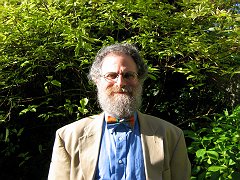
Judy Kay is a Professor at the University of Sydney, Australia , renowned for her contributions to Artificial Intelligence in Education , User Modeling , and Ubiquitous Computing . Her work focuses on creating scrutable open learner models , enhancing collaborative learning analytics , and applying machine learning to education and health. Current research includes AI-driven misinformation detection and human-AI teaming for education. Recent projects involve virtual reality exergames and long-term physical activity tracking . Key publication trends span AI in education , data-driven learning design , and privacy-aware personalized systems . She actively collaborates with researchers in human-computer interaction and health informatics , emphasizing user control and ethical data use .
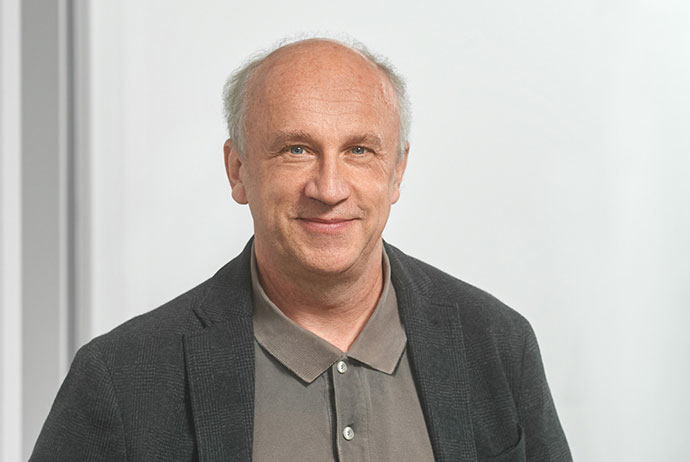
Prof. Michael Beigl is a faculty member at Karlsruhe Institute of Technology (KIT), serving as Professor of Pervasive Computing Systems (PCS) and head of the Telecooperation Office (TECO). He is a spokesperson for the KIT Center for Health Technologies (KITHealthTech) and coordinator of the Smart Data Innovation Lab (SDIL), a federally funded big data center. His work focuses on developing wearable sensor systems and AI-driven diagnostics for healthcare and industrial applications, collaborating across disciplines with medical experts and technology partners. Research interests include digital health technologies (e.g., gas sensors in headbands for respiratory monitoring), ubiquitous computing for remote patient tracking, and Smart Data solutions in medicine, energy, and Industry 4.0. His team integrates machine learning for optimized diagnostics and real-time data analysis.
Hao Liu is a researcher affiliated with institutions like Chinese Academy of Sciences , Beihang University , and Stanford University . His work spans Computer Science , Artificial Intelligence , and Robotics . Key affiliations: National Space Science Center (Beijing), School of Astronautics (Beihang), Key Laboratory of Pervasive Computing (Tsinghua) Research interests include Machine Learning , Image Processing , Graph Neural Networks , and Wireless Communication Optimization His recent publications focus on: Advanced control systems for fuzzy models Medical imaging via hyperspectral analysis Transformer-based approaches in NLP and vision Quantum-safe and edge computing protocols
Philip Wadler is Professor of Theoretical Computer Science at the University of Edinburgh and Senior Research Fellow at IOHK. He is an ACM Fellow, Fellow of the Royal Society, and Fellow of the Royal Society of Edinburgh. His work spans programming language design, type systems, and formal verification, with significant contributions to Haskell, Java, and XQuery. He has held leadership roles in ACM SIGPLAN and served on editorial boards for major journals. Research Interests: Wadler's research focuses on the foundations of programming languages , including Gradual and session typing Language-integrated query Functional and logic programming XML data models Parametricity and free theorems Verification of smart contracts Publication Trends: Recent articles emphasize type safety, formal verification, and blockchain applications. Key themes include gradual typing (blame calculus), session types for concurrency, and logical foundations of programming. His 2015–2025 papers show sustained focus on type theory and language design . Awards & Recognition: POPL Most Influential Paper (2003 for 1993 work) SIGPLAN Distinguished Service Award Best Paper SBMF 2018 Royal Society-Wolfson Fellowship (2004–2009) ACM Fellow (2007) Fellow of Royal Society of Edinburgh (2005) Advising & Grants: He has supervised numerous PhD students in programs like the Centre for Doctoral Training in Pervasive Parallelism. His EPSRC Programme Grant "From Data Types to Session Types" (2013–2020) funded major advances in concurrency theory. Current work with IOHK explores blockchain verification using Haskell-based Plutus.
Lukas Einhaus is a Researcher and PhD student in the Embedded Systems department at the University of Duisburg-Essen since April 2020, affiliated with the Intelligent Embedded Systems (IES) research group and contributing to initiatives including Elastic AI and the IoT Garage. His academic background includes: Bachelor of Science from University of Duisburg-Essen, thesis focused on programming abstractions for concurrent embedded systems Master of Science from University of Duisburg-Essen, specializing in distributed and reliable systems with thesis research on quantizing neural networks Einhaus's research centers on designing neural networks for efficient hardware implementation on FPGAs, with primary expertise in quantized or low-precision neural networks that reduce bit depth (typically 1-3 bits) for computations and information flow. This work enables energy-efficient AI solutions for embedded and IoT devices where resource constraints are critical. His publication record from 2021-2025 reveals consistent innovation in FPGA-based neural network optimization, with applications spanning fluid flow estimation, time-series analysis, and real-time stream processing. Core themes include Elastic AI for adaptive systems, precomputation techniques for convolutional layers, and hardware-aware neural architecture design. He previously contributed to the BMBF-funded project "KI-Sprung: LUTNet" (until March 2022), developing energy-efficient AI networks using elementary lookup tables for FPGA deployment. Einhaus actively mentors students through the IoT Garage initiative, supervising practical projects including drink-mixing machines, exoskeletons, and ball-challenge systems.
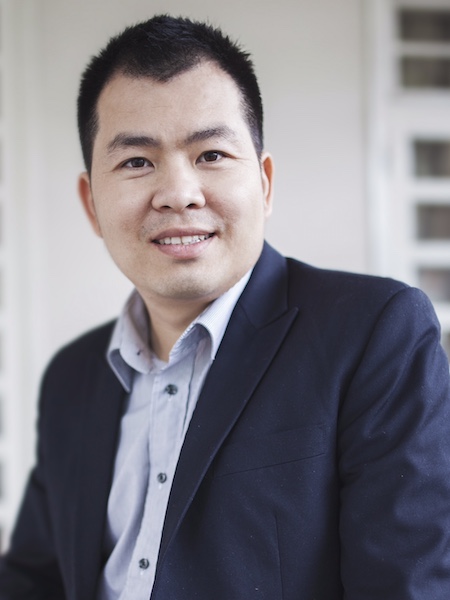
Danh Le Phuoc is a Principal Computer Scientist at Technical University of Berlin, leading research at the PICOM.AI lab where his team develops autonomous information systems for robotics, autonomous vehicles, and IoT systems through pervasive intelligence in complex networks. With over 70 publications and significant academic impact (6811 citations, H-index 31), he has established himself as a notable researcher in semantic technologies. His educational background isn't explicitly detailed in the provided text, but his research expertise spans multiple domains requiring advanced technical knowledge. Le Phuoc's research focuses on bridging theoretical concepts with practical system implementation, particularly in RDF Stream Processing, Semantic Web technologies, and IoT middleware. His work emphasizes building real-world systems that process linked streams and data in real-time, enabling applications in intelligent transportation systems and connected vehicles. His research trajectory shows consistent innovation from foundational work on semantic mashups (2009) through to advanced stream processing frameworks (2017). His publications reveal strong trends toward processing real-time semantic data streams, with increasing focus on scalability, performance optimization, and integration of IoT systems with knowledge graphs. The progression shows movement from basic semantic web pipes to complex, elastic cloud-based stream processing systems. 22 Awards, Honours, Fellowships and Grants 10+ awards for innovative Semantic Web applications Multiple honors for IoT applications As an obsessive builder, Le Phuoc has developed numerous influential systems including The Graph of Things, CQELS (Continuous Query Evaluation over Linked Streams), Semantic Web Pipes, and Linked Sensor/Stream Middleware. His current focus is on ASAP (Autonomous Semantic Stream Processing), a platform for connected vehicles and intelligent transportation systems. His lab appears to maintain active GitHub repositories for several of these systems, suggesting ongoing development and community engagement.
Shueng-Han Gary Chan is a faculty member in the Department of Computer Science and Engineering at the Hong Kong University of Science and Technology (HKUST), within the College of Engineering. He is actively engaged in research and mentoring, with a strong publication record in mobile computing, indoor localization, and AI for pervasive systems. His research focuses on indoor localization using Wi-Fi, geomagnetic, and inertial signals , sensor fusion , crowd counting with deep learning , domain adaptation , and efficient mobile AI systems . His work bridges theoretical innovation with real-world deployment, as seen in systems for missing person search and indoor navigation. Recent publications (2023–2025) show a consistent trend toward self-supervised and domain-agnostic learning , efficient model design for mobile devices , and robust signal fusion in noisy environments . His team leverages transformer architectures, graph neural networks, and novel optimization techniques to solve real-world challenges in urban and indoor spaces. He has advised numerous graduate students, including Jierun Chen, Zhuoxuan Peng, and Tianlang He, who have contributed as first authors to joint publications. His collaborations span institutions and include work on large-scale system deployments and mobile AI. He leads a research group focused on mobile and pervasive computing , with projects involving IoT-based contact tracing, indoor navigation (e.g., DeepNavi, SiFu), and real-time localization systems. The team emphasizes practical deployment and system robustness.
Andrés Bruhn is a Professor for Intelligent Systems and Dean of Computer Science Studies at the University of Stuttgart, where he leads research in the Institute for Visualization and Interactive Systems (VIS). His academic career spans over a decade with significant contributions to computer vision, particularly in optical flow, scene flow, and motion estimation. As Dean of Studies, he oversees academic programs while maintaining an active research agenda focused on cutting-edge computer vision problems. Bruhn's research interests center around computer vision with emphasis on optical flow estimation, scene flow, motion analysis, and adversarial machine learning. His work bridges theoretical foundations with practical applications, developing algorithms that address real-world challenges in motion estimation, image processing, and visual understanding. His research group has pioneered approaches that combine variational methods with deep learning, creating robust systems for motion analysis that can withstand adversarial attacks and challenging environmental conditions. The publication record demonstrates a strong focus on advancing the state-of-the-art in motion estimation, with recent work exploring adversarial attacks on optical flow systems, high-resolution datasets for benchmarking, and multi-frame fusion techniques. His research shows consistent innovation, moving from traditional variational methods to modern deep learning approaches while maintaining mathematical rigor. The work spans both theoretical contributions and practical implementations with real-world applicability. Bruhn has mentored numerous researchers who appear as first authors on publications, including Jenny Schmalfuss, Lukas Mehl, and Azin Jahedi, indicating his commitment to developing the next generation of computer vision researchers. His leadership role as Dean of Studies demonstrates institutional recognition of his expertise and administrative capabilities.
Sandra Geisler is a Junior Professor for Data Stream Management and Analysis at the Department of Computer Science, RWTH Aachen University, a position she has held since September 2021. She is also the leader of the Digital Health Spaces group at the Fraunhofer Institute for Applied Information Technology (FIT) in St. Augustin, reflecting her dual expertise in academic research and applied digital health solutions. Bachelor/Master: Diploma in Computer Science, RWTH Aachen University (2008) PhD: Doctoral degree in Computer Science, RWTH Aachen University (2016) Her research focuses on data stream systems, real-time analytics, data quality, and their applications in digital health and industrial processes. She has made significant contributions to ontology-based data quality management, edge computing for stream processing, and FAIR data principles. Recent work explores the integration of large language models into data management workflows and the development of privacy-preserving platforms for industrial data exchange. Her recent publications demonstrate a strong trend in distributed and edge-based stream processing, interdisciplinary applications in healthcare and supply chains, and the use of AI for data discoverability and quality. Topics include in-network computing, simulation of edge queries, self-tonometry for glaucoma, and cross-company data sharing with privacy awareness. She has served as Associate Editor for the Data & Knowledge Engineering Journal (Elsevier), Public Relation Chair for QDB Workshop (VLDB 2016), and Workshop Chair for IMMoA and HIMoA workshops. She has also edited a special issue on Information Management in Mobile Applications in the Pervasive and Mobile Computing Journal. Geisler has supervised multiple theses on topics including LLM-based ontology integration, edge anomaly detection, and data ecosystem modeling. She has been actively involved in research grants and projects related to industrial data processing, digital health, and sustainable production. She teaches courses such as Data Stream Management and Analysis and Data Ecosystems Lab. She leads the Digital Health Spaces research group at Fraunhofer FIT, focusing on innovative solutions for health data management and patient-centric digital tools. Her work bridges computer science, healthcare, and industrial applications, promoting secure, efficient, and intelligent data ecosystems.
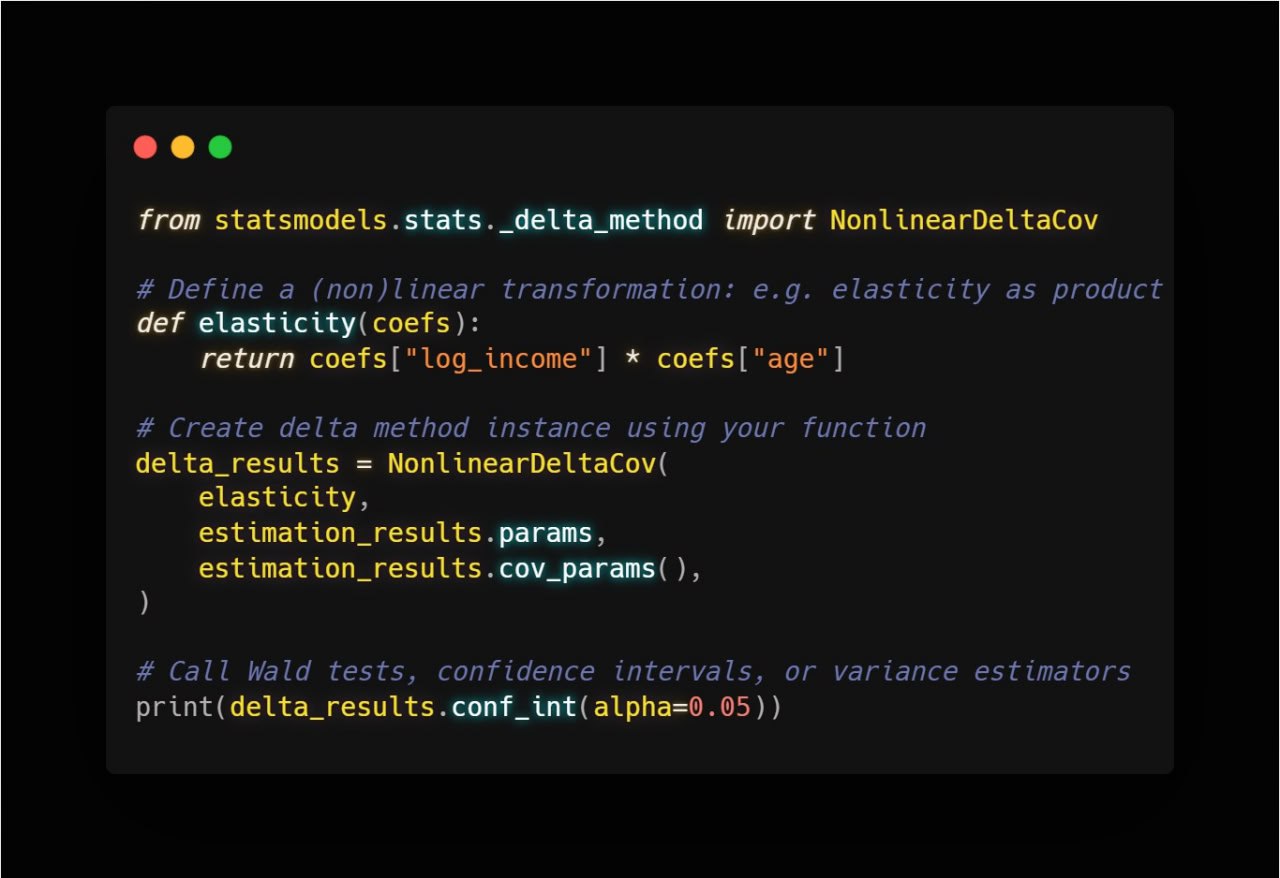
Vladislav Morozov is a tenure track Assistant Professor (W1) of Econometrics and Statistics at the Institute for Financial Economics and Statistics within the Department of Economics at the University of Bonn. He holds a PhD in econometrics from Universitat Pompeu Fabra, Barcelona, and maintains an active research program focused on developing practical statistical methods for handling unobserved heterogeneity in economic applications. His research interests encompass Econometrics , Nonparametric Statistics , Semiparametric Statistics , and methods for addressing Unobserved Heterogeneity . Dr. Morozov investigates how unobserved differences between economic agents affect causal inference, with particular attention to heterogeneous treatment effects and parameters that vary across populations. His work demonstrates that even with limited data (such as just two periods of panel data), it's possible to identify average causal effects despite infinitely many unobserved differences between individuals. His recent publications and blog posts reveal a strong focus on practical statistical methods, including applications of the delta method in statsmodels, visualization of statistical convergence concepts, and critical examinations of common econometric practices like fixed effects modeling and hypothesis testing procedures. His work bridges theoretical econometrics with practical implementation for empirical researchers. Dr. Morozov maintains active engagement with the academic community through his lecture notes on econometrics with unobserved heterogeneity, which cover topics from linear models with heterogeneous coefficients to nonparametric approaches. He has recently shifted from LaTeX Beamer to Quarto Reveal.js for creating reproducible, maintainable presentations that integrate code execution directly into slides. He is an active contributor to methodological discussions in econometrics, particularly regarding the challenges posed by unobserved heterogeneity in non-experimental settings, which can lead to significant bias and invalid inference if not properly addressed. His work provides robust methods for handling these pervasive issues in economic research.
Paul Lukowicz is a Professor of Computer Science at the Rhineland-Palatinate University of Technology Kaiserslautern-Landau (RPTU) and Scientific Director at the German Research Center for Artificial Intelligence (DFKI) in Kaiserslautern. He leads the Embedded Intelligence Research Department at DFKI and has been instrumental in establishing the DFKI SmartCity Living Lab since 2014. University of Karlsruhe: Dipl. Inform. in Computer Science University of Karlsruhe: Dipl. Phys. in Physics University of Karlsruhe: PhD in Opto-Electronic Computer Architectures (1999) His research spans Cyber-Physical Systems , Pervasive Computing , and Social-Interactive Systems , focusing on integrating wearable sensors into real-life scenarios for health and behavioral applications. Recent work emphasizes synthetic sensor data generation, algebraic machine learning, and sustainable textile electronics. The 2025 articles highlight advancements in Human Activity Recognition (HAR) using multimodal feature spaces, efficient white-box training methods, and sustainable textile electronics. These works align with his expertise in Wearable Computing , Embedded Systems , and Machine Learning for real-world deployment. He has led academic departments at the University of Passau and UMIT, and his current leadership roles at DFKI reflect his commitment to applied research in intelligent systems. Projects like VidGenSense, Eghi, ALMA, and SocialWear showcase his interdisciplinary approach to health informatics and smart fashion. Labs and teams under his leadership include the Embedded Intelligence Research Department and the SmartCity Living Lab , which focus on translating theoretical research into scalable solutions for healthcare, urban living, and wearable technology. His collaborations span academia and industry across Europe.
Dr. Sebastian Boring is an Assistant Professor at the Department of Computer Science (DIKU), University of Copenhagen. His research focuses on Human-Computer Interaction, User Interface Design, and Pervasive Computing. He defended his PhD thesis "Interacting 'Through the Display': A New Model for Interacting on and Across External Displays" in July 2010. Since November 2012, he has worked at the University of Copenhagen, though his site is no longer maintained. He previously held a Postdoctoral Fellowship at the iLab, University of Calgary, in 2010.
Pascal Knierim is a researcher in the Department of Computer Science at Ludwig Maximilian University of Munich, Germany. He completed his PhD at the same institution in 2020 with a dissertation titled "Enhancing interaction in mixed reality: the impact of modalities and interaction techniques on the user experience in augmented and virtual reality." His research focuses on human-computer interaction, particularly in virtual and augmented reality environments, with an ORCID identifier 0000-0001-9578-9953. Knierim's research interests span virtual reality, augmented reality, mixed reality, ubiquitous computing, and extended reality systems. He has made significant contributions to understanding user interaction in immersive environments, privacy considerations in VR/AR, biometric identification using thermal imaging, and universal interaction frameworks. His work often combines technical innovation with user-centered design principles, resulting in numerous publications at top-tier venues including CHI, MUM, UbiComp, and IEEE Pervasive Computing. Recent work has explored content blocking in extended reality, social anxiety in VR proxemics, user awareness of privacy permissions, and framework development for ubiquitous research preservation. Knierim has collaborated extensively with researchers such as Thomas Kosch, Florian Alt, and Albrecht Schmidt, forming a productive research group within LMU Munich's computer science department. He has also contributed to the academic community through editorial roles for major conferences including Mensch und Computer 2023 and the 22nd International Conference on Mobile and Ubiquitous Multimedia (MUM 2023), demonstrating leadership within his research community. His research demonstrates a strong commitment to both theoretical advancement and practical applications of immersive technologies, with particular attention to user experience, privacy, and accessibility considerations.
Nitinder Mohan is an Assistant Professor in the Faculty of Electrical Engineering, Mathematics, and Computer Science (EEMCS) at Delft University of Technology (TU Delft), where he leads the Systems and Protocols for Edge-Enabled Internet (SPEAR) Lab. His research focuses on edge computing, next-generation network protocols, and Internet-wide measurements. Previously, he was a senior researcher at Technical University of Munich and holds a PhD from University of Helsinki (awarded IEEE TCSC Outstanding Dissertation Award). Research interests span: Edge computing infrastructure and orchestration Next-generation network protocols (MPTCP, QUIC) Internet-wide measurements and performance analysis Satellite networking (Starlink/LEO networks) Distributed machine learning at edge His publications demonstrate strong focus on practical systems research in edge computing (container orchestration, Oakestra framework), network protocol innovation (segment routing, MPTCP), and empirical Internet measurements (Starlink/CDN analysis). Recent work shows growing emphasis on satellite networking and edge AI. Awards & Honors: IETF/IRTF Applied Networking Research Prize (2025) ACM EdgeSys Best Paper Award (2025) RIPE Academic Cooperation Fellowship (2025) ACM EuroSys Best Poster Award (2025) IEEE Future Networks Best Paper (2023) IEEE TCSC Outstanding PhD Dissertation (2020) Advises multiple PhD and master's students on edge computing, networking, and distributed systems. Secured significant funding including EU Horizon 2020 grant (€5.4M for EDGELESS project). Founded Oakestra - an open-source edge orchestration framework. Leads the SPEAR Lab at TU Delft focusing on edge-enabled Internet systems. Organizes conferences (TMA 2026) and workshops (LEO-NET). Active in IETF/IRTF standards community and industry collaborations with Microsoft Research, Airbus, and Siemens.
Mirjana Spasojevic is a researcher and collaborator in Human-Computer Interaction , Distributed Systems , and Interactive Media . She has contributed to innovations in Augmented Reality for family engagement Context-aware mobile interfaces Collaborative digital storytelling Ubiquitous computing systems Preschooler communication tools Her work bridges technical research with social implications, emphasizing user experience and accessibility. Research Trends from her 15 most recent publications (1994-2023) show sustained focus on Human-robot interaction and failure detection (2023) Smart jewelry and wearable interfaces (2015) Family videochat and connected reading (2010-2011) Early mobile photoware systems (2010) Networked toys for distance play (2011) Asynchronous messaging for children (2011) Academic Contributions span from foundational distributed systems research in the 1990s to modern interactive media explorations. Her collaborations with institutions like Carnegie Mellon University (via Mahadev Satyanarayanan) and tech companies suggest cross-disciplinary impact.