معرفی
Vladislav Morozov is a tenure track Assistant Professor (W1) of Econometrics and Statistics at the Institute for Financial Economics and Statistics within the Department of Economics at the University of Bonn. He holds a PhD in econometrics from Universitat Pompeu Fabra, Barcelona, and maintains an active research program focused on developing practical statistical methods for handling unobserved heterogeneity in economic applications.
His research interests encompass Econometrics, Nonparametric Statistics, Semiparametric Statistics, and methods for addressing Unobserved Heterogeneity. Dr. Morozov investigates how unobserved differences between economic agents affect causal inference, with particular attention to heterogeneous treatment effects and parameters that vary across populations. His work demonstrates that even with limited data (such as just two periods of panel data), it's possible to identify average causal effects despite infinitely many unobserved differences between individuals.
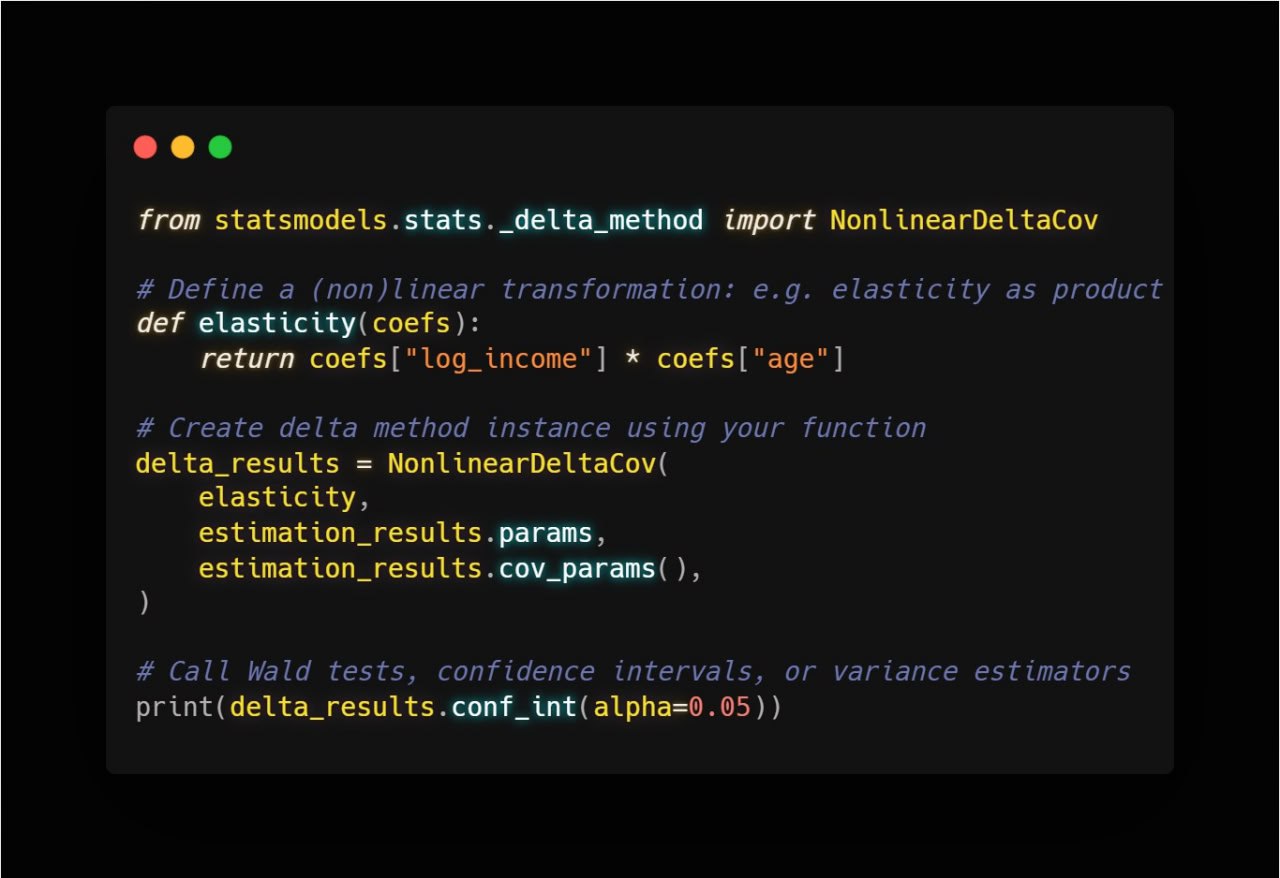
His recent publications and blog posts reveal a strong focus on practical statistical methods, including applications of the delta method in statsmodels, visualization of statistical convergence concepts, and critical examinations of common econometric practices like fixed effects modeling and hypothesis testing procedures. His work bridges theoretical econometrics with practical implementation for empirical researchers.
Dr. Morozov maintains active engagement with the academic community through his lecture notes on econometrics with unobserved heterogeneity, which cover topics from linear models with heterogeneous coefficients to nonparametric approaches. He has recently shifted from LaTeX Beamer to Quarto Reveal.js for creating reproducible, maintainable presentations that integrate code execution directly into slides.
He is an active contributor to methodological discussions in econometrics, particularly regarding the challenges posed by unobserved heterogeneity in non-experimental settings, which can lead to significant bias and invalid inference if not properly addressed. His work provides robust methods for handling these pervasive issues in economic research.