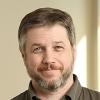
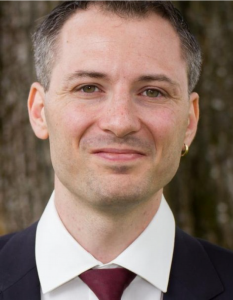
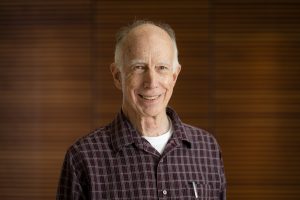
Robin Bauwens is an Assistant Professor at the Department of Human Resource Studies , Tilburg School of Social and Behavioral Sciences , Netherlands. He earned his PhD in Business Economics from Ghent University, focusing on performance management in higher education. Research Focus: Technology's impact on employee well-being and performance, particularly through HRM and leadership in digitizing organizations His recent work explores Digital Leadership , Artificial Intelligence in HRM , and Strengths-Based Coaching , with publications appearing in top journals like Human Resource Management Review and BRQ-Business Research Quarterly. Key Awards include the H2020-MSCA-IF Fellowship (2020) and the Review of Public Personnel Administration Best Article Award (2022). External Role: Owner of TalentMetrics consulting firm
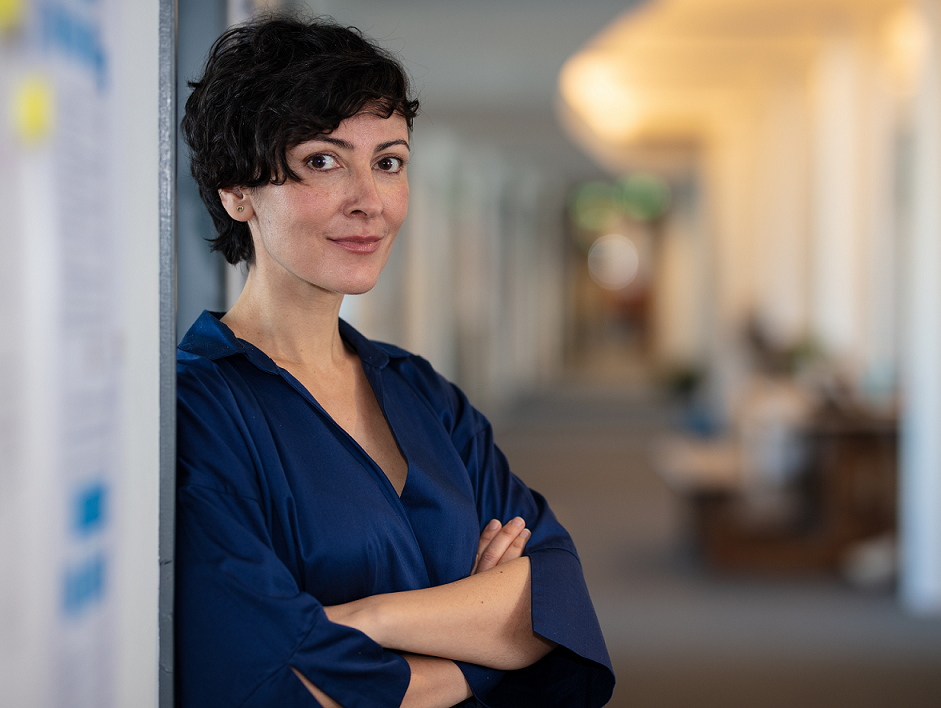
Linda Onnasch is an Assistant Professor at Humboldt Universität zu Berlin in the Department of Engineering Psychology since 2017. She specializes in human-automation and human-robot interaction, focusing on function allocation, automation reliability, anthropomorphism, and RoboEthics. She holds a PhD in Psychology from Technische Universität Berlin (2014) and a Diplom in Psychology from the same institution (2009). PhD in Psychology (2009-2014), Technische Universität Berlin Diplom in Psychology (2002-2009), Technische Universität Berlin Her research explores the impact of anthropomorphic robot design on trust and attention, flexible automation concepts, and ethical implications of human-robot collaboration. Recent work examines social loafing with robots, taxonomy development for interaction models, and the role of system transparency in trust recovery. Linda’s publications emphasize automation bias, human error identification, and empirical validation of human-robot interaction paradigms. She has contributed to journals like ACM Transactions on Human-Robot Interaction and Science Robotics , with a 2021 meta-analysis on anthropomorphism in robotics. HFES Europe Chapter Best Paper Award She has served as an ad-hoc reviewer for journals like IEEE Transactions on Human-Machine Systems and is a member of organizations including the Human Factors and Ergonomics Society Europe Chapter and the German Association of University Professors and Lecturers (DHV).
Anna Abrahams is a Senior Programmer Artist Film and Artistic XR at Eye Filmmuseum in Amsterdam and teaches Moving Image at the Royal Academy of Art, The Hague, within the Photography department. She has been active in experimental film since 1989 as a co-founder of Rongwrong, an independent production foundation. Education: Studied film theory at the University of Amsterdam. Her research and practice focus on experimental film, virtual reality (XR), and moving image art. She bridges traditional film techniques (35mm, 16mm) with digital innovations, emphasizing immersive storytelling and artistic exploration of landscapes, urban spaces, and sociocultural themes. The films she has directed or co-directed, spanning 1995–2022, explore topics like psychogeography, counterculture, and digital experimentation. Her 2022 VR work Angels of Amsterdam highlights her engagement with extended reality technologies. As a co-author, she contributed to publications including Warhol Films , mm2. Experimental Film in the Netherlands , and film³ [kyü-bik film] , documenting avant-garde film practices and theoretical frameworks.
Samuel Jean Bassetto is an Associate Professor in the Department of Mathematics and Industrial Engineering at Polytechnique Montréal. He serves as Director of the Continuous Improvement Laboratory (LABAC) and holds membership in multiple prestigious research groups including the Research Group on Globalisation and Management of Technology (GMT), Poly-Industries 4.0 Laboratory, Interuniversity Research Centre on Enterprise Networks, Logistics and Transportation (CIRRELT), and Institute for Data Valorization (IVADO). Dr. Bassetto's research spans multiple disciplines, focusing on continuous improvement through the integration of engineering, artificial intelligence, cognitive science, psychology, and design. His primary sphere of excellence is in New Frontiers in Information and Communication Technologies, with secondary expertise in Modeling and Artificial Intelligence and Human Health. He develops tools that place humans at the center of technology to enhance organizational performance while respecting human rhythms and cognitive limitations. His recent publication portfolio reveals a strong interdisciplinary approach, with research bridging industrial engineering, cognitive neuroscience, and AI ethics. His work addresses practical challenges in lean manufacturing assessment, racial bias in medical AI systems, cognitive data collection in natural environments, and condition monitoring for industrial machinery. The research consistently demonstrates a commitment to developing practical solutions that integrate human factors with technological innovation. NSERC Synergy Prize for Innovation recipient Principal investigator on multiple research grants from NSERC, FRQ, and MITACS Collaborations with over a dozen institutions across multiple countries Supervision of over 150 highly qualified personnel throughout his career Dr. Bassetto teaches specialized courses including CAP7011 (Creativity in Research), IND8444 (Continuous Improvement), IND8203 (Industrial Launch), and previously taught IND8178 (Production). His teaching philosophy emphasizes practical application, with courses featuring hands-on exercises, real-world scenarios, and gamification techniques to enhance learning. His supervision portfolio includes numerous Ph.D. and Master's students working on topics ranging from human-technology collaboration to reinforcement learning for production management. Through LABAC, Dr. Bassetto leads research initiatives focused on developing human-centered tools for continuous improvement in organizational settings. The laboratory conducts projects related to industrial IoT applications, cognitive aspects of process improvement, and the development of practical frameworks for organizations to enhance performance while maintaining respect for human rhythms and cognitive capabilities.
Aniello Murano is a Professor of Computer Science at the Department of Electrical Engineering and Information Technologies , University of Naples Federico II. He serves as Scientific Director of the ASTREA (Automated Strategic Reasoning) Laboratory and leads cutting-edge research in Artificial Intelligence, Strategic Reasoning, Multi-Agent Systems , and Formal Verification . Research Interests : Strategic reasoning under perfect/imperfect information, specification/verification/synthesis of reactive systems, temporal/modal logics, automata theory, parity games, game theory, mechanism design, and formal languages. Notable Projects : PNRR Research Unit Coordinator (2023-2025) on Resilient AI, PRIN 2020 Unit Coordinator (RIPER: Resilient AI-Based Self-Programming and Strategic Reasoning), H2020-MSCA SEAL (Principal Coordinator). Awards & Honors : JPMorgan Faculty Research Award (2022), Royal Society Award (2016), Best Paper PRIMA (2015), INDAM Project Leader (2023), Italian Scientific Habilitation (2017-2018). Students & Postdocs : Supervised 6 PhD students (e.g., Silvia Stranieri, Vadim Malvone) and mentored postdocs such as Munyque Mittelmann and Bastien Maubert. Laboratory : Leads ASTREA Lab, focusing on automated strategic reasoning and resilient AI systems.
Dr. Lucy Gloag is a Lecturer at the Research School of Chemistry at the Australian National University (ANU), where she joined in 2024 after previously serving as a Lecturer at the University of Technology Sydney in 2023. Her research focuses on the development of advanced nanomaterials for energy applications, particularly in electrocatalysis and energy storage. Education: BSc/BCA and BSc(Hons) from Victoria University of Wellington, New Zealand PhD from the University of New South Wales (2018) on synthesis and characterization of Ru-based nanocatalysts Dr. Gloag is a nanomaterials chemist and electron microscopist specializing in the synthesis and characterization of nanomaterials for electrocatalytic applications. Her research addresses the fundamental question of how nanostructure can be used to enhance the performance of electrocatalysts . She employs solution-phase synthesis techniques to create nanoparticles with precise control over crystal structure, dimensions, and surface faceting, then correlates these structural features with electrocatalytic properties using transmission electron microscopy and electrochemistry. Her work spans energy conversion technologies, biomedical applications of nanoparticles, and advanced materials characterization. Analysis of her recent publications reveals a strong focus on single-atom catalysts, hierarchical nanostructures, and the relationship between nanomaterial structure and function. Her research spans both fundamental materials science and practical applications in energy conversion, with significant work on oxygen evolution reaction, hydrogen evolution reaction, and methanol oxidation electrocatalysts. She has also made notable contributions to biomedical applications of nanoparticles, particularly in magnetic particle imaging and Alzheimer's disease diagnostics. Scientific Awards: ARC Discovery Project Grant (2023) ARC Linkage Project Grant (2023) UNSW Science COVID19 Strategic Support Grant (October 2021) Dementia Australia Research Foundation – Yulgilbar Innovation Grant (2019-2022) Australian Postgraduate Research Scholarship (2015) AMN-7 Image Competition Finalist (2015) Dr. Gloag currently leads the ANU Futures Scheme 2.0 project (2024-2028) and has secured multiple competitive research grants, demonstrating strong research leadership. Her work involves extensive collaboration with researchers at UNSW and other institutions, particularly with Professors Richard Tilley and Justin Gooding. She has published 28 research outputs since 2015, with significant citation impact (h-index of 17). Her laboratory at ANU (Building 137, room 2.49) focuses on developing single atom and nanomaterials for energy storage and conversion technologies, continuing her trajectory as an emerging leader in advanced materials synthesis and electron microscopy characterization.
Robert M. Weikle, II is a Professor in the Charles L. Brown Department of Electrical and Computer Engineering at the University of Virginia, with a courtesy appointment in the Department of Physics. He earned his B.S. from Rice University (1986), M.S. (1987), and Ph.D. (1992) in Electrical Engineering from Caltech, followed by postdoctoral work at Chalmers University of Technology (1992). His research focuses on millimeter-wave and terahertz electronics , applied electromagnetics, integrated antennas, low-noise sensors, and heterogeneous integration of compound semiconductors. His work bridges electronics and photonics for spectrum access, with applications in astronomy, spectroscopy, and metrology. He has published extensively on micromachined silicon substrates, superconducting materials, and emerging technologies. Scientific Awards: IEEE Microwave Prize (1993) David A. Harrison III Award (1999) University of Virginia All-University Outstanding Teaching Award (2000) Edlich-Henderson Innovator of the Year (2016) Fulbright Scholar (2001) As Chief Technology Officer and co-founder of Dominion Microprobes, Inc., he commercializes micromachined wafer probes for high-frequency metrology. His lab, located in E220 Thornton Hall and the Jesse W. Beams Physics Building, has produced 15+ recent publications on submillimeter-wave devices, THz probes, and calibration techniques.
Salome Voegelin is a Professor of Sound Art at the London College of Communication, University of the Arts London. She is a leading figure in sound studies, focusing on listening as a socio-political practice and the transversal potential of sound across disciplines. Her research explores the intersections of sound with politics, feminism, and pedagogy, and she leads projects like Listening across Disciplines II (LxDII), funded by the AHRC, which investigates listening as a research methodology. Education: PhD in Sound Art, Goldsmiths, University of London (2000–2004) BA (Hons) Fine Art Film and Video, Central Saint Martins (1994–1997) PGCertHE, Middlesex University Research Interests: Sound Studies, Sonic Pedagogy, Feminism, Interdisciplinary Knowledge Production, Sonic Methodologies Her work bridges artistic practice and theory, including collaborations with David Mollin and co-convening Points of Listening . Key books include Listening to Noise and Silence (2010), The Political Possibility of Sound (2018), and Sonic Possible Worlds (2021). She is a member of the Creative Research into Sound Arts Practice (CRiSAP) and leads the Sounding Knowledge Network. Recent articles and presentations highlight themes like transversal sound studies, the ethics of listening, and curatorial practices. Her projects emphasize participatory engagement and the socio-political dimensions of sound.
Elvin Karana is a Professor of Materials Innovation and Design at Delft University of Technology's Faculty of Industrial Design Engineering. His work bridges the gap between material science, design, and human-computer interaction with a focus on emerging materials and their experiential qualities. He leads the Materials Experience Lab, which investigates how materials communicate ideas and beliefs while enhancing functionality and user experience. Dr. Karana's research interests center on Materials Design, Emerging Materials, Material Driven Design, Bio-based Materials, and Materials Experience. His work explores how living materials can be incorporated into design practices, particularly focusing on microbial interactions, textile interfaces, and regenerative material ecologies. He investigates how materials can be designed to create serene experiences, facilitate multispecies interactions, and support sustainable practices in human-computer interaction. His recent publications demonstrate a strong trend toward biodesign and living materials, with significant focus on microbial systems like cyanobacteria and flavobacteria. His work explores the design space of direct interactions with living organisms, examining how materials can be designed for performativity and how livingness can be understood as a material quality. The research spans textile interfaces, material ecologies, and regenerative design approaches that integrate living systems into everyday artefacts. Best Paper Honourable Mention (2023) Dr. Karana serves as a member of the Supervisory Board/Advisory Board at Avans University of Applied Sciences (CARADT) from May 2024 to December 2025. His research has been featured in various media outlets including TU Delft, Delta, Strawberry Earths, and architectmagazine, highlighting the societal impact of his work on living materials. His projects often involve interdisciplinary collaborations across design, biology, and engineering disciplines. He leads the Materials Experience Lab, which approaches materials as a medium that communicates ideas, beliefs, and approaches while compelling users to think, feel, and act in certain ways. The lab's work emphasizes the dual role of materials as both technical and experiential components in design, exploring how material qualities can be harnessed to create meaningful interactions and sustainable solutions.
Yang Kaidi is an Assistant Professor in the Department of Civil and Environmental Engineering at the National University of Singapore (NUS), affiliated with the Institute of Operations Research and Analytics (IORA) within NUS’s Smart Nation Research Cluster. Their research focuses on intelligent transportation systems, traffic control, shared mobility, and machine learning applications in mobility. Key interests include connected and automated vehicles, privacy-preserving data sharing, and reinforcement learning for traffic optimization. Research highlights include developing parameter privacy-preserving strategies for mixed-autonomy platoons, enhancing safety in autonomous driving via transformer-based trajectory prediction, and optimizing traffic signal timing using connected vehicle data. Their work bridges theoretical control systems with practical urban mobility challenges, addressing issues like ridesourcing-public transit integration, modular transit service operations, and weaving section management in mixed traffic environments. Recent publications emphasize real-time control frameworks, cooperative safety mechanisms, and data-driven solutions for urban and highway systems. Yang’s interdisciplinary approach integrates robotics, optimization, and cybersecurity to advance smart transportation infrastructure. Their contributions are particularly notable in privacy-preserving techniques for traffic state estimation and federated learning applications. While no specific awards or grants are listed, their research aligns with Singapore’s Smart Nation initiatives through IORA’s strategic focus areas. Yang’s work has implications for future traffic management systems, autonomous vehicle coordination, and sustainable urban mobility solutions.
Philipp Neumann is a Professor and Chair of High-Performance Computing at Helmut Schmidt University since 2019. Previously, he held roles including Senior Researcher at the German Climate Computing Center (2016–2019), Postdoc at the University of Hamburg (2017–2019), and completed his Habilitation in Scientific Computing at TU Munich (2019). He transitioned to DESY/Universität Hamburg in May 2024. Education : PhD (Dr. rer. nat.) in Scientific Computing at TU Munich (2008–2013) Habilitation in Scientific Computing at TU Munich (2019) Studies in Technomathematics at Friedrich-Alexander University Erlangen-Nuremberg (2003–2008) Research Interests focus on high-performance computing, parallel and distributed systems, computational science, and applications in climate modeling. His work bridges computational methods with medical challenges, including surgical simulation training, wound healing mechanisms, and gastrointestinal pathology. Professional Activities include leadership roles in major conferences such as steering committee member for ISPDC (since 2021) and program committee roles in IPDPS, ICCS, and IEEE Cluster. He also managed the DFG priority program SPPEXA (2013–2016). Labs/Teams include the Chair for High-Performance Computing at Helmut Schmidt University and collaborations with the German Climate Computing Center. His current work at DESY/Universität Hamburg likely expands these computational efforts into interdisciplinary research.
Zsofia Zavecz is a Research Associate at the University of Cambridge Department of Psychology. Her work focuses on the neurophysiological mechanisms underlying sleep and memory consolidation, with particular emphasis on electrophysiological correlates of lucid dreaming and sleep-dependent learning. Research highlights include: Investigation of EEG functional connectivity during statistical learning Study of transcranial stimulation effects on probabilistic learning Analysis of sleep restriction impacts on hormonal regulation Exploration of cognitive reserve mechanisms in sleep disorders Her neuroscientific investigations span procedural memory systems, neural oscillations, and cross-population studies in both healthy individuals and pediatric sleep-disordered breathing patients.
Dan McCammon is a Professor in the Department of Physics at the University of Wisconsin-Madison, affiliated with the College of Letters & Science. His research focuses on X-ray astronomy, including studies of the diffuse X-ray background, interstellar and intergalactic media, and the development of advanced X-ray instrumentation. He is a key contributor to the XRISM (X-ray Imaging and Spectroscopy Mission) satellite, leading efforts in high-resolution X-ray spectroscopy and mission operations. McCammon's work emphasizes understanding cosmic plasma dynamics, galaxy cluster physics, and supernova remnant evolution through cutting-edge observational techniques and detector technology. His research interests span multiple subfields, including the thermodynamic properties of galactic clusters, charge-exchange processes in astrophysical plasmas, and the design of cryogenic microcalorimeters for space-based observatories. He has pioneered advancements in transition-edge sensors (TES) and superconducting detectors, enhancing the precision of X-ray spectral measurements. McCammon has contributed to numerous sounding rocket missions, such as Micro-X, and has been instrumental in the development of the Line Emission Mapper (LEM) probe concept, aimed at mapping the soft X-ray sky with unprecedented resolution. His work on the Hitomi (ASTRO-H) satellite demonstrated breakthroughs in resolving the thermal and dynamic properties of cosmic plasmas, such as the Perseus galaxy cluster and the Crab Nebula. His publications highlight a focus on high-resolution X-ray spectroscopy of cosmic sources, including galaxy clusters, active galactic nuclei, and supernova remnants. He has explored topics like non-thermal pressure contributions in cluster cores, ionized plasma diagnostics, and the role of charge-exchange emissions in interpreting diffuse X-ray backgrounds. McCammon's instrumentation innovations have enabled breakthroughs in measuring spectral features with sub-eV resolution, advancing our understanding of astrophysical processes. Despite the absence of explicitly listed awards or grants in the provided text, his leadership in major space missions and pioneering detector technologies underscores his contributions to the field. His research team collaborates on international projects, such as XRISM and LEM, reflecting a commitment to advancing observational astrophysics through interdisciplinary collaboration.
Dr. Sarah Bay-Cheng is Dean and Professor of Theatre & Performance Studies at York University’s School of the Arts, Media, Performance & Design (AMPD). Her research focuses on intersections between theatre, media, and digital technologies, with over 100 academic essays, lectures, and reviews. She authored or edited four books, including *Performance and Media: Taxonomies for a Changing Field* (2015) and *Mapping Intermediality in Performance* (2010). Prior to her role at York, she was Chair of Theater and Dance at Bowdoin College and Founding Director of the Techne Institute at the University at Buffalo. She holds a BA from Wellesley College and a PhD from the University of Michigan. Research Interests: Digital Humanities, intermediality, performance historiography, film studies, and technology’s role in contemporary performance. Awards include a 2015 Fulbright Senior Scholarship in Media and Cultural Studies. She serves on boards for Factory Theatre and StageView.com. Her work bridges historical and emerging digital practices, emphasizing how media shapes performance’s past, present, and future.
Teresa Faucon is an Associate Professor and HDR researcher at Sorbonne Nouvelle University (Paris 3), affiliated with the IRCAV research institute. She specializes in cinema and audiovisual aesthetics, montage theory, and postcolonial film studies. Her roles include director of the Cinema and Audiovisual Master's program (2021–2023), and leadership in disability and professional training initiatives. She co-founded key research groups like Indian Cinemas (2012), CREAViS (2015), and Exotismes en champ-contrechamp (2018), focusing on decolonial cinema and exoticism analysis. Her work bridges academic research with creative projects, including the interactive Maps of Film Analysis platform. Research interests span Indian and Southeast Asian cinemas, dance-cinema interactions, and experimental film forms. She has organized 7 international conferences and co-edited major texts like Chorégraphier le film (2019). Recent publications include studies on exoticism's sonic dimensions and non-European cinema. Her digital platform Les cartes de l'analyse de film innovates in nonlinear film analysis through heuristic maps. She co-directs the Formes filmiques and Cinémas en champ-contrechamp book series, promoting global cinema scholarship.