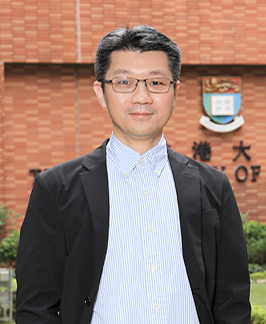
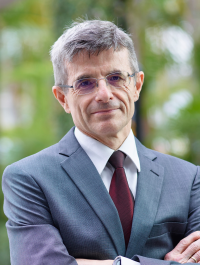
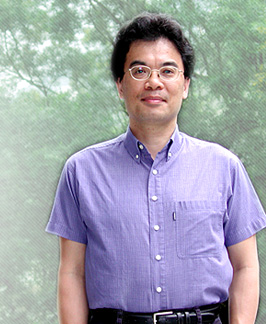
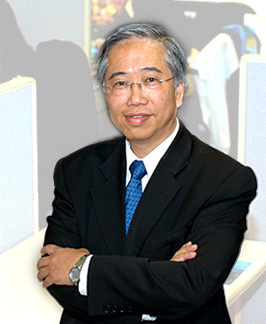
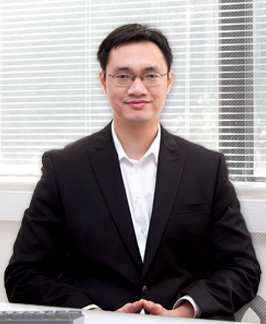
Professor Benjamin C.M. Kao is a faculty member in the Department of Computer Science at The University of Hong Kong (HKU), affiliated with the School of Computing and Data Science. He holds a BSc from HKU (1989) and a PhD from Princeton University (1995). His career includes roles as a teaching/research assistant at Princeton (1989-1991) and a research fellow at Stanford University (1992-1995). His research focuses on Database Management Systems, Data Mining, Real-time Systems, and Information Retrieval Systems. Notable contributions include S-OLAP for sequence data analysis, collaborative resource discovery in social tagging systems, and algorithms for mining periodic patterns in sequences. He has led research grants such as the GRF-funded 'Online Analytical Processing on Sequence Data' (2008) and computational studies in uncertain data mining (2006). Professor Kao has served on program committees for major computer science conferences and reviewed for leading journals. His work bridges theoretical foundations with practical applications in data systems and information retrieval.
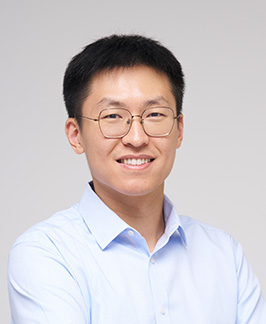
Ka Ho Chow is an Assistant Professor in the Department of Computer Science at the University of Hong Kong, part of the School of Computing and Data Science. He holds a PhD from Georgia Institute of Technology and was previously a research scientist at IBM Research. His research focuses on the intersection of machine learning, cybersecurity, and scalable systems, emphasizing trustworthy AI and defense against security/privacy threats in federated learning, large language models, and visual recognition systems. Key achievements include IBM PhD Fellowship (2022) and Croucher Scholarship (2021). Education: PhD in Computer Science from Georgia Tech (2020), advised by Prof. Ling Liu. His work spans algorithmic optimization, infrastructure resilience, and adversarial machine learning. Current research explores attack-resilient solutions for centralized/federated learning and AI system vulnerabilities. Recent articles highlight innovations in federated learning security, gradient inversion attacks, backdoor detection, and privacy-preserving techniques. He has openings for PhD students interested in AI security and trustworthy systems. His lab collaborates on projects involving blockchain fraud detection (ZipZap), facial recognition privacy (Personalized Masks), and graph neural network robustness. Awards: IBM PhD Fellowship (2022), Croucher Scholarship (2021). Active in guiding PhD candidates and advising on microservices cloud migration (Atlas/SCAD systems). Research outputs include over 30 peer-reviewed papers spanning cybersecurity, AI ethics, and distributed learning frameworks.
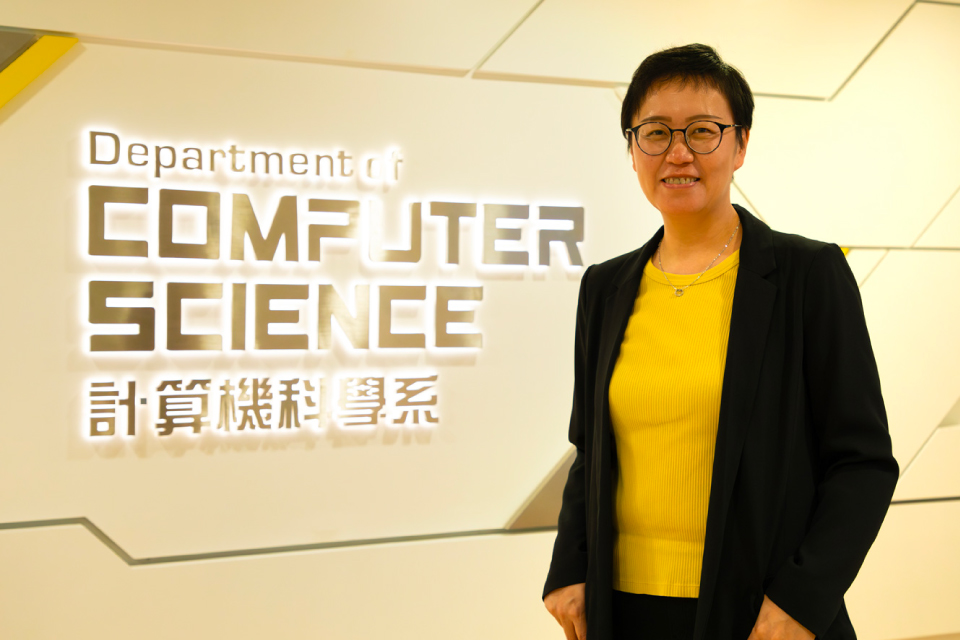
Professor Li Chen is a full Professor and Associate Head (Research) in the Department of Computer Science at Hong Kong Baptist University (HKBU), with an affiliate appointment at the Academy of Wellness and Human Development. She leads the Positive Intelligence Lab , focusing on intelligent technologies for human well-being. Her research spans conversational AI, explainable AI, recommender systems, and human-computer interaction. Education: PhD in Computer Science, Swiss Federal Institute of Technology in Lausanne (EPFL), Switzerland (Nominee for Best PhD Thesis Award) Master in Computer Software and Theory, Peking University, China Bachelor in Computer Science, Peking University, China Her research interests revolve around personalized conversational and explainable AI, with applications in entertainment, education, e-commerce, and mental well-being. She has published over 150 papers in top venues including ACM TOIS, IJHCS, CHI, SIGIR, AAAI, RecSys, and UMAP . Her work has been recognized with awards such as the RecSys Best Student Paper Award (2024), CHI Honourable Mention (2022), and multiple best paper awards at UMAP and UMUAI. The most recent publications reflect a strong trend toward fair, explainable, and user-centric recommender systems , with increasing integration of large language models , mental health applications , and conversational agents . Her research emphasizes user feedback, negative sampling techniques, and evaluation frameworks grounded in real user behavior. Scientific Awards & Recognition: President’s Award for Outstanding Performance in Teaching (Individual), HKBU (2024/25) President’s Award for Outstanding Performance in Research Supervision (2022/23) World’s Top 2% Most-Cited Scientists, Stanford University (2021–2024) ACM Senior Member (2015) RecSys’24 Best Student Paper Award CHI’22 Honourable Mention Award UMAP’20 Best Student Paper Award UMUAI 2018 Best Paper Award THE Awards Asia 2021 Excellence and Innovation in the Arts (Co-I) Professor Chen is actively involved in mentoring PhD and Master’s students such as Wanling Cai and Yuhan Zhao, who have co-authored award-winning papers. She has secured research funding through grants like the HKBU IRCMS Project. Her editorial leadership includes serving as Co-Editor-in-Chief of ACM Transactions on Recommender Systems (TORS) , Associate Editor for ACM TiiS , and Editorial Board Member for UMUAI . She has chaired major conferences including ACM RecSys’23 (General Co-Chair), RecSys’20 (Program Co-Chair), and UMAP’18 (Program Co-Chair). She leads the Positive Intelligence Lab , which conducts interdisciplinary research on AI for well-being. The lab has developed datasets like the Intent Annotation of Recommendation Dialogue (IARD) and focuses on user-centric AI design, mental health chatbots, and personalized recommendation interfaces.
Dan Wang is a Professor in the Department of Computing at The Hong Kong Polytechnic University. He holds a B.Sc. from Peking University, M.Sc. from Case Western Reserve University, and Ph.D. from Simon Fraser University, all in Computer Science. Expertise: Network Architecture, QoS, Smart Building, Big Data, Industry 4.0 Awarded ACM Distinguished Scientist 2023 for contributions to cyber-physical energy systems Recipient of Best Paper Awards at ACM Buildsys (2018), ACM e-Energy (2018), and multiple conference recognitions Research focuses on smart building energy systems, edge computing, and applied AI in industry. Active in organizing conferences like ACM Buildsys 2024 (TPC Co-Chair) and ACM e-Energy 2022 (General Co-Chair). Advises 5-7 students annually, with current Ph.D. candidates and postdocs working on edge computing and AI applications. Former students hold roles at Tencent, Huawei, and JD.com.
Professor John Shi Wen-zhong is Chair Professor of Geographical Information Science and Remote Sensing at The Hong Kong Polytechnic University, where he serves as Head of the Department of Land Surveying and Geo-Informatics. He also holds leadership positions as Director of the Otto Poon Charitable Foundation Smart Cities Research Institute and Director of the PolyU-Shenzhen Technology and Innovation Research Institute (Futian). Professor Shi is recognized as an international leader in uncertainty modeling and quality control for spatial data and spatial analyses, with contributions dating back to the 1990s. He currently serves as President of the International Society for Urban Informatics and Editor-in-Chief of the international journal Urban Informatics. Professor Shi's research focuses on urban informatics for smart cities, geographical information science and remote sensing, artificial intelligence-based object extraction and change detection from satellite imagery, intelligent analytics and quality control for spatial big data, and mobile mapping and 3-D modelling based on LiDAR and remote sensing imagery. His work has solved fundamental uncertainty issues in spatial data and spatial analyses, making significant contributions to geographical information science. He has authored over 300 research articles in Web of Science-indexed journals and 20 books, and has been granted 44 patents as of July 2023. Professor Shi has received numerous prestigious awards for his groundbreaking work: ESRI Award for Best Scientific Paper by the American Society for Photogrammetry and Remote Sensing (2006) State Natural Science Award (Second Award), China's highest award for fundamental research (2007) Wang Zhizhuo Award by the International Society for Photogrammetry and Remote Sensing (2012) Founder's Award by the International Spatial Accuracy Research Association (2020) CPGIS Distinguished Scholar Award (2021) Gold Medals at both the 2021 and 2023 Geneva Invention Expos Smart 50 Awards (2021) Gold Medal in Asia International Innovative Invention Exhibition (2023) He is also listed among the world's top 2% most cited researchers according to Elsevier BV's standardized citation indicators. Professor Shi has been elected as an Academician of the International Eurasian Academy of Sciences and is a Fellow of the Academy of Social Sciences (UK), the Royal Institution of Chartered Surveyors, and the Hong Kong Institute of Surveyors.
Dr. Can Liu is an Assistant Professor at the School of Creative Media, City University of Hong Kong, where she leads the ERFI Lab (Laboratory of Empirical Research for Future Interfaces). Her research focuses on designing future interfaces for ubiquitous technologies through empirical understanding of human cognition and behavior, with emphasis on multimodal interaction combining physical and digital elements. Education: PhD in Human-Computer Interaction, Université Paris-Sud (France), INRIA labs ex)situ and ILDA MSc in Media Informatics, RWTH Aachen University (Germany) Dr. Liu's research spans three primary domains: AI-assisted Input (using LLMs/NLP to enhance text manipulation and speech interfaces), Spatial Computing (multimodal interfaces for AR/VR and large displays), and Hybrid/Remote Collaboration (supporting intuitive remote interaction through understanding collocated collaboration). Her work integrates empirical user studies with real-world system deployments in public spaces. Recent publications demonstrate strong trends toward LLM-integrated interfaces, wearable computing applications, and novel interaction techniques for foldable devices. Her team consistently publishes at top venues including CHI, UIST, and CSCW, with increasing focus on practical AI integration for everyday tasks. Awards and Recognition: Best Paper Award at ACM CHI 2014 (top 1%) Honourable Mention at ACM CHI 2012 (top 5%) Dr. Liu actively mentors PhD students and researchers while securing substantial research funding including Google Faculty Research Awards, National Natural Science Foundation grants, and RGC Early Career Schemes. She serves on numerous program committees including ACM CHI (Associate Chair 2024, 2022, 2021, 2020, 2019, 2017) and co-organizes research initiatives like the HCIX Summer Research Program. Her laboratory ecosystem includes the ERFI Lab, affiliation with the Augmented Materiality Lab and Kowloon Interaction Center, and active participation in the Greater Bay HCI community, supporting both fundamental research and industry collaboration with partners including Google, Huawei, and Lenovo.
Dr. Alan William Dougherty is a Lecturer at the School of Computing and Data Science, University of Hong Kong. He holds an MEng in Electronic Engineering from King’s College London (2013) and a PhD from Hong Kong Polytechnic University (2019), where he received the prestigious Hong Kong PhD Fellowship. His professional background includes engineering roles in compiler design for edge AI on FPGAs, autonomous robotic systems, and computer vision applications such as human emotion classification and 3D mesh generation from single images. Affiliations: School of Computing and Data Science (HKU) Research Interests: Computer Vision, Machine Learning, Medical Robotics, Edge AI, Autonomous Systems His research spans interdisciplinary areas including immersive online learning systems, human pose estimation using transformers, and computational material science for energy applications. Notable contributions include the SAILS platform for young learners and advanced catalyst discovery methodologies. He integrates practical engineering challenges with theoretical research to address real-world problems. Dr. Dougherty has been recognized for his work with awards such as the Hong Kong PhD Fellowship. His teaching philosophy emphasizes bridging theory and practice, fostering critical thinking in emerging tech fields.
Professor Dirk U. Pfeiffer is the Chair Professor of One Health at City University of Hong Kong's Jockey Club College of Veterinary Medicine and Life Sciences. He holds a part-time position at the Royal Veterinary College (RVC) in the UK and is an Adjunct Professor at China's Animal Health & Epidemiology Centre. His academic roles include Director of the Centre for Applied One Health Research and Policy Advice (OHRP) and former Chief Epidemiologist at the UK's Animal and Plant Health Agency (2015–2017). Education includes a veterinary degree from Justus Liebig University (1984), a Doctorate in Veterinary Medicine (1986), and a PhD in Veterinary Epidemiology from Massey University (1992). He has extensive advisory roles, including chairing OIE/FAO's Avian Influenza Network and the UK's Animal Health Surveillance Board. Research focuses on One Health, epidemiology, and disease control, with a focus on avian influenza, African swine fever, and spatial analysis. He has over 440 publications (h-index 63) and leads projects like the £19M UK-funded One Health Poultry Hub. Awards include the Calvin W. Schwabe Award and recurring recognition as a top 2% cited scientist globally. Teaching includes advanced epidemiology courses and international training programs in over 20 countries. Current grants exceed HK$47M, addressing poultry health in Bangladesh and Hong Kong's livestock systems. Collaborations span global institutions, emphasizing interdisciplinary solutions to zoonotic threats.
Professor Francis C.M. Lau is a Professor at the University of Hong Kong's School of Computing and Data Science, within the Department of Computer Science. He holds an honorary professorship and has contributed extensively to academia through editorial roles and international society involvement, including pioneering the IEEE Computer Society's Distinguished Visitors Program for Asia/Pacific in 1993. His educational background includes a BSc from Acadia University and MMath/PhD from the University of Waterloo. Professor Lau's research focuses on parallel/distributed computing, wireless networks, operating systems, and computer music, with notable publications in journals like Theoretical Computer Science and Ad Hoc Networks . He has led major research grants, including a $7.5M HKU UGC Special Equipment Grant for interdisciplinary systems research. His awards include the IEEE Golden Core Recognition (1998) and the IEEE Third Millennium Medal (2000). He has served on key committees such as the Research Grant Council's engineering panel and Hong Kong Institution of Engineers' accreditation committee. His work bridges theoretical computer science with practical applications in networking, cloud computing, and cultural heritage through computational approaches to art.
Professor David Wai-lok Cheung is a Professor in the Department of Computer Science at the University of Hong Kong (HKU) and Director of the Center for E-commerce Infrastructure Development (CECID). He holds a BSc in Mathematics from the Chinese University of Hong Kong and MSc/PhD in Computer Science from Simon Fraser University, Canada. His research focuses on database systems, data mining, e-commerce technologies, and secure computation. Key contributions include pioneering work on privacy-preserving data mining, XML schema design, and e-commerce infrastructure development. He has led numerous prestigious grants totaling over HK$60M and developed widely adopted open-source tools like the ebXML gateway. Professor Cheung has received awards such as the HKU Outstanding Researcher Award (1999) and the Distinguished Contribution Award (2009 PAKDD). He actively contributes to academia through leadership roles in conferences like PAKDD and CIKM. His research spans secure computation, data interoperability, and bioinformatics, with over 150 publications in top venues like SIGMOD, VLDB, and KDD. **Grants & Funding**: Highlighted grants include HK$6.6M for eLogistics Appliance (2007-2008) and HK$9.198M for a service-oriented e-transaction platform (2006-2008). **Publications**: Over 150 papers in areas like privacy-preserving data mining, XML query processing, and spatiotemporal data analysis. **Service**: Member of RGC Engineering Panel, Hong Kong Deposit Protection Scheme board, and Certification Board for IT Professional Certification.
Pong C Yuen is a Professor in the Department of Computer Science and Associate Dean of Science Faculty at Hong Kong Baptist University (HKBU). He earned his B.Sc. (1989) from City Polytechnic of Hong Kong and Ph.D. (1993) from The University of Hong Kong. His academic career at HKBU spans since 1993, including a six-year term as Department Head (2011–2017). Dr. Yuen's research focuses on video surveillance , human face recognition , and biometric security and privacy . His work bridges theoretical advancements in deep learning , sparse representation , and domain adaptation with practical applications in medical imaging and human-computer interaction . Recent publications included in this summary demonstrate expertise in unsupervised learning for person re-identification, adversarial domain adaptation for anti-spoofing, and physiological signal analysis for biometric security. These works span venues like IEEE Transactions on Image Processing (TIP) , CVPR , and AAAI . Scientific awards include: University Fellowship (1996) Outstanding Editorial Board Service Award (2018) Guangdong Province First-prize Natural Science Award Ministry of Education China Second-prize Natural Science Award Fellow of IAPR As an educator, Dr. Yuen has taught courses ranging from fundamental programming to graduate-level medical image processing , with a focus on interdisciplinary applications. He has served as Editorial Board Member for journals like Pattern Recognition and SPIE Journal of Electronic Imaging , and as Vice President (Technical Activities) of the IEEE Biometrics Council.
Philipp Barteska is an Assistant Professor of Economics at the University of Hong Kong, having joined in summer 2025 after a postdoctoral fellowship at Harvard Kennedy School. His research bridges development economics, political economy, and organizational economics with a focus on bureaucratic capacity in policy implementation. His academic credentials: PhD in Economics, London School of Economics and Political Science (LSE), 2024 MRes in Economics, London School of Economics and Political Science (LSE), 2019 MSc in Economics, Universitat Pompeu Fabra (UPF), 2016 BSc in Economics, University of Mannheim, 2015 Barteska investigates how state capacity affects firms in developing countries, particularly examining why industrial policies succeed or fail based on bureaucratic quality. His work combines historical analysis (Korean export promotion), contemporary field experiments (Haiti's public sector), and policy evaluations (Indian FDI regulations) to demonstrate that implementation capacity often outweighs policy design. His 2023 publications reveal critical patterns: bureaucratic ability explains 37-40% export increases in Korea, vaccination campaigns boost education outcomes, and Haitian bureaucrats' social networks form productive Weberian structures despite state fragility. These studies consistently show policy effectiveness collapses under low-capacity implementers. Recognition includes: LSE Class Teacher Bonus Award (2020-2023) for exceptional student evaluations averaging 4.6/5 Barteska secured RCT funding for Addis Ababa labor market research and collaborates with James A. Robinson on Haiti projects. His teaching spans LSE, London Business School, and UPF across development economics, public economics, and advanced microeconomics. Current fieldwork in Ethiopia examines bureaucrat-firm trust building through embedded meetings. He co-leads research teams in Haiti investigating bureaucratic networks through surveys and behavioral games, while developing new projects on state capacity in fragile contexts through Harvard-Kennedy School partnerships.
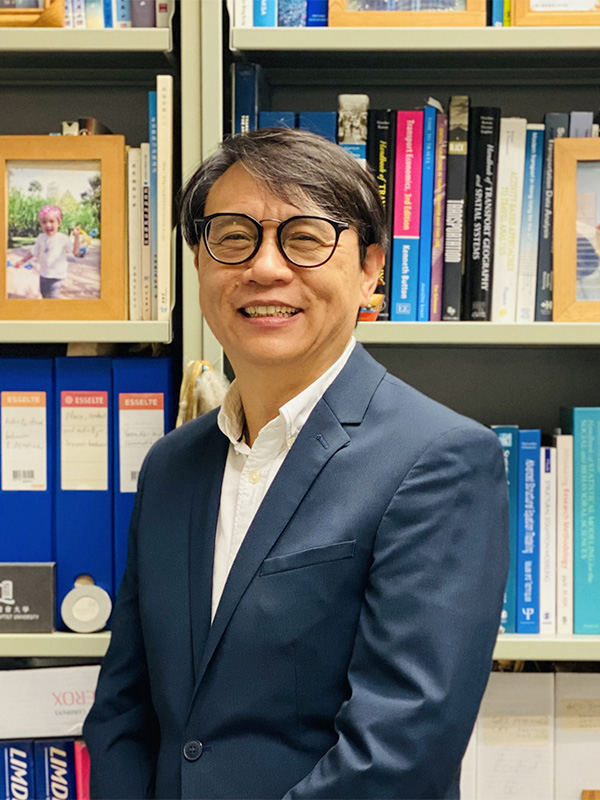
WANG Donggen is a Chair Professor in the Department of Geography at Hong Kong Baptist University (HKBU) and serves as Director of the Centre for China Urban and Regional Studies. His academic leadership spans editorial roles in major transportation journals and active participation in professional societies across Asia. Education: Ph.D. in Architecture, Eindhoven University of Technology, Netherlands M.A. in Development Studies, Erasmus University, Netherlands M.Sc. in Urban Design, Wuhan University, China B.Sc. in Geodesy and Geomatics, Wuhan University, China Research Focus: Professor Wang's work centers on activity-travel behavior and transport time geography , examining how built environments shape mobility patterns, socio-spatial segregation, and wellbeing. His research integrates machine learning for causal inference in travel behavior, with strong emphasis on Chinese urban contexts like Shenzhen and Beijing. Key themes include rail transit impacts, travel satisfaction determinants, and housing-residential satisfaction linkages. Publication Trends: Recent work (2022-2024) reveals growing interdisciplinary integration—combining transportation science with mental health studies, food accessibility research, and gendered mobility analysis. His methodological innovations in difference-in-differences frameworks and instrumental variable approaches address complex behavioral questions in urban settings. Scientific Recognition: Fellow, Hong Kong Society for Transportation Studies (2013–present) Grants & Service: Secured 5+ major grants from Hong Kong RGC (2022-2029) and NSFC, including AI-enabled geospatial platforms for disability mobility and rail transit behavior studies. As Co-Editor-in-Chief of Travel Behavior and Society and editorial board member for 5 top journals, he shapes global discourse in transportation geography. Previously chaired the Hong Kong Geographical Association (2009-2013). Research Infrastructure: Leads the Centre for China Urban and Regional Studies, driving collaborative research on urbanization, transportation systems, and regional development across Chinese cities through interdisciplinary teams.
Zhenqin Wu is an Assistant Professor at the Department of Computer Science, University of Hong Kong. He holds a PhD from Stanford University (2016–2022) under advisors Prof. James Zou and Dr. Vijay Pande, with research focused on applying AI/ML to computational biology and spatial omics. His work bridges machine learning and spatial biology, developing tools for analyzing spatial proteomics, transcriptomics, and histopathological imaging. Education: PhD in Computer Science, Stanford University (2016–2022) BSc in Chemistry, Peking University Research Interests: AI-driven spatial omics analysis Multimodal data integration in biology Machine learning for medical imaging Computational modeling of cellular microenvironments His recent work highlights include developing the ROSIE AI framework for immunofluorescence generation and the CORAL method for spatial multiomics integration. Articles focus on immunotherapy response prediction, disease biomarker discovery, and interpretable models for tissue structure analysis. Professional Affiliations: Scientific Advisor, Enable Medicine (biotechnology startup) AI Fellow, Genesis Therapeutics He actively mentors PhD/postdoc researchers and collaborates on AI-driven drug discovery projects. His lab focuses on translating spatial omics insights into clinical applications.
Dr. Heming Cui is an Associate Professor at the Department of Computer Science, University of Hong Kong, affiliated with the School of Computing and Data Science. He joined HKU in 2015 after completing his PhD at Columbia University, following bachelor's and master's degrees from Tsinghua University. His research focuses on distributed systems, operating systems, and high-performance computing, with a strong emphasis on reliability and security. Dr. Cui leads projects in distributed AI training systems, blockchain frameworks, and secure execution environments, collaborating closely with industries like Huawei. He has received notable awards including the Croucher Innovation Award (2016), HK$5 million RGC Research Impact Fund (2023), and best paper awards at ICSE and ACSAC. His work has led to commercialized systems such as Huawei's MindSpore integration of Fold3D and TICS' UTEE component derived from his secure systems research. Dr. Cui actively recruits PhD students specializing in systems security and database systems, prioritizing candidates with strong systems-building backgrounds. Key grants include leadership in projects totaling HK$30 million, including flagship collaborations with Huawei and RGC grants targeting transaction/analytical processing in edge computing and cloud security. His research spans over 50 publications in top venues like SOSP, NSDI, and IEEE journals, emphasizing reproducibility and industrial impact.