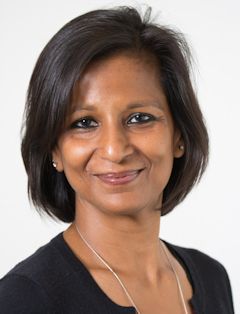
Waltraud Kleindienst serves as a Senior physician in the Department of Neurology at the University of Salzburg. Her research spans neuro-oncology, neuroimmunology, and advanced imaging techniques with substantial publication output from 2016 through 2025. Her primary research interests include: Neuro-oncology with focus on glioblastoma and CNS lymphoma Neuroimmunology including multiple sclerosis and paraneoplastic syndromes Advanced neuroimaging techniques, particularly radiomics applications Molecular biomarkers with emphasis on DNA methylation patterns Seizure disorders and status epilepticus Analysis of Dr. Kleindienst's publication record reveals an evolving research trajectory with increasing emphasis on computational approaches to neuroimaging and molecular biomarkers for risk stratification in neurological disorders. Her recent work demonstrates strong collaboration within Austrian neurology networks, particularly examining real-world clinical outcomes and translational applications of radiomics in neuro-oncology. Dr. Kleindienst maintains active research collaborations with prominent Austrian neurology specialists including Trinka E., Moser T., and Harrer A., contributing to multi-center studies that bridge clinical practice and advanced computational methods in neurological care.
Felix Lang is a Senior Scientist at the School of Classical Studies , University of Salzburg. With over 166 publications and 14 research projects since 2004, he specializes in Roman archaeology focusing on the Noric Danube Limes and Salzburg Lake District. Project Manager for 'Life and Death on the Noric Danube Limes' Leading 'Buried and Forgotten Finds' research in Salzburg Lake District Research Interests include: Roman burial practices and identity studies Geophysical prospection of ancient sites Late antique reuse of Roman estates Regional trade routes analysis Recent collaborative work with Huber, Traxler, and Stadlmayr explores funerary landscapes, military-civilian dynamics, and cultural continuity along the Danube frontier.
Grazia Prontera is an Associate Professor in History specializing in migration studies and German-Italian relations. Her research examines labor migration patterns, political participation of migrant communities, and historical impacts of forced labor. Recent projects include managing the 2017-2018 biographical study Italian Forced Laborer about Venanzio Gibillini. Research focuses: Post-war European labor migration systems Italian diaspora communities in Germany Migrant political activism and advisory councils Cold War-era social policies Historical trauma and war impacts Her scholarly output includes 38 publications, with recent works analyzing Munich's Migration Advisory Council (2024) and Italian social clubs in late-20th century Germany (2023). Her research employs interdisciplinary approaches combining social history, policy analysis, and cultural studies. Honors include: DAAD Research Scholarship (2005) University of Bologna Fellowship (2003) Year of the Humanities Award (2007) She maintains active scholarly engagement through international lectures, including recent presentations on Eurocommunism (2023) and migrant political spaces (2024), and participates in public history initiatives through media contributions on migration heritage.
Archana Singh-Manoux is a Research Professor (Directeur de Recherche) at INSERM and an Honorary Professor at University College London . Her work focuses on the epidemiology of aging and neurodegenerative diseases , particularly through the Whitehall II cohort study . Key research areas : Cognitive decline, dementia, social determinants of health, health inequalities, aging. Grants : NIH R01 grants (2019-2024), MRC co-investigator roles (2018-2023). Awards : Prix Coup d'élan (2019), Inserm Prix Recherche (2015), ERC Starting Grant (2005), Academy of Europe member (2010). Publications : Over 400, including Nature , Lancet , and JAMA articles on diabetes-onset age, sleep patterns, and social factors in dementia risk.
Herbert Michlmayr is a researcher at the Institute of Plant Breeding within the Department für Agrarwissenschaften at the University of Natural Resources and Life Sciences Vienna . His work focuses on plant-microbe interactions and mycotoxin detoxification mechanisms. Specializes in Trichothecene toxin metabolism Develops analytical methods for mycotoxin detection Investigates UDP-glucosyltransferase activity in plant defense Collaborates across disciplines in food safety and agricultural biotechnology Michlmayr's research addresses fungal contamination in cereals through biochemical approaches, including deoxynivalenol (DON) modification and masked mycotoxin analysis . His publications demonstrate expertise in enzymatic synthesis and toxin structural characterization . He has supervised Master's theses on heterologous enzyme systems and serves as peer reviewer for journals like Food Chemistry and Applied Microbiology and Biotechnology . His work informs EU-funded research on food safety and FWF projects on plant-pathogen interactions.
Fridolin Krausmann is a Full Professor and Deputy Director at the Institute for Social Ecology at the University of Natural Resources and Life Sciences, Vienna (BOKU). He has held this professorship since 2009 after serving as Associate Professor from 2007-2009. His academic career spans over two decades with significant contributions to the field of social ecology and socio-metabolic research. Professor Krausmann's research focuses on social-metabolic transitions, sustainable agricultural and food systems, environmental and agricultural history, social-ecological long-term research (LTSER), human appropriation of net primary production (HANPP), and material and energy flow analysis. His work bridges historical perspectives with contemporary sustainability challenges, examining long-term patterns in how societies use energy, materials, and land. He has developed innovative approaches to model economy-wide material stocks and flows, with particular attention to urban systems and their global environmental impacts. His recent publications reveal a strong focus on quantifying material stocks in long-lived products, analyzing the global biodiversity footprint of urban consumption (particularly in Vienna), and developing integrated models of material and energy metabolism. His research team has made significant contributions to understanding how spatial patterns of built structures influence resource demand and how historical transitions in social metabolism relate to contemporary sustainability challenges. 2021 Highly Cited Researcher (Web of Science) 2020 Best Paper Award of the Journal Resources, Conservation and Recycling 2019 Graedel Prize: Journal of Industrial Ecology (JIE) Senior Author Best Paper Prize 2020 Highly Cited Researcher (Web of Science) 2019 Highly Cited Researcher (Web of Science) Professor Krausmann leads multiple research projects including the WWTF-funded BIODIV VIENNA project analyzing Vienna's biodiversity footprint, the MISO project modeling global material stocks and flows, and contributes to international initiatives like the UN Environment Programme's International Resource Panel. He has supervised numerous PhD students and collaborates extensively with international research networks focused on sustainability transitions and socio-ecological systems. His work is central to the Vienna School of Social Metabolism, which examines the biophysical basis of socioeconomic systems through historical and contemporary analyses of material and energy flows. This research group has become a leading center for advancing methodologies in socio-ecological research and providing evidence for sustainable resource use policies.
Roman Klementschitz is a Professor at the Institute of Transport Studies within the Department of Landscape, Water and Infrastructure at the University of Natural Resources and Life Sciences, Vienna (BOKU). With over two decades of academic experience, he has established himself as a leading researcher in transportation planning and mobility systems, with particular expertise in rural and peripheral regions. Dr. Klementschitz earned his PhD from University Bodenkultur Vienna in 2002 following his Master's thesis at the Technical University of Vienna in 1997. His academic career began with lecturing positions at Fachhochschule Technikum Wien in 2005, progressing to BOKU in 2008 where he continues to contribute significantly to transportation research and education. His research spans spatial and regional planning, traffic safety, transportation economics, and mobility behavior, with particular emphasis on public transport systems and demand-responsive solutions for rural areas. Dr. Klementschitz has developed specialized expertise in sustainable mobility transitions, the impacts of emerging technologies on transportation systems, and post-pandemic recovery strategies for mobility services. Analysis of his recent publications reveals a strong focus on practical implementation of sustainable mobility solutions across European contexts, particularly addressing challenges in demand-responsive transport systems, rural accessibility, and the integration of new mobility services. His work consistently bridges theoretical research with practical application, featuring collaborations with transportation authorities and policymakers across multiple countries. Dr. Klementschitz has received several prestigious awards for his contributions to transportation research: Outstanding Reviewer 2012, Journal of Urban Planning and Development der American Society of Civil Engineers Förderungspreis der List-Unternehmensgruppe für wissenschaftliche Arbeiten zum City-Verkehr (2009) Klaus-Fischer-Innovationspreis für Technik und Umwelt (2004) Anerkennungspreis für Dissertationen im Rahmen des FSV-Preises 2003 der Forschungsgemeinschaft Straße und Verkehr; Österreich (2003) As an active researcher, Dr. Klementschitz has supervised numerous theses and led major international projects including DREAMS, GreenPATH, and SMACKER. He regularly organizes conferences and workshops on sustainable transportation topics, serving as a key connector between academic research and practical transportation planning across Europe. His current research teams focus on innovative mobility solutions for rural and peripheral regions, with particular attention to the integration of new technologies into existing transportation networks and the development of sustainable mobility systems resilient to future challenges.
Franz-Xaver Rupprecht is a researcher at the Institute of Transport Studies , part of the Department of Landscape, Water and Infrastructure at the University of Natural Resources and Life Sciences, Vienna (BOKU) . His work focuses on transportation modeling and simulation. Research interests include: Dynamic transportation network modeling Origin-destination matrix disaggregation Stochastic trip synthesis algorithms Urban mobility simulation He has presented at international conferences like the MATSim User Meeting and hEART Symposium , showcasing work on all-day round-trip synthesis and transportation behavior analysis.
Ursula Lutzky is an Associate Professor at the Vienna University of Economics and Business (WU) , specializing in Business Communication . She is the Deputy Head of the Institute for Communication Management and Media and Deputy Head of the WU Senate . Previously, she held roles at Birmingham City University and the University of Vienna. Senior Fellow, Higher Education Academy (UK) Regional Vice President for Europe, Africa, and the Middle East (Association for Business Communication, 2021–2025) Research Interests Lutzky’s work bridges digital business communication , pragmatics , and applied corpus linguistics . She investigates how businesses interact with the public through social media , e-commerce platforms , and forums , focusing on linguistic patterns and discursive effects . Her 2021 monograph, The Discourse of Customer Service Tweets , is a landmark study in corporate webcare analysis. Recent publications highlight trends in online polarization , humor in business , and apologies in digital forums . These works emphasize her expertise in big data linguistic analysis and digital discourse . Scientific Awards Senior Fellow, British Higher Education Academy
Markus Rudolf Crell is a researcher at Graz University of Technology's Institute of Neural Engineering, specializing in Brain-Computer Interfaces (BCIs) using electroencephalography (EEG). His work focuses on decoding hand movements and handwritten characters for applications in Locked-in Syndrome communication, with active publications and conference participation from 2023-2025. His educational background includes: Bachelor of Science (B.Sc.) Master of Science (M.Sc.) Crell's research centers on neural signal processing for movement-based BCIs, addressing critical challenges in training data generation, motion termination detection, and handwritten character classification. Key focus areas include: Asynchronous movement-based BCI paradigms Continuous hand movement decoding from EEG Low-frequency EEG analysis for communication systems Machine learning integration for real-time BCI performance His 2023-2025 publications demonstrate consistent innovation in BCI data generation and decoding techniques, particularly through movement-offset information and kinematic approaches to handwritten character classification. This work bridges neuroscience and computer science to advance non-invasive communication systems for motor-impaired individuals. No scientific awards were documented in the provided information. While specific advisees and grants aren't listed, his active conference participation—including presentations at the Graz Brain-Computer Interface Conference and ÖGBMT Jahrestagung—indicates ongoing collaborative projects. His research trajectory suggests continued development of practical BCI applications through institutional partnerships. Crell operates within Graz University of Technology's neural engineering ecosystem, collaborating closely with G. R. Müller-Putz's research team. His work leverages institutional resources for EEG data collection and analysis, contributing to the university's prominence in BCI research through the Institute of Neural Engineering.
Ernst Tomasch is a researcher at the Institute for Vehicle Safety (VSI) within Graz University of Technology . His work focuses on vehicle safety systems , crash analysis , and advanced driver assistance systems (ADAS) , with particular emphasis on preventing accidents involving trucks, cyclists, and pedestrians. Recent publications highlight his expertise in Crash cushion and roadside barrier design Cornering ABS for motorcycles ADAS effectiveness for vulnerable road users Child pedestrian safety modeling Heavy goods vehicle safety Simulation-based accident prevention . His research contributes to harmonized pre-crash scenarios and safety protocols for automated driving systems. He collaborates on projects like KISIMO (child pedestrian modeling) and PREVENT (guardrail transitions). Contact: ernst.tomasch@tugraz.at
Dr. Michael Bedek is a Researcher at the Department of Psychology , Natural Science Faculty , University of Graz . His work integrates cognitive science with mathematical modeling of cognitive processes, focusing on lattice theory applications for competence assessment, visual search, and edutainment. Current research emphasizes adaptive approaches in digital game-based learning and personalization in educational systems. Email: michael.bedek@uni-graz.at Projects: ITHACA, A+CHIS Research focus: Cognitive biases in visual analytics, adaptive health information systems, and formal concept analysis applications
Sonja Walcher is a researcher at the Institute of Psychology, Faculty of Natural Sciences, Karl-Franzens-University Graz. Her work focuses on the intersection of cognitive psychology and neuroscience, particularly investigating how eye movements correlate with internal cognitive processes. Education: BSc, MSc, and Dr.rer.nat. in psychology/neuroscience Institutional Affiliation: Karl-Franzens-University Graz Her research primarily explores oculometric indicators of internal attention , examining how eye behavior reflects mental states during visuospatial working memory, mental imagery, and attentional tasks. This includes studies on: Eye movement coupling to cognitive load Perceptual decoupling during internal focus Pupillary response modulation by attention Distraction susceptibility metrics Neurophysiological correlates of mental effort She has received funding from the Austrian Science Fund (FWF) for projects such as Ocular mechanisms in internally directed cognition (2021-2024) and Oculometric investigation of internally directed cognition (2016-2021).
Iris Koch is a researcher at the Institute for Antiquity , affiliated with the Faculty of Humanities at the University of Graz. She works on interdisciplinary projects in the Eastern Alps region, focusing on early medieval settlement patterns and castle archaeology. Research Focus : Early Medieval Archaeology, Castle Archaeology, Eastern Alps Archaeology Key Projects : Settlement of the SE Alpine Area in the Early Middle Ages (2018-2022), Hierarchies and networks. The castles of Wildon (2024-2027) Funding : Austrian Science Fund (FWF) Her recent publications analyze settlement distributions in Styria and fieldwork progress at sites like the Franziskanerkogel near Maria Lankowitz. She contributes to both journal articles and edited volumes in her field. Active in third-party funded research, Dr. Koch collaborates with scholars such as Levente Horváth on medieval archaeological investigations. Her work bridges fieldwork with theoretical interpretations of early medieval networks and hierarchies.
Klaus Tausend is an Associate Professor at the University of Graz, Faculty of Humanities, specializing in Mycenaeology and ancient marginal cultures. He has been actively involved in archaeological research in Greece since the 1990s, particularly focusing on the Peloponnese region with long-term projects at Pheneos and Arcadia. Institute for Antiquity, University of Graz Head of Center for Antiquity (since 2011) Deputy Director of the Institute (since 1994) His research combines archaeological fieldwork with historical analysis, covering: Military affairs in Late Mycenaean Greece Ancient transport routes and infrastructure Topography of Greek mountainous regions Interactions between Hellenic consciousness and polis identity Recent publications analyze fortification systems and regional identities in ancient Greece. He has received research funding from the Austrian Science Fund (FWF) and led multiple international symposia. Key collaborations: Co-founder of the Pheneos research project Editor of 'Studies on Regional, Social, and Ethnic Identity in Antiquity' book series Member of Etairia Peloponnesiakon Spoudon (Greece) and CMS (Austria)