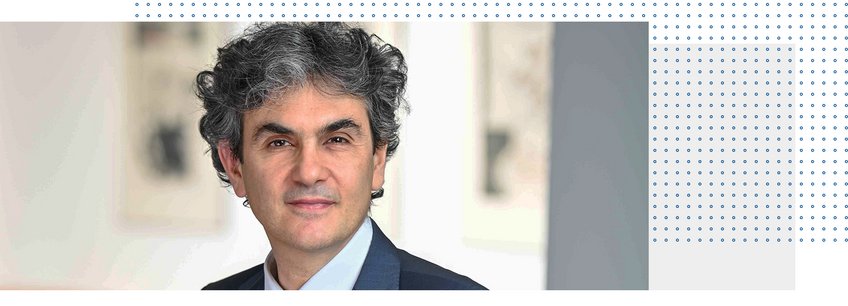
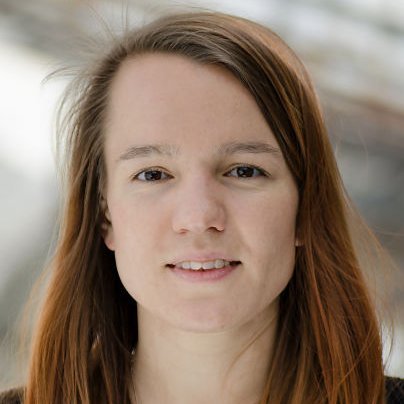
Prof. Dr. Eva Spies is a Professor for the Study of Religion with Focus on Africa at the University of Bayreuth within the Faculty of Humanities & Social Sciences . She holds a PhD in Cultural Anthropology from the University of Mainz and leads the Research Section Moralities in the Africa Multiple Cluster of Excellence (EXC 2052). Key Roles : Principal Investigator, Bayreuth International Graduate School of African Studies (BIGSAS) Vice Dean of Research Co-founder, German Association for the Study of Religion's Africa working group Research Interests span religious plurality, development cooperation, and transformative practices. She coined the concept of religious engineering to analyze how religious resources shape social/political worlds. Regional expertise in Niger/West Africa and Madagascar/Indian Ocean , with focus on: South-South mission Religion and pandemic response Intercultural hermeneutics Epistemological conflicts Material culture in development Projects : Africa Multiple Cluster of Excellence (2025): "Religious engineering. The making of moralities, development and religion in Niger" Humboldt Research Hub (2021): "Fighting pandemics with religion?" (with Moi University and University of Zimbabwe) Education : PhD in Cultural Anthropology, University of Mainz
Prof. Antje Stokman is a Professor of Landscape Architecture and Landscape Planning at HafenCity University Hamburg. Her department researches and designs landscape-, nature-, and water-related transformation processes, with teaching and research focused on the design and collaborative creation of urban landscapes in their dynamic interactions between natural and human habitats. Her research interests include: Landscape Architecture and Urban Design Climate-Adapted Urban Landscapes Blue-Green Infrastructure Water-sensitive Urban Design Linear Infrastructure Landscapes Urban Transformation Processes Prof. Stokman has led several significant research projects including the LILAS research network (Linear Infrastructure Landscapes as Open Spaces for the City in Climate Change), the City on the Blue Belt project, and the Blue-Green Infrastructure Dialogue Process. Her recent publications focus on transforming urban linear infrastructure landscapes and developing water development corridors along federal waterways as open space potential for urban green-blue infrastructure. Scientific awards: City of Hamburg's Teaching Prize (Hamburg Teaching Award) Prof. Stokman supervises doctoral projects including Katarina Bajc's work on "Perception and Design of Ecological Processes in Landscape Architecture" and Anne Kittel's research on "The Transformation of Metropolitan Landscapes." She has received research funding from various sources including the Federal Environment Agency, BMUV, BMBF, and EU Horizon 2020. She co-leads the Blue-Green Infrastructure Lab (BGI-Lab) with Prof. Wolfgang Dickhaut, which focuses on interdisciplinary research at the intersection of environmentally sound urban planning and landscape architecture.
Elena Simperl is a Professor of Computer Science and Deputy Head of Department for Enterprise and Engagement at King's College London's Department of Informatics. She co-directs the King's Institute for Artificial Intelligence and serves as Director of Research for the Open Data Institute. As a Hans Fischer Senior Fellow at the Technical University of Munich's Institute for Advanced Study, she leads the Trustworthy Knowledge Graphs focus group and contributes to advancing human-centric AI research across European institutions. Professor Simperl obtained her doctoral degree in Computer Science from the Free University of Berlin and her diploma from the Technical University of Munich. Prior to joining King's, she held academic positions in Germany, Austria, and at the University of Southampton, and was a Turing Fellow. Her career trajectory demonstrates consistent leadership in bridging academic research with practical applications in data ecosystems. Her research sits at the critical intersection of AI and social computing, focusing on human-centric approaches to building sociotechnical systems that integrate data, algorithms, and human capabilities. She investigates how to make knowledge engineering more accessible, how to leverage collective intelligence for data quality improvement, and how to design participatory AI systems that address societal challenges like misinformation. Her work spans knowledge graphs, semantic technologies, crowdsourcing, and open data, with particular emphasis on the social dimensions of data-intensive systems and the governance frameworks needed for trustworthy AI deployment. Analysis of her recent publications reveals a strong evolution toward integrating large language models with traditional knowledge engineering practices while maintaining human oversight. There's a clear trajectory from foundational work on knowledge representation toward increasingly applied research addressing real-world challenges in media ecosystems, citizen science, and data governance, with growing attention to policy implications of AI technologies. Fellow of the British Computer Society Fellow of the Royal Society of Arts Hans Fischer Senior Fellow at TUM-IAS (2023) Ranked among top 100 most influential scholars in knowledge engineering of the last decade Included in Women in AI 2000 ranking Professor Simperl has led 14 major European and national research projects totaling millions in funding, including MediaFutures (a Horizon 2020 program tackling online misinformation), QROWD, ODINE, Data Pitch, and ACTION. She currently co-chairs the Croissant working group in ML Commons developing data standards for AI, and serves as president of the Semantic Web Science Association. Her research has directly influenced the development of data ecosystems supporting startups and citizen science initiatives across Europe, demonstrating exceptional ability to translate theoretical advances into practical impact. As Director of Research at the Open Data Institute, she oversees initiatives connecting data entrepreneurs with artists and civic organizations. Her leadership in the MediaFutures project established a data-driven innovation hub that supported 51 startups/SMEs and 43 artists through three open calls, creating a sustainable model for arts-technology collaborations addressing media challenges. Her work with the ODINE project helped create a European ecosystem for data-driven startups, demonstrating her commitment to building practical applications of open data principles.
Schloss Dagstuhl - Leibniz Center for InformaticsGermany
Atreyi Kankanhalli is a Professor at the National University of Singapore, specializing in Information Systems with a focus on knowledge management, healthcare IT, and digital innovation. Their research spans over three decades, with prolific contributions in top journals like MIS Quarterly, Journal of AIS, and Information & Management. They have co-authored over 150 papers addressing topics such as crowdsourcing, online communities, and the impact of AI on scholarly practices. Notable work includes studies on user adherence to health apps, innovation in public sector data utilization, and the ethical challenges of generative AI in peer review. Kankanhalli has also led research on global virtual teams and digital technologies' role in social justice, reflecting a commitment to both technical and societal dimensions of information systems. Education & Background: While specific degree details are not provided, their extensive publication history and academic roles imply advanced qualifications in Information Systems or related fields. They have collaborated with global researchers across institutions like NUS, University of Illinois, and Singapore Management University. Research Themes: Core areas include digital health interventions (e.g., fitness app adherence), organizational innovation via open data and crowdsourcing, and the socio-technical challenges of AI in academia. Their work often bridges theoretical frameworks with practical applications, such as healthcare decision support systems and policy-driven technology adoption. Impact & Influence: As an editorial board member and frequent conference contributor (e.g., ICIS, PACIS), Kankanhalli shapes the field's research agenda. Their recent focus on generative AI's implications highlights proactive engagement with emerging technologies' ethical and methodological challenges.
Max Planck Institute for Empirical AestheticsGermany
Professor Emily S. Cross is a cognitive and social neuroscientist holding dual appointments at the University of Glasgow's School of Psychology & Neuroscience (UK) and Western Sydney University's MARCS Institute (Australia). She directs the Social Brain in Action Laboratory (SoBA), specializing in how embodied experiences shape social perception. Cross earned a BA in psychology and dance from Pomona College, MSc from University of Otago as a Fulbright Fellow, and PhD in cognitive neuroscience from Dartmouth College, followed by postdoctoral training at University of Nottingham and Max Planck Institute. Her research explores experience-dependent plasticity through dance, robotics, and neuroimaging techniques (fMRI, TMS), focusing on four key areas: neural signatures of embodied expertise, neuroaesthetics, visual learning across lifespan, and social engagement with robots. This interdisciplinary work bridges neuroscience, performing arts, and robotics. Cross's research shows strong focus on human-robot interaction dynamics, cultural perceptions of robotics, and the neural correlates of aesthetic experiences. Recent work investigates how social experience shapes human-robot interaction, cross-cultural differences in robot acceptance, and computational approaches to movement analysis. Publications consistently demonstrate methodological innovation through VR, economic games, and large-scale motion capture libraries. Honors & Awards: Jacob Brownowski Award (British Science Association, 2017) Philip Leverhulme Prize in Psychology (2018) World's 50 Most Renowned Women in Robotics (2020) Elected member: Young Academy of Europe Elected member: Royal Society of Edinburgh's Young Academy of Scotland Her ERC Starting Grant funds groundbreaking work on human-robot interaction. Cross leads the Social Brain in Action Lab with focus on mentoring next-generation scientists and research ethics training. The lab employs neuroimaging, training paradigms, and diverse methodologies to study action observation across dance, music, and robotics domains.
Dr. phil. André Fiebig is a Permanent Research Associate and PostDoc at the Institute of Fluid Mechanics and Technical Acoustics (ISTA) within Faculty V - Transportation and Mechanical Systems at Technical University of Berlin. From January 2019 to December 2024, he served as a Visiting Professor responsible for the field of psychoacoustics, funded by the HEAD Genuit Foundation. Since January 2025, he has been leading the 'Psychoacoustics and Noise Effects' working group at the Department of Technical Acoustics. His research spans multiple areas within psychoacoustics and soundscape studies, including fundamentals and modeling of psychoacoustic sensation variables, binaural psychoacoustics, assessment of ambient noise and soundscapes, and psychoacoustic evaluation of sound insulation measures. His work also addresses cognitive stimulus integration of auditory sensations, auditory recreation, acoustic quality of stay, characterization of quiet areas, and measuring sound-induced emotions. Analysis of his recent publications reveals a strong focus on urban soundscapes, noise-conscious behavior in transportation, and the development of methodological frameworks for soundscape assessment. His work often integrates psychoacoustic principles with environmental considerations, particularly examining the relationship between sound environments and human health. Recent research shows increasing emphasis on cross-cultural studies of noise perception and the development of standardized assessment methodologies. Dr. Fiebig is involved in the EARS (Education and Applied Research on Soundscapes) initiative and has contributed to numerous collaborative research projects examining the intersection of urban planning, environmental acoustics, and human perception. His work frequently appears in major acoustics conferences and journals, demonstrating his active role in advancing the field of psychoacoustics and soundscape research. His laboratory work focuses on psychoacoustic testing methodologies, soundscape assessment techniques, and the development of evaluation instruments for noise protection measures. The 'Psychoacoustics and Noise Effects' working group under his leadership conducts research on both theoretical aspects of sound perception and practical applications for urban noise management.
Prof. Dr. Talja Blokland is a Professor of Urban and Regional Sociology at the Institute of Social Sciences within the Faculty of Cultural, Social and Educational Sciences at Humboldt University of Berlin. Based at Universitätsstraße 3b, Room 301, she actively contributes to urban sociological research and teaching, with contact via talja.blokland@sowi.hu-berlin.de. Her position as Women's* representative underscores her institutional engagement beyond academic duties. Bloklund's research centers on urban sociology, examining social inequality, neighborhood dynamics, social capital, public space, and urban diversity through qualitative and ethnographic lenses. She investigates how spatial arrangements shape social interactions, community formation, and exclusionary processes in cities like Berlin, Rotterdam, and São Paulo. Her work emphasizes the lived experiences of marginalized populations and the role of public spaces in mediating urban life, particularly in contexts of migration, segregation, and rapid urban transformation. Analysis of her recent publications reveals a dominant focus on 'urban impasses'—structural deadlocks where inequality becomes entrenched. Her scholarship consistently explores segregation mechanisms, social trust in public spaces, and the impact of policies like lockdowns on urban dwellers. Methodologically, she prioritizes ethnographic approaches to capture nuanced social realities, with recurring attention to Berlin's evolving urban landscape. Key thematic threads include the paradoxes of diversity, the spatial dimensions of social capital, and how marginalized groups navigate urban inequalities through everyday tactics.
Prof. Dr. Frank-Martin Belz is a full professor of corporate sustainability at the TUM School of Management and Director of the TUM SEED Center, a global interdisciplinary research hub. His career includes studies in business administration at the University of Mannheim (1990), followed by doctoral and post-doctoral research at the University of St. Gallen in Switzerland. He has conducted extensive research stays in Sweden, the USA, Canada, and Finland. His research focuses on sustainable entrepreneurship, sustainability marketing, and community-based enterprise creation. He emphasizes integrating social identity theory and structuration theory into entrepreneurial processes, particularly in environmental and social contexts. His work bridges academic theory with practical applications, including innovative approaches to consumer integration in product development and sustainability-driven marketing strategies. Key achievements include the award-winning textbook "Sustainability Marketing: A Global Perspective" (2010) and influential publications on sustainable entrepreneurship models and community-based enterprises. He actively promotes cross-sector collaboration through his leadership at the TUM SEED Center, fostering global partnerships in sustainability research and education.
Dr. Laura Mae Jacqueline Herzog is a postdoctoral researcher at the University of Osnabrück, affiliated with the Institute of Geography and the Research Center Institute of Environmental Systems Research. She serves as representative of mid-level faculty staff in the faculty council of Department 1 Cultural and Social Sciences for the term 2024-2026 and is a member of the working group Resource Management. Dr. Herzog received her PhD from the University of Bern, where she worked as a research assistant at the Chair of Policy Analysis and Environmental Governance. Prior to that, she completed her diploma in political science at the Otto-Suhr-Institut (OSI), Free University of Berlin, focusing on common-pool resource problems and environmental conflicts. Her research focuses on transformation pathways towards sustainable interactions between humans and nature in social-ecological systems, with particular emphasis on aquatic ecosystems. She works predominantly inter- and transdisciplinarily, examining sustainable land, water and open space management, participatory processes and co-creation, transformation processes and capacities, and environmental governance. Her methodological approaches include participatory modeling, interviews & surveys, comparative case study analysis, causal loop diagrams, and Social Network Analysis. Dr. Herzog's publications reveal a consistent focus on water resource management, social-ecological systems, and governance of common-pool resources. Her work spans from micro-pollutant regulation in the Rhine River to transformation processes in peatland use and digitalization in water management. She has developed expertise in analyzing cooperation networks, stakeholder engagement, and the emergence of collaborative governance structures in environmental management contexts. Member of the 3rd cohort of the PostDoc Academy for Transformational Leadership of the Robert Bosch Foundation (2020-2022) Founding member of the Working Group on Governance of Social-Ecological Systems of the Earth System Governance network Dr. Herzog actively engages with stakeholders and the public through her work on the Future Water Laboratory, MOOSland project, and LimnoScenES project. She has served on scientific advisory boards for research projects including BaltAqua and "Participatory visioning for collective action in natural resource management." Her commitment to climate action is evident through her involvement with Scientists4Future in Osnabrück. As part of her research on peatlands, Dr. Herzog works with regional stakeholders to investigate transformation processes toward rewetted peatlands and facilitates knowledge transfer of project findings into teaching materials and exhibition modules. She also conducts research on digital applications for sustainable water use within the Future Water Laboratory.
Max Planck Institute for the Study of SocietiesGermany
Lucio Baccaro is Director at the Max Planck Institute for the Study of Societies (MPIfG) and was Full Professor of Macrosociology at the University of Geneva, where he also served as Deputy Dean for Research (2016–2020). He has held academic positions at MIT, Case Western Reserve University, and visiting roles at the University of Turin and the University of Vienna. His primary affiliations are with MPIfG and the University of Geneva, both central to his research in political economy and sociology. Education: PhD in Management and Political Science, Massachusetts Institute of Technology (MIT), 1999 Doctorate in Labor Law and Industrial Relations, University of Pavia, 1997 Master of Business Administration, Stoa' (IRI-MIT joint venture), 1991 Laurea in Philosophy, summa cum laude, University "La Sapienza", Rome, 1989 Lucio Baccaro’s research focuses on comparative political economy, labor relations, global worker rights, and deliberative governance . His work integrates economic sociology and political sociology to analyze institutional change, social dialogue, and the impact of globalization on labor and welfare systems. He has led major comparative studies on employment models, pension reforms, and international labor standards. His scholarship emphasizes the interplay between institutions, ideas, and power in shaping economic governance. His recent publications reveal a consistent focus on institutional change, deliberative processes, labor market reforms, and global justice . Themes include path dependence in international organizations, the transformation of collective bargaining, and the role of expertise in democratic governance. His interdisciplinary approach bridges sociology, political science, and economics, with strong methodological rigor in comparative and qualitative analysis. Scientific Awards and Honors: Honorary Professor, University of Duisburg-Essen (2023) Professeur honoraire, University of Geneva (2020) International Geneva Award (2011) Outstanding Young Scholar Award, IRRA (2003) Founder's Prize, SASE (2001) Maurice F. Strong Career Development Chair, MIT (2006–2009) Multiple fellowships from SSRC, Harvard, MIT, and CUNY Alfiere del Lavoro, awarded by the President of Italy (1984) Advising and Grants: While specific student advisees are not listed, Baccaro has supervised research and mentored scholars through his roles at MPIfG and the University of Geneva. He has secured substantial research funding, including grants from the Swiss National Science Foundation (SNF) and the Swiss Network for International Studies (SNIS), supporting projects on post-Fordist growth models, employment policy, and deliberative governance. His leadership in co-principal investigator roles highlights his collaborative research approach and institutional influence. Labs and Research Teams: As Director at MPIfG, Baccaro leads a major research institute focused on the study of societal and economic institutions. He has been instrumental in shaping research agendas on political economy and governance, fostering interdisciplinary collaboration and international scholarly exchange.
Saskia Goldberg is a Research Fellow at the Institute of Social Sciences , University of Stuttgart , with a current affiliation as Postdoctoral Researcher at the KU Leuven (since April 2022). Her work focuses on deliberative democracy, dialogic citizen participation, and legitimacy perceptions in representative democracies. Education: Master in Empirical Political and Social Research from University of Stuttgart (2014–2016) Goldberg’s research examines how citizens evaluate deliberative minipublics, the contingent legitimacy perceptions of non-participants, and the intersection of deliberation with policy outcomes. She has conducted empirical studies on democratic preferences, citizen forums, and dialogic participation in local governance. Her recent publications analyze the legitimacy of deliberative forums, cost-benefit assessments of citizen participation, and democratic expectations. Trends in her work include experimental methodologies, comparative studies of political systems, and the practical implications of deliberative innovations in real-world governance contexts. Goldberg has collaborated with institutions like the Ohio State University (2021) and contributed to edited volumes on empirical social research and democratic theory. Her teaching experience includes courses on democratic innovations, political systems, and comparative democracy models. She has participated in projects funded by the Fritz-Thyssen-Stiftung and Baden-Württemberg Stiftung , focusing on evaluating citizen participation mechanisms and analyzing democratic preferences.
Prof. Michael Janoschka is a Professor of Regional Studies at the Karlsruhe Institute of Technology (KIT), leading the Institute of Regional Studies since June 2022. His work focuses on urban transformation, housing market dynamics, and participatory research methods. He holds a doctorate from Goethe University Frankfurt and has taught internationally in institutions including the University of Leeds, Universidad Autónoma de Madrid, and Universidad de Santiago de Chile. Research interests include financialization of housing markets, urban displacement processes, and governance innovations. He has conducted fieldwork across Latin America, Southern Europe, and German urban regions like Leipzig and Karlsruhe. Notable projects include CONTESTED_TERRITORY (EU-funded, 2025), CoprodAction (Ecuador urban co-production study), and the IECO Institute for Eco-Industrial Development (BMBF-funded). Publications span over 20 years, with key works on gentrification dynamics, post-crisis urban landscapes, and transnational real estate investment. His 2016 study Gentrification, displacement, dispossession established frameworks for understanding Latin American urban processes. Current research emphasizes spatial justice and the 'Right to the City' discourse. Education: Humboldt University of Berlin (undergraduate), Goethe University Frankfurt (PhD) Labs/Teams: Institute of Regional Studies research group, IECO eco-industrial development initiative Grants: Over €5M in EU and German federal funding since 2020
Brandenburg University of Technology Cottbus-SenftenbergGermany
Luisa Stuhr is a Researcher at the Department of Sociology of Technology and the Environment within the Faculty of Technology and the Environment at Brandenburg Technical University (BTU) Cottbus-Senftenberg. Her work focuses on socio-ecological transformation processes, energy transition dynamics, and the intersection of crisis and transformation in regions like Lusatia. She holds a background in Political Science (Free University of Berlin) and Ecology/Environmental Planning (Technical University of Berlin). Education: Bachelor/Master in Political Science – Free University of Berlin Studies in Ecology and Environmental Planning – Technical University of Berlin Research Interests: She critically examines socio-ecological transitions, particularly the role of hydrogen in energy systems, energy security frameworks, and how crises influence transformation pathways. Her work integrates historical and power dynamics perspectives to analyze collective responsibility in resource use. Labs/Teams: Active member of the Sociology of Technology and Environment research group, contributing to participatory climate action initiatives like BTU4Future.
Marta Severo is a Lecturer at University of Paris Nanterre in the Department of Information, Communication, Digital Media within the Faculty of Humanities and Social Sciences. She also maintains significant research affiliations with University of Lille where she has directed multiple projects including the PEPS Digital Routes Project (2015-2016). Her academic profile is characterized by interdisciplinary research at the intersection of digital technologies and cultural heritage. Her research focuses on digital representations of cultural heritage, particularly intangible cultural heritage (ICH) and cultural itineraries like the Via Francigena. She investigates how digital methods can be used to study, represent, and safeguard cultural heritage through social media analysis, network mapping, and participatory platforms. Her work examines the relationship between amateurs and institutions in knowledge production, with special attention to Wikipedia as a citizen science tool. Her publication portfolio demonstrates consistent scholarly output with significant contributions to understanding digital representations of cultural routes, stakeholder networks along heritage paths, and participatory approaches to cultural heritage management. Her research shows a clear trajectory from methodological development in digital humanities to applied studies of specific heritage contexts. Humboldt Research Fellowship for Experienced Researchers (2023-2025) for project on ethics of digital participation IUF project funding for 'Data in action' research on research trajectories of implication NEST project (Marie Skłodowska-Curie RISE Action Programme) visiting fellowship at UC Berkeley (2022) As a research leader, Marta Severo has directed multiple significant projects including the ANR COLLABORA project (construction of an observatory of cultural contributory devices), the Wikipatrimoine project (exploring collaborative management of cultural heritage), and the ICH Observatory project (mapping digital networks of ICH stakeholders in France). Her work demonstrates strong commitment to interdisciplinary collaboration across computer science, social sciences, and heritage management. She frequently partners with European institutions including the European Association of Via Francigena Routes and has presented at numerous international conferences on cultural heritage and digital methods.
Schloss Dagstuhl - Leibniz Center for InformaticsGermany
Sri Kurniawan is a researcher at the Computational Media Department within Baskin Engineering, University of California Santa Cruz . With a focus on Human-Computer Interaction , their work spans assistive technology , virtual reality applications , and accessibility design for aging populations and people with disabilities. Key research areas: Accessibility , Virtual Reality , Human-Computer Interaction Recent work explores immersive systems for emergency preparedness and Mixed Reality in biomedical visualization Publications from 2000-2025 demonstrate sustained engagement in mobile health and inclusive game design . Collaborations with institutions like University of Manchester and University of California systems highlight cross-continental research impact.