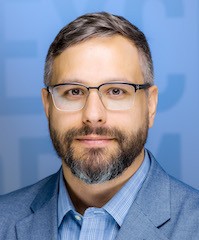
Eric Liberda is an Interim Co-Director and Professor at the School of Occupational and Public Health, part of the Faculty of Community Services at Toronto Metropolitan University. He holds a doctorate in Environmental Medicine from New York University School of Medicine. His expertise spans Toxicology, Pandemic Planning, Inhalation Exposures, and Risk Assessment. Dr. Liberda’s research focuses on protecting Indigenous communities in Canada and globally from environmental health threats, particularly through community-driven initiatives like land-based programs and food security projects. He actively collaborates with organizations such as the Society of Toxicology and the Society of Environmental Toxicology and Chemistry. His work emphasizes innovative solutions to environmental contamination, pandemic preparedness, and the integration of traditional knowledge with modern science. Notable projects include assessing methylmercury risks in Indigenous diets, developing opioid treatment programs, and addressing water policy gaps in Indigenous regions. Dr. Liberda is committed to advancing public health equity through interdisciplinary approaches, leveraging technologies like machine learning and AR/VR to enhance risk communication and community engagement.
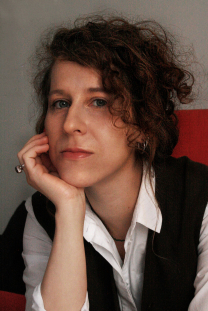
Sara Catenacci is an Assistant Professor in Art History at the IMT School for Advanced Studies Lucca, affiliated with the LYNX Center. She holds a PhD in Art History from Sapienza University of Rome, with prior degrees from the University of Pavia, Ca’ Foscari, and IUAV Universities in Venice. Her research focuses on 20th-century Italian art institutions, socially engaged art practices of the 1970s, and the intersection of art, architecture, and design with social activism. Her academic training included collaborations with institutions like the Peggy Guggenheim Collection and the Venice Biennale’s Archives. Notable roles include Research Curator for the 14th Istanbul Biennial (2014–2015) and Curatorial Coordinator at Castello di Rivoli Museum of Contemporary Art (2019–2020). From 2020–2022, she was part of MACRO Museum of Contemporary Art in Rome’s curatorial team. Her research explores: History of contemporary art institutions and para-institutions in Italy Methodologies for analyzing 20th-century exhibitions International solidarity networks in 1970s art communities Connections between art, architecture, and social engagement Recent publications include studies on Gianfranco Baruchello’s agricultural art project, Riccardo Dalisi’s participatory design methods, and solidarity-driven art networks. Her work bridges art theory with socio-political contexts, emphasizing interdisciplinary approaches. Key projects include analyzing the 'Operazione Roma Eterna' urban intervention and curating exhibitions on radical design collectives like Global Tools. She actively contributes to conferences on modernity, biennale histories, and design pedagogy.
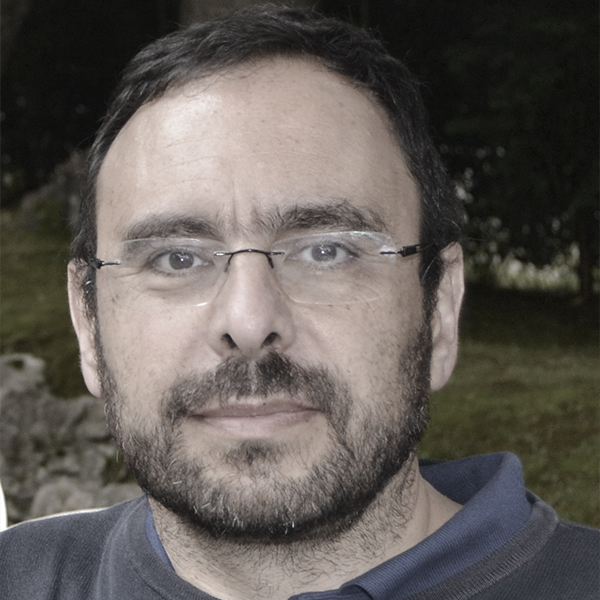
Luis Javier Miguel González is a Professor in the Department of Systems Engineering and Automation at the University of Valladolid since 1997. He has transitioned from early work on automatic fault diagnosis and predictive maintenance to leading research on energy systems dynamics since 2004. He directs the Energy, Economics, and Systems Dynamics research group and has supervised five doctoral theses. His roles include managing the Department of International Development Cooperation, promoting initiatives like the Interuniversity Master's in International Development Cooperation and the University of Valladolid's Development Cooperation Observatory. Research focuses on energy transition pathways, integrating biophysical and socioeconomic constraints through models like MEDEAS. His work addresses systemic challenges such as the land-energy-food nexus, renewable energy variability, fossil fuel depletion, and decarbonization strategies. He has led projects under EU H2020 and national programs, emphasizing interdisciplinary approaches to sustainability. Publications span energy policy analysis, IAM development, and participatory education tools for sustainability. Notable contributions include the WILIAM System Dynamics model and pymedeas open-source software. His research bridges technical modeling with policy implications, addressing global challenges like SDG acceleration and climate mitigation.
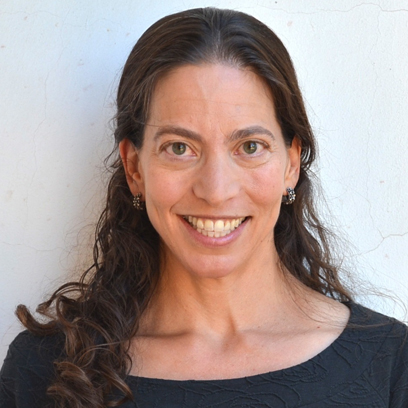
Jessica Goodkind is a Professor and Associate Chair in the Department of Sociology at the University of New Mexico (UNM). Her research focuses on the mental health of refugees and immigrants, particularly addressing social determinants of health, community-based interventions, and cultural competency. She leads the Refugee & Immigrant Well-Being Project (RIWP), a research and community engagement initiative. Education: PhD in Community Psychology from Michigan State University (2002). Community Roles: Co-Director of DEI Curricular Development for UNM School of Medicine, Board Member of United Voices for Newcomer Rights. Research Interests: Sociology of Health and Medicine Race, Ethnicity, and Gender Community-Based Participatory Research Refugee and Immigrant Mental Health Advising & Engagement: Advises resettlement agencies on policy and practice, develops culturally effective healthcare curricula, and collaborates with tribal communities in New Mexico. Recent work includes interventions targeting post-migration stressors and systemic inequities affecting mental health. Labs/Teams: Directs the Refugee & Immigrant Well-Being Project (RIWP), fostering transdisciplinary partnerships to improve newcomer integration and healthcare access.
Professor Philip Woods is a leading academic in educational policy, democracy, and leadership at the University of Hertfordshire. He holds a professorial role within the Schools of Law and Education, focusing on transformative educational practices that foster democratic values and collaborative leadership. His work emphasizes distributed leadership models, holistic democracy in schools, and the role of arts-based and embodied learning in educational reform. Woods has led major international projects including the AECED initiative under Horizon Europe, collaborating with five European countries to integrate aesthetic and embodied learning into democratic education. He has also contributed to significant projects like EFFeCT and PIP, exploring teacher collaboration and co-creation in higher education. His research spans over 130 publications, including the upcoming Handbook on Leadership in Education and Education and Communication: Promoting Peace and Democracy . Key areas of focus include social justice in leadership, equity in school systems, and the intersection of policy with democratic principles. Woods has held leadership roles such as Chair of BELMAS and has advised on educational systems in Sweden and the UK. His recent projects emphasize methodological innovation, cross-national collaboration, and the practical application of theoretical frameworks to real-world educational challenges. Woods' work bridges theory and practice, advocating for democratic principles in educational governance and leadership development. His contributions span policy analysis, leadership capacity-building, and the design of frameworks that promote inclusive and participatory educational environments.
Dr. Alexander Bigazzi is an Associate Professor in UBC's Department of Civil Engineering and Associate Member of the School of Community and Regional Planning. His work focuses on sustainable transportation systems, active travel behavior, and environmental impacts of mobility. He leads the REACT Lab, advancing research on pedestrian/cycling infrastructure, e-bike integration, and equitable urban design. Education: PhD in Civil Engineering (Portland State University, 2014), B.M. in Jazz Saxophone (University of Miami, 2001). Current roles include Associate Head of the Undergraduate Program in Civil Engineering. Teaching includes courses on transportation engineering, bicycle facility design, and urban systems. Research Highlights: Wall Legacy Award-winning project on inclusive transport design Climate Action Award-winning e-bike rebate program in Saanich Pioneering studies on air pollution exposure during active travel Collaborations: Interdisciplinary teams with psychology, kinesiology, and urban planning experts Key Focus Areas: Sustainable mobility transitions, human-centric infrastructure, and equity in transportation access Grants & Awards: Wall Research Award (2024), Community Energy Association Climate Action Award (2023), UBC Tenure & Promotion (2020). Current projects address BC's 2030 sustainability targets through participatory design methods. Labs/Teams: REACT Lab (Research on Active Transportation), collaborating with local governments and NGOs on applied transportation solutions.
Catharina Juul Kristensen is an Associate Professor at the Department of Social Sciences and Business, Roskilde University. She specializes in qualitative social research with a focus on organizational practices in street-level organizations, social innovation, and research ethics. Her affiliations include membership in the Research Ethics Committee at Roskilde University and roles as an external examiner at Aalborg University's Master's in Social Work program. Education: PhD in Social Studies and Organisation, Aalborg University (1998) MSc in Public Administration, Roskilde University (1992) MSc in Social Sciences, University of Birmingham (1989) Research Interests: Catharina's work explores ethical dimensions of organizational ethnography, cross-sector collaboration in social innovation, and volunteer integration in welfare services. She emphasizes practical methodologies for addressing conflicts of interest in multi-stakeholder environments and advancing qualitative research standards. Academic Contributions: She coordinates mandatory doctoral courses on research ethics and qualitative methods at Roskilde University, drawing on 25+ years of teaching experience. Her recent projects include studying social innovation in frontline organizations and ethical practices in asylum-seeking contexts. Awards & Recognition: While no formal awards are listed, her extensive service on ethics committees and academic boards reflects her leadership in research integrity. Advising & Mentorship: Supervised 5 doctoral students and co-developed PhD courses like 'Research Ethics and Integrity' and 'Qualitative Research Methods.' Her mentorship spans both main and co-supervision roles. Labs/Teams: Active in the Social Dynamics and Change (SODYC) research group, focusing on societal transformation through qualitative inquiry.
Professor Kate Morris is a Professor of Social Work at the University of Sheffield’s School of Sociological Studies, Politics and International Relations. She previously held roles as Director of the Centre for Social Work at the University of Nottingham and Deputy Head of School. Her career bridges academic research, policy, and practice with a focus on social work’s role in addressing family dynamics and child welfare inequities. Her research emphasizes family-centered approaches to child protection, safeguarding reform, and addressing systemic inequalities. Key areas include family participation in care decisions, early intervention strategies, and the impact of poverty on child welfare. She led the national evaluation of the Children’s Fund (2003–2006) and currently co-leads studies on family perspectives in child welfare and ‘Think Family’ policy frameworks. Professor Morris actively contributes to social work reform through roles like chairing JUCSWEC and serving on editorial boards for Families, Societies and Relationships and Relational Social Work . Her work critiques risk-driven child protection systems, advocating for more socially inclusive and participatory practices. She supervises PhD students focusing on family practices, child protection, and social work interventions. Major grants include studies on domestic abuse responses, child welfare inequalities under austerity, and comparative analyses of family-based welfare work across welfare regimes. Her publications span over 30 peer-reviewed articles and books, emphasizing systemic reforms and equity-centered social work practices.
Dr. Erika Speelman is an Associate Professor at the Laboratory of Geo-information Science and Remote Sensing within Wageningen University. She holds MSc and PhD degrees from Wageningen University, specializing in tropical agronomy. Her research focuses on developing simulation and gaming tools to enhance stakeholder collaboration in addressing socio-ecological challenges, particularly in the Global South. She leads the INREF SESAM programme (2020-2025), supervising 15 PhD candidates and 2 PostDocs, and coordinates MSc courses in geo-information science and interdisciplinary research methods. Her work spans agroforestry, water governance, and participatory tools for sustainable landscape management. Dr. Speelman has extensive experience collaborating with NGOs, UN agencies, and academic institutions across Asia, Latin America, and Africa. Her research emphasizes boundary objects like serious games to bridge stakeholder perspectives in contested landscapes. Recent projects include exploring water management in Kenya’s Ewaso Ng’iro Basin and land use dynamics in Peru’s Amazon. She teaches courses on spatial modeling, remote sensing integration, and geo-information science in socio-ecological contexts. Her international collaborations reflect a commitment to global sustainability challenges, integrating technical tools with community-driven solutions. Dr. Speelman’s lab is part of the Environmental Sciences group at Wageningen, fostering interdisciplinary approaches to complex environmental problems. She advocates for inclusive landscape governance through participatory tools, aiming to enhance resilience among smallholder farmers and marginalized communities. Her work combines academic rigor with practical impact, addressing issues like climate change, biodiversity loss, and equitable resource distribution.
Ali Hamidi is a researcher affiliated with Linnaeus University's Department of Informatics under the Faculty of Technology. His work focuses on computational thinking (CT) education, systems thinking integration, and STEM pedagogical innovation. He leads the Computational Thinking and Coding Skills in Schools (CoCoS) research group and contributes to the Linnaeus University Systems Community (LNU-STC). Current projects include the EU-funded IGNITE initiative to reform Albanian/Kosovo education systems and the TACTIDE project empowering teachers with digital tools. Hamidi's research emphasizes bridging CT with systems thinking frameworks, robotic learning for children, and maker technologies for inclusive education. He co-edited proceedings for Linnaeus Student Conferences on IT (2019-2021) and holds a Licentiate in Education Sciences (2023). His 2025 Human Systems Management paper advances CT education through systems theory, while 2024 work critiques CT pedagogical foundations. Publications span robotics in early programming education (2022), digital competence for preschool teachers (2022), and textile-based STEM engagement (2019). Collaborations with Milrad, Zerega, and Mirijamdotter highlight interdisciplinary approaches. Current research groups address CT integration across formal/informal learning contexts.
Dr. Tafsir Matin Johansson is an Assistant Professor (Research/Ocean Sustainability, Governance & Management) at the WMU-Sasakawa Global Ocean Institute. He holds a PhD in Maritime Affairs from WMU, an MSc in International Maritime Law from Lund University, and an LL.B. (Honours) from the University of Chittagong. His interdisciplinary research focuses on ocean governance, techno-regulatory frameworks for robotics, Arctic policy, IUU fishing, marine debris, and gender equality in ocean science. Recent work examines climate adaptation in shipping, remote inspection technologies, and sustainable port management. Dr. Johansson has led projects funded by Transport Canada, the European Union, and Swedish/Danish agencies, addressing oil spill response, underwater noise, and autonomous systems. His publications frequently analyze regulatory innovation for emerging technologies and crisis management strategies in maritime operations.
Ina Horlings is a Professor at the Faculty of Spatial Sciences, University of Groningen, affiliated with the Urban and Regional Studies Institute. Her work focuses on sustainable development, spatial planning, and climate adaptation. She contributes to UN Sustainable Development Goals through her research on citizen engagement in urban green spaces, co-creation strategies, and transformative community practices. Her research explores intersections of environmental policy, urban planning, and social innovation. Notable topics include subnational climate leadership, stakeholder acceptance of floating developments, and resourceful resilience in communities. She has published extensively in peer-reviewed journals and books, with over 80 research outputs since 2015. Education: Ph.D. in Spatial Sciences (details not explicitly provided in text). Grants/Advising: Supervised 7 academic works and engaged in multiple funded projects addressing climate adaptation and urban sustainability. Horlings actively collaborates internationally, presenting at conferences and contributing to policy discussions. Her work emphasizes place-based approaches, cultural sustainability, and the role of leadership in driving environmental and social change.
Jennifer Fraser holds a joint appointment at the University of Westminster as University Director of Student Partnership in the Centre for Education and Teaching Innovation and Principal Lecturer in the School of Social Sciences since 2017. She previously served as Deputy Director of the Centre for Transformative Practice in Learning and Teaching at Birkbeck, University of London. Her academic journey includes a PhD in Latin American Cultural Studies from Birkbeck (2008), an MA in Latin American Literature from the University of British Columbia (1998), and a BA in Hispanic Studies and Political Science from the University of Victoria (1995). Dr. Fraser's research interests converge at the intersections of literature, gender studies, queer theory, and critical pedagogies. Methodologically, she employs collaborative approaches through auto-ethnography, storytelling, and participatory methods with a commitment to disrupting traditional power dynamics in knowledge creation. Her work is fundamentally grounded in anti-racist and decolonizing practices that challenge conventional academic structures and hierarchies. Her recent publications reveal a clear trajectory toward examining non-binary gender experiences in higher education and decolonial approaches to curriculum development. The 2024-2025 publications particularly demonstrate her focus on understanding institutional barriers faced by non-binary students and staff, while her work on decolonizing curricula reflects broader commitments to social justice in educational spaces. These research areas are interconnected through her consistent emphasis on power dynamics, institutional transformation, and centering marginalized voices. 2016 National Teaching Fellow Fellow of the Higher Education Academy Dr. Fraser actively supervises PhD students in gender studies, queer theory, critical pedagogies, and decolonial methods. She co-leads significant research projects including the Non-Binary in Higher Education initiative and the Pedagogies for Social Justice Project, which involve extensive student-staff partnerships. Her approach to teaching emphasizes creating inclusive practices that embrace development rather than deficit models of learning, fostering relationships of mutuality, and implementing feminist, queer, and decolonial pedagogical approaches. She co-directs the Non-Binary in Higher Education project which creates spaces for non-binary people in higher education to share experiences and imagine different futures. Additionally, through the Pedagogies for Social Justice Project, she works with student partners to co-create tools for teaching and research including podcasts, reading lists, and glossaries, while hosting events like the Festival of Decolonial Learning.
Andrés M. Urcuqui-Bustamante is a Postdoctoral Research Associate in the Department of Urban Planning and Policy at the University of Illinois Chicago (UIC). His work bridges environmental science, public health, and policy through a focus on human-nature interactions. He holds a PhD in Environmental Science from SUNY College of Environmental Science and Forestry, alongside multiple master's degrees in rural development and biodiversity conservation from institutions in Colombia and Spain. His research investigates how societal perceptions shape responses to environmental challenges such as Lyme disease prevention, urbanization impacts, and biodiversity conservation. Methodologically, he combines qualitative and quantitative approaches with participatory tools like collaborative modeling and role-play simulations to enhance stakeholder collaboration and policy design. Current projects explore green space accessibility in Chicago and Santiago de Cali, and the non-economic values influencing hydrological services programs in Mexico and Colombia. Urcuqui-Bustamante's publications span environmental policy, public health, and participatory governance, with recent work appearing in Environment and Behavior , EcoHealth , and Environmental Science and Policy . He is affiliated with professional organizations including the Association of Collegiate Schools of Planning and the International Association for Society and Natural Resources.
Dr Sophia Amenyah is an Assistant Professor in Nutrition and a Vice Chancellor’s Fellow at Northumbria University. She holds a dual expertise in biomedical and social sciences, focusing on co-production methodologies, healthy ageing, and community-based food models. Her work addresses inequalities in ageing, nutritional determinants, and policy development. She has secured £756,927 in research funding as Principal Investigator for projects funded by the Dunhill Medical Trust, UKRI, and Alzheimer’s Research UK. Education: PhD in Epigenetic effects of riboflavin supplementation (Ulster University), MSc in Nutrition (Ghent University), BSc in Nutrition (University of Ghana). Research interests include nutrigenomics, global nutrition policies, and community nutrition. She leads projects like the Lemonade initiative and Healthy Brain Healthy Life, emphasizing participatory research methods such as Photovoice and asset mapping. Her UN SDG contributions focus on Reduced Inequalities and Quality Education. Awards: Dunhill Medical Trust Research Fellow, Vice Chancellor’s Fellow. Professional roles include the American Society for Nutrition’s Global Leadership Council and Diversity committees. Her work evaluates interventions targeting obesity, unemployment, and social deprivation, with a commitment to inclusive, equity-driven research.