معرفی
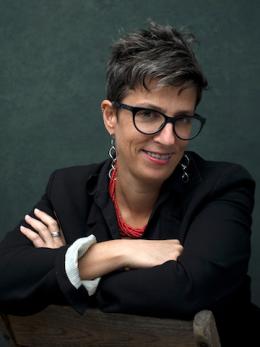
Jennifer Fraser holds a joint appointment at the University of Westminster as University Director of Student Partnership in the Centre for Education and Teaching Innovation and Principal Lecturer in the School of Social Sciences since 2017. She previously served as Deputy Director of the Centre for Transformative Practice in Learning and Teaching at Birkbeck, University of London. Her academic journey includes a PhD in Latin American Cultural Studies from Birkbeck (2008), an MA in Latin American Literature from the University of British Columbia (1998), and a BA in Hispanic Studies and Political Science from the University of Victoria (1995).
Dr. Fraser's research interests converge at the intersections of literature, gender studies, queer theory, and critical pedagogies. Methodologically, she employs collaborative approaches through auto-ethnography, storytelling, and participatory methods with a commitment to disrupting traditional power dynamics in knowledge creation. Her work is fundamentally grounded in anti-racist and decolonizing practices that challenge conventional academic structures and hierarchies.
Her recent publications reveal a clear trajectory toward examining non-binary gender experiences in higher education and decolonial approaches to curriculum development. The 2024-2025 publications particularly demonstrate her focus on understanding institutional barriers faced by non-binary students and staff, while her work on decolonizing curricula reflects broader commitments to social justice in educational spaces. These research areas are interconnected through her consistent emphasis on power dynamics, institutional transformation, and centering marginalized voices.
- 2016 National Teaching Fellow
- Fellow of the Higher Education Academy
Dr. Fraser actively supervises PhD students in gender studies, queer theory, critical pedagogies, and decolonial methods. She co-leads significant research projects including the Non-Binary in Higher Education initiative and the Pedagogies for Social Justice Project, which involve extensive student-staff partnerships. Her approach to teaching emphasizes creating inclusive practices that embrace development rather than deficit models of learning, fostering relationships of mutuality, and implementing feminist, queer, and decolonial pedagogical approaches.
She co-directs the Non-Binary in Higher Education project which creates spaces for non-binary people in higher education to share experiences and imagine different futures. Additionally, through the Pedagogies for Social Justice Project, she works with student partners to co-create tools for teaching and research including podcasts, reading lists, and glossaries, while hosting events like the Festival of Decolonial Learning.