Asher Wolinsky is the Gordon Fulcher Professor of Economics at Northwestern University's Weinberg College of Arts & Sciences. His research focuses on microeconomic theory and industrial organization, with emphasis on markets under imperfect competition and information asymmetry. He holds a PhD from Stanford University (1980). He is a Fellow of the Econometric Society and the American Academy of Arts and Sciences. His work has explored auction design, strategic market behavior, and institutional mechanisms. Recent research includes studies on auctions with frictions, bidder solicitation dynamics, and search theory under adverse selection. Educational background: PhD in Economics, Stanford University, 1980. His academic service includes editorial roles with the Econometric Society Annual Reports. His research portfolio spans over 50 years, addressing foundational questions in game theory and market design.
Mark Crowley is an Associate Professor in the Department of Electrical and Computer Engineering at the University of Waterloo , with a cross-appointment in the Cheriton School of Computer Science . He is actively involved in the Waterloo Artificial Intelligence Institute (WAII) , the Waterloo Institute for Complexity and Innovation (WICI) , and serves as National Secretary for the Canadian Artificial Intelligence Association (CAIAC) , coordinating the Canadian Conference on AI . Research interests span the theoretical and applied aspects of Reinforcement Learning , Deep Learning , Manifold Learning , and Ensemble Methods . His work addresses challenges in domains with spatial dynamics, multi-agent systems, and uncertainty, particularly in Computational Sustainability (forest fire management, sustainable forestry), Autonomous Driving , Medical Imaging , and Material Design . Recent research focuses on integrating causal modeling with generative representation learning to improve out-of-distribution robustness in motion forecasting applications. Key publications include foundational work on ChemGymRL environments for safe chemical process reinforcement learning, Generative Causal Representation Learning for robust forecasting, and collaborative work on multi-advisor reinforcement learning in multi-agent settings. He co-authored a textbook Elements of Dimensionality Reduction and Manifold Learning (Springer, 2023) with Prof. Ali Ghodsi and Prof. Fakhri Karray. Teaching includes graduate and undergraduate courses in Algorithm Design , Computational Intelligence , Reinforcement Learning , and Data Modeling at the University of Waterloo since 2018. His research group has produced several notable graduates including Benyamin Ghojogh (2021), who continued as a postdoc until 2022.
Emiliya Lazarova is a Professor of Economics and Head of the School of Economics at the University of East Anglia (UEA). She chairs the Royal Economics Society’s Conference of Heads of Departments of Economics. Her research focuses on coalition formation, matching theory, and applied economics, with recent projects analyzing technological innovation via patent data, biodiversity market measurements, and international environmental agreements. She has held academic roles at the University of Birmingham and Queen’s University Belfast, teaching quantitative courses like Applied Econometrics and topics in applied microeconomics. Her research interests include coalition dynamics, social housing allocation, and the political economy of environmental policies. Current projects with Dr. Yuan Gao include developing an ex-ante novelty index for inventions and studying biodiversity valuation mechanisms. Lazarova has secured grants from the Royal Economic Society and British Academy, focusing on property rights and economic development in emerging economies. Her work bridges theoretical models and empirical applications, addressing issues like firm behavior under political pressure, patent innovation cycles, and disability discrimination impacts. Collaborations span institutions globally, reflecting her interdisciplinary approach to economic challenges. Advisory roles include supervising PhD students on topics such as status-seeking in matching markets and conflict resolution via coalition theory. Her teaching expertise complements her research, emphasizing quantitative methods and policy analysis.
Luis F. Ayala H. is the Department Head and William A. Fustos Family Professor in the John and Willie Leone Family Department of Energy and Mineral Engineering at Penn State University. He holds dual summa cum laude degrees in Chemical and Petroleum Engineering from Universidad de Oriente (Venezuela), and M.S. and Ph.D. degrees from Penn State. His research focuses on computational fluid dynamics modeling of multiphase flow in unconventional reservoirs, hydrocarbon thermodynamics, and reservoir simulation. Education: Ph.D. (Petroleum and Natural Gas Engineering), Penn State University M.S. (Petroleum and Natural Gas Engineering), Penn State University Petroleum Engineering Degree, summa cum laude, Universidad de Oriente Chemical Engineering Degree, summa cum laude, Universidad de Oriente Research Interests: Advanced reservoir simulation, unconventional gas reservoir analysis (shale gas, tight sands), multiphase flow in porous media, hydrocarbon thermodynamics, and lattice Boltzmann methods. His work aims to improve predictive capabilities for unconventional reservoirs through quantitative modeling of multiphase transport dynamics. Key Awards: SPE Distinguished Member (2022) Fulbright-Colciencias Innovation Award (2016-2017) Howard B. Palmer Faculty Mentor Award (2022) Wilson Award for Excellence in Teaching (2008) Grants & Advising: He has led numerous research projects funded by industry and federal agencies, advising graduate students in energy systems and reservoir engineering. His administrative roles include service as executive editor for the SPE Journal and as an Administrative Fellow at Penn State’s Office of Research. Labs & Teams: His research group collaborates on projects involving advanced simulation tools for unconventional reservoirs, with a focus on multiphase flow dynamics and thermodynamic interplay in nano-pore systems.
Gheorghe Craciun is a Professor in the Department of Mathematics and the Department of Biomolecular Chemistry at the University of Wisconsin-Madison. His research focuses on mathematical and computational models in biology and medicine, particularly dynamical systems models of biological interaction networks. He has been a visiting researcher at the Max Planck Institute for Mathematics in the Sciences during the 2019-2020 academic year and has organized the Madison Workshops on Mathematics of Reaction Networks. Craciun's primary research interests include Mathematical Biology, Dynamical Systems, Chemical Reaction Networks, Computational Biology, Systems Biology, and Algebraic Geometry. He investigates systems of differential equations with polynomial right-hand sides, which are common in biochemical reaction networks, ecological interactions, and epidemiological models. His work often involves proving global stability, analyzing multistability, and characterizing steady states using tools from algebraic geometry and combinatorics. Recent publications demonstrate his focus on toric differential inclusions, endotactic networks, and the global attractor conjecture, extending to applications in biochemical networks and discrete Boltzmann equations. His extensive publication record reveals a strong trend toward algebraic and geometric methods for analyzing complex biological networks, with significant contributions to reaction network theory, stability analysis, and parameter characterization. Craciun's work bridges abstract mathematical concepts with practical applications in biochemistry, ecology, and medicine, including modeling vitellogenin production in trout and peptide mass distributions. He has collaborated extensively with international researchers including Alicia Dickenstein, Anne Shiu, Bernd Sturmfels, Casian Pantea, and Miruna-Stefana Sorea. In education, Craciun teaches graduate courses such as Math 703 and mentors students through the Madison Math Circle and Putnam Club, while organizing specialized workshops that foster collaboration in reaction network theory.
Lev Sarkisov is a Professor of Chemical Engineering at the University of Manchester, leading the Sarkisov Research Group. His work focuses on advancing porous materials for carbon capture, energy storage, drug delivery, and sensing through multiscale computational workflows integrating molecular simulation, machine learning, and process modeling. He holds a Ph.D. from the University of Massachusetts Amherst (2001) and held roles at the University of Edinburgh, including Head of Chemical Engineering. Notable achievements include securing a £1M Wolfson Foundation grant for sustainable engineering (2022) and receiving the 2013 Royal Academy of Engineering/Leverhulme Trust Senior Research Fellowship. Education: Ph.D., Chemical Engineering, University of Massachusetts Amherst, 2001 M.Sc./B.Sc., Moscow Lomonosov Academy of Fine Chemical Technologies, 1995-1997 Research Interests: The group develops porous materials using AI-driven approaches for carbon capture, energy-efficient separations, and material informatics. Key areas include MOFs, adsorption phenomena, and open-source software for reproducible research. Grants & Awards: £1M Wolfson Foundation Grant (2022) Royal Academy of Engineering/Leverhulme Trust Senior Research Fellowship (2013) Edinburgh University Student Union Teaching Award (2019) Labs & Collaborations: The group collaborates globally, emphasizing open-source tools and reproducibility. Projects include CRAFTED (MOF adsorption database) and PoreBlazer v4.0.
Ruhai Wu is a tenured Associate Professor of Marketing at McMaster University's DeGroote School of Business. He holds a B.Sc. and M.Sc. in Finance from Tsinghua University, and an M.A. and Ph.D. in Economics from the University of Texas at Austin. His research focuses on retail and industrial marketing strategies, including pricing, advertising, channel relationships, and platform management in digital ecosystems. He has been awarded grants from SSHRC and NSERC for projects analyzing sharing economies, mobile marketing, and social commerce. Dr. Wu's teaching portfolio includes courses on Digital Marketing, Marketing Management, and Marketing Research Methodology at both undergraduate and graduate levels. He actively supervises doctoral students and has published in top-tier journals such as the Journal of Retailing , Journal of Business Research , and Electronic Markets . His research explores platform governance, network effects, and online consumer behavior using game-theoretical models. Recent work examines live-stream shopping trends, cross-platform competition, and seller review manipulation. Dr. Wu has contributed to scholarly discussions on emerging digital marketing strategies and their societal impacts through media features and industry collaborations.
Xihong Lin is a Professor of Statistics at Harvard University and a Professor of Biostatistics at the Harvard T.H. Chan School of Public Health. She is a distinguished academic, holding membership in both the National Academy of Sciences and the National Academy of Medicine. Her research focuses on scalable statistical inference for big data, statistical machine learning, causal inference, and integrative data analysis, with applications in genomics, public health, and precision medicine. Lin’s work addresses challenges in analyzing large-scale genomic and multi-ancestry data, including methods for rare variant association testing, ancestry-adjusted sample analysis, and scalable computing frameworks. Her contributions span biobank studies (e.g., UK Biobank, TOPMed) and clinical applications in lung cancer, cardiovascular health, and smoking cessation. Her scientific awards reflect her leadership in statistical genetics and public health. Key research trends include leveraging single-cell sequencing for functional genomics, developing ensemble machine learning methods for health subtyping, and enhancing polygenic risk prediction across diverse populations. Lin’s methodologies prioritize interpretability and scalability, enabling impactful analyses of complex observational and genomic datasets. Awards: Member, National Academy of Sciences; Member, National Academy of Medicine Her grants and advising efforts focus on interdisciplinary collaborations, bridging statistics, AI, and domain sciences. Lin leads initiatives to improve genomic data management and ethical use of federated data (e.g., FADI framework). She is affiliated with labs advancing statistical genetics and cloud-based workflows (e.g., STAAR workflow).
Donald Spector is Professor of Physics at Hobart and William Smith Colleges (HWS), where he has been a faculty member since 1989. He holds a Ph.D. in Physics from Harvard University (1986) and has taught at Harvard, Cornell, and the University of Utrecht. He is affiliated with the Department of Physics in the School of Natural and Social Sciences and has served as coordinator of the Engineering Program and chair of the Physics Department. Ph.D., Harvard University, 1986 A.M., Harvard University, 1983 A.B., Harvard University, 1981, magna cum laude His research centers on supersymmetry, quantum field theory, and mathematical physics, with significant contributions to Q-balls, magnetic monopoles, and duality in supersymmetric quantum mechanics. He explores the intersection of physics with number theory, set theory, and computational complexity. His interdisciplinary work spans physics and the arts, particularly music (e.g., John Cage, Terry Riley) and theatre (e.g., Waiting for Godot ). His recent publications reveal a strong trend toward foundational questions in physics and information theory, especially the application of set-theoretic forcing to generalize information theory. His work bridges theoretical physics, mathematics, and the humanities, often drawing analogies between physical principles and artistic expression. Scientific awards and honors include: Teaching awards at Harvard and Cornell NSF-NATO Postdoctoral Fellowship KITP Scholar (2005–2008) Japan Society for the Promotion of Science Visiting Fellowship Philip J. Moorad Professor of Science (2005–2010) FQXi Grant (2013–2015) Spector has been regularly funded by the National Science Foundation, FQXi, KITP, and JSPS. He has supervised student research in quantum mechanics and simulated annealing. He is a founding member and board member of the Anacapa Society, which promotes theoretical physics at undergraduate institutions. He teaches courses such as Quantum Computing, Modern Physics, and interdisciplinary seminars like Physics through Star Trek and Time Travel & Multiple Universes . He is involved in multiple labs and collaborative initiatives, including organizing workshops at the Kavli Institute for Theoretical Physics and contributing to interdisciplinary projects at the Institute for Science and Interdisciplinary Studies. His recent work includes performing in plays and providing dramaturgical support for theatre productions.
Michele Dolce is a Lecturer and Scientist at the École Polytechnique Fédérale de Lausanne (EPFL), affiliated with the School of Basic Sciences (SB) and the Chair of Mathematical Analysis, Calculus of Variations and PDEs (AMCV). He previously held positions as a Postdoc at EPFL and a Research Associate at Imperial College London, where he worked under Prof. Michele Coti Zelati. His academic journey includes a PhD from the Gran Sasso Science Institute. Current affiliation: EPFL, School of Basic Sciences (SB), Department of Mathematics (MATH), AMCV Past affiliation: Imperial College London His research focuses on the mathematical analysis of Partial Differential Equations (PDEs) in fluid dynamics and kinetic theory. Key areas include hydrodynamic stability, long-time behavior of viscous vortex systems, and time-decay properties of kinetic models like the Boltzmann and Wave Kinetic Equations. Recent work explores vortex merging phenomena and Taylor dispersion in rotationally symmetric flows. Scientific activities include organizing workshops such as "Long time dynamics in random and deterministic systems" (2025) and co-organizing events like the "Deterministic and random features of fluids" summer school (2023) and the "Enjoying Probability and Fluids in Lausanne" workshop (2023). His publications span journals including Communications in Mathematical Physics, Archive for Rational Mechanics and Analysis, and Journal of Mathematical Fluid Mechanics. Supported by Swiss National Science Foundation (SNF Ambizione grant PZ00P2_223294) Partially funded by GNAMPA (INdAM group)
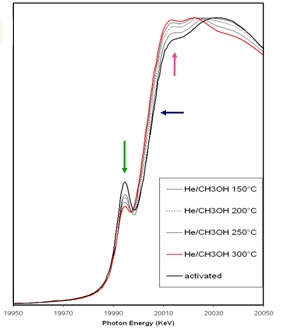
Sylvain Cristol is a Professor at the University of Lille within the Heterogeneous Catalysis department and the Modeling and Spectroscopy (MODSPEC) group. He teaches quantum chemistry, chemical bonding, statistical physics , and X-ray absorption spectroscopy at the university’s European Master’s program. PhD in Molecular and Organic Chemistry (1997-2000, Université de Provence) Postdoctoral work at Davy-Faraday Research Lab, Royal Institution of Great Britain (2000-2002) His research focuses on modeling hydrodesulfurization and hydrodeoxygenation catalysts for biomass valorization, supported by ANR-PNRB project ECOHDOC (with Caen, Poitiers, and TOTAL). He pioneered operando X-ray absorption spectroscopy for characterizing supported oxides (Mo/Re on alumina/anatase) via the ANR SAXO project (Paris VI, Grenoble, SOLEIL). Collaborative work with Francesco Mauri (Paris VI) advanced NMR parameter modeling in solids. Publications span DFT studies , XANES spectroscopy , and solid-state NMR applied to catalysis. Scientific awards include the UCCS Thesis Prize (highest honors) for his work on dibenzothiophene reactivity on molybdenum sulfide.
Jean-Luc Thiffeault is a Professor of Applied Mathematics at the University of Wisconsin-Madison, serving as Chair of the Department of Mathematics. His research spans applied mathematics, fluid dynamics, and topological chaos, with a focus on mixing mechanisms in viscous flows, biogenic mixing by microorganisms, and computational modeling. Key research themes include: Topology-driven fluid mixing via braid theory; Chaotic advection in low-Reynolds environments; Microswimmer interactions with boundaries and waves; Development of numerical tools for dynamical systems analysis. He has authored significant software packages like braidlab (braid analysis), rodent (ODE integration), and jlt lib (utility functions for scientific computing). Collaborative projects include studies on hagfish slime unraveling, burger flipping dynamics, and Brownian particle winding around vortices. His work is supported by NSF grants DMS-0806821 and CMMI-1233935, emphasizing interdisciplinary approaches combining mathematics, physics, and computational methods.
Dr. Wolfram Barfuss is the Argelander Professor of Integrated Systems Modeling for Sustainability Transitions at the University of Bonn, affiliated with the Center for Development Research (ZEF). He is a member of multiple interdisciplinary research areas including TRA Sustainable Futures, TRA Modeling, and TRA Individual and Societies, as well as the Cluster of Excellence PhenoRob and the Center for Earth System Observation and Computational Analysis (CESOC). He also collaborates with the Potsdam Institute for Climate Impact Research and the Earth Resilience Science Unit. His research focuses on understanding whether humanity is 'smart enough for the good life' by developing formal models of collective learning and decision-making in complex social-ecological systems. He integrates methods from complex systems, multi-agent reinforcement learning, and dynamical systems theory to explore sustainability transitions, cooperation, and Earth system resilience. The recent publications demonstrate a strong focus on modeling collective intelligence, cooperation in stochastic games, decision-making under uncertainty, and integrated World-Earth system modeling. His work spans disciplines including computer science, environmental science, game theory, and cognitive science, with frequent contributions to high-impact journals like PNAS , Nature Communications , and Environmental Research Letters . Argelander Professor for Integrated Systems Modeling for Sustainability Transitions Member, TRA Sustainable Futures Member, TRA Modeling Member, TRA Individual and Societies Cluster of Excellence PhenoRob Center for Earth System Observation and Computational Analysis (CESOC) Earth Resilience Science Unit (Potsdam) Earth Resilience and Sustainability Initiative (Princeton-Stockholm-Potsdam) Dr. Barfuss teaches graduate courses at the University of Bonn and Humboldt University Berlin, including Complex System Modeling of Human-Environment Interactions, Economics on Sustainability, Systems Modeling, and Introduction to Agent-Based Modeling. He leads the BarfussLab, where his team develops computational tools such as pyCRLD for modeling collective reinforcement learning dynamics. While specific student advisees are not listed, his lab and publications suggest active supervision and collaboration with early-career researchers. He has not received any explicitly mentioned scientific awards in the provided text. His research is supported through institutional affiliations and collaborative projects rather than individually listed grants.
Jiaxin Jin is an Assistant Professor in the Department of Mathematics at University of Louisiana at Lafayette, joining in 2024. He holds a Ph.D. in Mathematics from University of Wisconsin-Madison (2021), M.S. from University of Wisconsin-Madison (2015), and B.S. from Shanghai Jiao Tong University (2014). Previously, he served as Zassenhaus Assistant Professor at The Ohio State University. His research focuses on applying dynamical systems to mathematical biology/biochemistry and partial differential equations in mathematical physics, with emphasis on: (i) dynamical equivalence in reaction models, (ii) network structure in input-output networks, and (iii) kinetic equations analysis. His work bridges mathematical theory and biological applications through advanced computational methods. Recent publications demonstrate strong focus on reaction networks (12 papers), kinetic theory (4 papers), and homeostasis in biological systems (2 papers), with increasing emphasis on algorithmic implementations and geometric approaches.
Andreas Malikopoulos is a Professor at Cornell University's School of Civil & Environmental Engineering and Director of the Information and Decision Science Lab (IDS Lab). Previously, he held roles as the Terri Connor Kelly and John Kelly Career Development Professor at the University of Delaware (UD) and founding Director of UD's Sociotechnical Systems Center. He also served as the Alvin M. Weinberg Fellow at Oak Ridge National Laboratory (ORNL), Deputy Director of ORNL's Urban Dynamics Institute, and Senior Researcher at General Motors R&D. His research focuses on cyber-physical systems (CPS), stochastic control, and learning-driven approaches for optimizing energy efficiency and sustainable mobility in smart cities and transportation systems. Education: PhD (Mechanical Engineering, University of Michigan, 2008), M.S. (Mechanical Engineering, University of Michigan, 2004), Diploma (National Technical University of Athens, 2000). Research Interests: Analysis and control of CPS, stochastic scheduling, game theory, and mechanism design applied to emerging mobility systems (e.g., autonomous vehicles, electric vehicles). He emphasizes integrating learning and control for socially optimal solutions in transportation networks. Awards: IEEE ITS Young Researcher Award (2019), UD’s Outstanding Junior Faculty Award (2020), Alvin M. Weinberg Fellowship (2010), and recognition as a NAS Kavli Frontiers of Science Scholar (2012). He is an IEEE Senior Member, ASME Fellow, and serves on editorial boards of leading journals. Teaching: Focuses on optimal decision-making, control theory, and emerging mobility systems. Courses include stochastic optimal control and game theory at Cornell. Labs: Leads the IDS Lab, which develops scalable frameworks for CPS and smart city applications. Current projects include coordinated routing for mixed-traffic systems and AI-driven recommendations for autonomous vehicles.