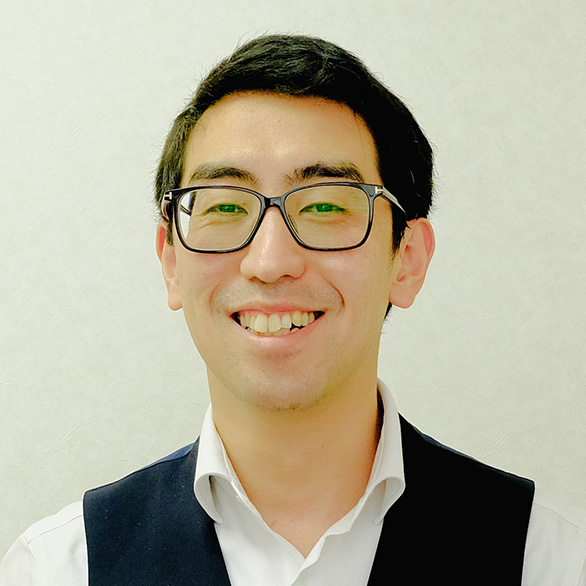
Lars Rohwedder is an Associate Professor in Algorithms at the Department of Mathematics and Computer Science, University of Southern Denmark (SDU). His research focuses on theoretical computer science, particularly in the development of efficient algorithms for scheduling and optimization problems. Research Interests: Algorithms, Scheduling Theory, Integer Programming, Approximation Algorithms, Operations Research, Theoretical Computer Science. Recent work includes advancements in coflow scheduling approximation, makespan minimization algorithms, and fine-grained complexity analysis. Rohwedder is involved in the NWO-funded project The Twilight Zone of Efficiency: Optimality of Quasi-Polynomial Time Algorithms , exploring computational efficiency boundaries.
Luís Cruz-Filipe is an Associate Professor at the Department of Mathematics and Computer Science (IMADA) within the Faculty of Engineering at the University of Southern Denmark. His research spans theoretical computer science with a focus on formal methods, programming languages, and distributed systems. He maintains an active research profile with numerous publications in top venues. His research interests primarily center around choreographic programming, formal verification, sorting networks, and logic programming. Cruz-Filipe has made significant contributions to the theoretical foundations of choreographic programming, developing formal frameworks for specifying and verifying distributed communication protocols. His work on sorting networks has advanced the understanding of optimal network structures, while his research in approximation fixpoint theory has provided formal foundations for logic programming semantics. Analysis of his recent publications reveals a strong trend toward formal methods applied to distributed systems, particularly in choreographic programming where he has developed theoretical frameworks, verification techniques, and compilation approaches. His work bridges theoretical computer science with practical implementation concerns, often using proof assistants like Coq to ensure correctness. More recently, he has expanded into sustainability topics with work on green software development. As an academic, Cruz-Filipe has contributed significantly to the theoretical foundations of choreographic programming, producing a cohesive body of work that has helped establish this field. His publications demonstrate a consistent focus on formal methods to address challenges in distributed systems, with increasing attention to practical implementation and verification.
Hans Hüttel is an Associate Professor in the Department of Computer Science at Aalborg University's Technical Faculty of IT and Design. His research focuses on theoretical foundations of computer science with emphasis on programming languages and formal methods. His research interests span process calculi, type systems, concurrency theory, program synthesis, and security protocols. The fingerprint analysis of his work shows strong emphasis on Type Systems (100%), Process Algebra (27%), Cryptographic Protocols (22%), and Branching Time (18%). His recent work demonstrates a growing interest in the intersection of formal methods with emerging technologies like large language models. Hüttel's publication trend shows consistent output with 97 research outputs including 56 articles in proceedings, 17 journal articles, and 9 conference articles in journals. His most recent work (2024-2025) focuses on type systems for programming languages, program synthesis with LLMs, and functional array programming. Scientific Awards: CONCUR Test-of-Time Award (Sept 2020) Hüttel has participated in multiple research projects including TREsPASS (Technology-supported Risk Estimation by Predictive Assessment of Socio-technical Security), BETTY (Behavioural Types for Reliable Large-Scale Software Systems), and educational initiatives like PBL Exchange. He has 35 media appearances where he discusses topics ranging from AI ethics to university education reform. He leads research within the Distributed, Embedded and Intelligent Systems group and has been active in educational development through problem-based learning (PBL) initiatives at Aalborg University.
Emad Jacob Maroun is a Research Fellow at the Department of Applied Mathematics and Computer Science within the College of Engineering at the Technical University of Denmark (DTU). His work centers on time-predictable computing with emphasis on Worst-Case Execution Time (WCET) analysis for safety-critical embedded systems. His research interests span Worst-Case Execution Time Analysis , Real-Time Systems , Embedded Systems Engineering , Instruction Set Architectures , and Time-Predictable Computing . Maroun focuses on creating deterministic execution environments through techniques like single-path code generation, tagged architectures, and hardware-software co-design for predictable timing behavior. Analysis of his recent publications reveals a strong trend toward solving WCET challenges in heterogeneous environments. His work bridges compiler design, hardware architecture, and real-time theory—particularly in Developing the Platin multi-target analysis framework Advancing Lingua Franca for real-time applications Designing internally-tagged instruction sets for safety Optimizing caching for mixed-criticality 5G systems His research directly addresses the timing predictability gap in modern complex hardware. Maroun actively contributes to the WCET research community through conference organization and tool development, though no formal scientific awards are currently documented. His collaborative work shows strong ties with the DTU Embedded Systems Engineering group and international researchers in real-time systems. While no formal students or major grants are mentioned in available records, his publications indicate leadership in multi-institutional projects like the Platin toolchain development. Maroun operates within DTU's Embedded Systems Engineering research environment, focusing on creating practical WCET solutions for industrial applications in safety-critical domains including telecommunications infrastructure and real-time control systems.
Selina Kikkenborg Berg serves as a Clinical Professor in the Department of Clinical Medicine at the University of Copenhagen, specializing in Internal Medicine with a focus on Cardiology. Her institutional affiliations include addresses at Blegdamsvej 9, 2100 Copenhagen Ø, and Blegdamsvej 3, 2200 Copenhagen N, with professional correspondence via selina@rh.dk. Her research program centers on cardiology with deep integration of psychological dimensions, particularly examining cardiac arrest outcomes, takotsubo syndrome, atrial fibrillation rehabilitation, and HIV care retention. She employs advanced methodologies including multicenter cohort studies (notably the REVIVAL cohort), systematic reviews, and register-based epidemiological analyses. Key thematic threads include the interplay between cardiac events and mental health, socio-economic determinants of health outcomes, and evidence-based rehabilitation protocols. Analysis of her 2024-2025 publications reveals dominant trends in post-cardiac event psychological sequelae, with the REVIVAL cohort driving significant insights into cognitive symptoms and mental health trajectories. Parallel work explores vaccination safety in adolescents and mortality determinants in rare cardiac conditions, demonstrating methodological versatility across clinical cardiology, public health, and psychological medicine. No scientific awards were documented in the source material. Details regarding graduate student mentorship and specific research grants were not provided in the available information. Dr. Berg maintains active leadership in the REVIVAL cohort—a multicenter initiative investigating neurological and psychological outcomes in cardiac arrest survivors—which serves as the primary platform for her groundbreaking work on cognitive recovery and family mental health impacts following critical cardiac events.
Winnie Edith Svendsen is a Professor at the Department of Biotechnology and Biomedicine , Technical University of Denmark , leading the Nano Bio Integrated Systems (NaBIS) research group since 2006. Her work bridges physics, nanotechnology, and biomedical applications. Academic Background: PhD in Atomic Physics (Copenhagen University, 1996) MSc in Experimental Physics (University College Dublin, 1993) BSc in Physics (University College Dublin, 1991) Dr. Svendsen focuses on developing micro/nanofabricated biosensors for biomedical diagnostics. Her research explores the physical properties of biological materials, nanosensor functionality, and microfluidic systems using impedance spectroscopy, electrochemistry, and field-effect transistor-based detection. Applications span cancer biomarker detection, neural metabolism monitoring, and drug delivery via nanopeptides. Research Trends: Recent publications highlight innovations in digital microfluidics , antifouling surfaces , paper-based immunoassays , and electrochemical sensor stabilization , reflecting her commitment to portable, cost-effective diagnostic tools. Scientific Recognition: EOLAS award Marie Curie stipend European FP5, FP6, FP7 grants Multiple national research grants As a main supervisor, she mentors PhD candidates in projects like handheld sensors for circulatory failure, photonic crystal sensors for tissue forces, and nanobody-based toxin detection. She co-founded the company XeHe Hypol (APS) for commercializing biomedical technologies.
David Pisinger is a Professor at the Department of Technology, Management and Economics, Technical University of Denmark (DTU). His research focuses on Operations Research, Management Science, and Optimization, with significant contributions to maritime transportation, offshore wind farm design, and stochastic optimization. He leads the DECIDE project (ERC-2022-ADG), exploring machine learning for decision-making under uncertainty. His research interests include network design, vehicle routing, energy systems modeling, and combinatorial optimization. Notable recent work addresses challenges in multi-parallel-aisle warehouses, tramp ship routing, and immunization strategies for epidemic outbreaks. Research Trends in Articles: Recent publications emphasize maritime logistics, renewable energy optimization (offshore wind farms), and stochastic programming applications. His work bridges theoretical optimization and real-world problems in transportation, energy, and telecommunication networks. Awards: ERC-2022-ADG Grant (2023) Finalist - EURO Excellence in Practice Award (2021, 2018) Best Student Paper Award (ICORES 2017) Advising & Grants: Supervises PhD students in stochastic optimization, energy systems, and maritime logistics. PI of projects like DECIDE (2024–2029), SUSTAINABULK (2022–2025), and others. Teams/Labs: DECIDE Project Team (machine learning for decision-making under uncertainty). Collaborations on offshore wind farm optimization, energy system modeling, and maritime logistics.
Viola Gelli is a Research Fellow at the Niels Bohr Institute, University of Copenhagen, specializing in the Cosmic Dawn Center (DAWN) where she investigates galaxy formation during the universe's first billion years. Her work combines James Webb Space Telescope (JWST) observations with theoretical modeling to study high-redshift phenomena including Population III galaxies and early star formation processes. Her research focuses on astrophysical processes at cosmic dawn, particularly bursty star formation, metallicity evolution in primordial galaxies, and feedback mechanisms from supernovae. She employs multi-wavelength JWST data to analyze galaxy clustering, stellar populations, and chemical enrichment in the reionization era, often developing novel statistical approaches for interpreting sparse high-z observations. Analysis of her eight recent publications reveals a cohesive research program centered on JWST's capabilities to probe the epoch of first galaxies. Her work consistently addresses how stellar feedback shapes early galaxy evolution, with particular emphasis on quenching mechanisms, metal-pollution signatures, and connections between high-z systems and local galaxy analogs. No scientific awards were documented in the available institutional materials. Gelli actively contributes to major international collaborations including the Lighter BEACON JWST survey consortium, where her expertise in pure-parallel imaging analysis informs survey design and data interpretation. Her research methodology integrates observational constraints with cosmological simulations to model galaxy formation under extreme high-redshift conditions. As a core member of the Cosmic Dawn Center, she participates in this Danish National Research Foundation-funded initiative that unites theoretical and observational efforts across multiple institutions to decode the physics of cosmic dawn through coordinated JWST programs and simulation campaigns.
Takamitsu Watanabe is a Professor at the International Research Center for Neurointelligence (IRCN) at the University of Tokyo, where he leads a research laboratory focused on understanding the neural mechanisms underlying human intelligence and neuropsychiatric conditions. Previously, he served as an Associate Professor at IRCN (2020-2025) and Deputy Team Leader for the Miyashita lab at RIKEN Center for Brain Science (2018-2020). His research spans multiple disciplines within neuroscience, with a particular emphasis on how brain dynamics relate to cognitive functions and disorders. Watanabe received his M.D. from The University of Tokyo in 2007, completed his medical training there, and earned his Ph.D. in 2013 under Professor Yasushi Miyashita as a JSPS Research Fellow. He conducted post-doctoral research with Professor Geraint Rees at University College London under both JSPS and Marie-Curie Research Fellowships. His primary research interests focus on the dynamic nature of human cognition and its neural underpinnings. Watanabe investigates how large-scale brain network architecture, global and local neural dynamics relate to both typical and atypical cognition, with particular emphasis on conditions like autism, schizophrenia, and epilepsy. His work has pioneered the application of energy landscape analysis to understand brain activity patterns, revealing how neural stability and flexibility relate to cognitive functions. Recent research has expanded to examine parallels between brain dynamics in neuropsychiatric conditions and artificial intelligence systems, particularly large language models. Analysis of Watanabe's publication record reveals a consistent focus on neural dynamics as a framework for understanding cognition. His work has evolved from foundational studies on brain network dynamics in autism to more recent investigations of neural mechanisms in Alzheimer's disease and comparative analyses between human brain activity and AI processing. A distinctive thread throughout his research is the innovative application of mathematical and computational approaches to neuroimaging data, particularly energy landscape analysis, to quantify neural dynamics in ways that correlate with behavioral and cognitive measures. NeuroCreative Award RIKEN Excellent Achievement Award JSPS Research Fellowship Marie-Curie Research Fellowship Watanabe actively mentors researchers in his laboratory, including postdoctoral fellows like Dr. Shota Murai (awarded a JSPS post-doc fellowship) and Dr. Agnes Gao, as well as students like Daichi Watanabe. His research is supported by numerous prestigious grants including KAKEN, JSPS, European Council funding, Wellcome Trust, and several Japanese research initiatives including the Moonshot R&D Program and SIP. His laboratory at WPI-IRCN utilizes a multidisciplinary approach combining human behavioral experiments using fMRI, EEG, TMS, TUS and motion capture devices with computational and data science methods. Watanabe's laboratory at the IRCN is a vibrant research environment that brings together neuroscientists, psychologists, and computational scientists. The lab has established collaborations with international institutions, including Brown University (with Professor Sanes) and European research centers. Current research directions include developing non-invasive neural stimulation techniques to modulate brain dynamics in neurodevelopmental conditions, investigating the neural basis of comorbid conditions like ASD/ADHD, and exploring parallels between brain dynamics and AI processing. The lab actively recruits PhD students and postdoctoral researchers, particularly those with computational backgrounds or fellowship support.
Kristian Nagel Delica serves as Associate Professor in the Department of People and Technology at Roskilde University, Denmark. His research critically examines urban marginality through institutional development in neglected housing areas, public sector evolution, and territorial stigmatization. He actively engages with media and policy debates on Danish 'ghetto lists' and parallel societies. His scholarly focus spans urban sociology, social innovation in marginalized communities, and qualitative methodologies including ethnographic fieldwork. Theoretical frameworks draw from Bourdieu and Wacquant to analyze welfare state dynamics, spatial inequality, and mental health in peripheral regions. Recent work bridges sociology, political science, and health promotion through critical lenses on policy schizophrenia. Analysis of his 15 most recent publications reveals concentrated investigation into state mechanisms of territorial stigmatization, particularly regarding Denmark's ghetto list. His scholarship demonstrates methodological integration of bureaucratic field analysis with community-based action research, emphasizing spatial dimensions of social exclusion. Delica leads or participates in six research projects including active initiatives 'Green Mobility Shift' (2023-2026) and 'BOSID: Boligmæssig Stigmatisering I Danmark' (since 2016). His 122 academic activities encompass lectures on 'Fragmenting Cities' (2025), peer review, and editorial work, while 20 media contributions address urban policy controversies.
Andrzej Filinski is an Associate Professor at the Programming Languages and Theory of Computation section within the Department of Computer Science at the University of Copenhagen. His research focuses on applied programming-language semantics, particularly computational effects and machine-verifiable reasoning about programs. University: University of Copenhagen Department: Department of Computer Science Research Interests: Operational semantics of monadic effects, game-theoretic program contracts, formal verification, concurrency, distributed systems, and code certification. Recent Publications include work on information flow logic using partial equivalence relations (2024), functional approaches to regular expression matching (2021), and streaming nested data parallelism on multicore systems (2016). His research spans theoretical foundations and practical applications in programming languages and computational theory.
Nikolaj Hey Hinnerskov is a PhD Fellow in the Programming Languages and Theory of Computation (PLTC) section at the Department of Computer Science, University of Copenhagen. His research is embedded within DIKU's PLTC group, focusing on foundational and applied programming language systems. His core research spans: Programming Language Theory and Type Systems Compiler Design for Array-Based Languages Automatic Differentiation Techniques GPU-Accelerated Algorithm Development Rank-Polymorphic Function Inference Time Series Analysis Optimization Recent work demonstrates a strong convergence of programming language theory and high-performance computing, particularly in advancing compiler techniques for functional array languages like Futhark and optimizing scientific computations on GPUs. His publications address critical challenges in type inference, automatic differentiation, and parallel time-series decomposition. No scientific awards are documented in available sources. As a doctoral researcher, he operates under faculty supervision without independent advisees or grant leadership. His contributions align with DIKU's PLTC projects, including language design and performance optimization initiatives. He actively collaborates within the PLTC research ecosystem, contributing to GPU-based computational methods and programming language innovations alongside DIKU faculty and international researchers.
Torben Ægidius Mogensen is an Associate Professor at the Department of Computer Science, University of Copenhagen, where he leads research in the Programming Languages and Theory of Computation section. His office is located at Universitetsparken 5, Copenhagen. His primary research focuses on: Automatic program analysis and transformation (especially partial evaluation and semi-inversion) Compiler technology for functional languages Domain-specific language design Reversible computing systems and languages Algorithms, complexity theory, and automata theory Applications in graphics and fractal generation His recent publications demonstrate a strong focus on reversible computation systems, including specialized programming languages like Hermes for encryption, reversible processor architectures, and functional programming extensions. His textbook publications on compiler design (2024) and programming language implementation (2022) indicate significant contributions to computer science education and foundational knowledge. He teaches courses on compilers, programming language technology, and game development, and maintains active research collaborations internationally. He is fluent in Danish and English, with working knowledge of German and Romanian.
Luca Pezzarossa is an Associate Professor in the Department of Applied Mathematics and Computer Science at the Technical University of Denmark (DTU). His research focuses on real-time systems, embedded computer systems, digital microfluidics, compiler optimizations, and hardware accelerators. He leads projects such as the Edu4Chip: Joint Education for Advanced Chip Design in Europe initiative and supervises PhD students in areas like compiler optimizations for neural networks and speech enhancement algorithms. His academic journey includes contributions to interdisciplinary fields, combining computer engineering with biomedical applications such as biochip design and PCR optimization. He actively engages in open-source tool development, particularly using the Chisel framework for hardware design education and research. Key research themes include: Real-time systems and time-predictable architectures Compiler-driven optimizations for constrained devices Digital microfluidics for lab-on-a-chip systems Edge computing and TinyML applications Recent publications highlight innovations in microplastic detection on edge devices, dynamic channel pruning for speech enhancement, and parallel execution engines for digital microfluidics. His work aligns with sustainable development goals through environmental applications and energy-efficient technologies. Current projects involve: PhD Supervision: Andrea Cerioli (Compiler Optimizations), Riccardo Miccini (AI-to-Neural Network Mapping), Ehsan Khodadad (Time-predictable Systems) Research Grants: EU-funded Edu4Chip (2023–2025), multiple industry-academia collaborations Labs and teams: Leads the Embedded Systems Engineering group at DTU, focusing on interdisciplinary hardware-software co-design for real-world applications. Active in developing open-source frameworks for education and research.
Morgane Tidière is a researcher affiliated with the Interdisciplinary Centre on Population Dynamics (CPop) at the University of Southern Denmark. Her work focuses on biodemography, conservation biology, and evolutionary demography, particularly examining aging patterns in zoo-housed and wild mammals. She has contributed to studies on reproductive senescence, species delineation, and the impact of sub-species variation on conservation strategies. Her research frequently integrates demographic data from captive populations to inform wildlife management and longevity mechanisms. Key research areas include comparative analyses of lifespan and aging rates across species, with a focus on mammals such as tigers, lemurs, and marine mammals. Her recent work highlights advancements in animal welfare practices in zoological institutions and their parallels with human longevity trends. Tidière is also involved in projects addressing genetic structure of endangered species like Chaerephon bats on Madagascar and the Comoro Islands.