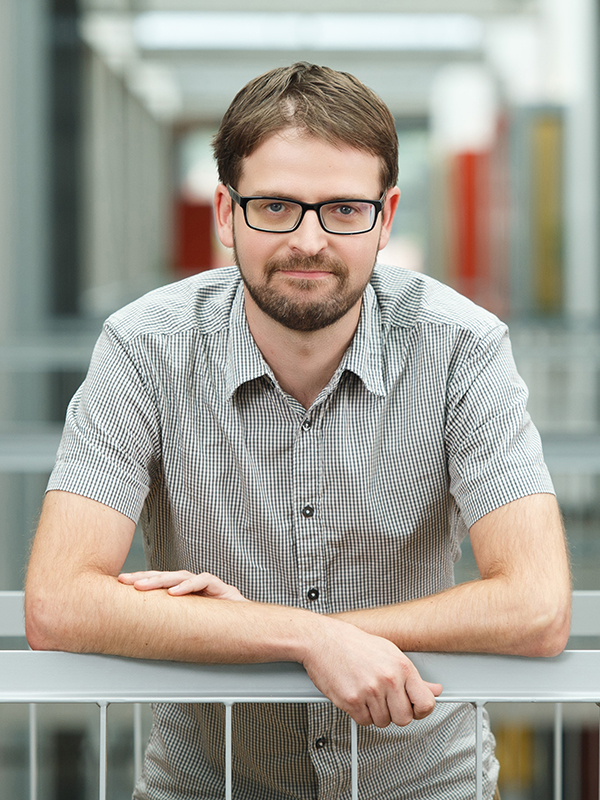
Octavian Mihai Machidon is an Assistant Professor at the Faculty of Computer and Information Science (FRI), specializing in mobile computing, IoT systems, and approximate computing. His research bridges technological innovation with diverse applications in agriculture, cultural heritage, and smart governance. Current research focuses on energy-efficient mobile systems, UAV-based agricultural monitoring, and smart governance frameworks Previously led H2020 Smart4All AgriAdapt project Recipient of multiple awards for research excellence and innovation His work demonstrates cross-disciplinary impact through projects like Mobiprox (IEEE IoT Journal) and SqueezeSlimU-Net (IEEE Journal of Selected Topics in Applied Earth Observations). Key trends include adaptive algorithms, real-time processing, and sustainable technology integration. 2024 - FRI Special Award for Exceptional Research Achievement 2023 - Agrobiznis 'Best Idea' award for AgriAdapt project As member of the Computer Communications Laboratory , he contributes to digital transformation initiatives and teaches courses in process automation and mobile sensing platform development.
Lovro Šubelj is an Associate Professor at the University of Ljubljana, Faculty of Computer and Information Science , specializing in Network Science and Machine Learning with Graphs . His work bridges theoretical and applied network analysis, with contributions to community detection, graph convexity, and network simplification. Research focuses on graph algorithms for network abstraction Teaching: MSc/PhD courses on Network Science, BSc programming courses Collaborates with institutions like Leiden University and Imperial College London Research Interests: His primary work explores structural and dynamic properties of complex networks, including community detection via label propagation, convex skeletons for network simplification, and intermediacy metrics for citation analysis. Secondary interests span data mining, stream mining, and statistical network modeling. Publication Trends: Recent work emphasizes scalable network algorithms (2023-2025), graph embeddings (2021), and geometric network properties like convexity (2018-2019). Earlier projects (2012-2017) addressed citation network analysis, social network fraud detection, and database consistency evaluation. Teaching & Outreach: Provides educational materials on YouTube, including courses on network science and programming. Maintains open-access data/code repositories through KONECT, ICON, and GitHub.
Nejc Ilc serves as an Assistant Professor at the University of Ljubljana's Faculty of Computer and Information Science, where he has been employed since 2009 and teaches process automation and digital design courses. He earned his PhD in Computer and Information Science from the same institution in 2016 following undergraduate studies completed in 2009. His academic credentials include: PhD in Computer and Information Science, University of Ljubljana (2016) BSc in Computer and Information Science, University of Ljubljana (2009) Dr. Ilc's research spans machine learning with emphasis on cluster analysis algorithms, bioinformatics applications in inflammation modeling, computer simulation techniques, and parallel processing implementations. His machine learning work develops novel ensemble methods and validity indices, while bioinformatics research explores lipid mediator pathways in extracellular vesicles. Parallel computing applications appear in real-time computer vision systems for traffic sign recognition. Analysis of his 2012-2020 publications reveals persistent focus on clustering methodologies across data mining and biomedical contexts, with increasing interdisciplinary collaboration in bioinformatics after 2015. His work consistently bridges theoretical algorithm development with practical implementations in simulation environments. His recognition includes: Faculty award for assistants with best student evaluations (2020/2021) Current research leadership includes the ARRS program P2-0241 "Synergy of technological systems and processes" (2020-2026) and EUROCC2 competence center project (2023-2025). Past projects involved bilateral collaborations on complex dynamic systems modeling (2010-2011) and approximate computing (2019-2021). He organized the ICANNGA 2011 international conference and maintains office hours Tuesdays 13:00-14:00 in Room R2.31. While specific laboratory affiliations aren't detailed, his project involvement suggests computational research activities within the Faculty of Computer and Information Science.
Ratko Pilipović is an Assistant Professor affiliated with the Laboratory for Adaptive Systems and Parallel Processing (LASPP). He specializes in high-performance computing, ubiquitous computing, and RISC-V vector processors, with extensive involvement in European and Slovenian research projects. Current project: EUROCC2 (National Competence Centres in EuroHPC Phase 2, 2023-2025) Current project: P2-0359 (Ubiquitous Computing, 2023-2027) Past project: P2-0359 (Vseprisotno računalništvo, 2018-2023) Past project: BI-HR/23-24-009 (RISC-V vector processors, 2023-2025) His teaching responsibilities include courses in Digital Design , Computer Systems , and Digital Logic Design . Research focuses on adaptive systems, parallel processing architectures, and scalable computing solutions.
Boštjan Slivnik is an Assistant Professor specializing in compilers and grid technology , with a focus on parser algorithms and distributed systems. His research extends to domain-specific languages, big data optimization, and medical informatics applications. Program Committee member of ACM Symposium on Applied Computing (2007, 2008) Laboratory of Algorithmics member He teaches courses including Compilers , Compilers and Virtual Machines , and Programming 2 . His work involves projects like ARRS research programs on parallel systems and KATARINA's computational knowledge dissemination initiatives.
Assistant Professor Davor Sluga is a member of the Laboratory for Adaptive Systems and Parallel Processing (LASPP). His research focuses on high-performance computing, approximate computing, and parallel/distributed systems, with applications in sensor networks, medical video processing, and RISC-V architecture. His work spans multiple projects including: Synergy of technological systems (ARRS P2-0241, 2020-2026) EUROCC2 National Competence Center (2023-2025) ARISA AI Skills Alliance (2022-2026) Context-aware on-device approximate computing (ARRS J2-3047, 2021-2024) He has previously contributed to projects involving medical video annotation (2014-2015), soft computing for dynamic systems (2010-2011), and hypercomputing in Parkinson’s research (2019).
Branko Šter serves as Professor at the Faculty of Computer and Information Science, University of Ljubljana, teaching Computer Systems Architecture , Computer Systems , and System Software while leading the Laboratory for Adaptive Systems and Parallel Processing. His research focuses on Computer Systems , Parallel Processing , and Adaptive Systems , with emphasis on technological synergy and soft computing methodologies. Current work centers on the ARRS research programme P2-0241 Synergy of the technological systems and processes (2020-2026), extending his continuous involvement since 2009 through overlapping project phases. Professor Šter directs laboratory research in adaptive computing systems with practical applications in embedded technologies, evidenced by projects like PKP 5 Accelerator for virtual machine for embedded systems (2019). His international collaboration includes the EuNetAir COST Action on air-pollution control systems (2012-2016), demonstrating cross-disciplinary technological integration.
Patricio Bulić is an Associate Professor at the Faculty of Computer and Information Science, University of Ljubljana, Slovenia. His primary research focuses on computer architecture, embedded systems, and approximate computing for energy-efficient hardware design. Research Areas: Computer Architecture, Parallel Processing, Embedded Systems, Approximate Computing Affiliation: Faculty of Computer and Information Science (University of Ljubljana) Laboratory: Laboratory for Adaptive Systems and Parallel Processing His recent publications explore logarithmic arithmetic and approximate computing techniques to optimize hardware performance while reducing power consumption. These methods have been applied in sensor networks, digital signal processing, and neural network implementations. Scientific Awards: Professor of the Year 2014 Professor of the Year 2020 Professor of the Year 2021 Professor of the Year 2022 He has led numerous research projects including the ARRS programme on Ubiquitous Computing and COST Action IC1303 for enhanced living environments. His teaching responsibilities include courses in Computer Systems Organization, Parallel and Distributed Systems, and Embedded Systems.
Iztok Lebar Bajec is an Associate Professor at the Faculty of Computer and Information Science, University of Ljubljana, where he has been actively engaged in research and teaching since completing his PhD in 2005. His academic journey began with a Computer Science Programme at the Technical School Centre in Nova Gorica (1994), followed by undergraduate, master's, and doctoral studies at the University of Ljubljana. His research spans multiple interdisciplinary fields including computer graphics, fuzzy logic applications, quantum-dot cellular automata, and artificial life modeling. Professor Lebar Bajec's work uniquely bridges computer science with biological modeling, particularly in simulating collective animal behavior. His PhD dissertation focused on fuzzy logic modeling of bird flocking behavior, which has evolved into a significant research trajectory examining organized group dynamics in both biological and artificial systems. His recent publications reveal a dual research focus: on one hand, the application of fuzzy logic to model collective behavior in biological systems (particularly bird flocking and predator-prey interactions), and on the other hand, pioneering work in quantum-dot cellular automata for ternary computing systems. This unusual combination of research areas demonstrates his innovative approach to computational modeling across vastly different scales - from biological collectives to nanoscale computing elements. 3rd place at the 10th student paper competition, ERK'2000, Portorose, Slovenia (2000) Best high school graduate of the Technical School Centre in Nova Gorica, Slovenia (1994) Runner-up at the 17th Young Innovator Competition, Nova Gorica, Slovenia (1993) Professor Lebar Bajec has advised multiple graduate students including Jure Demšar (PhD), Miha Moškon (BSc), Primož Pečar (MSc), and Tomaž Orač (BSc). His current research is supported by several active projects including P2-0359 - Ubiquitous computing (2023-2027), J7-4642 - Fundamental research for development of speech resources and technologies for Slovenian (2022-2025), and PoVeJMo - Adaptive Natural Language Processing with Large Language Models (2023-2026). He is a member of the Computer Structures and Systems Laboratory where he has been active since 2000.
Uroš Lotrič is an Associate Professor at the Faculty of Computer and Information Science, University of Ljubljana, Slovenia. His academic and professional work spans research in soft computing methods, distributed processing, and high-performance computing applications. Education: BSc in Physics (1994), MSc in Computer Science (1997), PhD in Computer Science (2000), all from the University of Ljubljana. Research Interests He focuses on soft computing techniques, distributed systems, and their applications in industrial and computational domains. His work integrates neural networks, wavelet transforms, and predictive modeling to solve complex problems in fields like rubber processing and time series analysis. Scientific Awards Best Assistant 2007 Best Professor 2009 Projects and Laboratory He is involved in national and European research programs such as P2-0241, EUMaster4HPC, and ARISA. Additionally, he is a member of the Adaptive Systems and Parallel Processing laboratory, contributing to advancements in adaptive algorithms and parallel computing.
Jurij Mihelič is an Associate Professor at the Faculty of Computer and Information Science, University of Ljubljana, and a member of the Laboratory for Algorithms and Data Structures where he conducts research in theoretical and applied computer science. His research interests include: Algorithms and discrete mathematics Combinatorial optimization Computational complexity Operating systems and system software Virtual machines and execution environments Algorithm engineering and experimental algorithmics Graph theory and network analysis Facility location and pattern matching Mihelič teaches courses in Operating Systems and Algorithms and Data Structures I. His research bridges theoretical computer science with practical applications, with a particular focus on developing efficient algorithms and system software solutions. His work spans both theoretical foundations and practical implementations, demonstrating a strong commitment to connecting academic research with real-world problems. His publications demonstrate consistent contributions to algorithm design, graph theory, and combinatorial optimization, showing a progression from purely theoretical work toward more applied research in recent years. Key themes include facility location problems, subgraph isomorphism algorithms, and educational tools for system software concepts. Mihelič has been actively involved in the academic community, serving on organizing committees for significant conferences including EuroCG 2015, LADS3 2014, and ALGO 2012. He is currently involved in multiple research projects, most notably the ARRS research program 'Parallel and distributed systems' (2020-2026), along with several other projects focused on graph optimization, big data, and system software development.
Tomaž Dobravec is an Assistant Professor at the Faculty of Computer and Information Science, University of Ljubljana, Slovenia. He is actively involved in research and teaching in computer science, with a focus on system software, algorithms, and distributed computing. His work is supported by national research programmes and structural funds projects. His research interests include: Parallel and Distributed Systems Graph Optimization and Big Data Combinatorial Scientific Computing Mobile and Industrial Operating Systems Interactive Educational Software Development The trend in his research projects indicates a strong emphasis on algorithmic efficiency, large-scale data processing, and practical software solutions for both industrial and educational contexts. His involvement in long-term ARRS programmes (e.g., P2-0095) highlights sustained contributions to core computing disciplines. He has participated in several research and development projects, including: P2-0095 - Parallel and distributed systems (2020–2026) N2-0171 - Graph Theory and Combinatorial Scientific Computing (2021–2023) PKP6 - Mobile Operating System for Industrial Use (MobiIOS) (2020) Graph Optimisation and Big Data (2016–2019) Development of the Visual Assistant project (2016–2017) Design and programming of interactive electronic textbooks (2017) He teaches key undergraduate courses such as System Software Programming 2 , Algorithms and Data Structures 2 , and The C Programming Language , indicating a strong foundation in core computer science education. While no formal advisees are listed, his role in research projects suggests mentorship of students and junior researchers. There is no mention of scientific awards in the provided text.
Lecturer Rok Češnovar is affiliated with the Laboratory for Adaptive Systems and Parallel Processing (LASPP). His work focuses on computational methods in adaptive systems and parallel processing. Teaches classes in Computer Systems Organisation, Input-Output Systems, and Embedded Systems Active in research projects related to computationally intensive statistical analysis, sensor networks, and RISC-V vector processors Research Focus Rok Češnovar specializes in embedded systems and signal processing , with emphasis on computationally intensive methods and approximate computing . His work bridges theoretical statistics with practical implementation in adaptive systems. Project History He has contributed to projects including: ARRS-funded research on computationally intensive statistical methods (2016-2019) Decomposing cognition in working memory studies (J3-9264, 2018-2021) High-performance RISC-V vector processor computing (BI-HR/23-24-009, 2023-2025)
Uroš Čibej serves as an Assistant Professor at the Faculty of Computer Science and Informatics, University of Ljubljana, where he teaches core courses including Theoretical Foundations of Computer Science, Computability Theory, and Algorithms and Data Structures. As a member of the Algorithmics Laboratory, he contributes to both educational and research initiatives within the institution. His research centers on distributed systems, scheduling theory, and complexity theory, with specialized focus on approximate, probabilistic, and distributed algorithms. This work addresses fundamental challenges in computational efficiency and scalability, particularly relevant to modern distributed computing environments and big data applications. Dr. Čibej actively participates in major research projects such as ARRS Program P2-0095 "Parallel and Distributed Systems" (2020-2026), ARRS Project N2-0171 "Graph Theory and Combinatorial Scientific Computing" (2021-2023), and earlier initiatives including "Graph Optimization and Big Data" (2016-2019). His project portfolio demonstrates consistent engagement in theoretical algorithm development with practical applications in network analysis and visualization. Within the Algorithmics Laboratory, he collaborates on advancing theoretical computer science methodologies while mentoring students through coursework in foundational programming and computational theory.
Borut Robič is a Full Professor and Head of the Theoretical Computer Science Chair at the Faculty of Computer and Information Science, University of Ljubljana . He also serves as Head of the Laboratory for Algorithmics and President of the Faculty's Academic Assembly since 2005. His work spans computability theory, algorithms, and parallel computing, with notable contributions to foundational concepts and educational literature. University: University of Ljubljana School: Faculty of Computer and Information Science Roles: Professor, Head of Theoretical Computer Science Chair, Head of Laboratory for Algorithmics, President of Academic Assembly Robič's research interests focus on computability and complexity theory, algorithm design, and parallel computing frameworks. His publications emphasize historical context, formal methods, and modern computational paradigms like hypercomputing. Publication trends reveal a progression from foundational algorithmic theory (1999) to advanced computability research (2020), with a 2018 work bridging parallel programming and practical implementation. Projects include leadership in ARRS research programmes on parallel systems (2020-2026) and past collaborations on graph optimization and big data initiatives. Laboratory affiliations: Head of the Laboratory for Algorithmics and active member of its research team.