معرفی
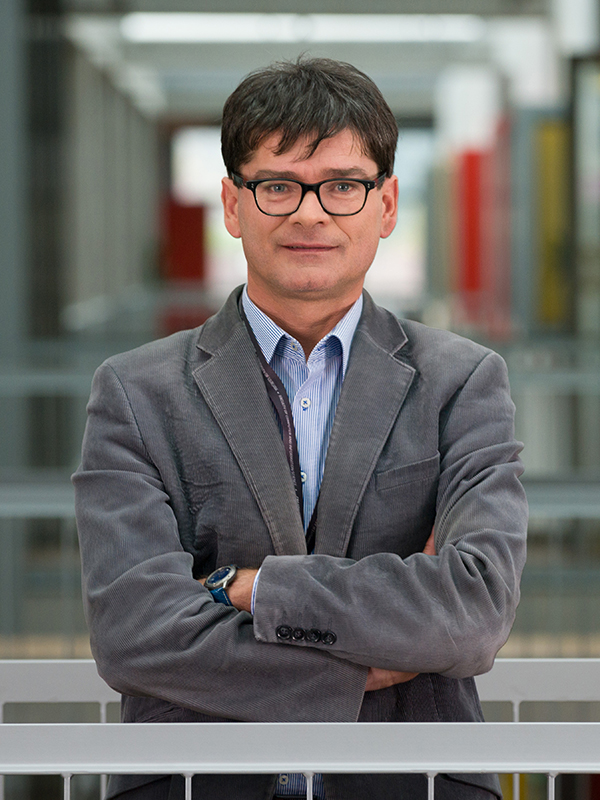
Iztok Lebar Bajec is an Associate Professor at the Faculty of Computer and Information Science, University of Ljubljana, where he has been actively engaged in research and teaching since completing his PhD in 2005. His academic journey began with a Computer Science Programme at the Technical School Centre in Nova Gorica (1994), followed by undergraduate, master's, and doctoral studies at the University of Ljubljana.
His research spans multiple interdisciplinary fields including computer graphics, fuzzy logic applications, quantum-dot cellular automata, and artificial life modeling. Professor Lebar Bajec's work uniquely bridges computer science with biological modeling, particularly in simulating collective animal behavior. His PhD dissertation focused on fuzzy logic modeling of bird flocking behavior, which has evolved into a significant research trajectory examining organized group dynamics in both biological and artificial systems.
His recent publications reveal a dual research focus: on one hand, the application of fuzzy logic to model collective behavior in biological systems (particularly bird flocking and predator-prey interactions), and on the other hand, pioneering work in quantum-dot cellular automata for ternary computing systems. This unusual combination of research areas demonstrates his innovative approach to computational modeling across vastly different scales - from biological collectives to nanoscale computing elements.
- 3rd place at the 10th student paper competition, ERK'2000, Portorose, Slovenia (2000)
- Best high school graduate of the Technical School Centre in Nova Gorica, Slovenia (1994)
- Runner-up at the 17th Young Innovator Competition, Nova Gorica, Slovenia (1993)
Professor Lebar Bajec has advised multiple graduate students including Jure Demšar (PhD), Miha Moškon (BSc), Primož Pečar (MSc), and Tomaž Orač (BSc). His current research is supported by several active projects including P2-0359 - Ubiquitous computing (2023-2027), J7-4642 - Fundamental research for development of speech resources and technologies for Slovenian (2022-2025), and PoVeJMo - Adaptive Natural Language Processing with Large Language Models (2023-2026). He is a member of the Computer Structures and Systems Laboratory where he has been active since 2000.