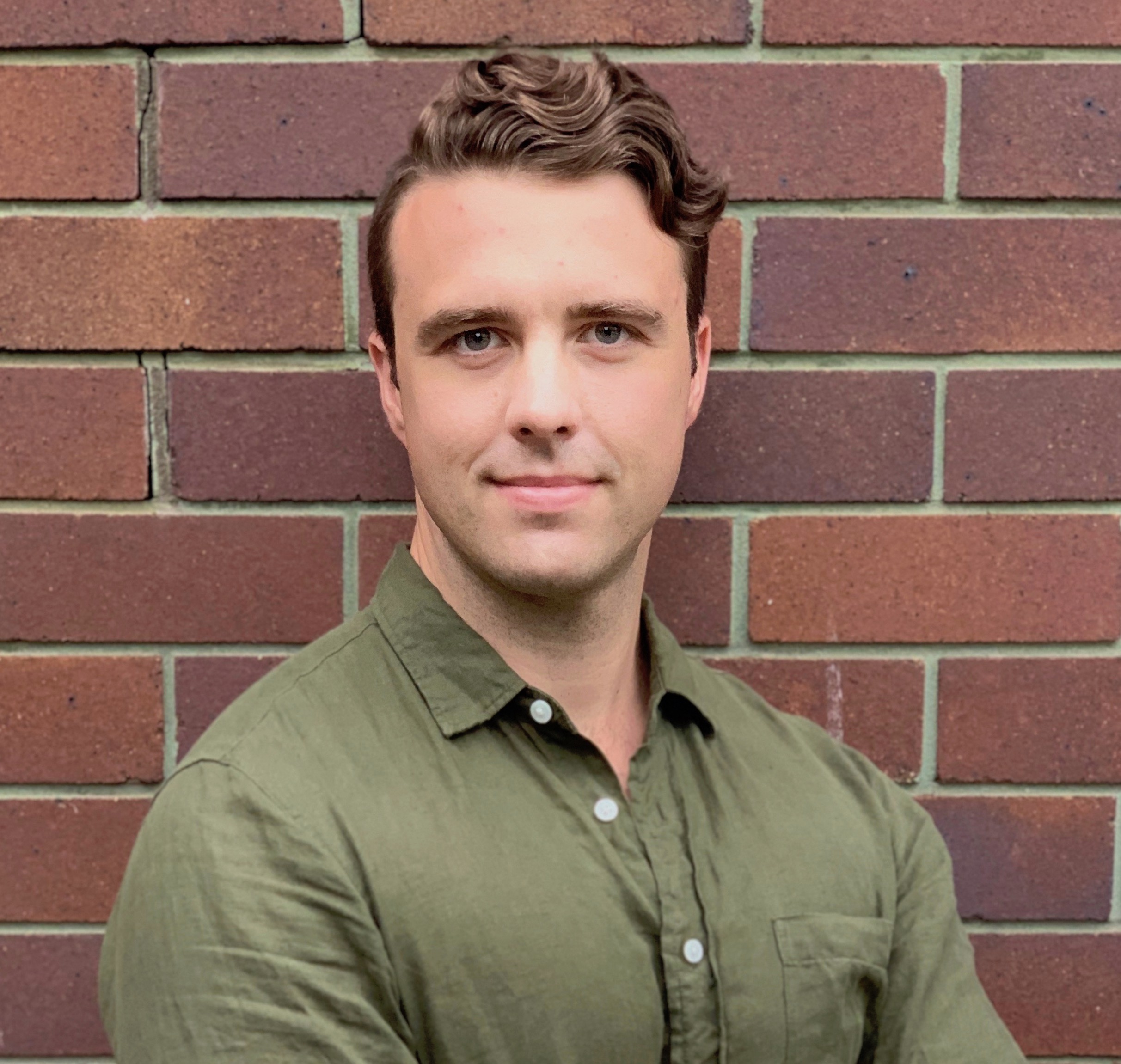
Jarrod Ray Hore is a Scientia Lecturer in the School of Humanities & Languages at the University of New South Wales (UNSW), Sydney, and Co-Director of the New Earth Histories Research Program. His work explores environmental history, settler colonialism, and the intersections of science, geology, and cultural landscapes. Hore’s research focuses on landscape photography’s role in shaping colonial projects, earthquake geology, and the logistics of the natural history trade. He has published widely in journals like the Pacific Historical Review and Australian Historical Studies, and his award-winning book *Visions of Nature* (2022) examines how photography reinforced settler territoriality. His research interests span environmental history, transnational history, the history of science, and colonial studies. Key areas include the history of settler colonialism in Australia, New Zealand, and North America, as well as the cultural and scientific dimensions of geological exploration. Hore actively supervises HDR and honours students in environmental history, colonial history, and the history of photography. His awards include the Marilyn Lake Prize (2023) and Donna Coates Prize (2022), with shortlist recognitions for prestigious history awards. Beyond academia, he teaches courses like *A House Divided: The Making of Modern America* (ARTS2150), emphasizing U.S. histories of race, class, and global engagement. Hore’s work bridges environmental humanities and colonial studies, analyzing how visual and scientific practices reinforced imperial and settler agendas. His current projects explore the material and logistical networks underpinning natural history collections and the epistemologies of colonial geology.
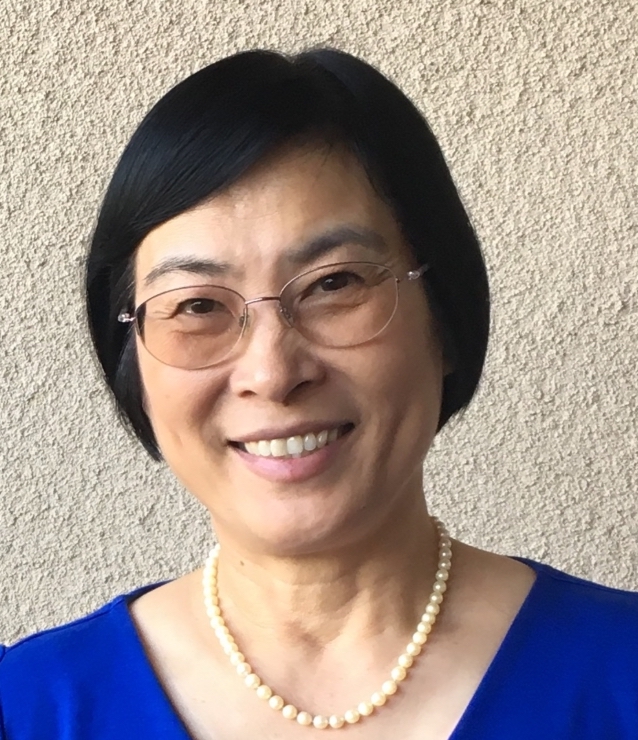
Min Zhou is a Distinguished Professor of Sociology and Asian American Studies at UCLA, and Director of the UCLA Asia Pacific Center. She holds the Walter & Shirley Wang Endowed Chair in U.S.-China Relations and Communications. A member of both the National Academy of Sciences and the American Academy of Arts and Sciences, her work focuses on migration studies, race and ethnicity, and Chinese diasporas. She previously directed the UCLA Asian American Studies Department (2001-2005) and served as Tan Lark Sye Chair Professor at Nanyang Technological University, Singapore (2013-2016). Her research explores transnationalism, immigrant entrepreneurship, ethnic supplementary education, and China’s internal migration dynamics. Notable publications include Chinatown (1992), The Asian American Achievement Paradox (2015), and Contemporary Chinese Diasporas (2017). She has received major awards such as the 2017 ASA Distinguished Career Award and the 2016 Bourdieu Prize for sociology of education. Education: Ph.D., Sociology, State University of New York at Albany Key Grants: Russell Sage Foundation grants (2005-09), Singapore Ministry of Education Tier 2 grant (2016-21) Labs/Teams: Directs the UCLA Asia Pacific Center; collaborates with global scholars on projects like 'Immigration and Integration in the Pacific Rim'
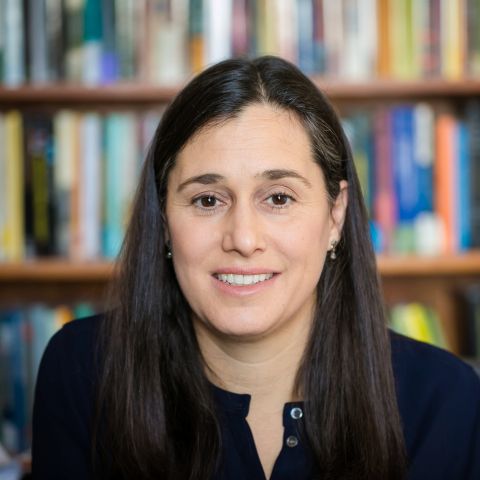
Victoria A. Beard is Professor of City and Regional Planning at Cornell University's College of Architecture, Art, and Planning, where she serves as Director of the Cornell Mui Ho Center for Cities. She is also a Core Faculty member of the Southeast Asia Program and was named a Global Public Voices Fellow (2021-22) for her work on urban poverty and water/sanitation inequality in developing countries. Education: Ph.D. in Community and Regional Planning, University of British Columbia (1999) M.A. in Urban Planning, University of California–Los Angeles (1995) B.A. in Urban Studies and Planning, University of California–San Diego (1992) Beard's research examines how communities in the Global South navigate formal planning systems to address urban poverty through collective action and transnational networks. Her work emphasizes water/sanitation infrastructure as critical sites of inequality, investigating how intermittency and affordability barriers perpetuate urban exclusion. She conducts comparative fieldwork in Southeast Asia (Indonesia, Thailand, Cambodia) and transnational contexts (Oaxaca/Southern California), analyzing how community-based planning can drive city-wide transformation despite institutional constraints. Her recent publications reveal a strategic shift toward infrastructure justice, with increasing focus on municipal service delivery systems and climate resilience. Beard consistently connects micro-level community practices to macro-level policy frameworks, highlighting pathways for inclusive urban development that center marginalized populations' lived experiences. Scientific Awards: Global Public Voices Fellow (2021-22) International Faculty Fellow, Global Cornell (2017) Fulbright Scholar to Indonesia (1993-94) Beard has secured major research funding including CORCL (University of California–Irvine) and Pacific Rim Research Program grants for transnational community planning projects. With 20+ years of practitioner experience, she has designed poverty-alleviation programs for the World Bank, Asian Development Bank, and RAND, specializing in community-based development, monitoring/evaluation systems, and national policy implementation. Her grant portfolio bridges academic research and on-the-ground impact through partnerships with NGOs like Mercy Corps. As Director of the Cornell Mui Ho Center for Cities, Beard leads initiatives focused on climate-resilient urban futures, including symposia on New York City resilience and Kenya's informal housing. She collaborates extensively with Cornell's Southeast Asia Program and Atkinson Center for Sustainable Future, building interdisciplinary teams that integrate planning, public health, and environmental science perspectives.
Ming-Cheng Lo is a Professor of Sociology at the University of California, Davis. She holds a Ph.D. in Sociology from the University of Michigan, along with an M.A. in Comparative Literature and a B.A. in Foreign Languages and Literature from National Taiwan University. Her research focuses on health, immigration, civic engagement, and culture, particularly exploring how marginalized groups navigate challenging social environments through hybrid cultural strategies. She has conducted extensive studies on healthcare access for immigrants, disaster recovery in Taiwan, and the interplay of cultural codes in civil society. Her academic career includes co-editing the Routledge Handbook of Cultural Sociology (2010, 2019) and authoring Doctors within Borders: Profession, Ethnicity, and Modernity in Colonial Taiwan (2002). Her work bridges sociological theory with empirical studies, emphasizing themes like cultural capital, resistance, and transnationalism. She has received grants from institutions including the Pacific Rim Research Program and Robert Wood Johnson Foundation, supporting projects on pandemic governance, immigrant healthcare, and civil society dynamics. Professor Lo teaches courses on immigration, health sociology, and social movements at both undergraduate and graduate levels. Her research has been recognized through fellowships such as the Davis Humanities Institute Fellowship and APRU Fellowship, and she has authored over 50 peer-reviewed articles in leading journals like Theory and Society and Sociological Perspectives . Her recent work examines Taiwan’s pandemic governance during the 2021–2025 period, linking public health responses to broader sociopolitical trends. She collaborates with global scholars to analyze cultural mechanisms in disaster recovery and populism resistance, reflecting her commitment to sociological inquiry with global relevance.
Thomas B. Gold is a Professor of Sociology at the University of California, Berkeley, and has held multiple leadership roles, including Executive Director of the Inter-University Program for Chinese Language Studies (IUP), a consortium managing advanced Chinese language programs at Tsinghua University. He has also served as Associate Dean of International and Area Studies, Founding Director of the Berkeley China Initiative, and Chair of the Center for Chinese Studies. Gold’s research examines the emergence of individual autonomy and civil society in East Asian contexts, particularly mainland China and Taiwan, focusing on topics like guanxi, entrepreneurship, popular culture, and non-governmental organizations. Gold earned his undergraduate degree in Sociology from Oberlin College, followed by a Master’s in Regional Studies-East Asia and a PhD in Sociology from Harvard University. His early academic work included being among the first American exchange students to study in China at Fudan University in Shanghai (1979-1980). He has taught courses on Development and Globalization, Contemporary Chinese Society, and special topics like North Korean Society and non-profits in education. His advocacy for public sociology led to roles on boards of organizations such as the National Committee on U.S.-China Relations and the East Bay College Fund, alongside editorial board positions in scholarly journals. Gold’s research trends emphasize civil society development, post-authoritarian societal change, and cross-strait dynamics between China and Taiwan. His work bridges traditional cultural frameworks with modern political and economic transformations, particularly in analyzing how individual agency evolves within authoritarian systems. Awards include the 2007 Distinguished Teaching Award and the 2010 Chancellor’s Award for Civic Engagement. As an advisor, he supports international student groups like Strait Talk and the East-West Coalition, and advises programs in Japan and Singapore. His civic engagement and academic leadership highlight a commitment to both scholarly rigor and practical societal impact. Labs/Teams: Gold is affiliated with the Institute of East Asian Studies (IUP program), the Center for Chinese Studies, and collaborates with academic consortia and civic organizations globally.
Robin D. Muhammad is an Associate Professor and Chair of the Department of African American Studies at Ohio University's College of Arts and Sciences. He is based in Bentley Annex 315 on the Athens Campus and contributes significantly to both teaching and research in African American history and labor studies. Education: Ph.D. in History, Carnegie Mellon University M.S. in History and Social Policy, Carnegie Mellon University B.A. in History and Spanish, University of California at Davis Dr. Muhammad is a labor historian whose research focuses on African American industrial workers, particularly in 20th-century California. His work explores the intersections of race, labor, federal policy, and technological change, with a special emphasis on shipbuilding communities and political movements like Garveyism. He teaches foundational courses such as Introduction to African American Studies , African American History I and II , and specialized topics including History of the Black Worker and The Black Press in North America . His recent publications reflect a strong trajectory in African American labor history, civil rights movements, gender and work, and transnational Black politics. Themes across his articles include racial segregation in wartime industries, Black women's labor activism, the Double V Campaign, and the global reach of Garveyism. His forthcoming book, Arsenal of Liberation , synthesizes much of this research into a comprehensive study of African American workers in the San Francisco Bay Area. Scientific Awards and Honors: Special 1804 Library Endowment, Ohio University (2007) Arts and Humanities Junior Faculty Endowment, Ohio University (2007) Goldman Award for Excellence in Graduate Teaching, Carnegie Mellon University (2004) Carnegie Scholar, Carnegie Mellon University (1996–2000) Dr. Muhammad is actively involved in university service, having co-chaired the MLK Celebration Committee and served on the University Curriculum Council, the Advisory Board for the Global Studies Program, and the Black Alumni Reunion Advisory Committee. He has secured research grants and contributed extensively to academic encyclopedias and journals, establishing himself as a key scholar in African American labor and political history. No information is available about advisees or laboratory/team affiliations.
Prof. Dr. Marianne Braig is a Professor of Political Science with a focus on Latin America at the Institute for Latin American Studies, Freie Universität Berlin. She has held this position since 2002 and previously served as Director of the Institute from 2003 to 2006. Prof. Braig is actively involved in the Center for Area Studies and serves as Principal Investigator for the Research Unit Temporality at the Berlin Graduate School for Global and Transregional Studies (BGTS). She also serves as Speaker of the Security Section of the Collaborative Research Center (SFB) 700 "Governance in Areas of Limited Statehood" at Freie Universität Berlin. Prof. Braig's educational background includes a PhD (Dr. phil.) in Sociology from Freie Universität Berlin (1989, summa cum laude) and a State doctorate from the Department of Political and Social Science at Freie Universität Berlin (1999). She studied Anthropology and History at Universidad Nacional Autónoma de México (UNAM) in 1977 and completed her diploma with double majors in Economics and Sociology from Freie Universität Berlin in 1977. Her academic career includes positions as Assistant Professor at the Institute for Latin American Studies (1988-1997) and Professor at Goethe-Universität Frankfurt (1997-2002). Prof. Braig's research spans several interconnected fields with a particular focus on gender segmentation in labor markets, social and educational policy, transformation and development in Latin America, political culture of the state and governance, and intertwined inequalities in the global context. Her work often examines how gender, class, and regional dynamics intersect in shaping social and political outcomes, particularly in Mexican and broader Latin American contexts. She has conducted extensive fieldwork in Mexico, where she has studied urban spaces, informal economies, and governance structures. Her research methodology combines theoretical rigor with empirical investigation, often employing comparative frameworks to analyze local phenomena within global structures. Prof. Braig's recent publications reveal a consistent focus on inequality, governance, and transformation processes in Latin America, with increasing attention to global interconnections and contemporary crises. Her work bridges political science, sociology, and gender studies, often employing comparative frameworks to analyze how local phenomena connect to global structures. Recent publications show growing engagement with issues of forced labor, pandemic responses, and sustainability challenges, reflecting her ability to address emerging global issues through the lens of Latin American experiences. Her scientific recognition includes: Margherita von Brentano Award for outstanding achievements in the advancement of women studies and gender research, Freie Universität Berlin (2013) Prof. Braig has led numerous significant research projects, including the Maria Sibylla Merian International Centre for Advanced Studies on "Conviviality in Unequal Societies," the "desiguALdades.net" research network on interdependent inequalities in Latin America, and the "GLOCON" project on land conflicts in Latin America and Sub-Saharan Africa. She has received funding from major German research organizations including DFG, BMBF, DAAD, and various foundations. Her international collaborations span across Latin America, particularly with institutions in Mexico, Peru, and Chile, and she has served as Visiting Professor at prestigious institutions including Colegio de México and Universidade de São Paulo. Prof. Braig maintains active leadership roles within Freie Universität Berlin, including membership on the Board of Trustees (Kuratorium) since 2008, the Excellence Council (Excellenzrat) since 2009, and the Executive Board of the Center for Area Studies since 2008. She has also contributed significantly to academic governance beyond her institution, serving as Vice President of the Latin American Studies Association (LASA) for 2017/18 and as a member of the Comité Científico Asesor Internacional (CCAI) at the PUCP since 2018.
Associate Professor Catherine Evans (MLArch, UPenn; AB, Vassar) is Deputy Head of School (Learning and Teaching) at UNSW's School of Built Environment and a Senior Fellow of the Higher Education Academy. She has twice directed UNSW's Landscape Architecture Program (2004-2006, 2015-2018) and chaired the AILA National Education Committee (2018-2021). Her research examines the performance of designed landscapes, evolution of urban park planning, and frameworks for sustainable green space. She contributes to the Sustainable Cities and Landscapes Hub of the Association of Pacific Rim Universities, co-convening working groups since 2018. Prior to UNSW (2000), she worked as a consultant in Sydney and a Historical Landscape Architect for the U.S. National Park Service. Publications highlight trends in urban sustainability , green infrastructure , and public participation in planning, with specific focus on Sydney's Olympic Park, Centennial Parklands, and Bicentennial Park. Recent works address climate-resilient design and low-carbon landscape frameworks. Scientific Awards: Senior Fellow of the Higher Education Academy (2021) AILA NSW Chapter Award for Low Carbon Landscape Guide (2020) Grants: Landscape Architecture Foundation ($7,700, 2020), NSW Department of Planning ($66,600, 2020), CRC for Low Carbon Living ($10,000, 2019), and multiple UNSW research grants for international student studies, green roofs/walls, and parkland environmental history. Teaching: Courses include Introduction to Landscape Architecture, Landscape Analysis, Management, and Plants, Design and Ecology.
Dr. Yuan Shu is a Professor in the Department of English at Texas Tech University's College of Arts and Sciences, specializing in American Literature and Comparative Literature with a focus on transpacific studies, globalization, and Asian American literature. He holds a Combined Ph.D. in English and American Studies from Indiana University at Bloomington and has established himself as a leading scholar in transnational American studies through extensive publications and international collaborations. His educational background includes: Combined Ph.D. in English and American Studies, Indiana University at Bloomington Dr. Shu's research explores the intersections of technology, race, and geopolitical discourse in transpacific contexts, with particular emphasis on post-9/11 American literature, Vietnamese American narratives, and Chinese diaspora experiences. His work bridges literary analysis with critical theory to examine how globalization reshapes cultural production and identity formation across the Pacific Rim. Key thematic threads include the technological empire's impact on racial formation, eco-critical perspectives on transpacific literature, and the rehabilitation of marginalized historical narratives. His publication trajectory reveals a sustained focus on transpacific literary and cultural studies, evolving from early work on digital communities and Asian American subjectivities toward contemporary analyses of geopolitical representation, human rights discourse, and oceanic epistemologies. Recent scholarship demonstrates increasing engagement with indigenous knowledge systems and planetary consciousness within American studies frameworks. His scientific recognition includes: Core Fulbright U.S. Scholar Program Award (2017-2018) Global Vision Award on Faculty International Scholarship (2016) President's Excellence in Diversity and Equity Award (2011) Inclusive Excellence Award (2011) Integrated Scholar designation (2017) NEH Summer Institute Fellowship (2023) Dr. Shu has secured significant research funding including U.S. Department of State grants ($24,000), Henry Luce Foundation awards ($27,000), and multiple Texas Tech University grants totaling over $75,000. His service includes founding the TTU Chinese Faculty and Staff Association (2009-2011) and directing the Comparative Literature Program (2006-2010). Current projects include a book under contract titled Negotiating the Technological Empire: Technology, Racial Formation, and Transpacific Chinese American Life Writing , reflecting his ongoing commitment to theorizing technology's role in transpacific cultural production. As an international educator, Dr. Shu has delivered lectures at Oxford University, Doshisha University, National University of Singapore, and institutions across Asia, fostering global dialogue on American studies in the post-American era through initiatives like the Stanford University Chinese Railroad Workers Project (2012-2016).
Patricia Anthony serves as Associate Professor at Lincoln University's School of Landscape Architecture in New Zealand, where she holds an ORCID identifier 0000-0002-4991-3340. Her academic appointments include Faculty Postgraduate Chair for the Faculty of Environment, Society and Design (2021-2024) and current affiliation with the Centre for Geospatial and Computing Technologies (2025-present). Previously, she served as Head of Department (2016-2017), Department Postgraduate Coordinator (2014-2016), and SHIFT Coordinator (2017-2020). Her educational background comprises a Ph.D. from the University of Southampton, United Kingdom; an M.Sc. from Birkbeck, University of London, United Kingdom; and a BSc (High Honors) from the State University of New York, United States. She is proficient in Malay language, with reading, writing, and speaking capabilities. Dr. Anthony's research centers on agent and multi-agent systems, utilizing artificial intelligence techniques including machine learning, evolutionary computation, and text processing as decision-making strategies for agents. She is recognized as a leading researcher applying intelligent agents across diverse domains such as online auctions, agriculture, education, and social media analysis. Her specialized work in sentiment analysis and emotion identification enables agents to detect emotional states in textual communications, with recent applications in earthquake tweet analysis. Her publication record demonstrates consistent scholarly output with over 130 publications, showing particular strength in applying multi-agent systems to practical challenges. Recent work reveals three major research streams: trust and reputation management in IoT environments (accounting for approximately 30% of recent publications), agricultural technology applications including mastitis detection and water resource management (approximately 40%), and social media analysis focusing on elderly technology adoption and cyber aggression classification (approximately 30%). Adjunct Professor, Hubei University of Technology, Wuhan, China Program Committee/Senior Program Committee member for Pacific Rim International Conferences on Artificial Intelligence (PRICAI) 2016, 2018, 2019 Co-chair for International Carnahan Conference on Security Technology (ICCST) 2014, 2016, 2018, 2020 Member of Institute of Electrical and Electronics Engineers (IEEE) Reviewer for Engineering Applications of Artificial Intelligence, Malaysian Journal of Computer Science, and Adaptive Behaviour Dr. Anthony has supervised numerous postgraduate students across multiple research areas related to multi-agent systems, with completed projects spanning cyber aggression classification, agricultural technology, IoT security, and elderly technology adoption. She serves as an examiner for advanced computing courses including Advanced Database (COMP643), Advanced Programming (COMP642), and Studio Project (COMP639), demonstrating her integration within the university's computing curriculum despite her Landscape Architecture appointment. Her research aligns with Sustainable Development Goal 11 (Sustainable Cities and Communities), reflecting her commitment to applying computational techniques to address real-world challenges in urban and community contexts. She actively collaborates across disciplines through the Centre for Geospatial and Computing Technologies, bridging computational methods with landscape architecture applications.
Timothy Gray is a Professor in the Department of English at the City University of New York College of Staten Island (CSI), where he has been a faculty member since 1998. His research focuses on 20th-century American literature, with specialties in mid-century avant-garde movements, counterculture studies, and psychoanalytic criticism. Gray emphasizes interdisciplinary approaches, integrating poetry, visual arts, and music into his scholarship and teaching. Gray holds a Ph.D. in English from the University of California, Santa Barbara (1998), an M.A. in English from the same institution (1994), and a B.A. cum laude in English from Franklin and Marshall College (1986). His pedagogical philosophy prioritizes thematic integration across disciplines, particularly in courses that blend literary analysis with cultural studies. His scholarship explores intersections between literature, music, and visual arts, with notable works like Urban Pastoral: Natural Currents in the New York School (2010) and Gary Snyder and the Pacific Rim (2006). He has also published widely on figures such as Jim Carroll, Diane di Prima, and Greil Marcus, alongside studies of jazz criticism, Americana music, and the Beat Generation. Gray’s recent work includes forthcoming analyses of jazz liner notes and Gary Snyder’s academic influence. His research consistently bridges literary criticism with broader cultural and environmental themes, reflecting his commitment to interdisciplinary inquiry.
Mikael Fauvelle is an Associate Professor and researcher in the Department of Archaeology and Ancient History at Lund University. His work focuses on political and economic complexity in pre-state and non-state societies, employing non-destructive sourcing methods like X-Ray and infrared spectrometry alongside ethnohistorical and indigenous knowledge frameworks. Director of the Heritage Science theme at Lund Institute for Advanced X-Ray and Neutron Science (LINXS) Principal Investigator (PI) for the Complex Canoes project analyzing Bronze Age sewn plank boats Co-PI for the Maritime Networks and Emergent Identities project across the North Pacific Rim Member of the Maritime Encounters project examining Neolithic and Bronze Age maritime connections Active in excavation and laboratory projects in Mexico, Sweden, and the United States His research explores themes such as the origins of money, long-distance trade networks, watercraft innovation, and societal resilience in maritime hunter-gatherer and island contexts. He integrates multidisciplinary approaches, including synchrotron and neutron analytical methods, to address questions about ancient exchange systems and technological impacts on social organization. Recent research outputs highlight comparative studies in Scandinavia, Southern California, and the Atlantic Façade, with a focus on material sourcing, social inequality, and prehistoric economic systems. His work aligns with UN Sustainable Development Goals related to poverty, planetary protection, and prosperity through archaeological insights into human-environment interactions. He actively participates in international collaborations and has presented at global conferences on topics ranging from Neolithic rock art to heritage science advancements, though no specific students or scientific awards are documented in the provided text.
Dr. John Glenn is an Associate Professor of International Politics and International Political Economy (IPE) at the University of Southampton. His research focuses on US-China relations, financial crises, resilience discourse, and neoliberalism. He has authored influential works such as China's Challenge to US Supremacy (2016) and Foucault and Post-Financial Crises (2019). Glenn currently supervises a PhD student in Politics and leads multiple interdisciplinary research projects funded by organizations like the SASAKAWA Foundation and the World Bank. His recent publications explore geopolitical competition, resilience theory, and resource frontier dynamics. Research interests include the socio-economic impacts of globalization, fragile states, and the evolution of risk governance. He contributes to courses on Development and International Relations, International Relations Theory, and Economic Globalization. Key grants include the 'Sustainability and Resilience Institute: Artisanal Mining in Zambia' and the 'Resilient Society Interdisciplinary Grant: Resilience and Migration.' Glenn is affiliated with the Centre for Eastern European and Eurasian Studies and actively engages in policy-oriented research.
Dr. Paul Richardson serves as Associate Professor in Human Geography at the University of Birmingham's School of Geography, Earth and Environmental Sciences, where he holds leadership roles as School Internationalisation Lead (Education) and Research Theme Lead for Geopolitics. A Fellow of the Higher Education Academy, he contributes significantly to academic governance as Academic Appeals Committee Panel Member and Vice-Chair of the Royal Geographical Society's Political Geography Research Group. His educational foundation includes a PhD in Geography from the University of Birmingham (2011), MA from UCLA (2003), and BA from University College London (2000). PhD Geography - University of Birmingham, 2011 MA Geography - University of California Los Angeles, 2003 BA Geography - University College London, 2000 Richardson's research critically examines the intersection of political and historical geography through the lens of Russian and Eurasian studies. His work investigates how national identity, nationalism, borders, and sovereignty manifest in contested territories, particularly focusing on Russia's geopolitical positioning. This scholarship reveals how historical narratives shape contemporary territorial disputes and national self-perception, with significant contributions to understanding border dynamics in post-Soviet spaces and the Pacific Rim. His publication trajectory demonstrates consistent engagement with geopolitical theory while addressing emerging global phenomena like the Belt and Road Initiative and Brexit. The work shows increasing methodological sophistication in analyzing memorialization practices and discursive constructions of space, with recent publications emphasizing the performative aspects of sovereignty and bordering practices in digital and physical realms. Notable recognitions include: HEFi Award for Education Enhancement and Innovation (2019) Fellowship of the Higher Education Academy Nomination for Royal Geographical Society Book Prize Richardson has secured substantial research funding from ESRC, AHRC, British Academy, and Leverhulme Trust for projects examining Russia's geopolitical identity and border dynamics. As an active mentor, he supervises graduate research on Russia, territorial disputes, and political geography while serving on international editorial boards including Eurasia Border Review. His professional service extends to conference organization for the Association for Borderlands Studies and peer review for leading journals like Geopolitics and Transactions of the IBG. He contributes to the University of Birmingham's 'Cities, Regions and Mobility' research group and Human Geography cluster, collaborating with scholars examining spatial transformations and geopolitical contestations across multiple scales from local borders to global infrastructures.
Meredith Kolsky Lewis is a Professor at the University at Buffalo School of Law and serves as Vice Dean for International and Graduate Programs. She is also Director of the Cross-Border Legal Studies Center, where she focuses on international economic law, trade law, and World Trade Organization Law. Lewis teaches courses in public and private international law, including International Trade Law and International Business Transactions. Administrative roles: Vice Dean for International and Graduate Programs; Director of the Cross-Border Legal Studies Center Previous academic appointments: Victoria University of Wellington Law School, Georgetown Law (Visiting Professor 2010-11) Professional affiliations: Society of International Economic Law (Co-Executive Vice President), American Society of International Law (co-chair), International Law Association (committee member) Education: BA from Northwestern University; J.D. and MSFS degrees from Georgetown University Her research emphasizes international economic law, particularly international trade frameworks, dispute resolution, and the legal implications of global trade agreements. Lewis has contributed to academic leadership through her roles in international legal societies and maintains active collaborations with institutions in the Pacific Rim region. Scientific honors and leadership roles: Co-Executive Vice President, Society of International Economic Law Founding member, Society of International Economic Law Member, International Law Association’s International Trade Law Committee Co-chair, American Society of International Law’s 'Law in the Pacific Rim Region' interest group Lewis practiced international trade and litigation at Shearman & Sterling LLP in Washington, DC, and Tokyo before entering academia. She maintains ongoing connections with her former practice through her research and teaching.