Jarle Brinchmann is an Associate Professor at Leiden University's Leiden Observatory, part of the Faculty of Science. He holds a PhD from the University of Cambridge and has held postdoctoral positions at Oxford University, the Max Planck Institute for Astrophysics, and the University of Porto. His research focuses on galaxy evolution, active galactic nuclei (AGN), and interstellar medium dynamics. Notable contributions include studies on gas outflows in galaxies and emission line diagnostics for AGN identification. Recent work includes analysis of Lyman-alpha emitters and binary star systems in globular clusters using the MUSE instrument. Education: BSc and MSc in Astronomy from the University of Oslo, PhD from the University of Cambridge (thesis: 'The physical evolution of galaxies'). Research emphasizes observational and theoretical astrophysics, with a focus on high-redshift galaxies, intergalactic medium interactions, and stellar populations. Collaborates widely on large-scale surveys and spectroscopic analyses.
Tony Cookson is a Professor of Finance and the Michael A. Klump Endowed Professor at the Leeds School of Business , University of Colorado Boulder, where he has served since 2013. His research spans empirical finance , household and corporate financial decision-making , and the impact of social media and legal institutions on financial behavior. He has published in top journals like the Journal of Finance , Journal of Financial Economics , and Management Science , focusing on topics from investor disagreement to fracking-induced debt repayment . Education : Ph.D. in Economics (University of Chicago), M.S. in Statistics and Applied Economics (Montana State University), B.S. in Economics (Montana State University) His research interests include: How social media shapes investor sentiment and trading patterns The economic consequences of fracking and casino policy Legal institutions and their role in credit market development Behavioral finance through LLM-driven investor personas His scientific awards include the Best Paper in Investments and Asset Pricing (MFA 2023) , NASDAQ Best Paper in Asset Pricing (WFA 2021) , and Finalist for TIAA Paul A. Samuelson Award (2021) . He serves as Editor at the Review of Corporate Finance Studies and Associate Editor at multiple top journals.
Lynn Kistler is a Professor in the Department of Physics & Astronomy at the University of New Hampshire (UNH), part of the College of Engineering and Physical Sciences. Her research focuses on plasma physics, space weather, and magnetospheric dynamics, particularly investigating the interactions between the solar wind and Earth's magnetosphere-ionosphere system. She holds a Ph.D. in Physics from the University of Maryland, along with a B.S. from Harvey Mudd College. Dr. Kistler's work emphasizes understanding plasma processes such as ion outflow from the ionosphere, magnetic reconnection, and storm-time magnetospheric evolution. She has led studies using data from missions like the Van Allen Probes, Solar Orbiter, and Cluster, contributing to advancements in instrumentation (e.g., the SWA suite) and computational modeling. Her research bridges observational analysis, theoretical frameworks, and machine learning to address challenges in space weather prediction and plasma dynamics. Key areas of her research include the role of ionospheric ions (O⁺, H⁺) in plasma sheet dynamics, the effects of geomagnetic storms on ring current formation, and the behavior of heavy ions in near-Earth space. She has authored or co-authored over 260 publications, spanning journals like Nature Communications , Geophysical Research Letters , and Journal of Geophysical Research . Dr. Kistler has secured grants and collaborations through initiatives like the NASA Interstellar Mapping and Acceleration Probe (IMAP) and has served as a co-investigator on multiple missions. Her work emphasizes interdisciplinary approaches, combining spacecraft observations with ground-based data and numerical simulations to unravel the complexities of Earth's space environment.
Anatoly Spitkovsky is a Professor of Astrophysical Sciences at Princeton University. His work focuses on theoretical high-energy astrophysics, particularly relativistic outflows, pulsar magnetospheres, collisionless shocks, and nuclear burning on accreting neutron stars during X-ray bursts. He employs high-performance computing and numerical simulations to study these phenomena. Developed a numerical method for Force-Free Relativistic Magnetohydrodynamics (MHD) to model pulsar magnetospheres. Investigated relativistic collisionless shocks using 3D particle-in-cell (PIC) simulations. Studied hydrodynamical effects in thermonuclear burning on neutron stars. His research bridges plasma physics, computational methods, and astrophysical observations, with applications to pulsar emission mechanisms and gamma-ray burst dynamics. He collaborates on interdisciplinary projects and contributes to advancing simulation techniques for astrophysical systems.
Norm Murray is a Professor at the Canadian Institute for Theoretical Astrophysics (CITA) within the University of Toronto . With a Ph.D. from UC Berkeley (1986), his research spans nonlinear dynamics , planetary formation , solar system evolution , and active galactic nuclei . His work combines theoretical physics with observational data from radio telescopes, X-ray satellites, and cosmological simulations. Recent research focuses on galaxy formation (via FIRE simulations), dark matter interactions in dwarf galaxies, and AGN disk dynamics . He employs machine learning for planetary collision modeling and investigates the interplay of magnetohydrodynamics and radiative transfer in quasar environments. Publications highlight his expertise in computational astrophysics, spanning topics from cosmic molecular gas mapping to the stability of exoplanetary systems.
Brian Walsh is an Associate Professor of Mechanical Engineering at Boston University, with affiliations in the Departments of Astronomy and Electrical and Computer Engineering. He holds a Ph.D. in Mechanical Engineering from Boston University (2011) and a B.A. from Colgate University (2006). His research focuses on experimental space physics and spacecraft instrumentation, particularly studying solar wind-magnetosphere interactions, magnetopause reconnection, and X-ray imaging techniques. His work investigates energy transfer from the Sun to Earth's space environment, with a primary focus on the magnetopause. Walsh develops instruments for NASA and ESA missions, including the LEXI lunar X-ray imager and the CuPID CubeSat. He has contributed to missions like SMILE and pioneered compact solar energetic particle telescopes. His research spans CubeSat-based observations and large-scale space missions, emphasizing cross-scale coupling and global magnetospheric dynamics. Key research interests include plasma turbulence, magnetosheath dynamics, and exosphere variability. Walsh collaborates on projects like the Trans-Heliospheric Survey and the Magnetospheric Constellation (MagCon), aiming to advance understanding of heliospheric plasma behavior. His work also addresses space weather prediction and instrument calibration, such as the Carruthers Observatory Student Solar Monitor (COSSMo). Walsh's recent studies explore solar wind acceleration, ionospheric outflow asymmetry, and the role of recirculated plasmasphere material in ring current dynamics. His contributions to instrumentation and mission design highlight his dual role as a researcher and engineer in aerospace and space physics.
Joseph van Batenburg-Sherwood is a Lecturer in Biofluid Mechanics at Imperial College London's Department of Bioengineering (Faculty of Engineering). He leads the vBS Lab and holds a Royal Academy of Engineering Research Fellowship (2017–2022). His research focuses on biofluid dynamics, particularly in microvascular diseases, intraocular pressure regulation, and ventilator design for resource-limited settings. Education: MEng in Mechanical Engineering, King’s College London (2005–2009) PhD in Biofluid Dynamics, University College London (2009–2013) Research interests include experimental techniques for microscale biological flow analysis, with specializations in: Red blood cell dynamics in microvascular diseases Aqueous humor flow mechanics in glaucoma Ventilator design optimization Benchtop perfusion systems (e.g., iPerfusion) Publications emphasize translational research in ocular fluid dynamics and medical device innovation. Notable contributions include consensus guidelines for outflow facility measurement protocols and MMP-3-based glaucoma therapies. Advising: No listed advisees. Grants: Unspecified in provided text. Labs: vBS Lab at Imperial College London's White City Campus.
Christopher Kochanek is a Professor and Ohio Eminent Scholar in the Department of Astronomy at The Ohio State University, affiliated with the College of Arts and Sciences. His expertise lies in cosmology, gravitational lensing, and supernovae. He earned his Ph.D. from the California Institute of Technology (1989) and a B.A. from Cornell University (1985). His research focuses on using gravitational lensing to study dark energy, dark matter substructures, and quasar accretion disks. He pioneered time-domain astronomy, exploring variability in massive stars and quasars, and co-led the ASAS-SN project for all-sky supernova detection. Key achievements include the Dannie Heineman Prize for Astrophysics (2020) and the AAS Beatrice M. Tinsley Prize (shared 2020). His work spans binary neutron star mergers, Milky Way mass estimation, and dust-obscured stellar explosions. Recent studies analyze supernova progenitors and long-term variability trends in transient events. Awards: Heineman Prize (2020), Tinsley Prize (2020) Grants & Projects: ASAS-SN collaboration with Prof. Stanek, dark energy constraints via lensing, and Milky Way dynamics. Labs/Teams: Active in the Ohio State Astronomy Instrumentation Group and ASAS-SN observatory network.
Professor Leah Morabito is a Professor (Research) - UKRI Future Leaders Fellow at Durham University, affiliated with the Department of Physics and the Institute for Computational Cosmology. She specializes in high-resolution imaging at low frequencies using the LOFAR telescope to study how supermassive black holes co-evolve with their host galaxies. As leader of the LOFAR Imaging of Resolved AGN (LIRA) group, she has made significant contributions to our understanding of active galactic nuclei and galaxy evolution through numerous high-impact publications. Professor Morabito's research primarily focuses on AGN physics, galaxy surveys, and radio interferometry. She has pioneered techniques for sub-arcsecond imaging at low radio frequencies, which has opened new windows for studying radio jets, galaxy evolution, and the interstellar medium. Her work reveals critical insights about AGN feedback mechanisms and the connection between supermassive black holes and their host galaxies across cosmic time. The analysis of her recent publications shows a strong emphasis on utilizing LOFAR's unique capabilities to study radio sources with unprecedented resolution at low frequencies. Scientific Recognition: UKRI Future Leaders Fellowship Professor Morabito actively mentors the next generation of astronomers, currently supervising PhD students Benite Tantely, Ciera Sargent, and Emmy Escott. Her research is supported by significant funding through her UKRI Future Leaders Fellowship and her role as co-Principal Investigator of the new LOFAR2.0 Large Programme, which extends her work on high-resolution low-frequency radio surveys. She has secured substantial research funding that enables cutting-edge observations and supports her research team. As leader of the LOFAR Imaging of Resolved AGN (LIRA) group, Professor Morabito oversees a collaborative research effort focused on advancing our understanding of how AGN help shape galaxy evolution. Her team utilizes unique high-resolution, low-frequency observations to study radio jets, AGN feedback mechanisms, and the connection between supermassive black holes and their host galaxies, contributing significantly to one of the most fundamental questions in modern astrophysics.
Chris Matzner is a Professor and Associate Graduate Chair at the University of Toronto's Department of Astronomy and Astrophysics, affiliated with the Dunlap Institute for Astronomy & Astrophysics. He earned his Ph.D. from UC Berkeley in 1999. His research focuses on astrophysical fluid dynamics, particularly star formation processes (protostellar disks, molecular clouds, energy feedback) and stellar explosions (supernovae, gamma-ray bursts), employing analytical, numerical, and observational approaches. His research encompasses: Dynamics of protostellar outflows and molecular cloud interactions Models for supernova shocks and gamma-ray burst mechanisms Fragmentation in star and planet formation Massive black hole accretion processes Evolution of giant molecular clouds Stellar feedback in galactic environments Analysis of his 15 most recent publications reveals strong emphasis on supernova dynamics (particularly Type Ia explosions), star formation mechanisms in clusters and molecular clouds, shock wave physics in astrophysical contexts, and the development of astronomical instrumentation. The works demonstrate consistent focus on explosive transients, fluid dynamics in cosmic environments, and observational constraints on theoretical models. As Associate Graduate Chair, he oversees academic programs and student development. His laboratory affiliations include the Dunlap Institute's computational astrophysics and instrumentation groups. Current work involves modeling star cluster-galaxy interactions, tidal disruption events, and developing next-generation UV/IR detectors.
Nicolas Binder is a Professor and Head of the Turbomachinery and Propulsion Research Group at ISAE-SUPAERO . His research focuses on turbomachinery aerodynamics, unsteady flow analysis, and innovative propulsion systems for aerospace applications. Member of EuroTurbo executive committee ASME Member Associate Editor, Journal of Turbomachinery Research expertise in off-design operations and windmilling flows Research Interests : Aerodynamics of turbomachinery in severe off-design conditions Unsteady flow dynamics in turbines Innovative propulsion methods including magneto-hydrodynamics Flow analysis techniques for compressors and fans Recent publications (2024-2021) emphasize transient flow modeling in turbines, windmilling operation optimization, and variable geometry turbine performance. Articles span experimental validation of numerical models, shock wave interactions, and novel propulsion concepts like plasma-thrusters for drones.
Martin Rey is a Lecturer in the Department of Physics at the University of Bath, specializing in theoretical astrophysics with a focus on galaxy formation and evolution. His research employs advanced computational methods to investigate fundamental questions about dark matter, star formation, and cosmic structure. His primary research interests include: Modeling the formation and co-evolution of stars, galaxies, and cosmic structures Using supercomputers for detailed fluid dynamics models of galaxies Investigating the nature of dark matter and its distribution Exploring the formation of the first stars and early universe processes Understanding how chemical elements permeate the Universe Dr. Rey's research portfolio reveals a strong concentration in Dark Matter Physics (100%), Dwarf Galaxy Physics (80%), Galactic Evolution Physics (74%), and Stellar Mass Physics (63%). His recent publications demonstrate expertise in radiation-hydrodynamics simulations, particularly through the EDGE project framework, which examines various aspects of dwarf galaxy physics and dark matter distribution. His notable scientific achievements include: Christopher Skinner Prize for outstanding PhD research (2020) Fellow of the Royal Astronomical Society (awarded December 7, 2024) Beecroft Fellowship (awarded September 1, 2021) Dr. Rey is actively engaged in research leadership as Co-Principal Investigator on the MEGATRON project (2023-2028) and Engineering Dwarf Galaxy project (2019-2027), and as Co-Investigator on the Vintergatan project (2020-2025). He serves as a peer reviewer for prestigious journals including Monthly Notices of the Royal Astronomical Society, Astronomy & Astrophysics, and The Open Journal of Astrophysics, and regularly presents at international conferences such as his Maynooth University seminar (November 2024) and First Galaxies conference (April 2025).
Edison P. Liang is the Andrew Hays Buchanan Professor of Astrophysics at Rice University, where he has served since 1991. Previously, he held positions at Stanford University, Michigan State University, and Lawrence Livermore National Laboratory (LLNL), where he led research groups in plasma physics and astrophysics. His research focuses on relativistic plasma physics, high-energy density physics, laser-plasma interactions, and high-energy astrophysical phenomena. He earned his BA (1967) and PhD (1971) in Physics from UC Berkeley, supported by the UC Science Fellowship and Anthony Scholarship. Key professional milestones include: Recipient of the British SRC Senior Visiting Scientist Fellowship (1974) Co-founder of the High Energy Density Laboratory Astrophysics (HEDLA) conference series Contributor to major NAS and SAUUL reports on High Energy Density Physics Organized over a dozen international astrophysics conferences Current research emphasizes computational modeling of relativistic plasmas, laboratory astrophysics, and antimatter creation using intense lasers. His group collaborates on both theoretical and experimental projects, with active involvement in HEDP applications to fusion, gamma-ray generation, and medical physics. Recent studies include relativistic jet dynamics, magnetic reconnection mechanisms, and shock-driven particle acceleration processes. Awarded over 300 peer-reviewed publications and conference proceedings, Liang is a Fellow of the American Physical Society and holds honorary memberships in Sigma Xi and Phi Beta Kappa. His group advises current graduate students Kyle Perez and Brandon Cage, with notable alumni including Guy Hilburn and Yingchao Lu. Research infrastructure includes advanced computational simulations and collaborations with national labs like LLNL.
Professor Christian Knigge serves as Professor of Astrophysics at the University of Southampton and is a core member of the Southampton Theory Astrophysics and Gravity (STAG) Research Centre within the Institute for Life Sciences. His research program investigates accretion phenomena across diverse cosmic scales, from stellar-mass compact objects to supermassive black holes. Knigge's primary research focuses on accretion phenomena and associated outflows, cataclysmic variables, close binaries, globular clusters, and active galactic nuclei. He examines the physical mechanisms driving accretion disk instabilities, outflow generation, and explosive events in binary systems, with particular emphasis on white dwarf and black hole accretors. His work integrates observational data with theoretical modeling to unravel the complex physics of these high-energy environments. Recent publications (2024-2025) reveal a strong emphasis on multi-wavelength observational campaigns, especially leveraging JWST capabilities, alongside theoretical code development. Key research threads include characterizing disk winds in active galactic nuclei, identifying quasi-periodic oscillations in white dwarf systems, classifying optical outbursts in cataclysmic variables, and developing computational tools like the SIROCCO radiative transfer code. These studies demonstrate his leadership in connecting observational signatures with fundamental accretion physics across different astrophysical regimes. Supervision: Currently guides six PhD students in Physics (Austen George William Wallis, Cordelia Brown, Brian Luff, Zackery Alexander Irving, Arianna Clarissa Albayati, Pornisara Nuchvanichakul) Grants: Leads STFC-funded projects including 'Line-Driven Disk Winds in Active Galactic Nuclei', 'C Knigge - Astrophysics at Southampton', and previously held a Leverhulme Trust Research Fellowship for 'The Universal Nature of Accreting Compact Objects' As an integral member of the STAG Research Centre, Knigge collaborates within a multidisciplinary team investigating gravity-dominated systems, contributing to Southampton's prominence in theoretical and observational astrophysics through both individual research initiatives and institutional consolidation grants.
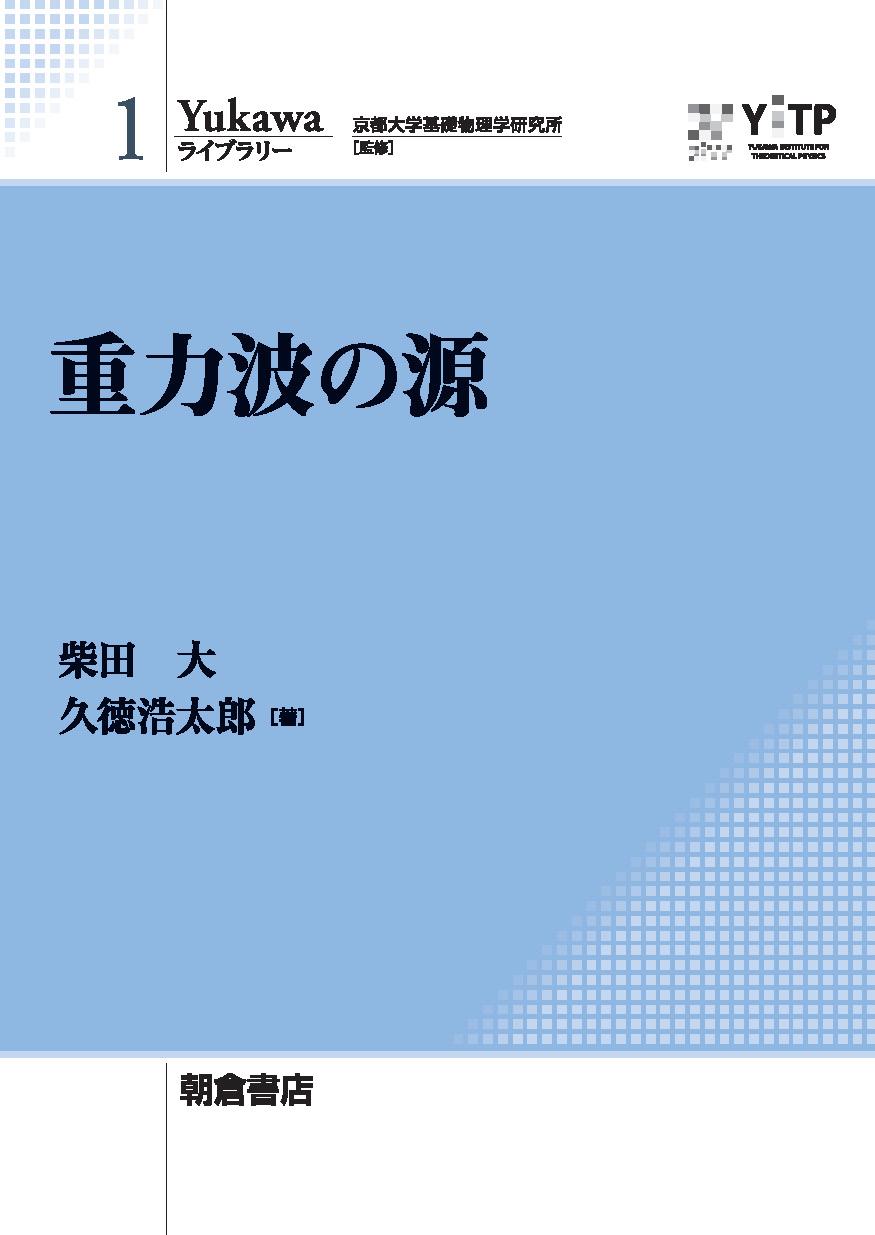
Prof. Masaru Shibata is a leading figure in computational relativistic astrophysics, currently serving as Director at the Max Planck Institute for Gravitational Physics (Albert Einstein Institute) since 2018 and Professor at Kyoto University's Yukawa Institute for Theoretical Physics since 2009. His career spans multiple prestigious institutions including University of Tokyo and Osaka University. PhD in Physics, Kyoto University (1994) Graduate studies in Physics, Kyoto University (1989-1993) Undergraduate in Science, Tokyo Institute of Technology (1985-1989) As a Professor with primary focus on Relativistic Astrophysics , Shibata's research investigates gravitational wave sources , neutron star mergers , black hole formation , and multimessenger astrophysics . His work combines general relativistic simulations , magnetohydrodynamic modeling , and neutrino radiation studies to understand high-energy cosmic phenomena. Recent publications (2024-2025) demonstrate expertise in supermassive star collapse , binary neutron star merger dynamics , and black hole-torus systems . These studies employ advanced numerical relativity techniques with applications to gravitational wave astronomy and gamma-ray burst modeling . 2025 Japan's Medal of Honor (Shiju-houshou) 2018 Nishina Memorial Prize 2013 International Society of General Relativity and Gravitation Fellow 2010 JSAP Excellent Young Researchers Prize 2008 Physical Society of Japan Outstanding Paper Award 2003 Nishinomiya-Yukawa Memorial Prize Shibata contributes to both theoretical frameworks and computational methodology in relativistic astrophysics, maintaining active collaborations with international research teams while leading computational projects at his dual institutions.