- German Language Didactics
- Syntax-based Orthographic Phenomena
- Compound and Separate Writing in German
- +۷ مورد دیگر
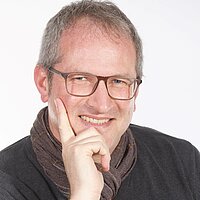
Prof. Dr. Andreas Krafft serves as Professor for German Language and its Didactics at the Pädagogische Hochschule Freiburg since 2017. He is affiliated with the Institute for German Language and Literature, the Department of Language Teacher Training, and the Writing Center. Previously, he held positions at Pädagogische Hochschule Karlsruhe (2002-2016) and served as Visiting Professor at Pädagogische Hochschule Ludwigsburg (2016-2017). He completed his doctorate at Goethe-Universität Frankfurt a.M. in 2014 with a dissertation on the development of metalinguistic abilities in children with monolingual and multilingual backgrounds. Prof. Krafft's research focuses on syntax-based orthographic phenomena in German, particularly compound and separate writing and punctuation. He investigates how children develop metalinguistic awareness and how this knowledge can be effectively integrated into language instruction. His work challenges traditional grammar teaching approaches, advocating for methods that connect language reflection with practical language skill development. He is actively involved in the Di.ge.LL research project, exploring how digital tools can enhance cognitive activation in language learning. His publication record shows consistent output in German language didactics, with recent work emphasizing practical classroom applications for diverse learners. His research demonstrates how intuitive writing and punctuation skills develop in children and how instruction can build on these foundations rather than contradicting them. He particularly examines how multilingual students' stronger initial word concepts can inform teaching approaches for all learners. Prof. Krafft actively supervises bachelor's and master's theses, preferring empirical research projects that contribute to practical language teaching. He encourages students to develop research questions from his courses and provides guidance on methodology while recommending additional support from the Writing Center. His teaching philosophy emphasizes connecting theoretical understanding with practical classroom application, particularly regarding how language awareness development can support actual language competence.