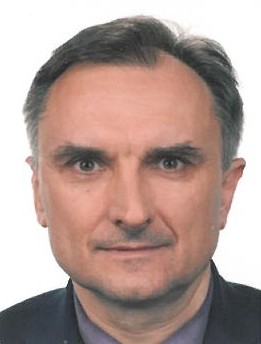
Prof. Tomasz Siwowski, PhD, DSc, Eng., is the Head of the Department of Roads and Bridges at the Faculty of Civil, Environmental Engineering and Architecture, Rzeszów University of Technology. Appointed as the Minister of Science's representative to the Scientific Council of the Road and Bridge Research Institute, he specializes in structural analysis, composite materials, fatigue strength, and infrastructure durability. His work bridges academic research with practical applications in large-scale infrastructure projects. PhD, DSc, Eng. in Civil Engineering Expert in composite materials and bridge diagnostics Over 200 publications and patents His research focuses on new materials for road infrastructure , diagnostics and durability of structures , and fatigue analysis of steel bridges . Recent studies include implementing FRP composites for bridge decks and repurposing renewable energy components in civil engineering. The 15 most recent publications highlight advancements in distributed fiber optic sensing for structural health monitoring and hybrid construction systems combining concrete with composite materials. As President of Promost Consulting , he directs design and management of major infrastructure projects. The Road and Bridge Research Institute, where he serves on the Scientific Council, develops innovative materials and European-standard construction systems for transportation facilities. His career spans both academic leadership and practical bridge construction supervision .
Kent Bertilsson is a Professor and Director of Studies at the Department of Computer and Electrical Engineering (DET) at Mid Sweden University . He serves as a Deputy Prefect and specializes in Power Electronics , with a focus on Embedded Systems , Power Converters , and Fiber Installation Equipment . His research includes projects like DeHigh (electrification of work vehicles) and STORE (electrical energy storage). His work spans High-Frequency Converters , Planar Magnetics , and Multilevel Inverters , with applications in Electric Vehicles and Renewable Energy Systems . He has extensively published in journals like IEEE Transactions on Power Electronics and Energies , emphasizing component optimization and energy efficiency. Notable projects include 48 V Drive Systems and Smart Industry Sweden .
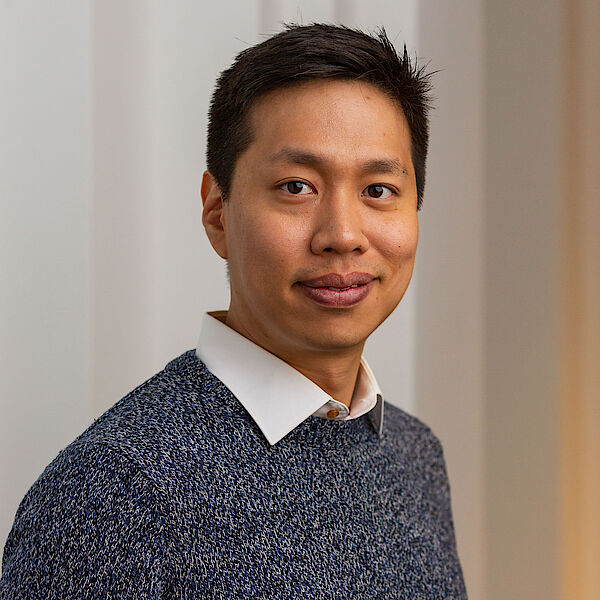
Sangyoung Park is an Assistant Professor of Smart Mobility Systems at the Faculty of Mechanical Engineering and Transport Systems, Technical University of Berlin, and is co-affiliated with the Einstein Center for Digital Future. His research focuses on two main areas: enhancing vehicle safety through digitalization and connectivity, and advancing the electrification of the transport sector with emphasis on electric vehicle battery systems design and management. He leads the Chair of Smart Mobility Systems at TU Berlin, where his team investigates how vehicle connectivity can improve energy efficiency, traffic flow, and safety in autonomous vehicle systems. Dr. Park completed his PhD in Electrical Engineering and Computer Science at Seoul National University in Korea, where he focused on energy management techniques for hybrid energy storage systems in electric vehicles. Before joining TU Berlin in 2018, he conducted postdoctoral research at the Technical University of Munich, working on energy management for smartphones in collaboration with Google and studying battery aging processes. His research interests span smart mobility systems, electric vehicle battery management, energy consumption optimization, vehicle connectivity, and autonomous driving systems. Park's work bridges the gap between design engineers and software engineers, investigating how different energy storage components (fuel cells, supercapacitors, lithium-ion batteries) should be interconnected and managed together for maximum efficiency. His research also addresses the design of charging infrastructure for electric vehicles. Analysis of Dr. Park's recent publications reveals a strong focus on digital twin technology for teleoperated driving, battery management systems for electric vehicles, and vehicle connectivity for improved safety and efficiency. His research increasingly integrates cybersecurity aspects of connected vehicles and explores novel approaches to extend battery lifespan through advanced cell balancing techniques. The interdisciplinary nature of his work connects electrical engineering, computer science, transportation systems, and urban infrastructure planning. Dr. Park supervises multiple doctoral students, including Philipp Kremer, Ongun Türkçüoglu, Kil Young Lee, Maria Claudia Miguel de Priego, Muzaffer Citir, Andrea Reindl, Subhendu Bhadra, and Hueseyin Türkyilmaz. His research is supported by various funding sources including the ECDF grant, DAAD projects (ide3a), and government scholarships. He collaborates with institutions including OTH Regensburg and Siemens Mobility. His laboratory, the Smart Mobility Systems group, focuses on developing system-level approaches for measuring, analyzing, and balancing energy consumption in battery-powered mobile systems. The team investigates how direct communication among autonomous vehicles can enable control scenarios that improve energy efficiency, traffic flow, and safety beyond what human drivers or isolated autonomous vehicles can achieve.
Naureen Ghafoor is an Associate Professor (Docent) at Linköping University, affiliated with the Department of Physics, Chemistry and Biology (IFM) and the Thin Film Physics Division. Her research focuses on advanced materials for neutron and X-ray optics, particularly multilayer structures and thin film physics. Dr. Ghafoor's research interests span thin film physics , nanomaterials science , and neutron optics . She specializes in the development and characterization of multilayer materials, particularly those involving iron-silicon structures with boron carbide interlayers for neutron optical applications. Her work combines advanced deposition techniques like magnetron sputtering with detailed materials characterization to optimize performance in neutron optics and related fields. A key innovation in her research involves the strategic use of isotope-enriched boron carbide (11B4C) to create atomically flat interfaces that enhance the optical properties of multilayer structures. Her recent publications demonstrate a strong focus on enhancing the performance of neutron optical components through innovative materials engineering. Key themes include the use of isotope-enriched boron carbide (11B4C) to improve interface quality in multilayer structures, the development of stress-free diaphragms for medical applications like inner ear implants, and the creation of superstructured materials with exceptional mechanical properties that combine metal-like ductility with high hardness. These advancements have significant implications for both scientific instrumentation and medical device technology. Postdoctoral scholarship in Thin Film Physics granted by Carl Tryggers Stiftelse (600,000 SEK) for studying "Stress-free Diaphragms for Long-lasting Inner Ear Implants" Dr. Ghafoor is actively involved in research commercialization and technology transfer. She is a co-founder of Quantum Beam Optics (QBO), a startup company that aims to bring advanced multilayer neutron optics technology to the international market. Her laboratory work is centered in the Thin Film Physics Division at IFM, where she leads research on nanomaterials science with applications spanning from fundamental neutron optics to practical medical devices. Her research group collaborates extensively with international partners and contributes significantly to advancing the field of neutron optical components.
Dr. Milomir Gašić is a full Professor at the University of Kragujevac, Faculty of Mechanical Engineering, Department of Construction and Transportation Machinery. He is affiliated with the Centre for Construction and Transportation Machinery and has made significant contributions to mechanical engineering research and education in Serbia. Dr. Gašić's research focuses on mechanical engineering, particularly in the areas of construction and transportation machinery design, structural optimization, and failure analysis. His work has practical applications in crane design, excavator systems, and vehicle engineering. He has served as an expert and project manager in the field of mechanization and structural engineering, implementing numerous project solutions. His publications consistently demonstrate expertise in mathematical optimization techniques applied to mechanical systems. His recent publications show a strong emphasis on optimization techniques for construction machinery, particularly crane booms and excavator components. He frequently employs mathematical methods like Lagrange's multipliers and differential evolution algorithms to solve complex engineering problems related to structural integrity and performance. His research bridges theoretical mathematics with practical mechanical engineering applications. Honorary Doctorate from Voronezh State University of Russia Significant contributions through work with the National Education Council of Serbia Contributions to the Main Scientific Committee for Mechanical Engineering Work with the Committee for Construction Machinery Standards Dr. Gašić has been instrumental in advancing scientific and technological development in Serbia through his committee work and has designed a license for responsible design of transport vehicles, warehouses, and mechanical structures issued by the Serbian Engineering Chamber. His work aligns higher education with Bologna Process requirements through TEMPUS projects. Dr. Gašić is actively involved with the Centre for Construction and Transportation Machinery at the University of Kragujevac, where he conducts research and development on new generations of bucket wheel excavator teeth and innovative concepts for rotating and non-rotating structures in transportation and construction machinery.
Prof. Dr. Robert Eberlein is a Senior Lecturer in Mechanics at the ZHAW School of Engineering , specifically working at the Institute of Mechanical Systems (IMES) . He has served as Director of IMES since 08/2017, following previous roles as Senior Lecturer at IMES (11/2013-07/2017) and industry leadership positions including CTO of Angst+Pfister Group (06/2006-10/2013). Dr. Eberlein holds a Dr.-Ing. (PhD) in Numerical Mechanics from Darmstadt University of Technology (1992-1997) and completed an exchange program at UC Berkeley (1991-1992). Education: Dr.-Ing. (PhD) in Numerical Mechanics, Darmstadt University of Technology (07/1992-07/1997); Exchange Student at University of California, Berkeley (07/1991-06/1992) Professional: Director of Institute IMES (08/2017-today); Senior Lecturer at IMES (11/2013-07/2017); CTO & Group Executive Committee, Angst+Pfister Group (06/2006-10/2013); Group Leader in Biomechanics, Sulzer Innotec (07/1998-04/2006) Dr. Eberlein focuses on experimental and numerical modeling of solid polymers and lightweight structures. His research spans material modeling, finite element analysis, and fatigue life prediction for materials like POM gears, TPU and vulcanizates. Recent work explores digital twin development for rubber spring elements and machine learning enhanced process simulation in additive manufacturing. His projects include Lifetime prediction of POM gears , Measurement of human soft tissue properties , and Optimization of plastic gear geometry . Scientific achievements include: Professor ZFH (Fachhochschulrat) - 12/2019 Dr.-Ing. (PhD) summa cum laude - Darmstadt University of Technology - 07/1997 Graduate Assistantship - Darmstadt University of Technology - 01/1993 His work appears in journals like International Journal of Non-Linear Mechanics , Rubber Chemistry and Technology , and Journal of Loss Prevention in the Process Industries . Publications since 2015 show a consistent focus on material characterization , finite element modeling , and fatigue analysis with applications in industrial components and biomedical systems.
Professor Gülten Manioğlu is a distinguished faculty member at Istanbul Technical University's Department of Architecture, where she has maintained a continuous appointment since 1993. With over three decades of academic service, she has established herself as a leading researcher in sustainable architectural design and building physics, focusing on energy-efficient solutions for the built environment. Her educational background includes: Doctorate in Building Science from Istanbul Technical University (1998-2002) Master's degree in Building Information (with thesis) from Istanbul Technical University (1991-1995) Licence in Architecture from Istanbul Technical University (1987-1991) Professor Manioğlu's research program centers on creating climate-responsive architectural solutions that optimize energy performance while maintaining occupant comfort. Her work bridges building physics, environmental control systems, and architectural design, with particular emphasis on adapting building technologies to Turkey's diverse climatic conditions. She investigates how building envelopes, urban forms, and advanced materials like phase change materials can be strategically implemented to reduce energy consumption in buildings. Analysis of her publication record reveals a consistent trajectory of innovation in building science, with recent work focusing on urban heat island mitigation, advanced shading systems, and integrated water-energy approaches to sustainable settlement design. Her research methodology typically combines sophisticated simulation techniques with practical applications, creating solutions that are both theoretically sound and implementable in real-world contexts. Professor Manioğlu has secured significant research funding through multiple projects: Bina ve Yerleşme Tasarımında İklim Değişikliği ile Uyumlu Enerji Etkin Bir Yaklaşımın Geliştirilmesi (BAP, 2021-2024) Developing an Approach to Energy and Water Efficient Building and Settlement Design (TUBITAK, 2021-2023) Investigation of the Effect of Phase Change Materials on Heating and Cooling Energy Consumption in Residential Buildings (BAP, 2018-2019) Utilizing Solar Energy with Passive Systems in Single-Story Primary School Buildings (BAP, 2012-2022) She maintains active professional engagement as demonstrated by her leadership roles in the Building Physics Association (Board Member, 2022-2023) and membership in the International Association of Building Physics (2018-2022). Currently supervising 17 theses, Professor Manioğlu continues to shape the next generation of architectural researchers while maintaining a vigorous publication record that extends to 2025.
Young Jin Choi is a Professor at Sejong University in the Department of Nano Technology and Advanced Materials Engineering and a Researcher at the Hybrid Materials Research Center. He holds a Ph.D. from Seoul National University and has previously served as a Professor at Myongji University (2005-2015) and a Managerial Researcher at Korea Electronics Technology Institute. Ph.D., Seoul National University (1999) M.S., Seoul National University (1995) B.S., Seoul National University (1993) His research spans advanced materials for implantable bioelectronics , quantum dot/perovskite-based LED devices , resistive memory systems , and organic optoelectronic components . Recent work focuses on perovskite nanowire arrays for photodetectors and VOx nanowires for infrared detection. Key publications include studies on self-powered blue photodetectors (Advanced Materials, 2022), quantum dot LED degradation (Nanotechnology, 2023), and hierarchical hybrid architectures for optoelectronic stability (Chemical Engineering Journal, 2025). Research trends emphasize nanowire engineering , metal halide perovskites , and interface design . Choi actively collaborates internationally, with network ties in materials science, resistive engineering, and nanowire technology. His work has generated significant citations, including 25 for his 2022 photodetector study.
Kyun Ho Lee is an Associate Professor in the Department of Aerospace Engineering at Sejong University, specializing in space propulsion systems, satellite thermal engineering, and computational fluid dynamics (CFD). His career spans academic research and practical development in aerospace technologies. Ph.D., KAIST (2009) M.S., Yonsei University (2000) B.S., Yonsei University (1998) His research focuses on cutting-edge aerospace technologies, including Space Propulsion , Thermal Engineering , and Inverse Heat Analysis . Recent work explores CFD modeling of propulsion plumes, rarefied gas dynamics , and optimization of FEEP thrusters for small satellites. Applications extend to green propulsion systems, waste-to-fuel technologies, and advanced emitter designs. The latest publications highlight trends in ionic monopropellants , gallium-based FEEP systems , and thermal cracking of plastic waste for sustainable aviation fuels. Collaborations span computational modeling, propulsion system development, and environmental stress testing for spacecraft.
Dr. Aneurin "Nye" Grant is a Professor in the Department of Civil Engineering and Construction Management at the University of West Florida , where he has taught since 2010. His research focuses on Sustainable Construction , Life Cycle Assessment (LCA) , Water Conservation , and Construction Safety , with publications in journals such as Building Research and Information and Safety Science . He integrates project-based learning and field experiences into his courses. Bachelor's Degree in Social Ecology (University of California Irvine) Master’s in Urban and Regional Planning (University of Florida, 2003) Ph.D. in Construction Management (University of Florida, 2010) Dr. Grant’s research spans Urban Metabolism , Rudimentary Structures , and Alternative Building Materials , emphasizing practical applications in Developing World Building Technologies and Rapid Manufacturing. His recent publications analyze hurricane resilience, 3D-printed materials, and passive energy-efficient building strategies. He has presented at conferences like the Southern Political Science Association and CIB W099 International Conference , and his work has been featured in peer-reviewed journals including the Journal of Industrial Ecology and Water Science and Technology .
Sophie Rapagna is a Casual Academic and Micro-CT Facility Manager at the College of Science and Engineering, Flinders University . Her research focuses on knee osteoarthritis , microCT imaging , and bone microarchitecture with applications in implant biomechanics and digital volume correlation (DVC) . Active in Flinders Institute for Nanoscale Science and Technology Full Member of the Medical Device Research Institute PhD candidate in biomechanics since 2017 Her publications (17 total) span topics like: Micro-CT-based mechanical analysis of implants Porosity in 3D-printed titanium components Failure mechanisms in dissimilar welds Bone-cartilage interactions in osteoarthritis Time-elapsed imaging of implant degradation High-resolution imaging for biomechanical strain mapping She collaborates with researchers such as Dr. Egon Perilli and Michael Taylor on projects involving digital volume correlation and additive manufacturing .
Takahiro Fujimoto is a Professor at the Faculty of Commerce under the Institute for Business and Finance. He specializes in Business Administration and Technology & Operations Management, with a focus on the automotive industry and lean manufacturing. Research areas: Business Administration, Technology & Operations Management Academic rank: Professor His publications cover topics such as production systems, product development, and supplier networks, primarily in the automotive sector. His work includes influential books on lean manufacturing and strategic design. Scientific awards include: The Shingo Prize of Excellence Manufacturing (2000, 2001) Jai Doblin Award (1991) 日経図書文化賞 (Nikkei Book Culture Award, 1993) 組織学会高宮賞 (Takamiya Award of the Organizational Society, 1998) He teaches courses in production development management and technology & production management at the Graduate School of Business and Finance.
Eiichiro Tanaka is a Professor at Waseda University's Faculty of Science and Engineering , specializing in Medical Assistive Technology , Robotics , and Design Engineering . His research focuses on developing wearable robotic systems for gait training, neuro-rehabilitation, and elderly mobility assistance. Key Research Areas : 1. Human-Robot Interaction for emotion-adaptive assistive devices. 2. Biomechanical Modeling of lower-limb assistance. 3. Ontological Frameworks for academic emotion analysis. 4. Non-Powered Exosuits for muscle fatigue reduction. His work integrates deep neural networks and physiological signal processing to create emotion-aware walking aids. Recent studies (2022-2020) demonstrate 24% fatigue delay and 16% walking distance improvement using RE-Gait® devices. Earlier projects include guide-dog robots and self-contained gear diagnostics . All publications employ 3D motion analysis , Wearable Sensors , and torque control algorithms .
Neil Berwick is a Lecturer in the Department of Built Environment and Life Sciences at Abertay University, Faculty of Social and Applied Sciences. He is a water specialist with extensive experience in sustainable urban drainage systems (SuDS), focusing on operation, management, and long-term maintenance. He has been with Abertay since 2009 and leads the BEng Civil & Environmental Engineering Placement Module and several SuDS CPD courses. Research Interests: Sustainable Urban Drainage Systems (SuDS) Stormwater and Energy Efficiency in Water Cycle Public Understanding of Environmental Benefits Rural and Source Control Drainage Diffuse Pollution and Urban Runoff Management His recent publications reflect a strong trend in applied environmental engineering, particularly in policy guidance, decision support tools, and practical implementation of SuDS across the UK and Mediterranean regions. Much of his work is collaborative, involving Scottish Government (CREW), EU Interreg, and EU MED projects. Scientific Awards: None listed in the provided text. Advising and Grants: Neil has supervised undergraduate projects at Abertay and has been a co-investigator on multiple funded research projects, including CREW, EU Interreg IVB, and EU MED E2STORMED. He has also contributed to national guidance documents and consultancy reports for Scottish Water and CIRIA. His knowledge exchange includes extensive training delivery for local authorities, contractors, and international agencies. Labs and Teams: Neil is part of the research team on the EU MED Project E2STORMED and has collaborated with Scotland’s Centre of Expertise for Waters (CREW). He also leads the Royal Academy of Engineering’s "On the Right Track" outreach project, promoting STEM education through real-world engineering contexts.
Dr. Lluis Batet Miracle is a Professor at the Universitat Politècnica de Catalunya (UPC) with the Department of Physics . He leads the Advanced Nuclear Technologies Research Group (ANT) and has contributed extensively to nuclear fusion technology, thermal hydraulics, and liquid metal systems. His work spans reactor safety analysis, tritium processing, and magnetohydrodynamic modeling. Expertise : Nuclear Engineering, Plasma Physics, Computational Fluid Dynamics, Fusion Reactor Design, Tritium Management Notable Projects : CONSOLIDER TECNO-FUS (2009-2013), EURATOM collaborations, HCLL Breeding Blanket Systems for ITER Research Trends : Recent publications focus on helium solubility in liquid metals, bubble dynamics in fusion blankets, and MHD simulations under nuclear conditions. His work combines atomistic modeling, high-fidelity CFD, and experimental validation for tritium and hydrogen systems in fusion reactors. Collaborations : Regularly works with Luis Sedano, Eduardo Ríos, Jordi Martí, Francesc Reventos, and Elisabet Mas de les Valls Grants : Involved in Horizon Europe, EURATOM, and Spanish National Research programs