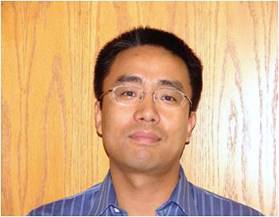
Rabah Aoufi is a Senior Lecturer in the Department of Engineering Technology & Industrial Distribution at the College of Engineering, Texas A&M University. His primary affiliation includes the Electronic Systems Engineering Technology program. He can be reached at raoufi@tamu.edu and is located in FERM 304AA. His work focuses on digital signal processing, microcontroller systems, control systems, and engineering entrepreneurship. Research interests span embedded systems design, real-time data processing, and innovative educational projects. His publications reflect expertise in both foundational engineering principles (e.g., signal processing fundamentals) and applied technologies (e.g., microcontroller programming and big data frameworks). His articles demonstrate a career-long engagement with evolving technologies—from foundational 1980s multiprocessor architectures to modern big data systems. No scientific awards or grants are explicitly mentioned in the provided materials.
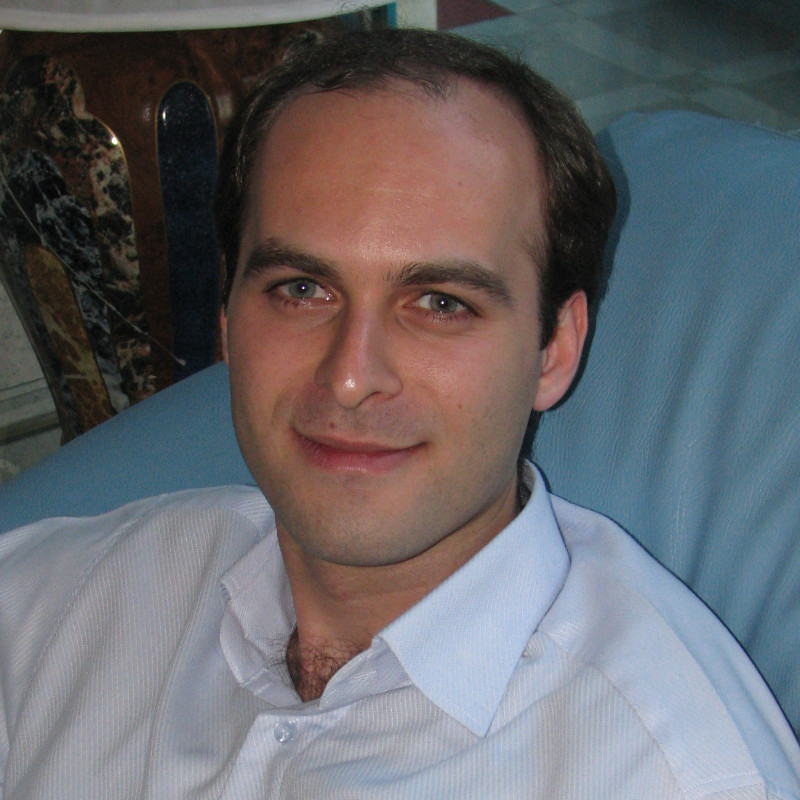
Vladimír Siládi, PhD, serves as Assistant Professor and Head of the Department of Computer Science at Matej Bel University in Banská Bystrica, Slovakia, where he has held academic positions since 1995. His current roles include Project Coordinator for the Virtual University initiative and Registration Authority for SlovakGrid, with prior experience as a part-time Assistant Professor at Slovak University of Technology. Educational Background: PhD in Computer Science, Slovak University of Technology in Bratislava (1997-2007) Master's in Theology, Comenius University in Bratislava (2003-2008) Master's in Secondary Education and Teaching (cum laude) and PaedDr. (EdD), Matej Bel University (1988-1993, 2005) High School Diploma, GMN Banská Štiavnica (1984-1988) His research centers on Grid Computing architectures , parallel processing techniques , and security frameworks for distributed systems . Specialized expertise includes GPU-accelerated algorithms for NP-hard problems, trust models in ad hoc grid environments, and cloud-based educational platforms. His interdisciplinary work bridges computer science with environmental modeling and psychological applications through virtual reality systems. Publication analysis reveals a consistent focus on computational optimization across 12 major works (2006-2014), with recent contributions emphasizing trust intersection models for decentralized grids (2012-2013) and cloud-based educational infrastructure (2013). Earlier works established foundations in GPU-accelerated network topology optimization and genetic algorithms for irregular systems (2006-2010). Scientific Awards: No awards documented in source materials Project leadership includes the Virtual University of Matej Bel University (ITMS 26110230077) coordinating 85 team members across 280 courses, plus TEMPUS-FLACE distance learning development (1998-2000). His registration authority role for SlovakGrid since 2009 supports national research infrastructure. Departmental leadership involves managing the Computer Science team while teaching core courses in algorithms, grid technologies, and GPU programming, maintaining consultation hours for student engagement.
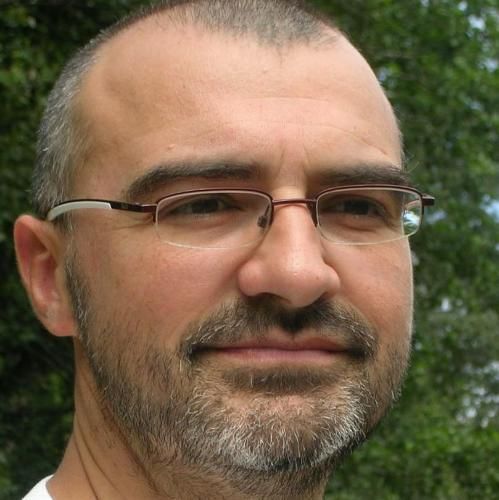
Tyler Bletsch is an Associate Professor of the Practice in the Department of Electrical and Computer Engineering at Duke University's Pratt School of Engineering. He joined the Duke faculty in November 2015 after several years of work in industry with NetApp, bringing practical industry experience to his academic role. His teaching focuses on practical aspects of computer engineering and systems programming. Dr. Bletsch received his B.S. from North Carolina State University in 2004, followed by his D.Phil. from the same institution in 2011. His doctoral research focused on software security, particularly addressing code-reuse attacks. His research interests span hardware and software security, with a particular focus on Rowhammer vulnerabilities and mitigation techniques. He also explores power-aware computing for high-performance systems and has interests in robotics and technology education with an emphasis on project-oriented learning. Dr. Bletsch's publication record shows a consistent focus on computer security, particularly Rowhammer attacks and mitigation strategies in recent years. His earlier work addressed code-reuse attacks like Jump-oriented Programming and Return-oriented Programming. He has also contributed to power management research for high-performance computing systems. Dr. Bletsch is actively involved in mentoring students through the Duke Combat Robotics club and FIRST robotics teams. He teaches a variety of courses including Computer Architecture, Digital Systems, Computer and Information Security, and Engineering Software for Maintainability. His teaching philosophy emphasizes hands-on, project-based learning. He maintains an active research laboratory focused on computer security and has been featured in Duke Today for his educational video "Tyler Bletsch Takes You on a Tour of the Insides of a Computer," which demystifies computer hardware for general audiences.
Dr. Liqiang Zhang is a Professor at the Department of Computer and Information Sciences, Indiana University South Bend. He holds a Ph.D. in Computer Science from Wayne State University (2005). His research focuses on wireless networks, mobile computing, resource allocation, IoT, cognitive radio networks, and network security. His work is supported by IU and the National Science Foundation. He has organized multiple conferences including ICCCN 2013 (Track Chair), GLOBECOM 2010 (Publicity Co-Chair), and founded/co-chaired WiMAN workshops. He serves as a Guest Editor for journals like ACM Transactions on Autonomous and Adaptive Systems and Elsevier's Computer Communications. He reviews for top journals including IEEE Transactions on Mobile Computing and IEEE Transactions on Parallel and Distributed Systems. Dr. Zhang teaches courses such as Computer Structures, Mobile App Development, and Network Security. Recent publications (2019-2009) include advancements in network scheduling, cognitive radio protocols, radar positioning, and digital design education. His research spans both theoretical and applied aspects of networking and distributed systems.
Erik Brunvand is a Professor at the School of Computing , University of Utah, and holds an Adjunct Professor position in the Department of Electrical and Computer Engineering. He was a University Professor from 2014–2016 and is currently on leave at the National Science Foundation (CISE/CNS division) (Fall 2019–2021). His research focuses on computer architecture, VLSI systems, asynchronous circuits, and graphics processing, particularly GPU architectures for ray tracing. Teaching includes courses like Digital VLSI Design , Embedded Systems and Kinetic Art , and interdisciplinary classes like Making Noise: Sound Art and Digital Media . He has organized the ASYNC international symposium series and contributed to projects such as TRaX (ray tracing architecture) and ACK (asynchronous design framework). Grants include NSF awards for GPU architectures, ray tracing applications, and microengine-based control systems. His work spans hardware design, sustainable computing, and arts/technology collaborations, including kinetic art installations and educational initiatives like circuit bending.
Ioannis Milis is a Professor at the Department of Informatics, Athens University of Economics and Business (AUEB), part of the School of Information Sciences and Technology. He holds a BS in Electrical Engineering from Democritus University of Thrace (1983) and a PhD in Computer Science from AUEB (1989). His research focuses on algorithms, computational complexity, and optimization for computer/communication networks, combinatorial optimization, graph theory, and game theory. He has conducted postdoctoral research at LRI (1992-94), INRIA-Sophia Antipolis (1994-95), and NTUA as a Marie Curie fellow (1995-96). His teaching includes courses on Algorithms, Advanced Algorithms, and Topics in Algorithms at both undergraduate and graduate levels. He co-authored a textbook on Distributed Systems with Java (2005). His conference involvement includes organizing the Athens Colloquium on Algorithms and Complexity (ACAC) since 2006, the Euro-Par 2012 conference, and the ISCO 2012 symposium. His research has addressed scheduling algorithms, energy-efficient computing, and combinatorial optimization problems in networks.
Soon Myoung Chung is a computer science researcher with significant contributions in the areas of cloud computing security, parallel data clustering, and GPU-accelerated algorithms. The publications indicate long-standing research activity spanning from 2002 to at least 2022, suggesting sustained academic engagement. While no formal institutional affiliation is provided in the scraped content, the depth and consistency of work imply a faculty or research-oriented academic role. The research interests center around cloud security , especially hypervisor vulnerabilities and isolation breaches, parallel and distributed clustering algorithms for large-scale data, and 3D shape analysis using orthogonal moments. These fields reflect a strong focus on algorithmic efficiency, security in virtualized environments, and pattern recognition. The most recent articles show a trend toward leveraging GPU acceleration for real-time data processing in crisis management and enhancing anomaly detection in time series data. Earlier works emphasize foundational methods in association rule mining, text clustering, and combinatorial fusion for feature selection. Collectively, the publications demonstrate expertise in both theoretical algorithm design and practical implementation in high-performance computing contexts. Although no scientific awards are mentioned in the provided texts, the body of work has accumulated over 1,800 citations, indicating influence in the field. There is no information available about students advised, grants received, or leadership roles. No labs or collaborative teams are referenced in the scraped material.
Dijana Stojić is an Assistant at the Department of Computer and Software Engineering, Faculty of Technical Sciences in Čačak, University of Kragujevac. She has held this position since January 2018 while pursuing her doctoral studies in Electrical and Computer Engineering with a specialization in Computer Engineering, which she began in 2021. Her academic journey began with excellent results at the 'Vuk Karadžić' elementary school in Čačak, followed by the Technical School in Čačak where she majored in computer electrical engineering. She earned her Bachelor's degree in Computer Engineering in 2011 (average grade 9.37) and Master's degree in 2012 (perfect average grade 10.00) from the Faculty of Technology in Čačak. Her Master's thesis, 'Software Support for Active RFID Localization,' was supervised by Prof. Dr. Siniša Ranđić. Dijana's research spans multiple domains within computer engineering, with recent publications focusing on practical applications of technology in diverse fields. Her work demonstrates strong expertise in IoT systems, machine learning applications, blockchain technology, and human-computer interaction. She has published extensively on topics including earthquake detection using mobile phones, predictive models for identifying students with difficulties in online learning, medical applications like ECG monitoring with Arduino, agricultural engineering applications, and infrastructure monitoring systems. Award for best first-year student at Faculty of Technology in Čačak Award for best second-year student at Faculty of Technology in Čačak Her professional activities include serving as Student Vice-Dean at the Technical Faculty in Čačak from December 2010 to September 2012, participating in the TEMPUS SIGMUS project, and completing an internship at D.O.O. DOCUS from June 2013 to June 2014. She was a scholarship holder of the Ministry of Education, Science and Technological Development from April 2013 to March 2017 and has been involved in significant research projects including 'Development and modeling of energy efficient, adaptable, multiprocessor and multisensory electronic low-power systems' (TR 32043) and the 'German-Serbian Collocation Dictionary for German Language and Teaching' (DeSKoll).
Nima Honarmand is an Assistant Professor in the Department of Computer Science at Stony Brook University, where he co-directs the Computer Architecture Stony Brook (COMPAS) Lab . His research focuses on computer system design , particularly parallel computer architecture and operating systems . Education : Ph.D. in Computer Science from University of Illinois at Urbana-Champaign under Josep Torrellas. His work addresses challenges in deterministic replay of parallel programs to simplify debugging on multi-processor systems. Current research explores memory fencing, consistency models, and architectural extensions for reproducibility. Recent publications span conferences like ASPLOS, ISCA, PACT, and POPL, with emphasis on parallelism constraints , memory hierarchy optimization , and fault-tolerant systems . Awards include Best Paper at PACT 2011 and Best Paper Candidate at VTS 2007 . Teaching : Courses include Computer Architecture (CSE 502) and Operating Systems (CSE 306/CSE 506). Email : nhonarmand@cs.stonybrook.edu
Georgios Keramidas is an Assistant Professor in Computer Architecture at the Department of Informatics, Aristotle University of Thessaloniki . He also holds an Adjunct Professor position at the Hellenic Open University and collaborates with institutions like the University of Peloponnese and University of Patras . Research Interests : Computer Architecture, Memory Systems, Multicore/GPU Design, Low-Power Techniques, Fault-Tolerant Systems His work focuses on cache optimization , energy-efficient computing , and security-aware memory design . Key contributions include DVFS frameworks , reuse-distance prediction , and non-deterministic cache mechanisms . Recent article trends highlight innovations in computation-in-memory , IoT platform components , and security/low-power co-design . Patents on image compression and GPU optimization reflect practical applications of his research. Academic Network : Collaborates with institutions including University of Patras , University of Manchester , and TU Dresden
Francisco Manuel Fernández Rivera is a Professor at the University of Santiago de Compostela, affiliated with the Department of Electronics and Computing under the Faculty of Physics. His research focuses on high-performance computing, parallel algorithms, and LiDAR data analysis. He leads the ARQCOMP research group and is part of the Center for Research in Intelligent Technologies (CITIUS). His work addresses challenges in NUMA systems optimization, sparse matrix computations, and geospatial data processing. He holds a PhD from the University of Santiago de Compostela (1988), with a thesis on algorithm partitioning in hypercube computers. His research spans parallel computing frameworks, LiDAR-based infrastructure analysis, and performance modeling of distributed systems. Recent projects include developing thread migration strategies for NUMA architectures and creating tools for LiDAR data visualization and simulation. Key contributions include advancements in LiDAR-based pathfinding, energy-efficient NUMA system management, and parallelization techniques for irregular codes. His work bridges theoretical computer architecture with practical applications in urban planning and environmental monitoring.
Carlos Molina Clemente is an Associate Professor of Computer Architecture at Rovira i Virgili University in Tarragona, Spain. He holds a M.Sc. in Computer Engineering (Universitat Politècnica de Catalunya, 1996) and a Ph.D. in Computer Science (UPC, 2005). His research focuses on Computer Architecture, Mobile/Sensor Networks, and Cloud Computing. He leads the Cloudlab research group and coordinates initiatives like GTDAWIN and BIOGEI. Key research areas include multicore scheduling, LoRaWAN protocols, LIDAR data analysis, and serverless computing. He has published over 50 articles in top-tier conferences/journals and supervised three doctoral theses. His work spans projects on cache architectures, real-time systems, and educational multicomputing solutions. Affiliations include the Department of Computer Engineering and Mathematics (DEIM) at URV, with offices at Campus Sescelades (Avinguda Països Catalans 26, Tarragona). Research highlights include contributions to non-uniform cache policies, predictive mobile network algorithms, and energy-efficient sensor networks.
Dr.-Ing. Volkmar Sieh is a researcher at the Chair of Computer Science 4 (Distributed Systems and Operating Systems) at Friedrich-Alexander-Universität Erlangen-Nürnberg. His work focuses on fault-tolerant systems, real-time embedded systems, and virtualization technologies. He leads the FAUmachine project, developing advanced virtualization techniques for system simulation and fault injection. His research also includes energy-efficient real-time systems and hardware/software co-design. Research Activities: Design of Virtual Machines (FAUmachine) Restoration of Zuse Z23 computer Real-Time Systems with Mixed Criticalities WCET and WCEC Analysis Toolchains Energy-Neutral Real-Time System Kernels Key Contributions: He has published extensively on fault tolerance mechanisms, embedded system reliability, and energy-aware real-time systems. His work on the UMLinux tool and FAUmachine framework has advanced techniques for testing fault tolerance in networked systems and comprehensive system simulation. Technical Expertise: Virtualization and Hardware Simulation Real-Time OS Design WCET Analysis Energy Efficiency in Embedded Systems Fault Injection and Reliability Validation Labs/Projects: He is part of the FAUmachine research group, pioneering virtualization tools for complex system analysis and fault tolerance evaluation. His work integrates VHDL-based hardware models with software systems for comprehensive testing environments.
Assoc Prof Anupam Chattopadhyay is an Associate Professor in the College of Computing & Data Science at Nanyang Technological University (NTU), Singapore. He also holds a courtesy appointment in the School of Physical & Mathematical Sciences. His research focuses on computer architecture, security, design automation, and quantum computing. Anupam received his PhD from RWTH Aachen University in 2008, followed by roles at CoWare R&D and RWTH Aachen as a Junior Professor before joining NTU in 2014. Education: B.E., Jadavpur University, India MSc, ALaRI, Switzerland PhD, RWTH Aachen University, Germany Research Interests: Anupam’s work spans quantum computing, hardware security, AI security, post-quantum cryptography, and emerging technologies. His contributions include novel high-level synthesis techniques for cryptography, reliability estimation flows for embedded processors, and exploration of coarse-grained reconfigurable architectures. His research has been featured in major outlets like The Economist and Asian Scientist. Awards: Borcher's plaque (2008) for outstanding doctoral dissertation Nomination for Best IP Award (ACM/IEEE DATE 2016) Nomination for Best Paper Award (International Conference on VLSI Design 2018) Advising & Grants: Anupam leads a team of over 20 researchers, overseeing projects funded by various grants. He has advised numerous doctoral students and collaborates with institutions like Temasek Labs and the Indian Statistical Institute. Labs & Teams: His research group focuses on advanced topics in secure computing, quantum-resistant systems, and hardware-software co-design, leveraging cutting-edge tools and platforms for next-generation technologies.
Foundation for research and technology-hellasGreece
Manolis G.H. Katevenis is a Professor at the Department of Computer Science, University of Crete, and the founder and Head of the Computer Architecture and VLSI Systems (CARV) Laboratory at the Institute of Computer Science (ICS), Foundation for Research and Technology – Hellas (FORTH) in Heraklion, Crete, Greece. He has held academic positions since 1986 and played a pivotal role in establishing the Computer Science Department at the University of Crete. His research spans computer architecture, interconnection networks, VLSI systems, and high-performance computing, with a strong focus on scalable, low-power, manycore systems and RISC-V. He has led numerous European R&D initiatives, including serving as Coordinator of the ExaNeSt project. PhD in Computer Science, University of California, Berkeley (1983) MSc in Electrical Engineering and Computer Science, University of California, Berkeley (1980) Diploma of Electrical Engineering, National Technical University of Athens (1978) Manolis Katevenis's research focuses on advancing scalable system architectures for high-performance and big data computing. His work in computer architecture includes RISC-V, exascale computing, and manycore systems. He has made foundational contributions to interprocessor communication, particularly through remote-write, remote-DMA, and remote-enqueue mechanisms, and has pioneered innovations in interconnection networks and low-latency network interfaces. His research integrates hardware and software co-design to optimize performance, energy efficiency, and scalability in large-scale computing systems. The recent publications highlight a strong trend in exascale computing, interconnection networks, and FPGA-based prototyping of manycore systems. His work emphasizes scalable, low-power architectures, with recurring themes in congestion management, fair scheduling, crossbar design, and hardware-software integration for HPC. The articles span high-impact journals such as IEEE/ACM Transactions on Networking, IEEE Micro, and Computer Networks, reflecting sustained contributions to computer architecture and networking. ACM Doctoral Dissertation Award (1984) David J. Sakrison Memorial Prize (1983) IBM PhD Fellowship (1981–1983) Greek State Fellowship (1973–1978) Stelios Pichoridis Award for Outstanding University Teaching (2015) Member of Academia Europaea (elected 2012) Award by the Secretary General of the Region of Crete (2003) IEEE Milestone recognition for the RISC Project (2015) Manolis Katevenis has supervised over 50 graduate theses and mentored many prominent Greek computer architects, including recipients of the ACM Maurice Wilkes Award. He has served as Principal Investigator or co-PI in over 30 R&D projects with a total budget exceeding 18 million euros, including major European initiatives such as ExaNeSt (which he coordinated), EuroEXA, EcoScale, SARC, ENCORE, and multiple HiPEAC Network of Excellence projects. His leadership extends to project coordination, architectural design, FPGA prototyping, and systems software development. Katevenis founded and leads the CARV Laboratory at FORTH-ICS, a major research team with 80–100 members focused on computer architecture and VLSI systems. The lab has spun off the Distributed Computing Systems (DCS) Laboratory and is central to European exascale computing efforts, including participation in the European Processor Initiative. CARV has developed large-scale prototypes such as the 768-core ExaNeSt system and the Formic FPGA platform for manycore research.